Sun Xuetao, Nunes Sara S
Toronto General Research Institute, University Health Network Toronto, ON, Canada.
Toronto General Research Institute, University Health NetworkToronto, ON, Canada; Institute of Biomaterials and Biomedical Engineering, University of TorontoToronto, ON, Canada; Heart & Stroke/Richard Lewar Centre of Excellence, University of TorontoToronto, ON, Canada.
Front Cell Dev Biol. 2017 Mar 9;5:19. doi: 10.3389/fcell.2017.00019. eCollection 2017.
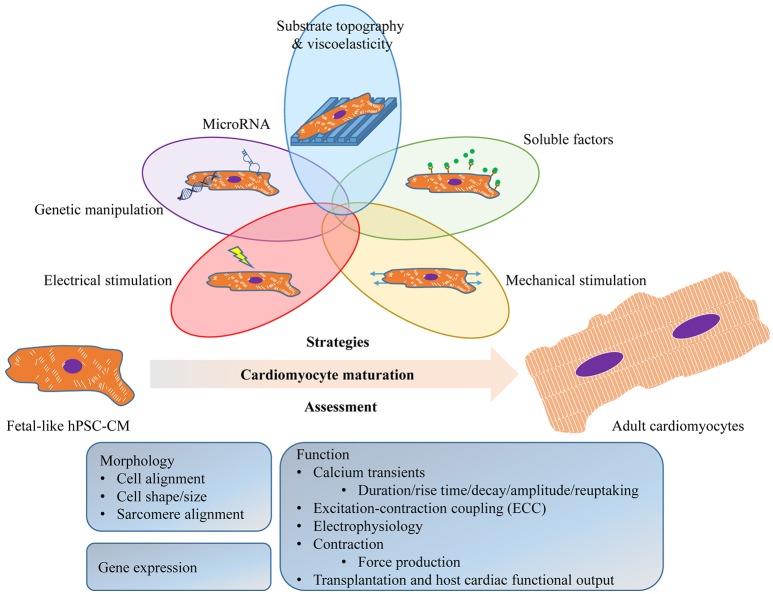
Human pluripotent stem cell-derived cardiomyocytes (hPSC-CM) represent a potential unlimited cell supply for cardiac tissue engineering and possibly regenerative medicine applications. However, hPSC-CMs produced by current protocols are not representative of native adult human cardiomyocytes as they display immature gene expression profile, structure and function. In order to improve hPSC-CM maturity and function, various approaches have been developed, including genetic manipulations to induce gene expression, delivery of biochemical factors, such as triiodothyronine and alpha-adrenergic agonist phenylephrine, induction of cell alignment in 3D tissues, mechanical stress as a mimic of cardiac load and electrical stimulation/pacing or a combination of these. In this mini review, we discuss biomimetic strategies for the maturation for hPSC-CMs with a particular focus on electromechanical conditioning methods.
人多能干细胞衍生的心肌细胞(hPSC-CM)为心脏组织工程以及可能的再生医学应用提供了潜在的无限细胞来源。然而,按照当前方案产生的hPSC-CM并不代表天然的成年人心肌细胞,因为它们表现出不成熟的基因表达谱、结构和功能。为了提高hPSC-CM的成熟度和功能,人们开发了各种方法,包括基因操作以诱导基因表达、递送生化因子(如三碘甲状腺原氨酸和α-肾上腺素能激动剂去氧肾上腺素)、在三维组织中诱导细胞排列、模拟心脏负荷的机械应力以及电刺激/起搏或这些方法的组合。在这篇小型综述中,我们讨论用于hPSC-CM成熟的仿生策略,特别关注机电调节方法。