Lo Victor C, Ren Qin, Pham Chi L L, Morris Vanessa K, Kwan Ann H, Sunde Margaret
Discipline of Pharmacology, School of Medical Sciences, The University of Sydney, Sydney NSW 2006, Australia.
School of Molecular Bioscience, The University of Sydney, Sydney NSW 2006, Australia.
Nanomaterials (Basel). 2014 Sep 17;4(3):827-843. doi: 10.3390/nano4030827.
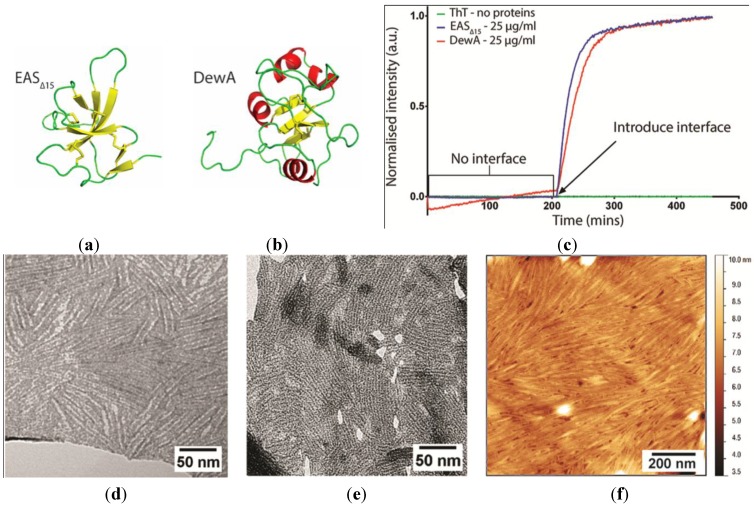
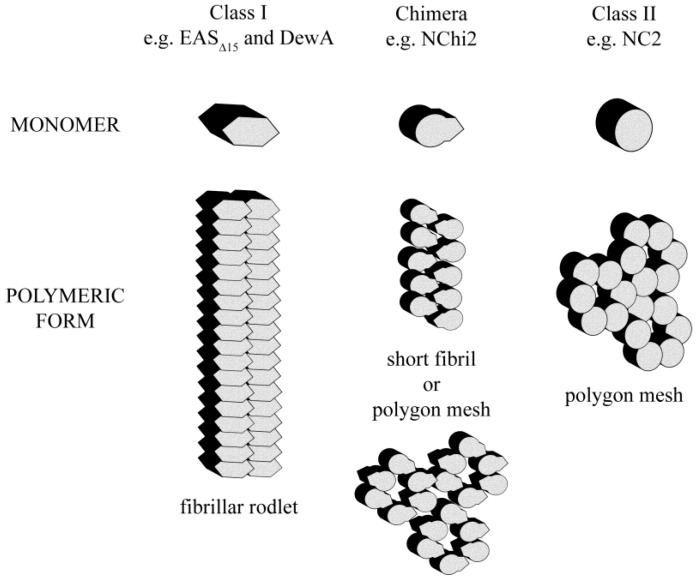
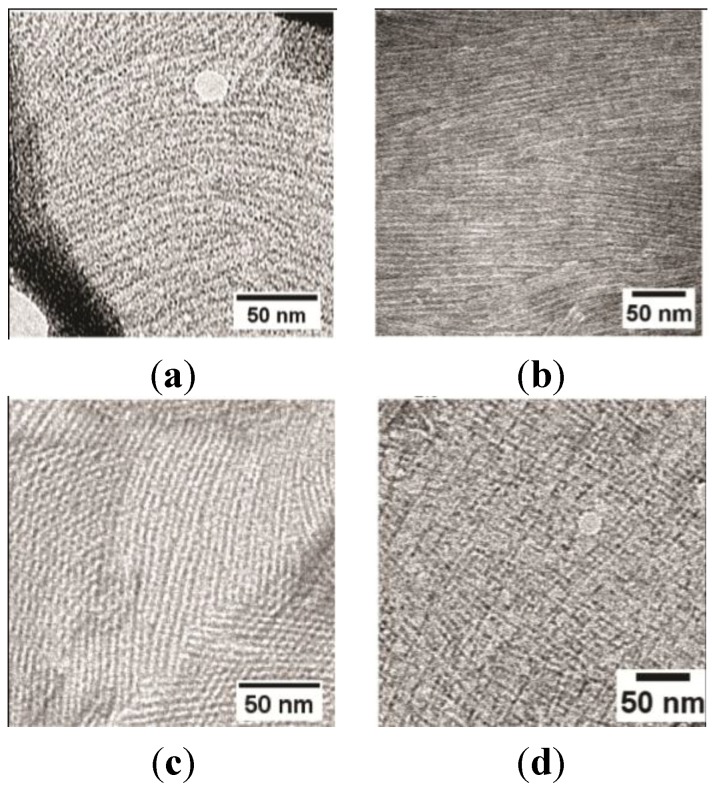
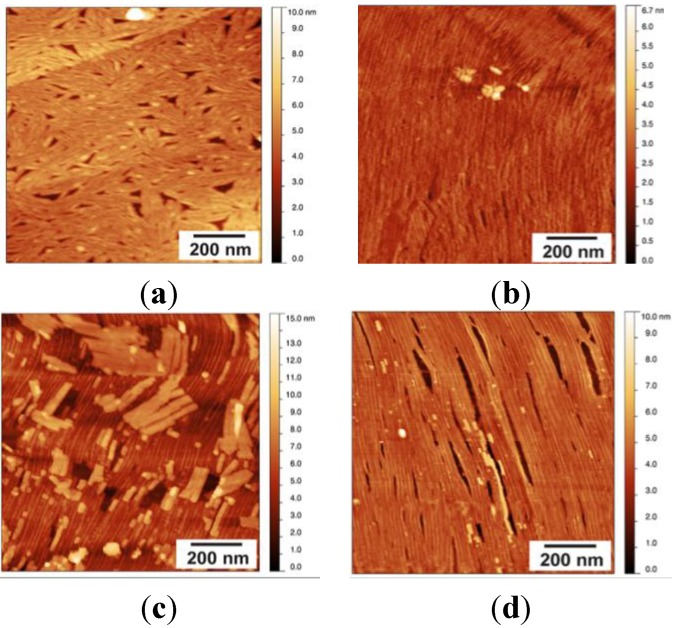
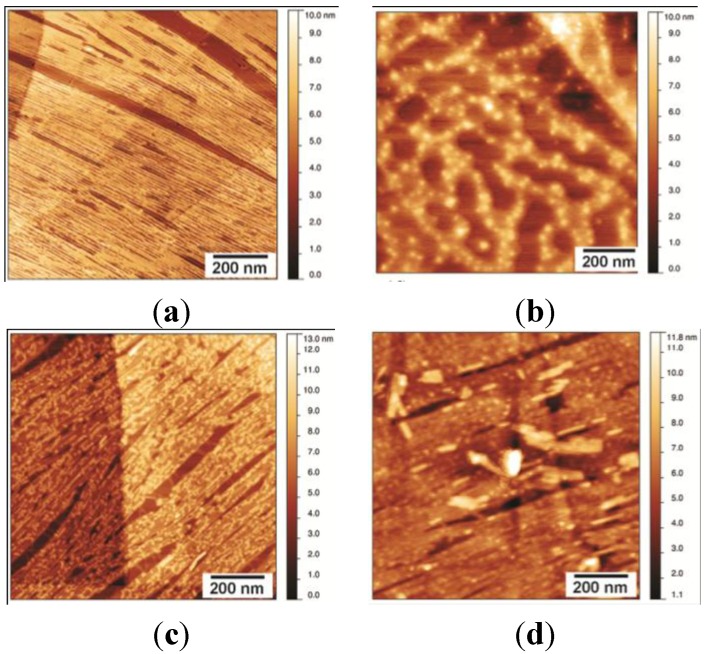
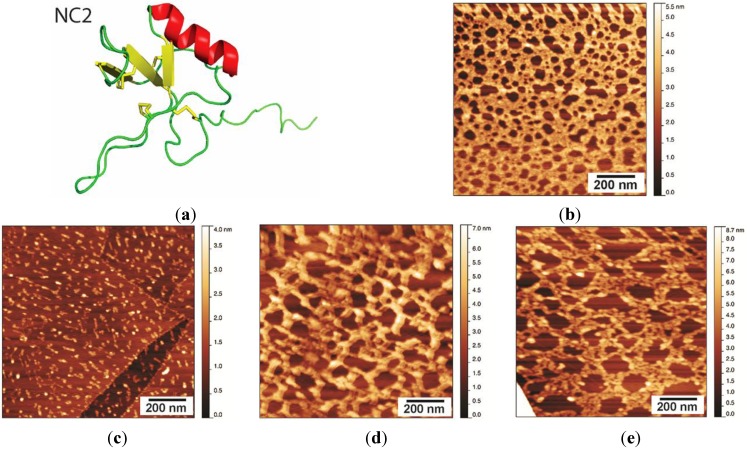
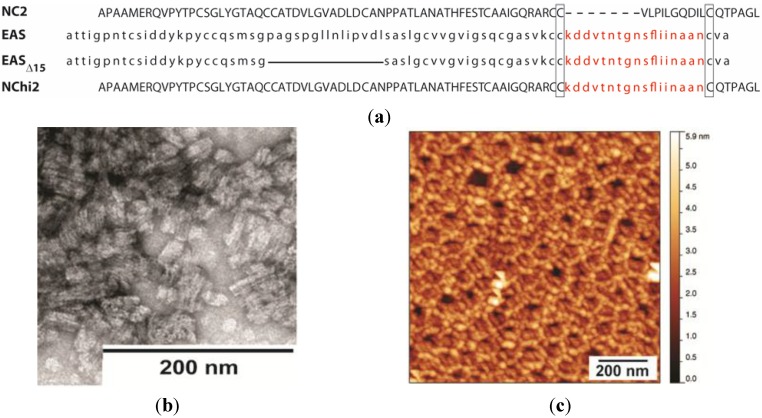
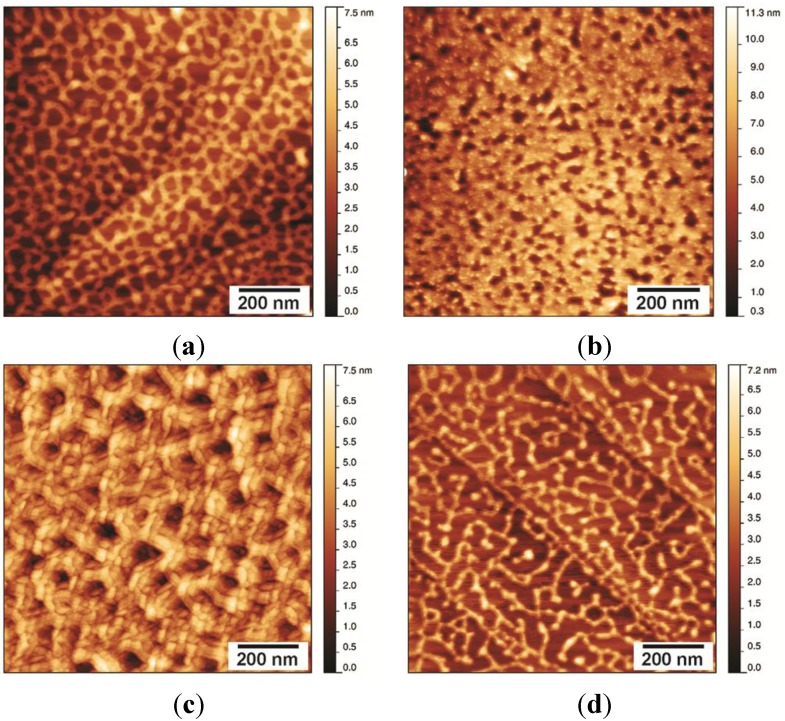
Hydrophobins are small proteins secreted by fungi and which spontaneously assemble into amphipathic layers at hydrophilic-hydrophobic interfaces. We have examined the self-assembly of the Class I hydrophobins EAS and DewA, the Class II hydrophobin NC2 and an engineered chimeric hydrophobin. These Class I hydrophobins form layers composed of laterally associated fibrils with an underlying amyloid structure. These two Class I hydrophobins, despite showing significant conformational differences in solution, self-assemble to form fibrillar layers with very similar structures and require a hydrophilic-hydrophobic interface to trigger self-assembly. Addition of additives that influence surface tension can be used to manipulate the fine structure of the protein films. The Class II hydrophobin NC2 forms a mesh-like protein network and the engineered chimeric hydrophobin displays two multimeric forms, depending on assembly conditions. When formed on a graphite surface, the fibrillar EAS layers are resistant to alcohol, acid and basic washes. In contrast, the NC2 Class II monolayers are dissociated by alcohol treatment but are relatively stable towards acid and base washes. The engineered chimeric Class I/II hydrophobin shows increased stability towards alcohol and acid and base washes. Self-assembled hydrophobin films may have extensive applications in biotechnology where biocompatible; amphipathic coatings facilitate the functionalization of nanomaterials.
疏水蛋白是由真菌分泌的小蛋白,能在亲水-疏水界面自发组装成两亲层。我们研究了I类疏水蛋白EAS和DewA、II类疏水蛋白NC2以及一种工程化嵌合疏水蛋白的自组装过程。这些I类疏水蛋白形成由横向关联的原纤维组成的层,具有潜在的淀粉样结构。这两种I类疏水蛋白尽管在溶液中表现出显著的构象差异,但自组装形成结构非常相似的纤维层,并且需要亲水-疏水界面来触发自组装。添加影响表面张力的添加剂可用于操纵蛋白质膜的精细结构。II类疏水蛋白NC2形成网状蛋白质网络,而工程化嵌合疏水蛋白根据组装条件呈现两种多聚体形式。当在石墨表面形成时,纤维状的EAS层对酒精、酸和碱洗涤具有抗性。相比之下,II类NC2单层被酒精处理解离,但对酸和碱洗涤相对稳定。工程化的I/II类嵌合疏水蛋白对酒精、酸和碱洗涤表现出更高的稳定性。自组装的疏水蛋白膜在生物技术领域可能有广泛应用,在该领域生物相容性的两亲性涂层有助于纳米材料的功能化。