Vehlow David, Schmidt Romy, Gebert Annett, Siebert Maximilian, Lips Katrin Susanne, Müller Martin
Department of Polyelectrolytes and Dispersions, Leibniz Institute of Polymer Research Dresden, Hohe Strasse 6, Dresden D-01069, Germany.
Department of Chemistry and Food Chemistry, Technical University Dresden, Mommsenstrasse 4, Dresden D-01062, Germany.
Nanomaterials (Basel). 2016 Mar 22;6(3):53. doi: 10.3390/nano6030053.
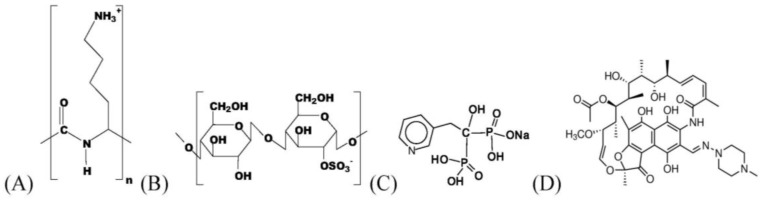
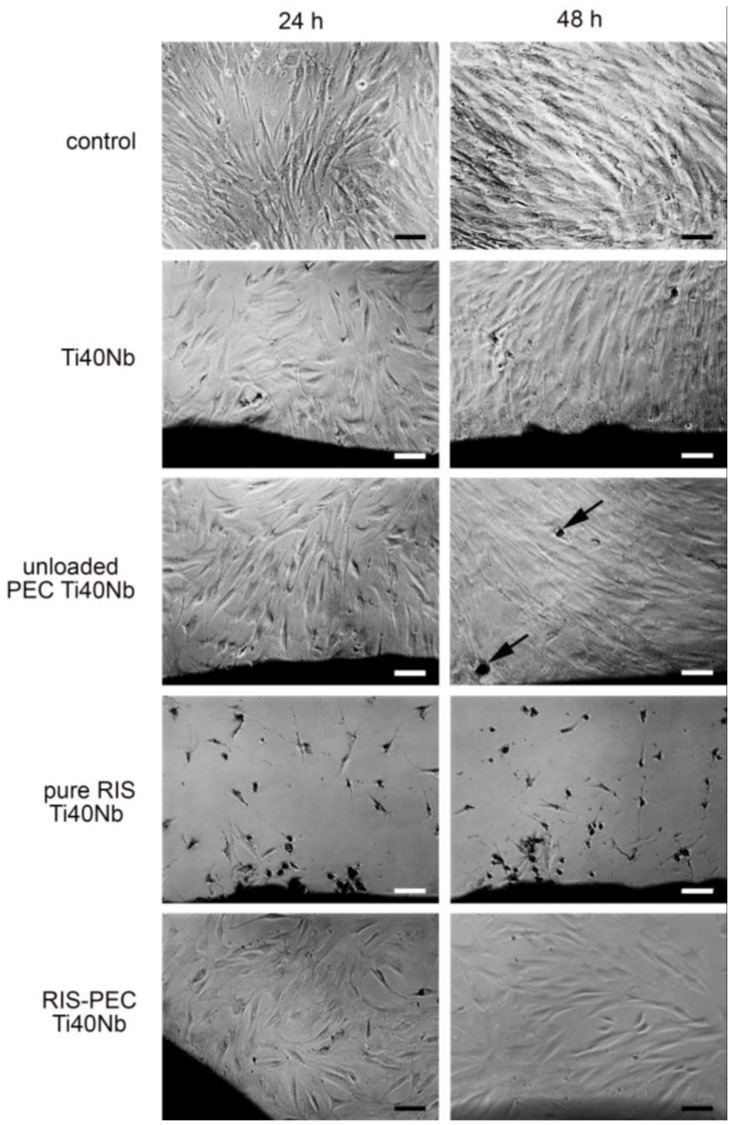
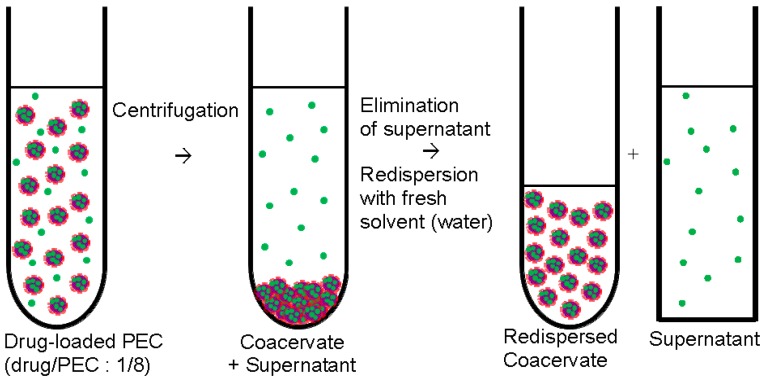
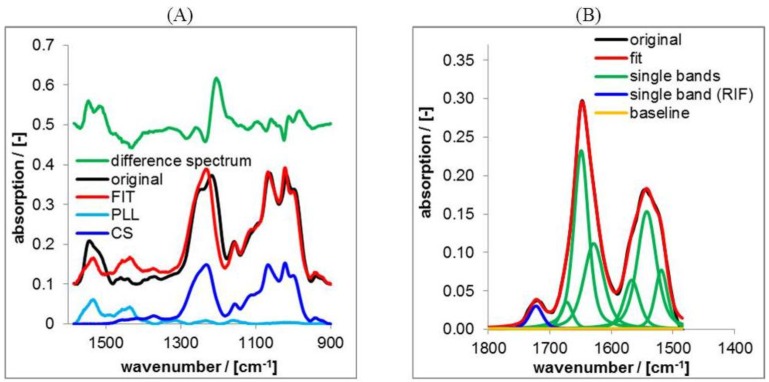
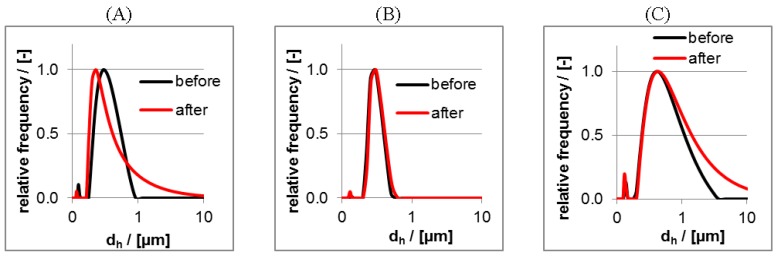
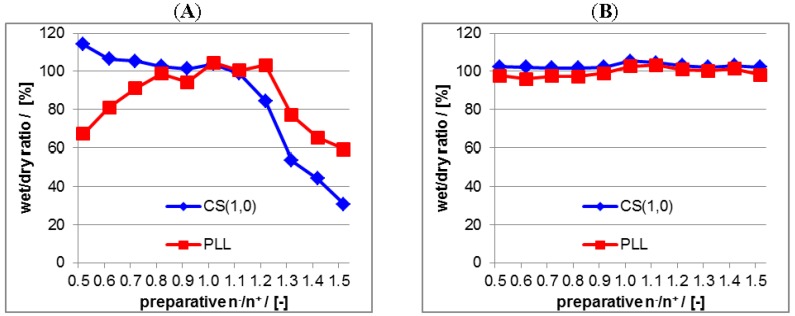
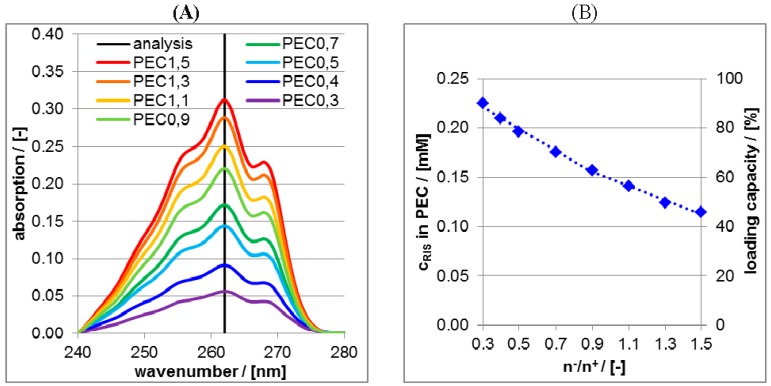
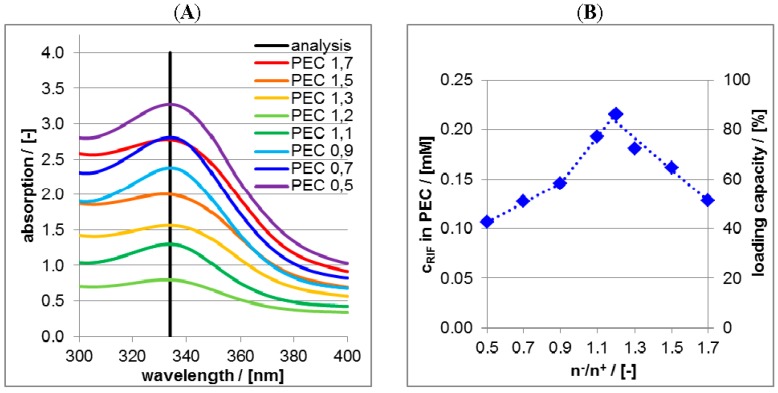
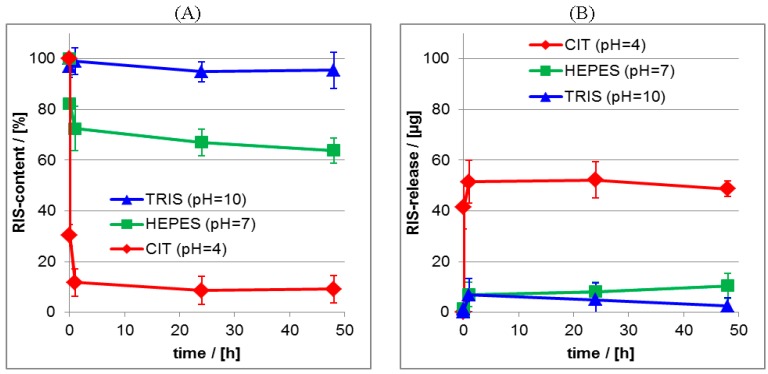
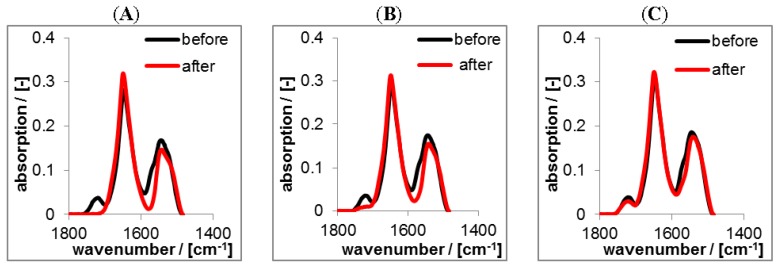
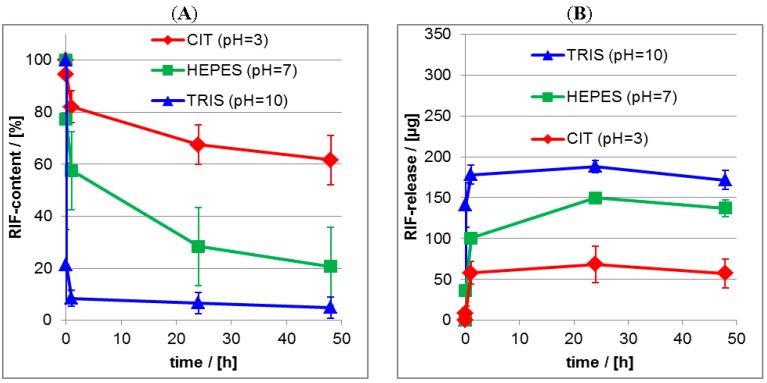
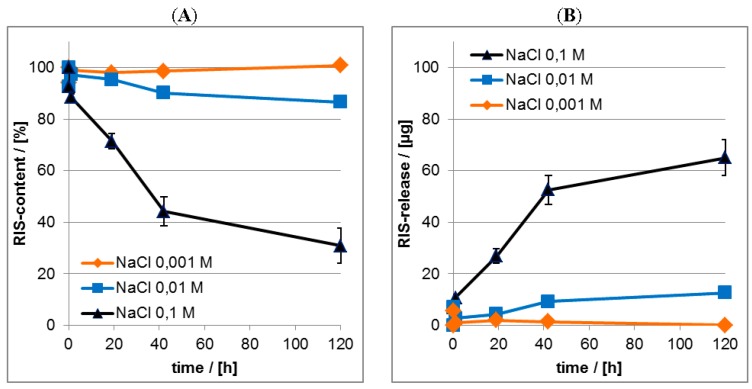
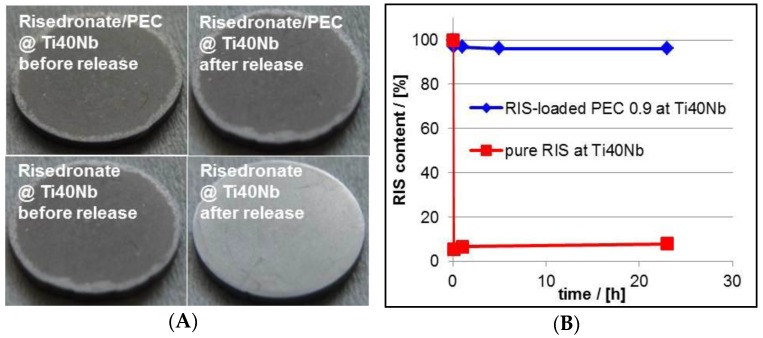
An improved interfacial drug delivery system (DDS) based on polyelectrolyte complex (PEC) coatings with controlled drug loading and improved release performance was elaborated. The cationic homopolypeptide poly(l-lysine) (PLL) was complexed with a mixture of two cellulose sulfates (CS) of low and high degree of substitution, so that the CS and PLL solution have around equal molar charged units. As drugs the antibiotic rifampicin (RIF) and the bisphosphonate risedronate (RIS) were integrated. As an important advantage over previous PEC systems this one can be centrifuged, the supernatant discarded, the dense pellet phase (coacervate) separated, and again redispersed in fresh water phase. This behavior has three benefits: (i) Access to the loading capacity of the drug, since the concentration of the free drug can be measured by spectroscopy; (ii) lower initial burst and higher residual amount of drug due to removal of unbound drug and (iii) complete adhesive stability due to the removal of polyelectrolytes (PEL) excess component. It was found that the pH value and ionic strength strongly affected drug content and release of RIS and RIF. At the clinically relevant implant material (Ti40Nb) similar PEC adhesive and drug release properties compared to the model substrate were found. Unloaded PEC coatings at Ti40Nb showed a similar number and morphology of above cultivated human mesenchymal stem cells (hMSC) compared to uncoated Ti40Nb and resulted in considerable production of bone mineral. RIS loaded PEC coatings showed similar effects after 24 h but resulted in reduced number and unhealthy appearance of hMSC after 48 h due to cell toxicity of RIS.
阐述了一种基于聚电解质复合物(PEC)涂层的改进型界面药物递送系统(DDS),该系统具有可控的药物负载量和改善的释放性能。阳离子均聚物聚(L-赖氨酸)(PLL)与两种不同取代度的纤维素硫酸盐(CS)混合物复合,使CS和PLL溶液具有大致相等的摩尔电荷单位。将抗生素利福平(RIF)和双膦酸盐利塞膦酸盐(RIS)作为药物整合其中。与先前的PEC系统相比,该系统的一个重要优势是可以进行离心,弃去上清液,分离出致密的沉淀相(凝聚层),并再次重新分散在新鲜水相中。这种行为有三个好处:(i)能够了解药物的负载能力,因为游离药物的浓度可以通过光谱法测量;(ii)由于去除了未结合的药物,初始突释较低且药物残留量较高;(iii)由于去除了聚电解质(PEL)过量成分,具有完全的粘附稳定性。研究发现pH值和离子强度强烈影响RIS和RIF的药物含量和释放。在临床相关的植入材料(Ti40Nb)上,发现其PEC粘附和药物释放特性与模型底物相似。与未涂层的Ti40Nb相比,Ti40Nb上未负载药物的PEC涂层在培养的人间充质干细胞(hMSC)数量和形态上相似,并导致大量骨矿物质生成。负载RIS的PEC涂层在24小时后显示出类似的效果,但由于RIS的细胞毒性,在48小时后导致hMSC数量减少且外观不健康。