Yeh Chun, Huang Hsien-Hao, Chen Shu-Chun, Chen Tung-Fang, Ser Kong-Han, Chen Chih-Yen
Division of Gastroenterology, Department of Internal Medicine, Cheng-Hsin General Hospital, Taipei, Taiwan.
Department of Emergency Medicine, Taipei Veterans General Hospital, Taipei, Taiwan.
PeerJ. 2017 Mar 21;5:e3090. doi: 10.7717/peerj.3090. eCollection 2017.
The promising postsurgical weight loss and remission of type 2 diabetes (T2D) from bariatric surgery can be attributed to modified eating physiology after surgical procedures. We sought to investigate the changes in the parameters of consumption behaviors and appetite sensations induced by a mixed meal tolerance test, and to correlate these alterations with age, body mass index, C-peptide levels, and duration of T2D 1 year after bariatric surgery.
A total of 16 obese patients with T2D who underwent mini-gastric bypass (GB) and 16 patients who underwent sleeve gastrectomy (SG) were enrolled in this study and evaluated using a mixed meal tolerance test one year after surgery. A visual analogue scale was used for scoring appetite sensation at different time points. The area under the curve (AUC) and the incremental or decremental AUC (ΔAUC) were compared between the two groups.
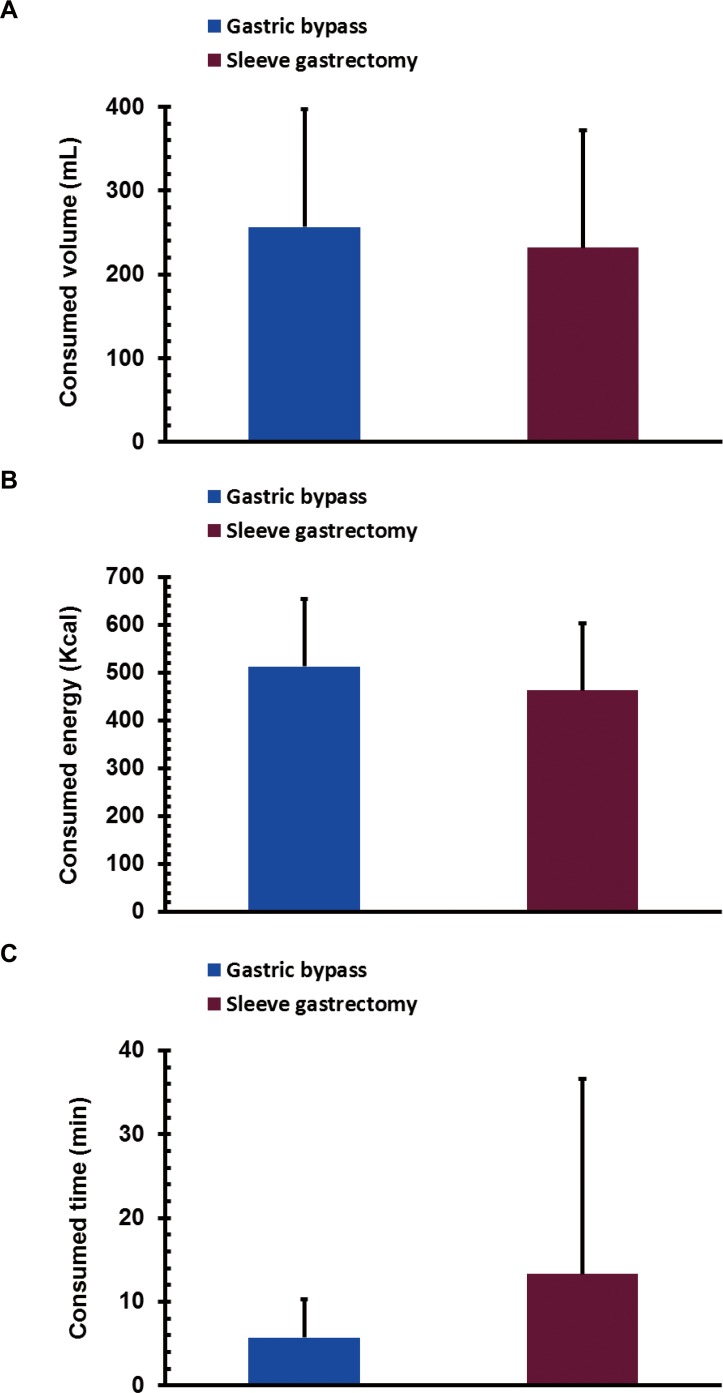
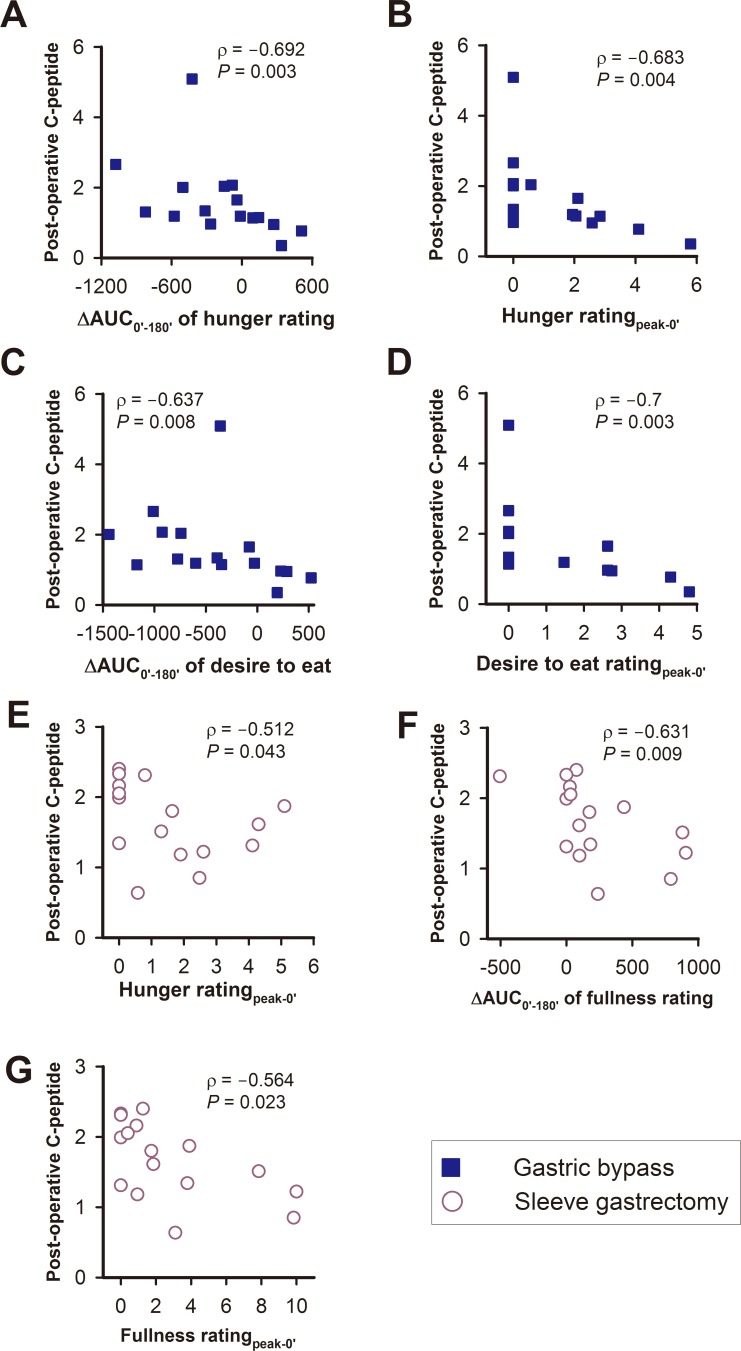
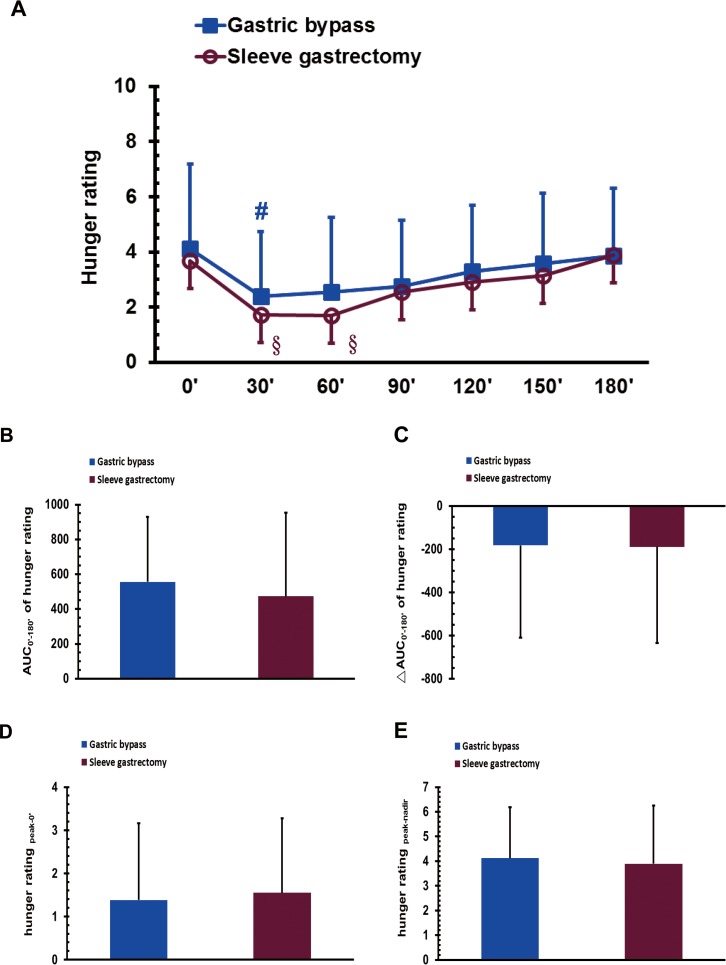
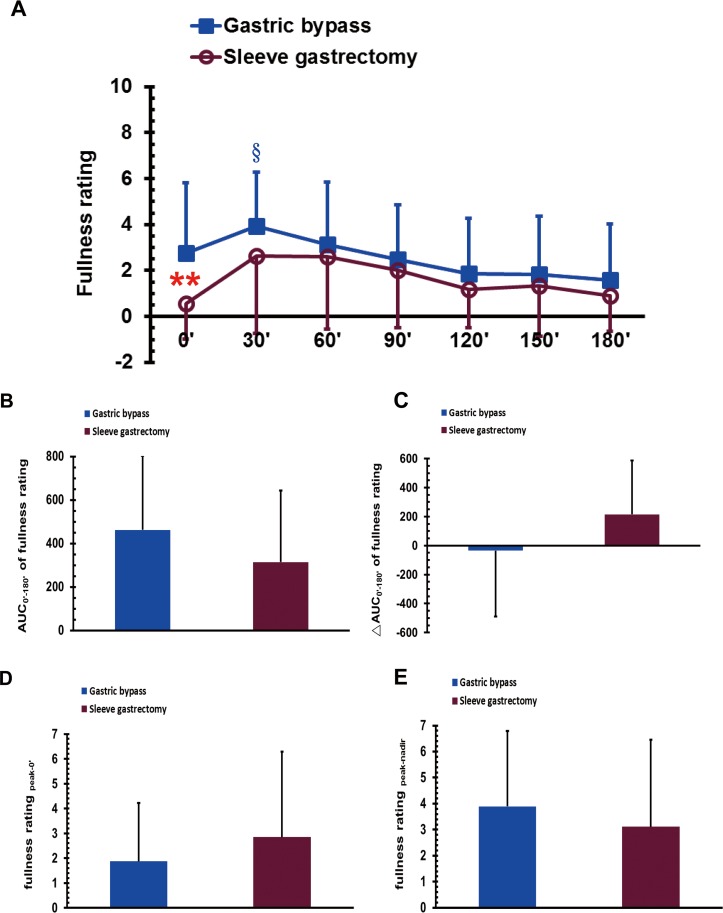
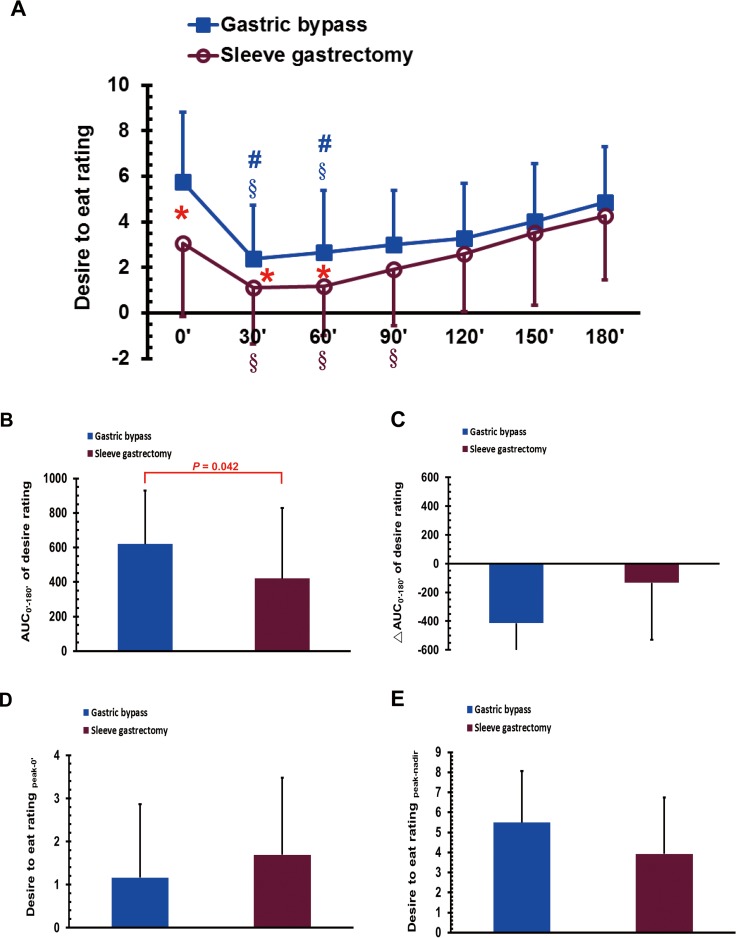
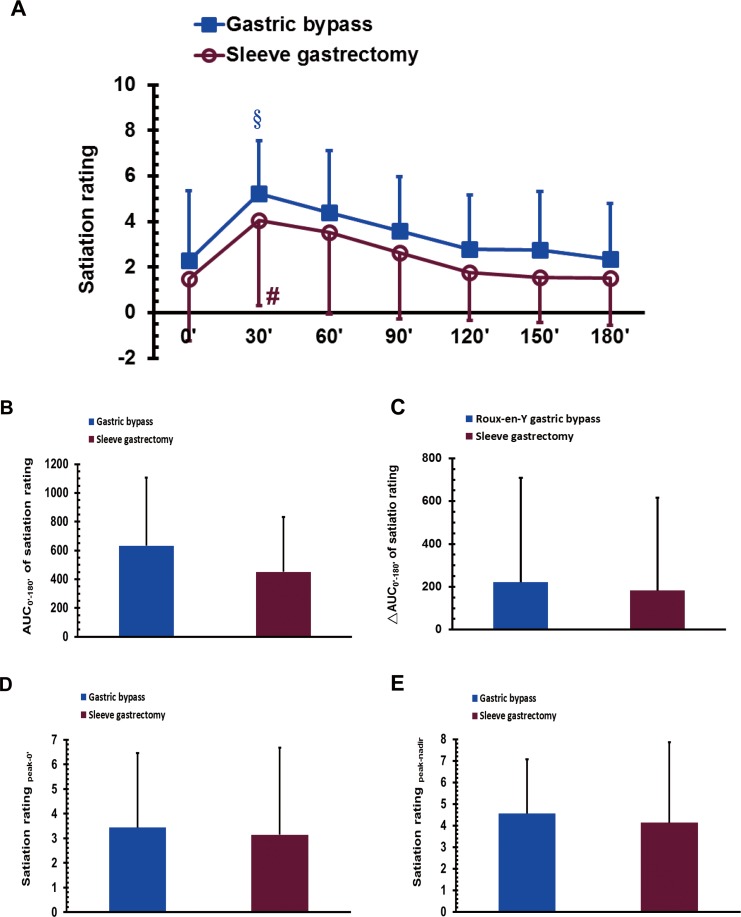
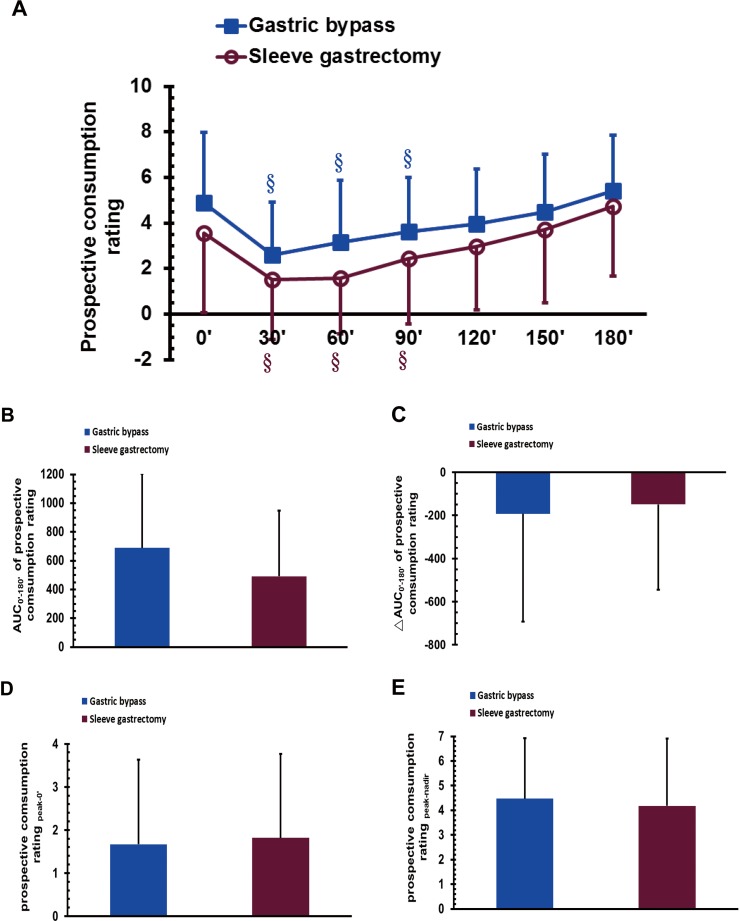
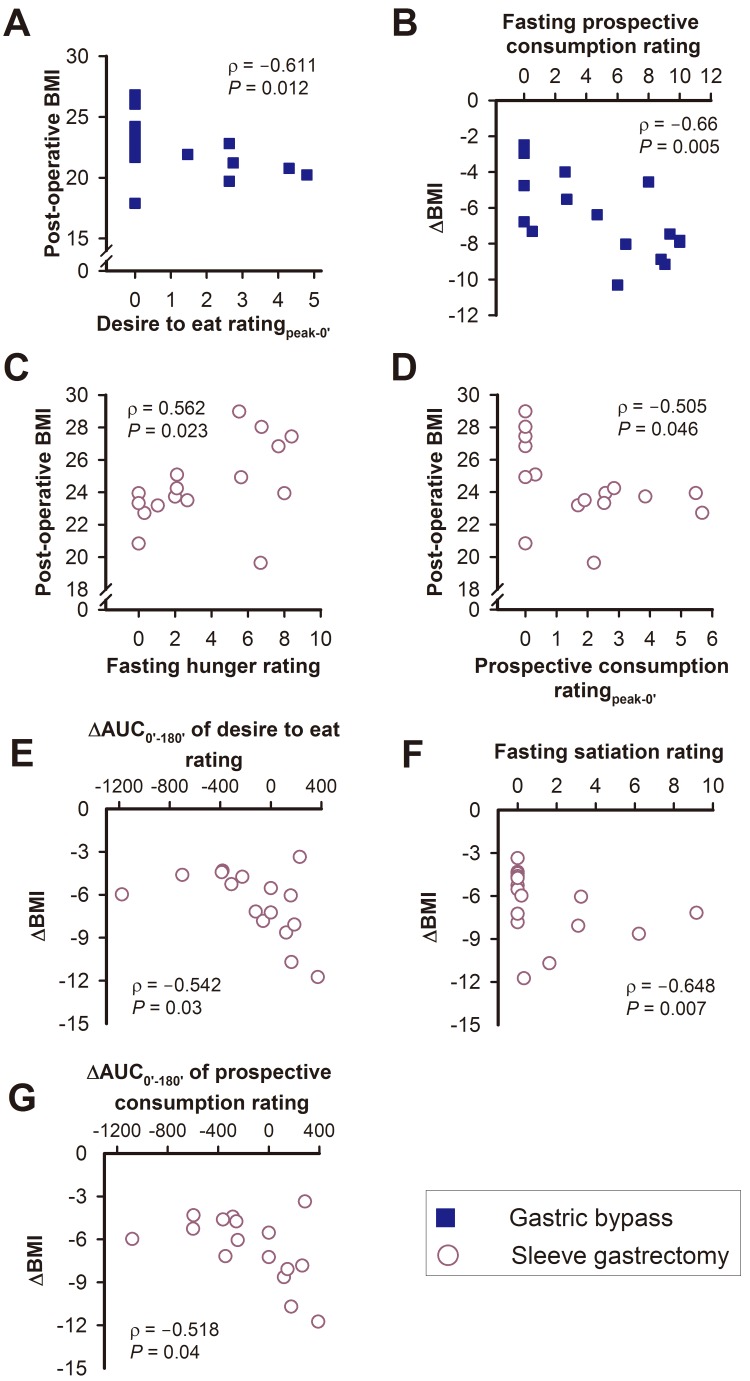
One year after surgery, a decreasing trend in the consumption time was observed in the GB group compared to the SG group, while the duration of T2D before surgery was negatively correlated with the post-operative consumed time in those after GB. Patients who underwent GB had significantly higher fasting scores for fullness and desire to eat, higher AUC of scores for desire to eat, as well as more effective post-meal suppression of hunger and desire to eat compared with those undergoing SG one year after surgery. Post-operative C-peptide levels were negatively correlated with ΔAUC for hunger and ΔAUC for desire to eat in the GB group, while negatively correlated with ΔAUC for fullness in the SG group.
Patients with T2D after either GB or SG exhibit distinct nutrient-induced consumption behaviors and appetite sensations post-operatively, which may account for the differential effects on weight loss and glycemic control after different surgery.
减肥手术后显著的体重减轻及2型糖尿病(T2D)缓解可归因于手术操作后饮食生理学的改变。我们试图研究混合餐耐量试验诱导的进食行为参数和食欲感觉的变化,并将这些改变与减肥手术后1年的年龄、体重指数、C肽水平及T2D病程相关联。
本研究纳入了16例行迷你胃旁路术(GB)的肥胖T2D患者和16例行袖状胃切除术(SG)的患者,并在术后1年使用混合餐耐量试验进行评估。采用视觉模拟量表在不同时间点对食欲感觉进行评分。比较两组的曲线下面积(AUC)以及增量或减量AUC(ΔAUC)。
术后1年,与SG组相比,GB组的进食时间呈下降趋势,而GB组术前T2D病程与术后进食时间呈负相关。与术后1年的SG组患者相比,接受GB手术的患者空腹时的饱腹感和进食欲望评分显著更高,进食欲望评分的AUC更高,且餐后对饥饿和进食欲望的抑制更有效。术后C肽水平在GB组与饥饿的ΔAUC和进食欲望的ΔAUC呈负相关,而在SG组与饱腹感的ΔAUC呈负相关。
GB或SG术后的T2D患者术后表现出不同的营养诱导进食行为和食欲感觉,这可能解释了不同手术对体重减轻和血糖控制的不同影响。