Meesilpavikkai Kornvalee, Dik Willem A, Schrijver Benjamin, Nagtzaam Nicole M A, van Rijswijk Angelique, Driessen Gertjan J, van der Spek Peter J, van Hagen P Martin, Dalm Virgil A S H
Department of Immunology, Erasmus University Medical Center, Rotterdam, Netherlands; Department of Internal Medicine, Division of Clinical Immunology, Erasmus University Medical Center, Rotterdam, Netherlands; Faculty of Medicine, Department of Microbiology, Chulalongkorn University, Bangkok, Thailand.
Department of Immunology, Erasmus University Medical Center, Rotterdam, Netherlands; Laboratory Medical Immunology, Erasmus University Medical Center, Rotterdam, Netherlands.
Front Immunol. 2017 Mar 13;8:274. doi: 10.3389/fimmu.2017.00274. eCollection 2017.
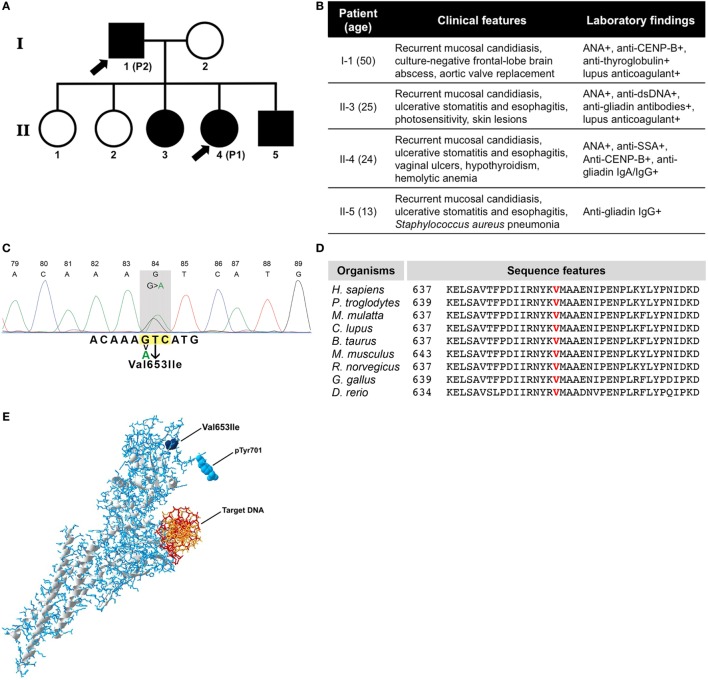
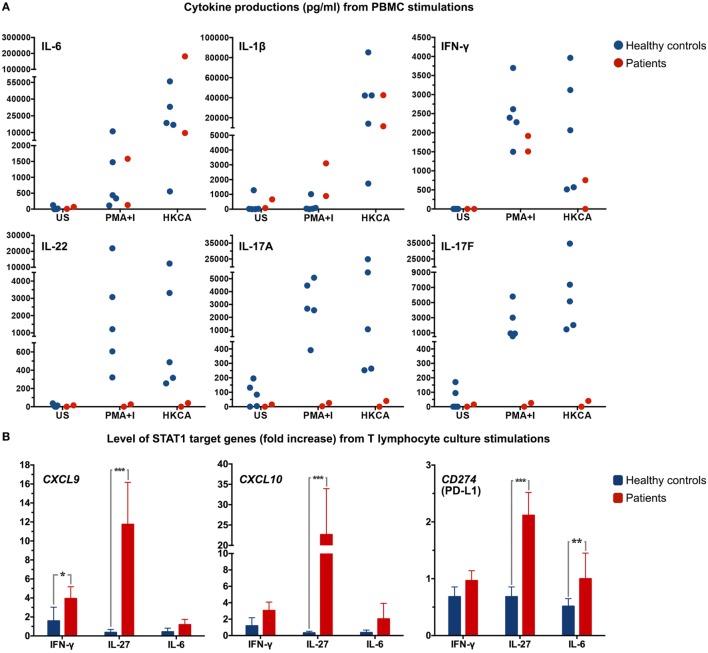
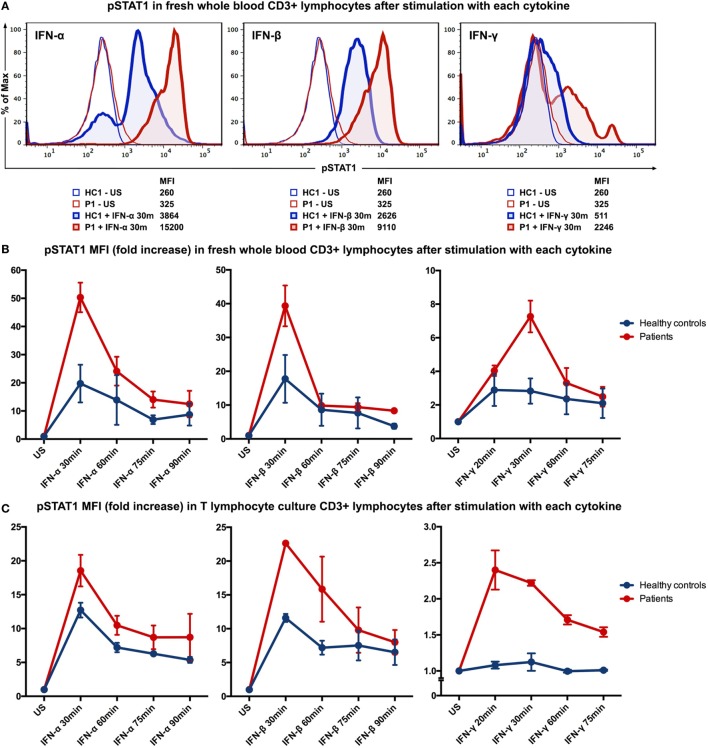
Chronic mucocutaneous candidiasis (CMC) is a primary immunodeficiency characterized by persistent or recurrent skin and mucosal surface infections with species. Different gene mutations leading to CMC have been identified. These include various heterozygous gain-of-function (GOF) mutations in signal transducer and activator of transcription 1 () that are not only associated with infections but also with autoimmune manifestations. Recently, two GOF mutations involving the Src homology 2 (SH2) domain have been reported, while so far, over 50 mutations have been described mainly in the coiled coil and the DNA-binding domains. Here, we present two members of a Dutch family with a novel mutation located in the SH2 domain. T lymphocytes of these patients revealed STAT1 hyperphosphorylation and higher expression of STAT1 target genes. The clinical picture of CMC in our patients could be explained by diminished production of interleukin (IL)-17 and IL-22, cytokines important in the protection against fungal infections.
慢性黏膜皮肤念珠菌病(CMC)是一种原发性免疫缺陷病,其特征为皮肤和黏膜表面持续或反复感染念珠菌属。已鉴定出导致CMC的不同基因突变。这些突变包括信号转导和转录激活因子1(STAT1)中的各种杂合功能获得性(GOF)突变,这些突变不仅与感染有关,还与自身免疫表现有关。最近,报道了两个涉及Src同源2(SH2)结构域的STAT1 GOF突变,而迄今为止,已描述了50多个主要位于卷曲螺旋和DNA结合结构域的突变。在此,我们报告一个荷兰家族的两名成员,他们携带位于SH2结构域的新型STAT1突变。这些患者的T淋巴细胞显示STAT1过度磷酸化和STAT1靶基因的高表达。我们患者中CMC的临床表现可以通过白细胞介素(IL)-17和IL-22产生减少来解释,这两种细胞因子在预防真菌感染中起重要作用。