McCabe Kyle, Henderson Keith, Pantinople Jess, Richards Hazel L, Milne Nick
School of Anatomy, Physiology and Human Biology, University of Western Australia , Perth , Western Australia , Australia.
PeerJ. 2017 Mar 22;5:e3100. doi: 10.7717/peerj.3100. eCollection 2017.
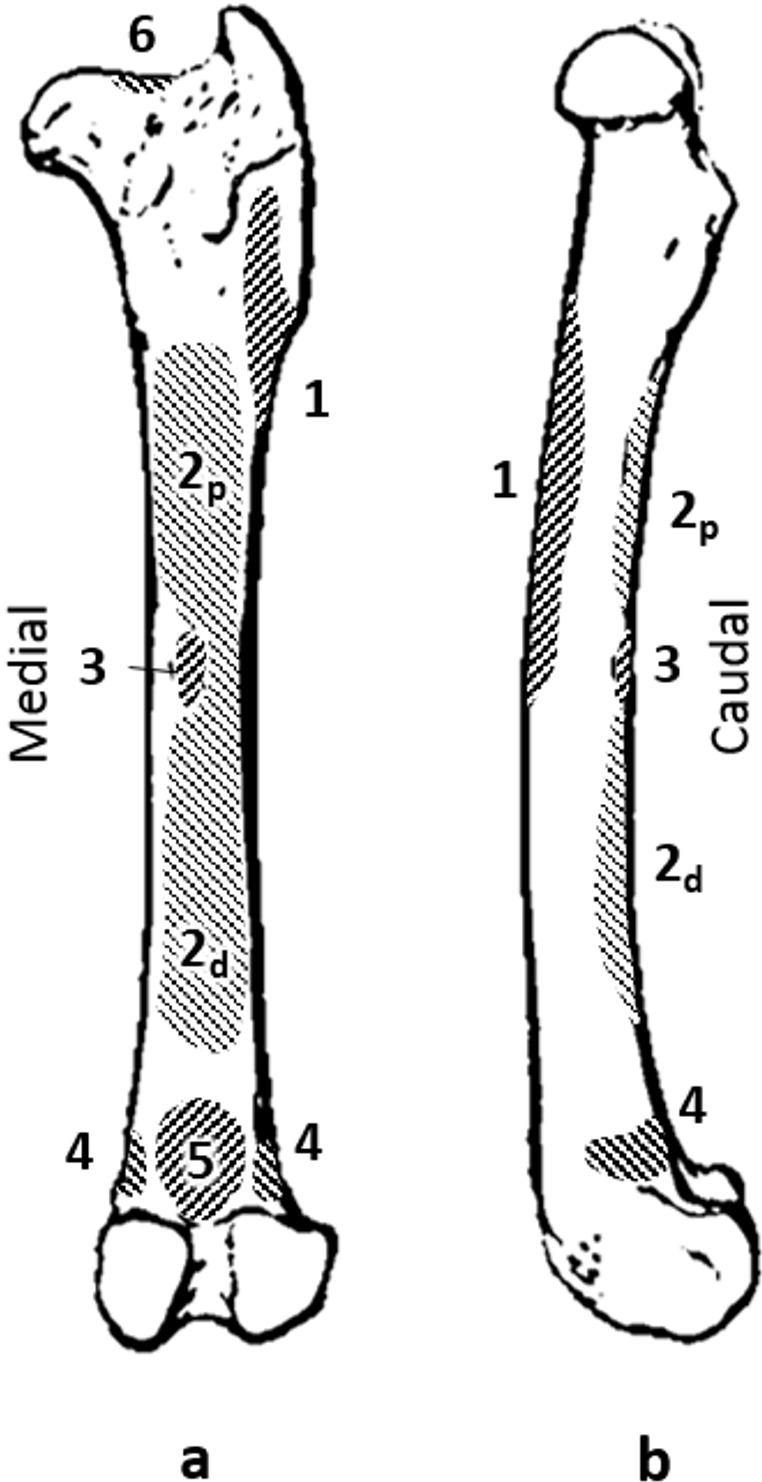
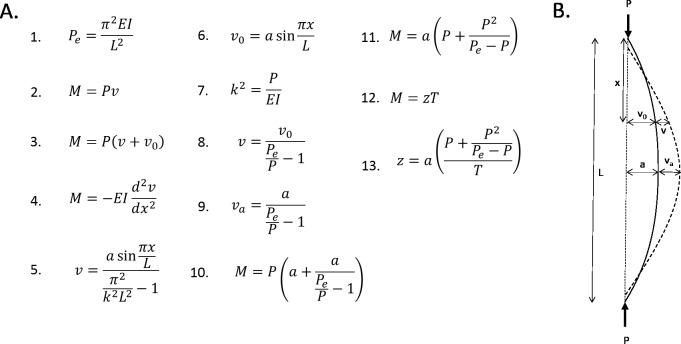
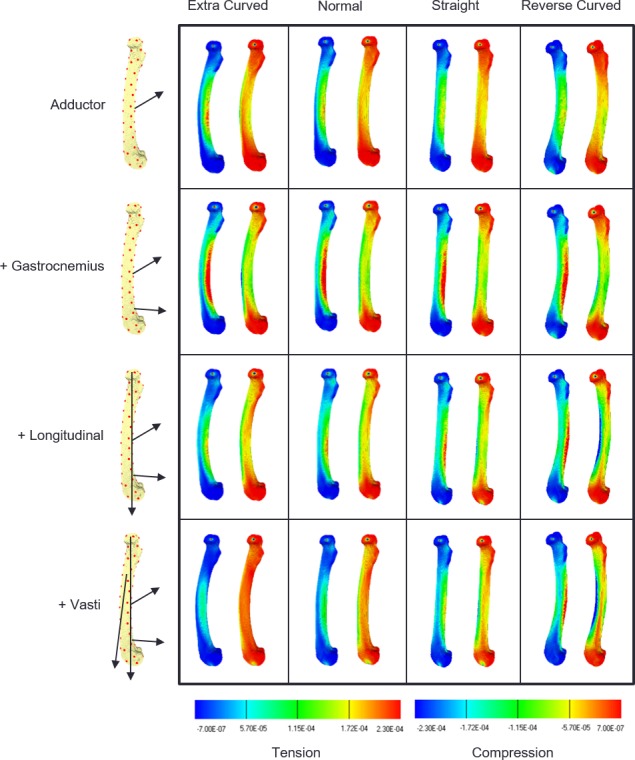
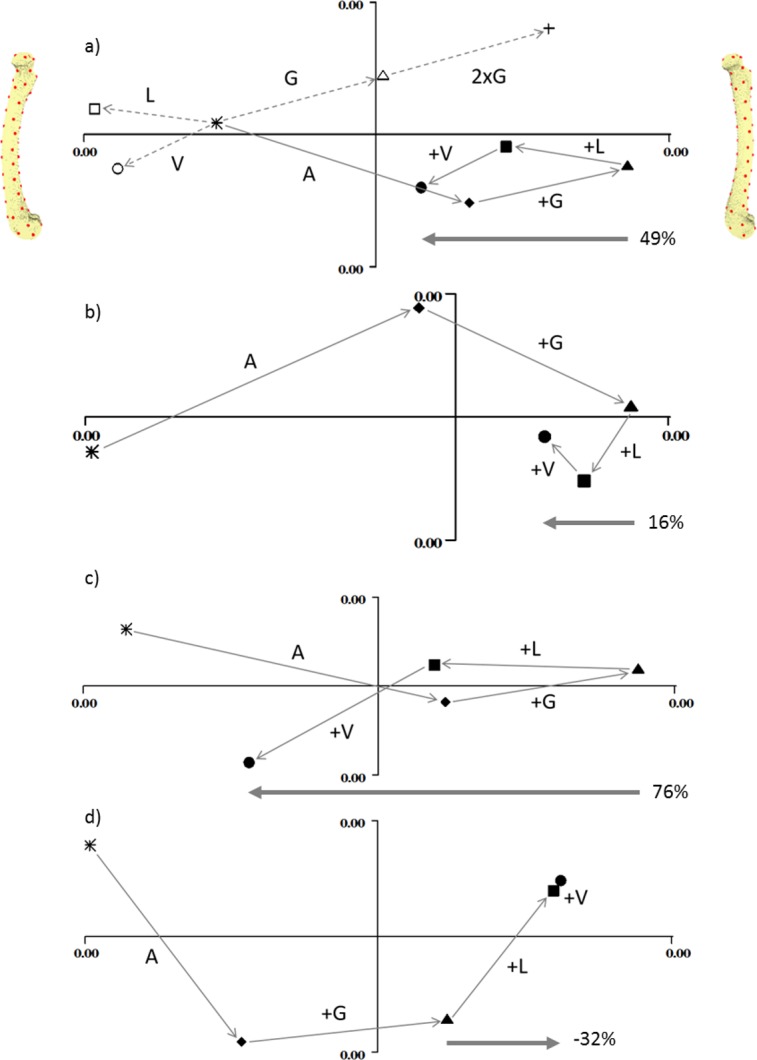
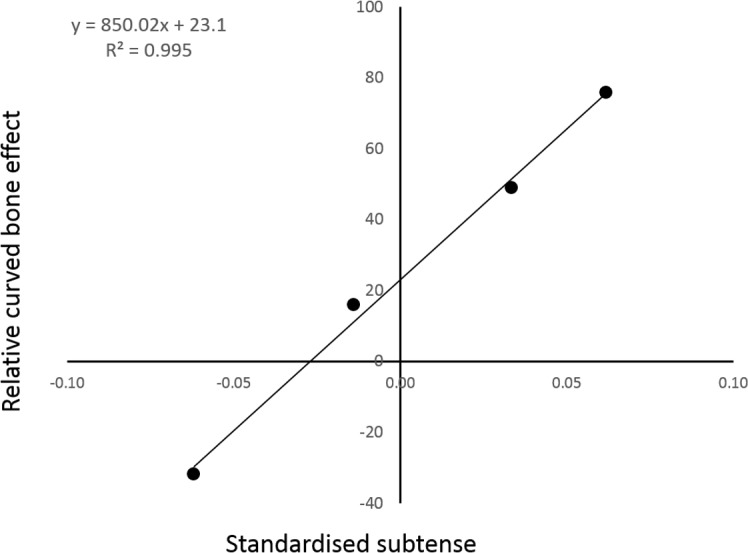
This study explores how curvature in the quokka femur may help to reduce bending strain during locomotion. The quokka is a small wallaby, but the curvature of the femur and the muscles active during stance phase are similar to most quadrupedal mammals. Our hypothesis is that the action of hip extensor and ankle plantarflexor muscles during stance phase place cranial bending strains that act to reduce the caudal curvature of the femur. Knee extensors and biarticular muscles that span the femur longitudinally create caudal bending strains in the caudally curved (concave caudal side) bone. These opposing strains can balance each other and result in less strain on the bone. We test this idea by comparing the performance of a normally curved finite element model of the quokka femur to a digitally straightened version of the same bone. The normally curved model is indeed less strained than the straightened version. To further examine the relationship between curvature and the strains in the femoral models, we also tested an extra-curved and a reverse-curved version with the same loads. There appears to be a linear relationship between the curvature and the strains experienced by the models. These results demonstrate that longitudinal curvature in bones may be a manipulable mechanism whereby bone can induce a strain gradient to oppose strains induced by habitual loading.
本研究探讨了短尾矮袋鼠股骨的曲率如何有助于在运动过程中减少弯曲应变。短尾矮袋鼠是一种小型沙袋鼠,但其股骨的曲率以及站立阶段活跃的肌肉与大多数四足哺乳动物相似。我们的假设是,站立阶段髋伸肌和踝跖屈肌的作用会产生颅侧弯曲应变,这些应变会减少股骨的尾侧曲率。膝关节伸肌和纵向跨越股骨的双关节肌肉会在尾侧弯曲(尾侧为凹面)的骨骼中产生尾侧弯曲应变。这些相反的应变可以相互平衡,从而减少骨骼上的应变。我们通过比较短尾矮袋鼠股骨正常弯曲的有限元模型与同一骨骼的数字拉直版本的性能来验证这一想法。正常弯曲的模型确实比拉直版本的应变更小。为了进一步研究曲率与股骨模型中应变之间的关系,我们还测试了在相同载荷下的超弯曲版本和反向弯曲版本。模型所经历的曲率与应变之间似乎存在线性关系。这些结果表明,骨骼中的纵向曲率可能是一种可操控的机制,通过这种机制,骨骼可以诱导应变梯度来对抗习惯性负荷引起的应变。