Port Gary C, Cusumano Zachary T, Tumminello Paul R, Caparon Michael G
Department of Molecular Microbiology, Washington University School of Medicine, Saint Louis, Missouri, USA.
Department of Molecular Microbiology, Washington University School of Medicine, Saint Louis, Missouri, USA
mBio. 2017 Mar 28;8(2):e00288-17. doi: 10.1128/mBio.00288-17.
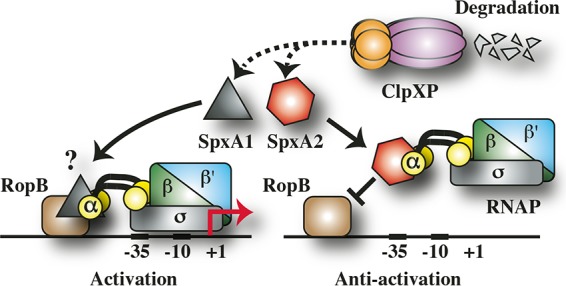
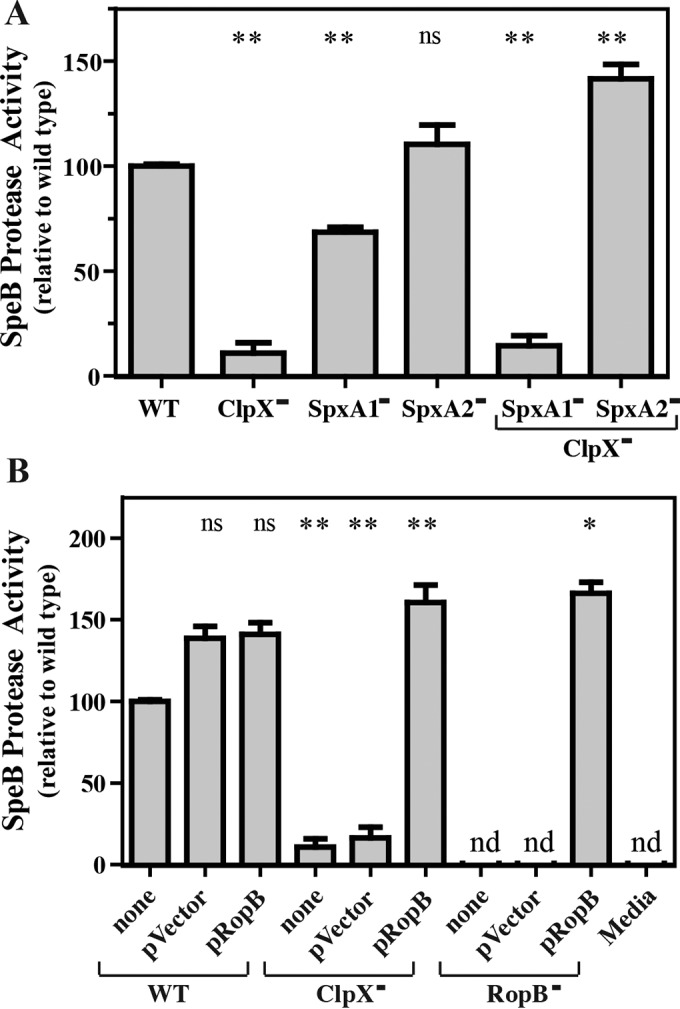
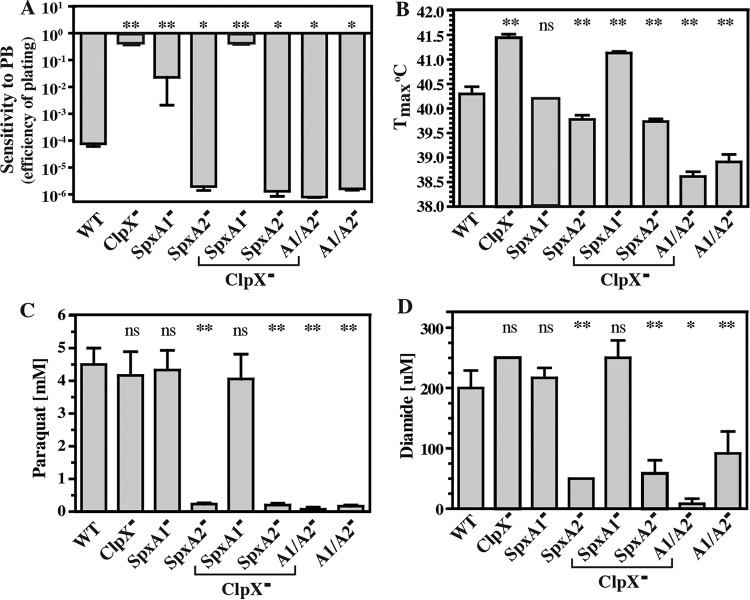
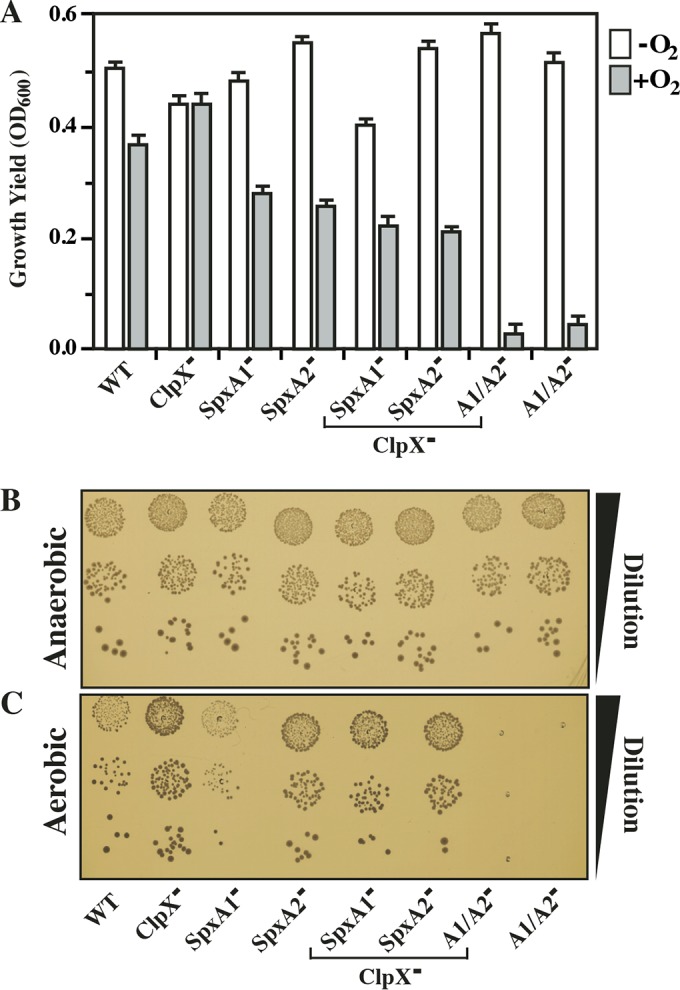
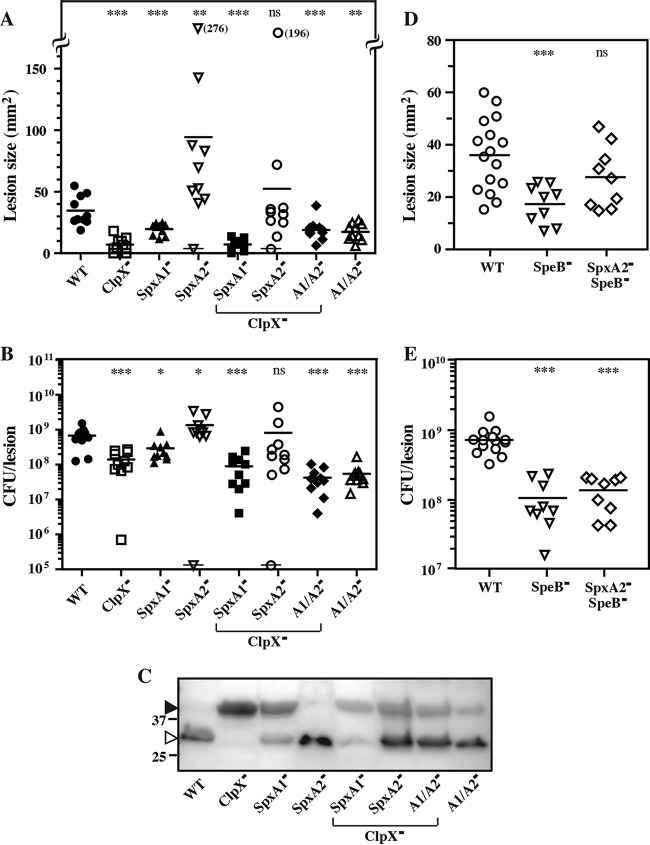
SpxA is a unique transcriptional regulator highly conserved among members of the phylum that binds RNA polymerase and can act as an antiactivator. Why some members have two highly similar SpxA paralogs is not understood. Here, we show that the SpxA paralogs of the pathogen , SpxA1 and SpxA2, act coordinately to regulate virulence by fine-tuning toxin expression and stress resistance. Construction and analysis of mutants revealed that SpxA1 mutants were defective for growth under aerobic conditions, while SpxA2 mutants had severely attenuated responses to multiple stresses, including thermal and oxidative stresses. SpxA1 mutants had enhanced resistance to the cationic antimicrobial molecule polymyxin B, while SpxA2 mutants were more sensitive. In a murine model of soft tissue infection, a SpxA1 mutant was highly attenuated. In contrast, the highly stress-sensitive SpxA2 mutant was hypervirulent, exhibiting more extensive tissue damage and a greater bacterial burden than the wild-type strain. SpxA1 attenuation was associated with reduced expression of several toxins, including the SpeB cysteine protease. In contrast, SpxA2 hypervirulence correlated with toxin overexpression and could be suppressed to wild-type levels by deletion of These data show that SpxA1 and SpxA2 have opposing roles in virulence and stress resistance, suggesting that they act coordinately to fine-tune toxin expression in response to stress. SpxA2 hypervirulence also shows that stress resistance is not always essential for pathogenesis in soft tissue. For many pathogens, it is generally assumed that stress resistance is essential for pathogenesis. For , environmental stress is also used as a signal to alter toxin expression. The amount of stress likely informs the bacterium of the strength of the host's defense response, allowing it to adjust its toxin expression to produce the ideal amount of tissue damage, balancing between too little damage, which will result in its elimination, and too much damage, which will debilitate the host. Here we identify components of a genetic circuit involved in stress resistance and toxin expression that has a fine-tuning function in tissue damage. The circuit consists of two versions of the protein SpxA that regulate transcription and are highly similar but have opposing effects on the severity of soft tissue damage. These results will help us understand how virulence is fine-tuned in other pathogens that have two SpxA proteins.
SpxA是一种独特的转录调节因子,在该菌门成员中高度保守,它能结合RNA聚合酶并可作为一种抗激活因子。为何有些成员有两个高度相似的SpxA旁系同源物尚不清楚。在此,我们表明病原体的SpxA旁系同源物SpxA1和SpxA2通过微调毒素表达和应激抗性来协同调节毒力。突变体的构建和分析显示,SpxA1突变体在有氧条件下生长存在缺陷,而SpxA2突变体对多种应激(包括热应激和氧化应激)的反应严重减弱。SpxA1突变体对阳离子抗菌分子多粘菌素B的抗性增强,而SpxA2突变体更敏感。在软组织感染的小鼠模型中,SpxA1突变体的毒力高度减弱。相反,对压力高度敏感的SpxA2突变体具有高毒力,与野生型菌株相比,表现出更广泛的组织损伤和更高的细菌载量。SpxA1的毒力减弱与几种毒素(包括SpeB半胱氨酸蛋白酶)的表达降低有关。相反,SpxA2的高毒力与毒素过表达相关,并且通过缺失[此处原文缺失相关基因名称]可将其抑制到野生型水平。这些数据表明SpxA1和SpxA2在毒力和应激抗性方面具有相反的作用,表明它们协同作用以响应应激微调毒素表达。SpxA2的高毒力还表明应激抗性对于软组织中的发病机制并非总是必不可少的。对于许多病原体,通常认为应激抗性对于发病机制至关重要。对于[此处原文缺失相关病原体名称],环境应激也被用作改变毒素表达的信号。应激的程度可能会告知细菌宿主防御反应的强度,使其能够调整毒素表达以产生理想的组织损伤量,在损伤过少(这将导致其被清除)和损伤过多(这将使宿主衰弱)之间取得平衡。在此,我们鉴定了一个涉及应激抗性和毒素表达的遗传回路组成部分,该回路在组织损伤中具有微调功能。该回路由两种调节转录的SpxA蛋白版本组成,它们高度相似,但对软组织损伤的严重程度具有相反的影响。这些结果将有助于我们了解在具有两种SpxA蛋白的其他病原体中毒力是如何微调的。