Jackson Johanna S, Witton Jonathan, Johnson James D, Ahmed Zeshan, Ward Mark, Randall Andrew D, Hutton Michael L, Isaac John T, O'Neill Michael J, Ashby Michael C
Lilly UK, Erl Wood Manor, Windlesham, Surrey GU20 6PH, UK.
Centre for Synaptic Plasticity, School of Physiology, Pharmacology and Neuroscience, University of Bristol, Biomedical Sciences Building, University Walk, Bristol BS8 1TD, UK.
Cell Rep. 2017 Mar 28;18(13):3063-3068. doi: 10.1016/j.celrep.2017.03.013.
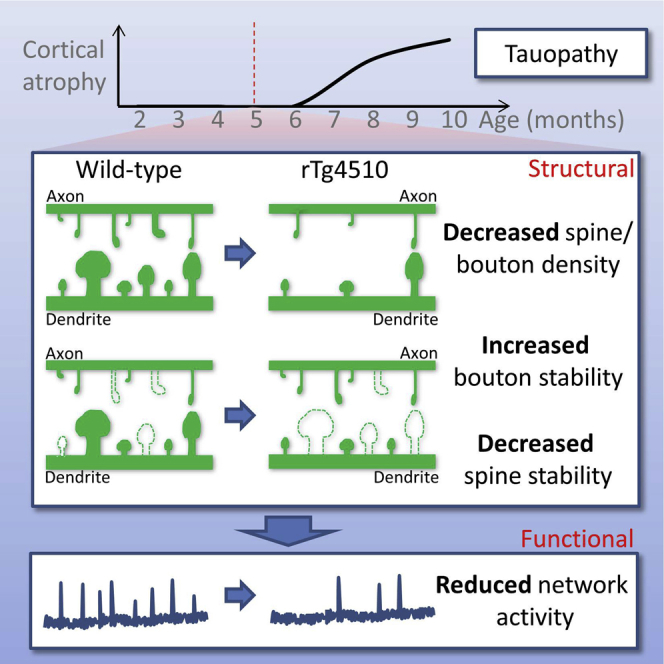
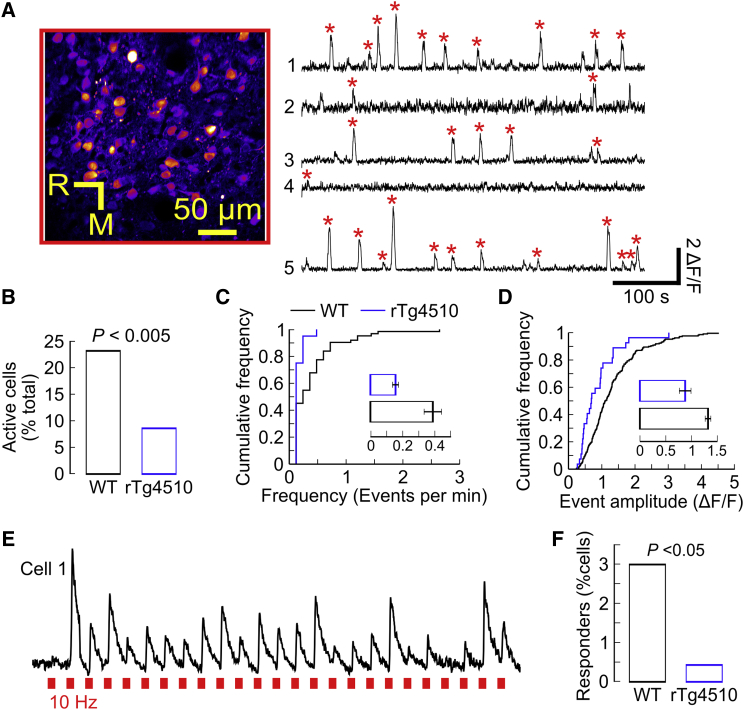
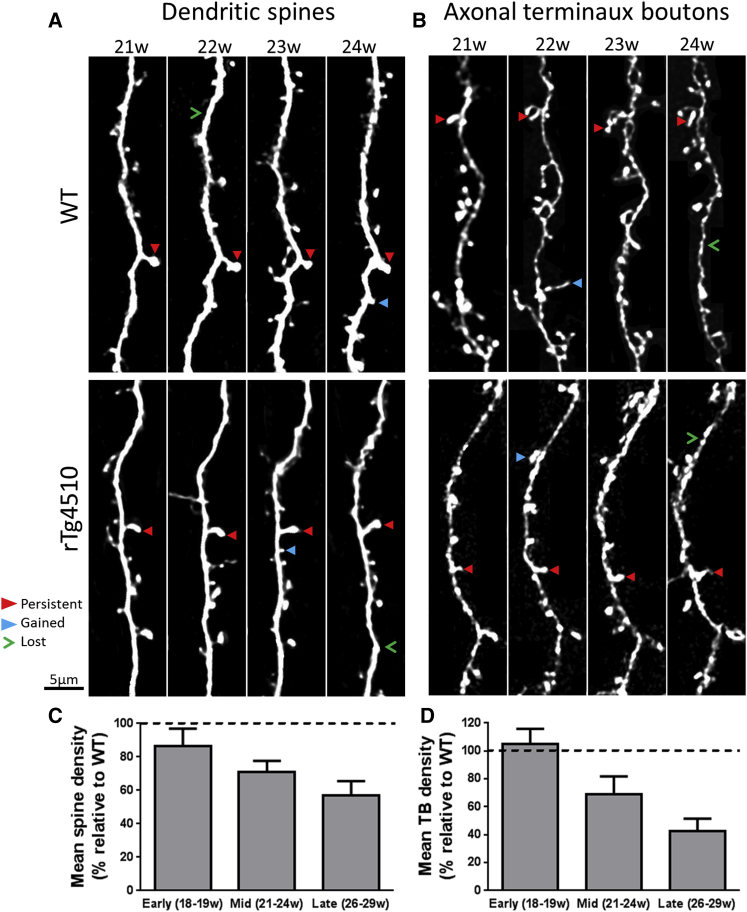
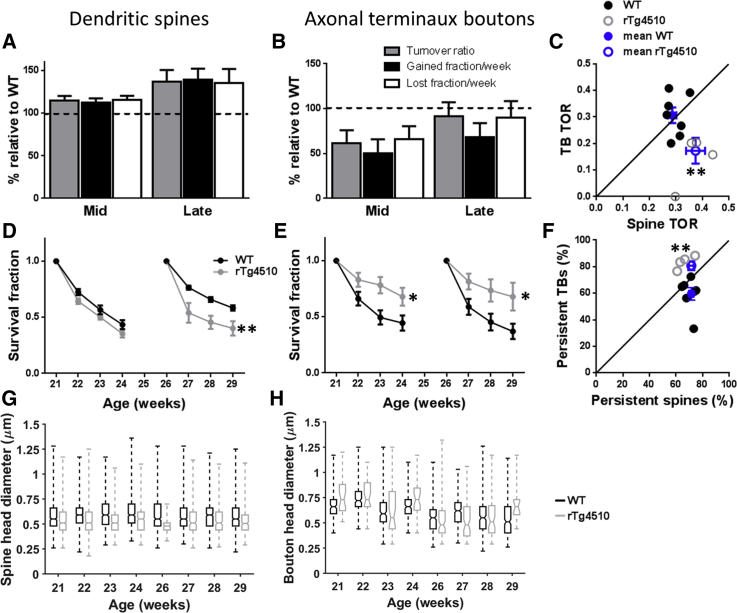
Synapse loss is a key feature of dementia, but it is unclear whether synaptic dysfunction precedes degenerative phases of the disease. Here, we show that even before any decrease in synapse density, there is abnormal turnover of cortical axonal boutons and dendritic spines in a mouse model of tauopathy-associated dementia. Strikingly, tauopathy drives a mismatch in synapse turnover; postsynaptic spines turn over more rapidly, whereas presynaptic boutons are stabilized. This imbalance between pre- and post-synaptic stability coincides with reduced synaptically driven neuronal activity in pre-degenerative stages of the disease.
突触丧失是痴呆症的一个关键特征,但尚不清楚突触功能障碍是否先于该疾病的退行性阶段出现。在此,我们表明,在tau蛋白病相关痴呆症的小鼠模型中,甚至在突触密度出现任何下降之前,皮质轴突终扣和树突棘就已经出现了异常更新。引人注目的是,tau蛋白病导致突触更新出现错配;突触后棘突更新更快,而突触前终扣则趋于稳定。突触前和突触后稳定性之间的这种失衡与疾病退行前阶段突触驱动的神经元活动减少相吻合。