Bernotavičius Giedrius, Saniukas Kęstutis, Karmonaitė Irena, Zagorskis Rimantas
Centre of Children's Orthopaedics and Traumatology, Children's Hospital, Affiliate of Vilnius University Hospital Santariškių Klinikos, Vilnius, Lithuania.
Faculty of Medicine, Vilnius University, Vilnius, Lithuania.
Acta Med Litu. 2016;23(3):155-164. doi: 10.6001/actamedica.v23i3.3379.
An obstruction of the distal part of the duodenum can occur because of the superior mesenteric artery syndrome (SMAS) after a surgical correction of scoliosis. It is essential to evaluate the risk factors and diagnose the SMAS in time because complications of this condition are life-threatening and it is associated with a high rate of morbidity. Diagnostics of the SMAS is challenging, because it is rare and its symptoms are non-specific. Therefore, in order to better understand the essence of this pathology and to make diagnosis easier we present a rare clinical case of the superior mesenteric artery syndrome after a surgical correction of neuromuscular scoliosis.
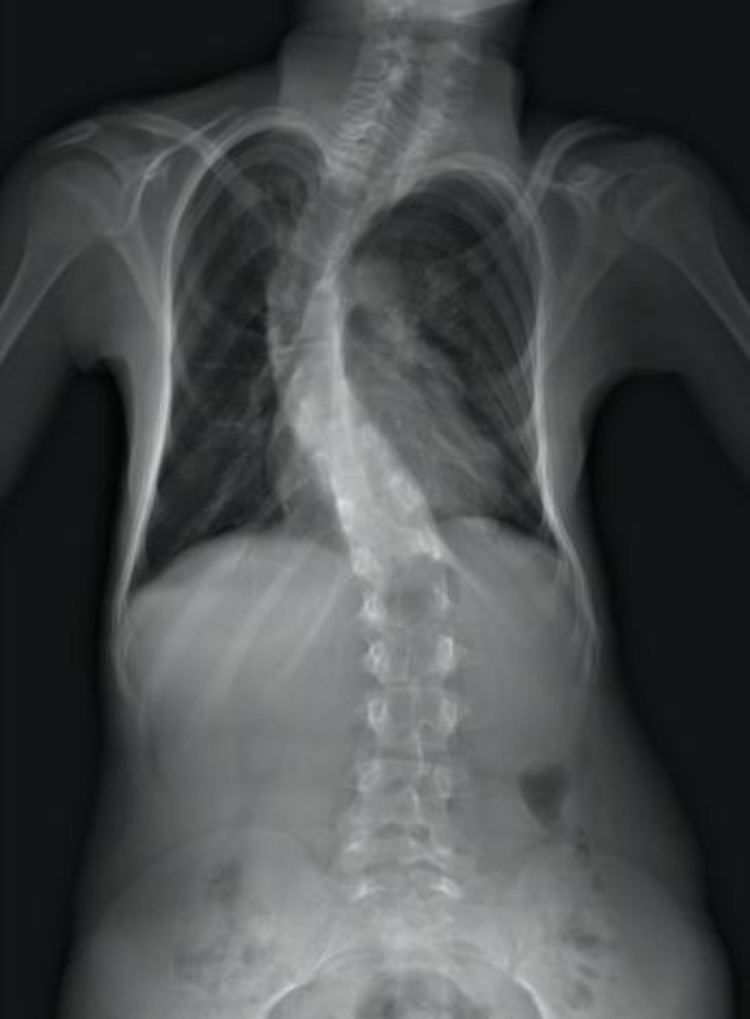
A 12-year-old girl with a specific development disorder, sensory neuropathy and progressive kypho-scoliosis was admitted to Vilnius University Children's Hospital. The patient had right side 50-degree thoracic scoliosis and an 80-degree thoracic kyphosis. She underwent posterior spinal fusion with hooks and screws from Th1 to L2. On the fourth day after the surgery the patient developed nausea and began to vomit each day 1-2 times per day, especially after meals. The SMAS was suspected and a nasogastric tube was inserted, stomach decompression and the correction of electrolytes disbalance were made. After the treatment, the symptoms did not recur and a satisfactory correction and balance of the spine were made in coronal and sagittal planes.
It is extremely important to identify the risk factors of the SMAS and begin preoperative diet supplements before surgical correction of scoliosis for patients with a low body mass index. After the first episode of vomiting following the surgery, we recommend to investigate these patients for a gastrointestinal obstruction as soon as possible. Decompression of the stomach, enteral or parenteral nutrition, and fluid therapy are essential in treating the SMAS.
脊柱侧弯手术矫正后,由于肠系膜上动脉综合征(SMAS)可发生十二指肠远端梗阻。及时评估危险因素并诊断SMAS至关重要,因为该病症的并发症会危及生命,且发病率很高。SMAS的诊断具有挑战性,因为它很罕见且症状不具特异性。因此,为了更好地理解这种病理的本质并使诊断更容易,我们呈现一例神经肌肉型脊柱侧弯手术矫正后肠系膜上动脉综合征的罕见临床病例。
一名12岁患有特殊发育障碍、感觉神经病变和进行性脊柱后凸-侧弯的女孩入住维尔纽斯大学儿童医院。患者右侧胸弯50度,胸段后凸80度。她接受了从胸1至腰2的后路脊柱融合术,使用钩和螺钉固定。术后第四天,患者出现恶心,每天呕吐1 - 2次,尤其是饭后。怀疑为SMAS,插入鼻胃管,进行胃减压并纠正电解质失衡。治疗后,症状未再复发,脊柱在冠状面和矢状面均获得满意的矫正和平衡。
对于体重指数低的脊柱侧弯患者,在手术矫正前识别SMAS的危险因素并开始术前饮食补充极为重要。手术后首次出现呕吐后,我们建议尽快对这些患者进行胃肠道梗阻检查。胃减压、肠内或肠外营养以及液体治疗是治疗SMAS的关键。