Ruetenik Andrea L, Ocampo Alejandro, Ruan Kai, Zhu Yi, Li Chong, Zhai R Grace, Barrientos Antoni
Neuroscience Graduate Program, University of Miami Miller School of Medicine, Miami, FL 33136, USA. ; Department of Neurology, University of Miami Miller School of Medicine, Miami, FL 33136, USA. ; Department of Biochemistry and Molecular Biology, University of Miami Miller School of Medicine, Miami, FL 33136, USA.
Department of Molecular and Cellular Pharmacology, University of Miami Miller School of Medicine, Miami, FL 33136, USA. ; Molecular and Cellular Pharmacology Graduate Program, University of Miami Miller School of Medicine, Miami, FL 33136, USA.
Microb Cell. 2016 Jul 26;3(8):338-351. doi: 10.15698/mic2016.08.518.
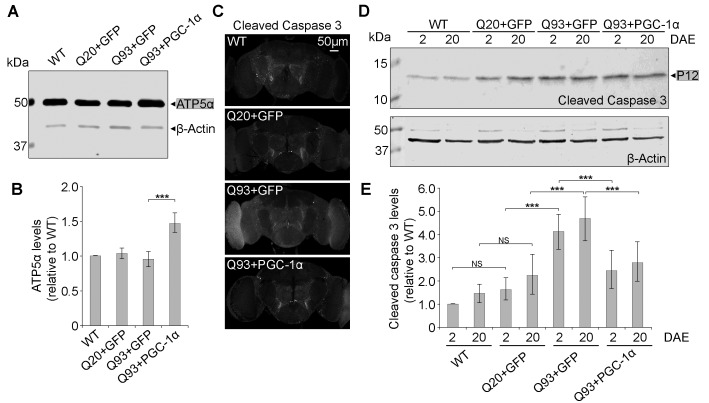
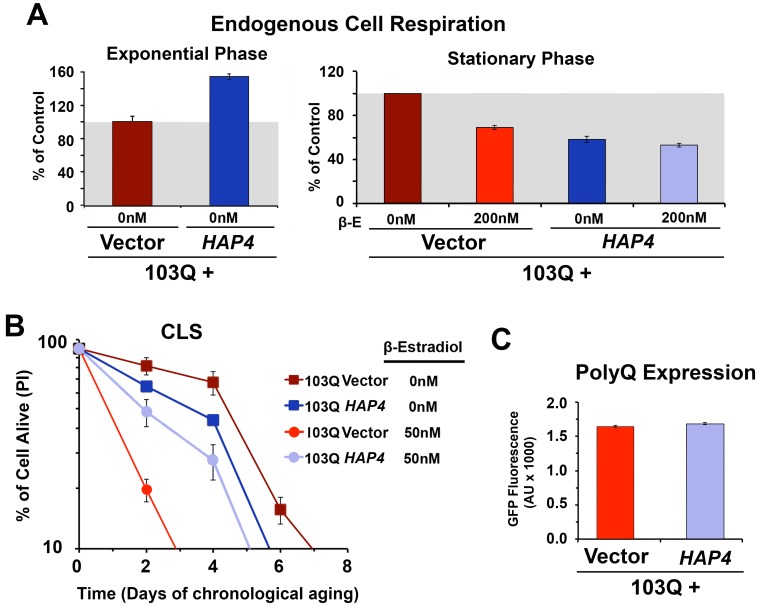
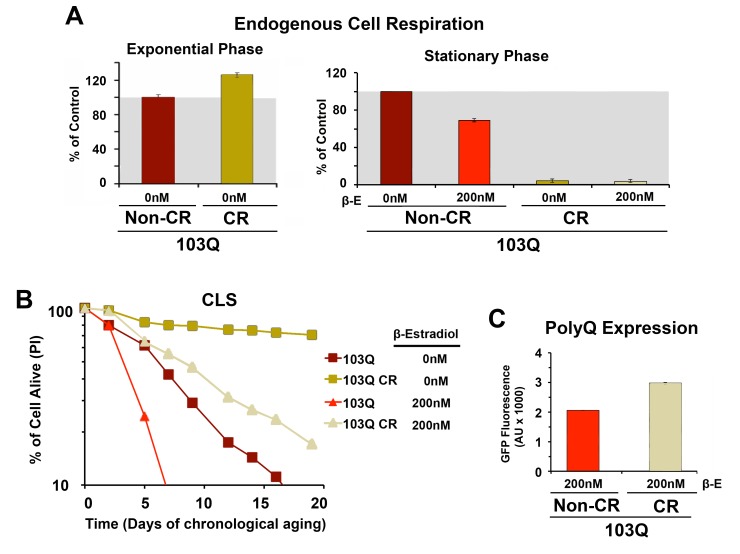
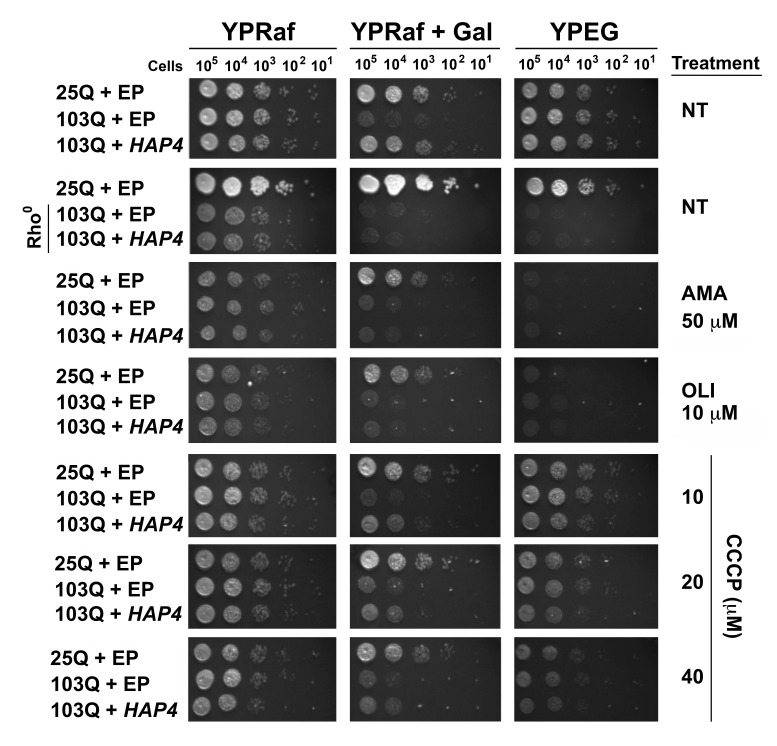
Defects in mitochondrial biogenesis and function are common in many neurodegenerative disorders, including Huntington's disease (HD). We have previously shown that in yeast models of HD, enhancement of mitochondrial biogenesis through overexpression of Hap4, the catalytic subunit of the transcriptional complex that regulates mitochondrial gene expression, alleviates the growth arrest induced by expanded polyglutamine (polyQ) tract peptides in rapidly dividing cells. However, the mechanism through which overexpression exerts this protection remains unclear. Furthermore, it remains unexplored whether overexpression and increased respiratory function during growth can also protect against polyQ-induced toxicity during yeast chronological lifespan. Here, we show that in yeast, mitochondrial respiration and oxidative phosphorylation (OXPHOS) are essential for protection against the polyQ-induced growth defect by overexpression. In addition, we show that not only increased levels, but also alternative interventions, including calorie restriction, that result in enhanced mitochondrial biogenesis confer protection against polyQ toxicity during stationary phase. The data obtained in yeast models guided experiments in a fly model of HD, where we show that enhancement of mitochondrial biogenesis can also protect against neurodegeneration and behavioral deficits. Our results suggest that therapeutic interventions aiming at the enhancement of mitochondrial respiration and OXPHOS could reduce polyQ toxicity and delay disease onset.
线粒体生物合成和功能缺陷在许多神经退行性疾病中很常见,包括亨廷顿舞蹈病(HD)。我们之前已经表明,在HD的酵母模型中,通过过表达Hap4(调节线粒体基因表达的转录复合物的催化亚基)来增强线粒体生物合成,可以缓解快速分裂细胞中由扩展的聚谷氨酰胺(polyQ)肽诱导的生长停滞。然而,过表达发挥这种保护作用的机制仍不清楚。此外,在酵母衰老过程中,生长期间的过表达和呼吸功能增强是否也能抵御polyQ诱导的毒性,这一点尚未得到探索。在这里,我们表明在酵母中,线粒体呼吸和氧化磷酸化(OXPHOS)对于过表达抵御polyQ诱导的生长缺陷至关重要。此外,我们还表明,不仅是水平的提高,包括卡路里限制在内的其他干预措施,只要能增强线粒体生物合成,就能在静止期抵御polyQ毒性。在酵母模型中获得的数据指导了在HD果蝇模型中的实验,我们在其中表明增强线粒体生物合成也能抵御神经退行性变和行为缺陷。我们的结果表明,旨在增强线粒体呼吸和OXPHOS的治疗干预措施可以降低polyQ毒性并延迟疾病发作。