Wise-Draper Trisha M, Moorthy Ganesh, Salkeni Mohamad A, Karim Nagla Abdel, Thomas Hala Elnakat, Mercer Carol A, Beg M Shalaan, O'Gara Sue, Olowokure Olugbenga, Fathallah Hassana, Kozma Sara C, Thomas George, Rixe Olivier, Desai Pankaj, Morris John C
Division of Hematology-Oncology, Department of Internal Medicine, University of Cincinnati, Cincinnati, OH, 45267, USA.
Division of Pharmaceutical Sciences, University of Cincinnati, Cincinnati, OH, 45267, USA.
Target Oncol. 2017 Jun;12(3):323-332. doi: 10.1007/s11523-017-0482-9.
The combination of everolimus and the imidazoquinoline derivative, BEZ235 (dactolisib), a dual PI3K/mTOR inhibitor, demonstrated synergy in a preclinical model.
To establish clinical feasibility, a phase Ib dose-escalation trial investigating safety and pharmacokinetics of this combination in patients with advanced tumors was performed.
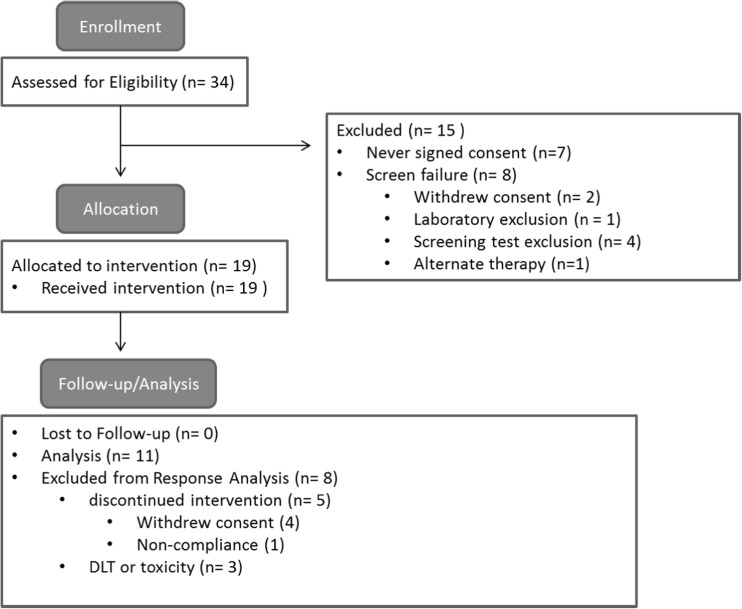
BEZ235 was orally administered daily in escalating doses of 200, 400, and 800 mg along with everolimus at 2.5 mg daily in 28-day cycles. Nineteen patients were enrolled. Adverse events and tumor responses were evaluated using CTCAE v4.0 and RECIST 1.1, respectively. Pharmacokinetic analyses were performed.
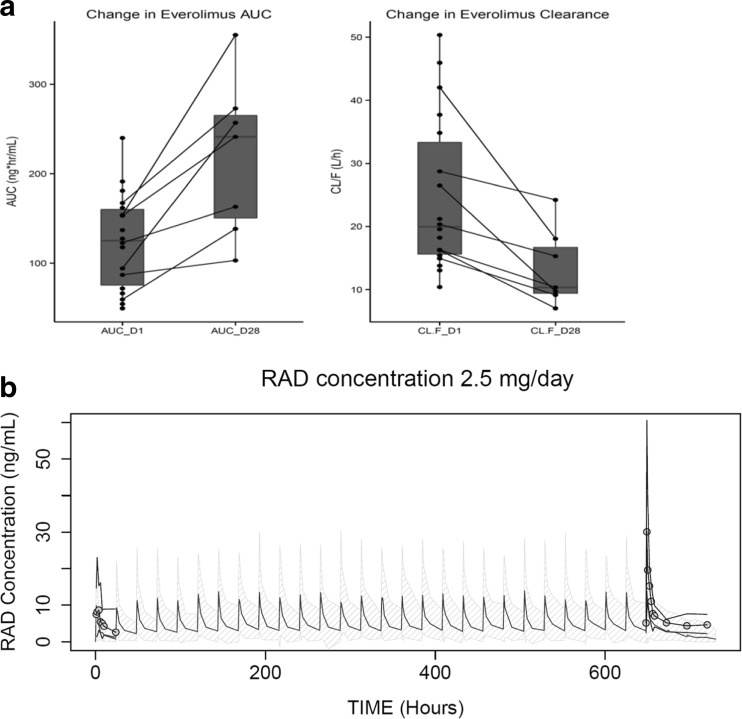
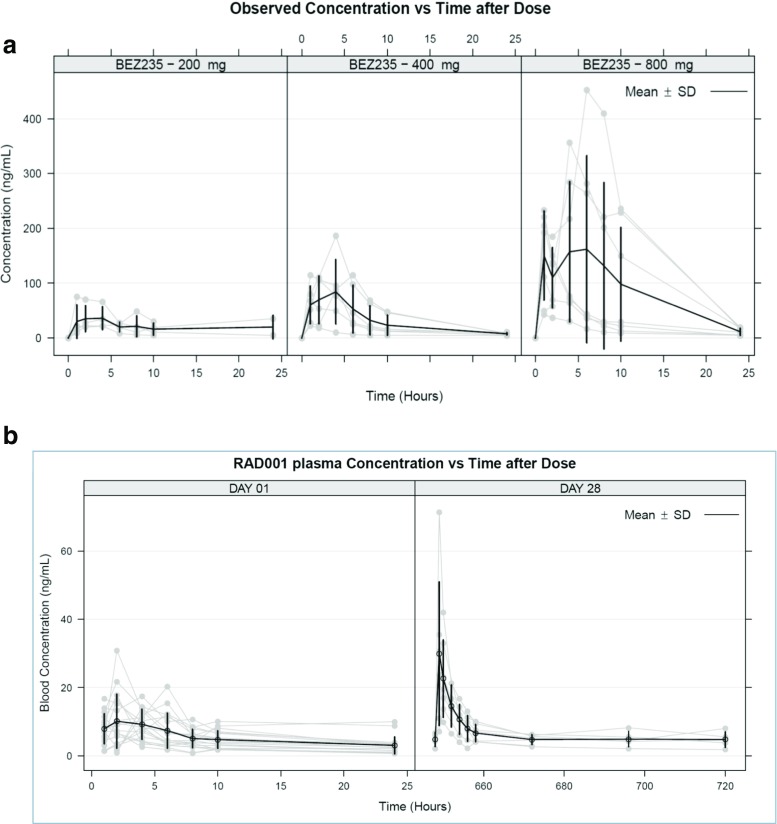
Common toxicities observed included fatigue, diarrhea, nausea, mucositis, and elevated liver enzymes. No confirmed responses were observed. BEZ235 pharmacokinetics exhibited dose-proportional increases in C and AUC over the three doses, with high inter-individual variability. Non-compartmental and population pharmacokinetic-based simulations indicated significant increases in everolimus C and AUC on day 28 and decreased clearance to 13.41 L/hr.
The combination of BEZ235 and everolimus demonstrated limited efficacy and tolerance. BEZ235 systemic exposure increased in a dose-proportional manner while oral bioavailability was quite low, which may be related to gastrointestinal-specific toxicity. The changes in steady-state pharmacokinetics of everolimus with BEZ235 highlight potential drug-drug interactions when these two drugs are administered together. Clinicaltrials.gov: NCT01508104.
依维莫司与咪唑喹啉衍生物BEZ235(达可替尼)联合使用,后者是一种双靶点PI3K/mTOR抑制剂,在临床前模型中显示出协同作用。
为确定临床可行性,开展了一项Ib期剂量递增试验,研究该联合用药方案在晚期肿瘤患者中的安全性和药代动力学。
BEZ235每日口服给药,剂量递增,分别为200、400和800mg,同时每日口服依维莫司2.5mg,每28天为一个周期。共纳入19例患者。分别使用CTCAE v4.0和RECIST 1.1评估不良事件和肿瘤反应。进行药代动力学分析。
观察到的常见毒性包括疲劳、腹泻、恶心、黏膜炎和肝酶升高。未观察到确诊的反应。BEZ235的药代动力学显示,在这三个剂量下,C和AUC呈剂量比例增加,个体间变异性高。非房室和基于群体药代动力学的模拟表明,第28天依维莫司的C和AUC显著增加,清除率降至13.41L/hr。
BEZ235与依维莫司联合使用显示出有限的疗效和耐受性。BEZ235的全身暴露呈剂量比例增加,而口服生物利用度相当低,这可能与胃肠道特异性毒性有关。依维莫司与BEZ235联合使用时稳态药代动力学的变化突出了这两种药物合用时潜在的药物相互作用。Clinicaltrials.gov:NCT01508104。