Aßmann Miriam, Mügge Carolin, Gaßmeyer Sarah Katharina, Enoki Junichi, Hilterhaus Lutz, Kourist Robert, Liese Andreas, Kara Selin
Institute of Technical Biocatalysis, Hamburg University of Technology, Hamburg, Germany.
Junior Research Group for Microbial Biotechnology, Ruhr-University Bochum, Bochum, Germany.
Front Microbiol. 2017 Mar 16;8:448. doi: 10.3389/fmicb.2017.00448. eCollection 2017.
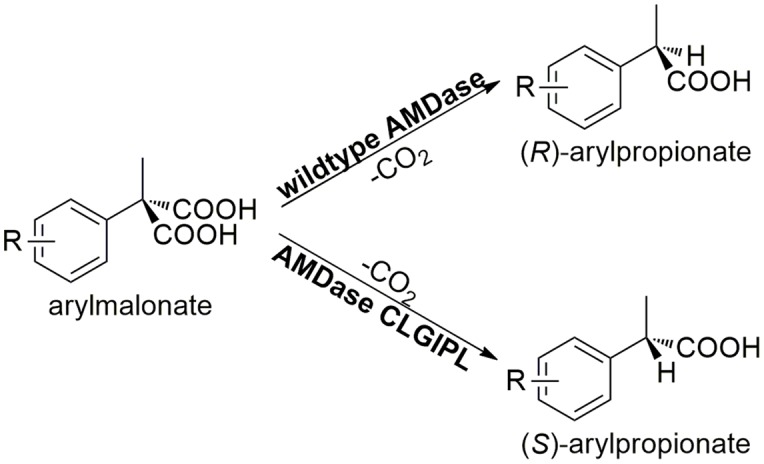
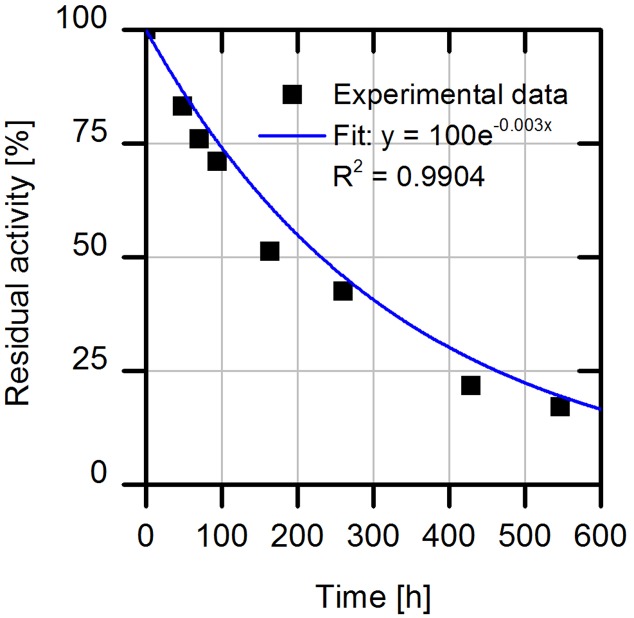
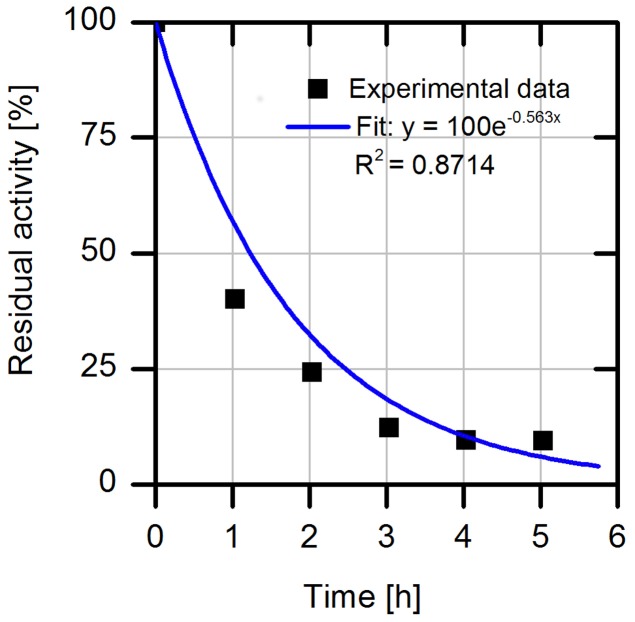
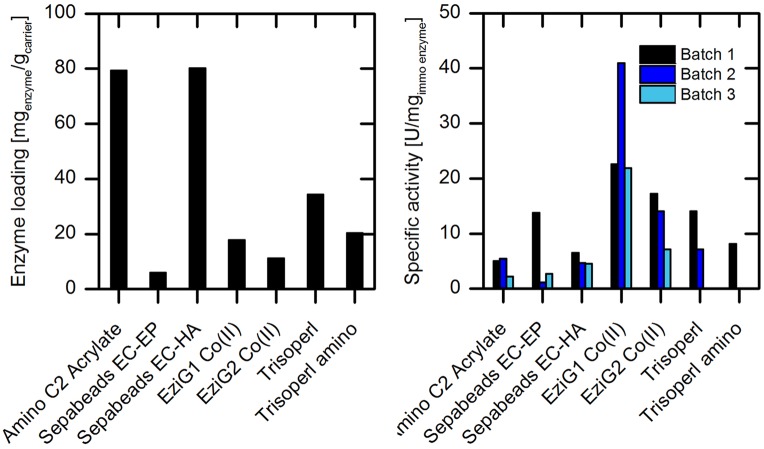
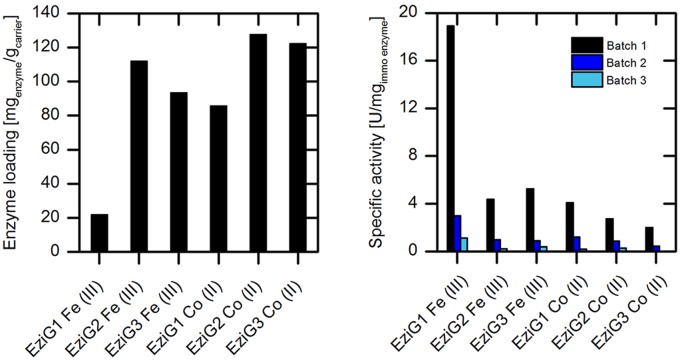
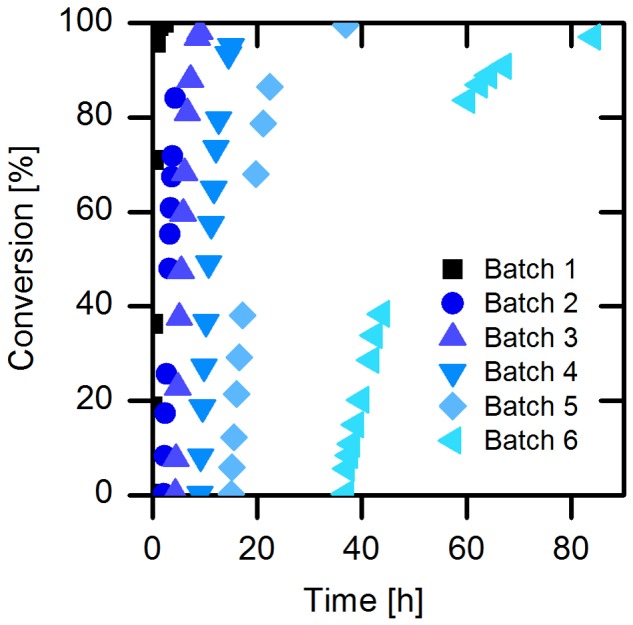
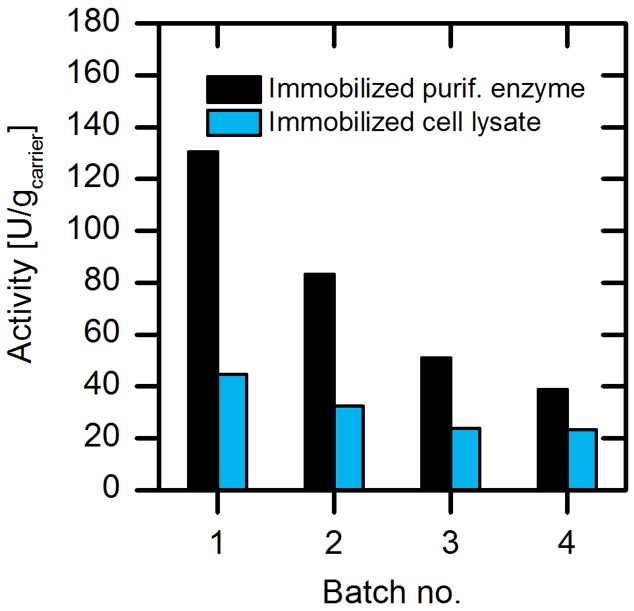
The enzyme arylmalonate decarboxylase (AMDase) enables the selective synthesis of enantiopure ()-arylpropinates in a simple single-step decarboxylation of dicarboxylic acid precursors. However, the poor enzyme stability with a half-life time of about 1.2 h under process conditions is a serious limitation of the productivity, which results in a need for high catalyst loads. By immobilization on an amino C2 acrylate carrier the operational stability of the ()-selective AMDase variant G74C/M159L/C188G/V43I/A125P/V156L was increased to a half-life of about 8.6 days, which represents a 158-fold improvement. Further optimization was achieved by simple immobilization of the cell lysate to eliminate the cost- and time intensive enzyme purification step.
芳基丙二酸脱羧酶(AMDase)能够通过二羧酸前体的简单单步脱羧反应选择性合成对映体纯的()-芳基丙酸酯。然而,在工艺条件下该酶稳定性较差,半衰期约为1.2小时,这严重限制了生产率,导致需要高催化剂负载量。通过固定在氨基C2丙烯酸酯载体上,()-选择性AMDase变体G74C/M159L/C188G/V43I/A125P/V156L的操作稳定性提高到约8.6天的半衰期,这代表了158倍的改进。通过简单固定细胞裂解物以消除成本高且耗时的酶纯化步骤实现了进一步优化。