Colleoni B, Paternot S, Pita J M, Bisteau X, Coulonval K, Davis R J, Raspé E, Roger P P
WELBIO, Institute of Interdisciplinary Research (IRIBHM) and ULB-Cancer Research Center (U-CRC), Université Libre de Bruxelles, Brussels, Belgium.
Program in Molecular Medicine, University of Massachusetts Medical School, Worcester, MA, USA.
Oncogene. 2017 Jul 27;36(30):4349-4361. doi: 10.1038/onc.2017.7. Epub 2017 Apr 3.
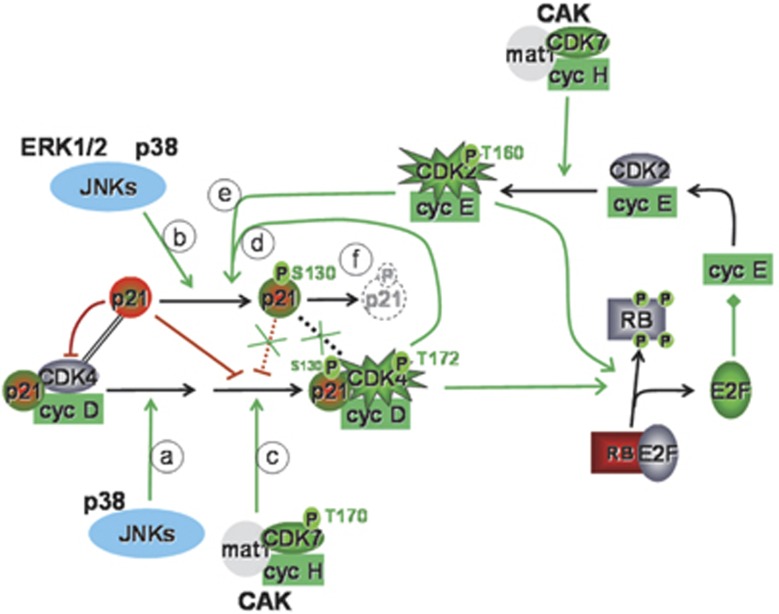
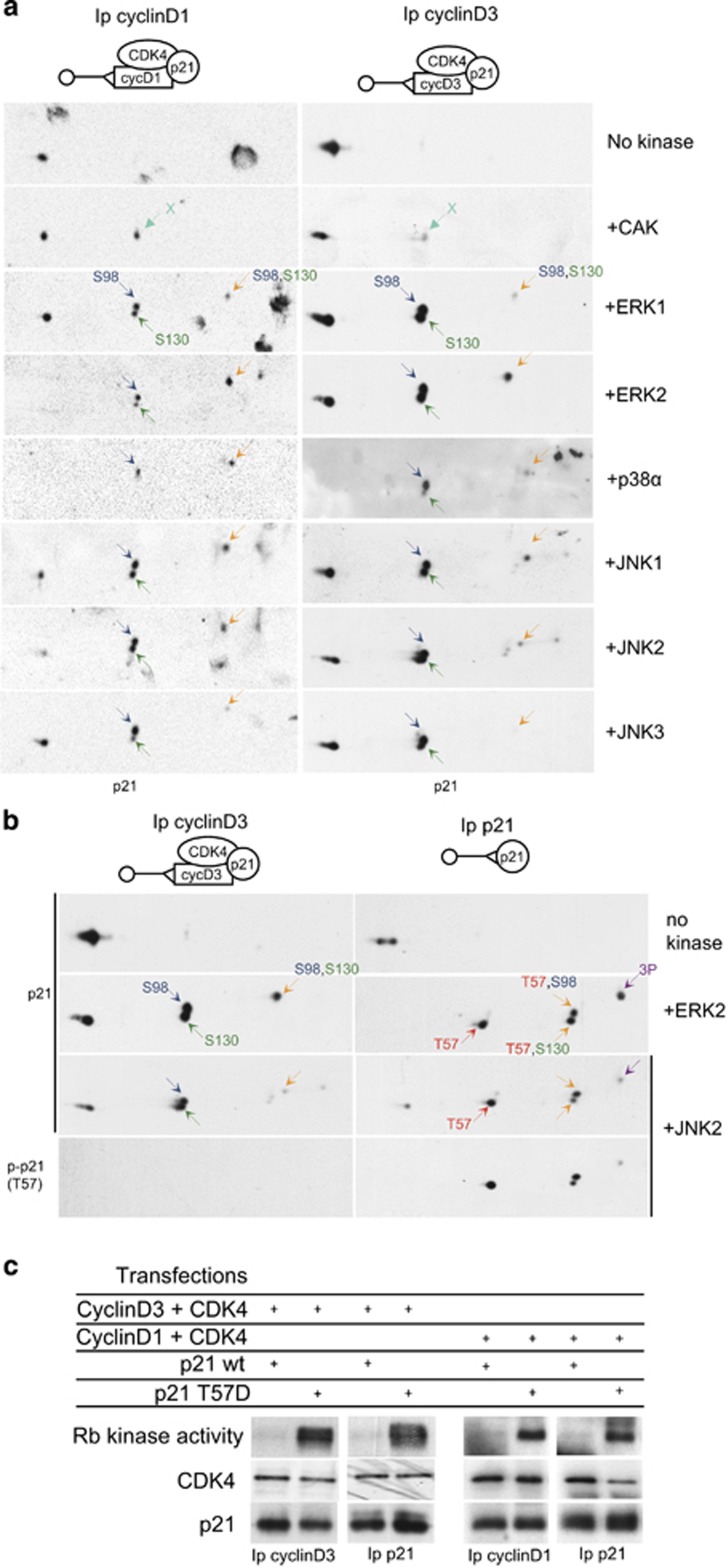
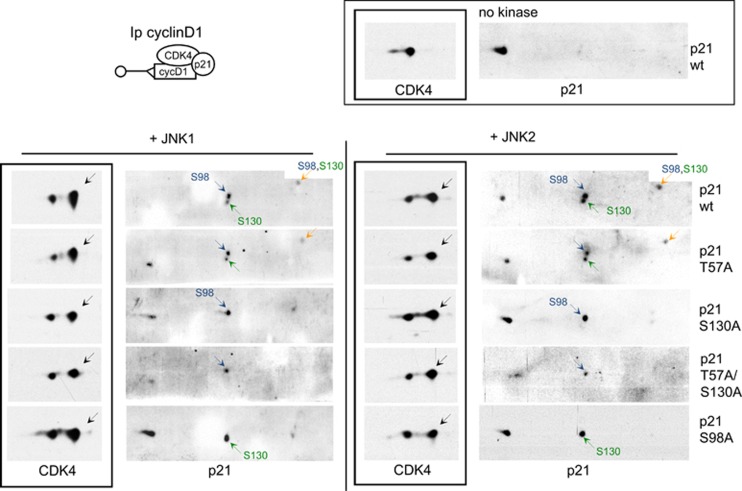
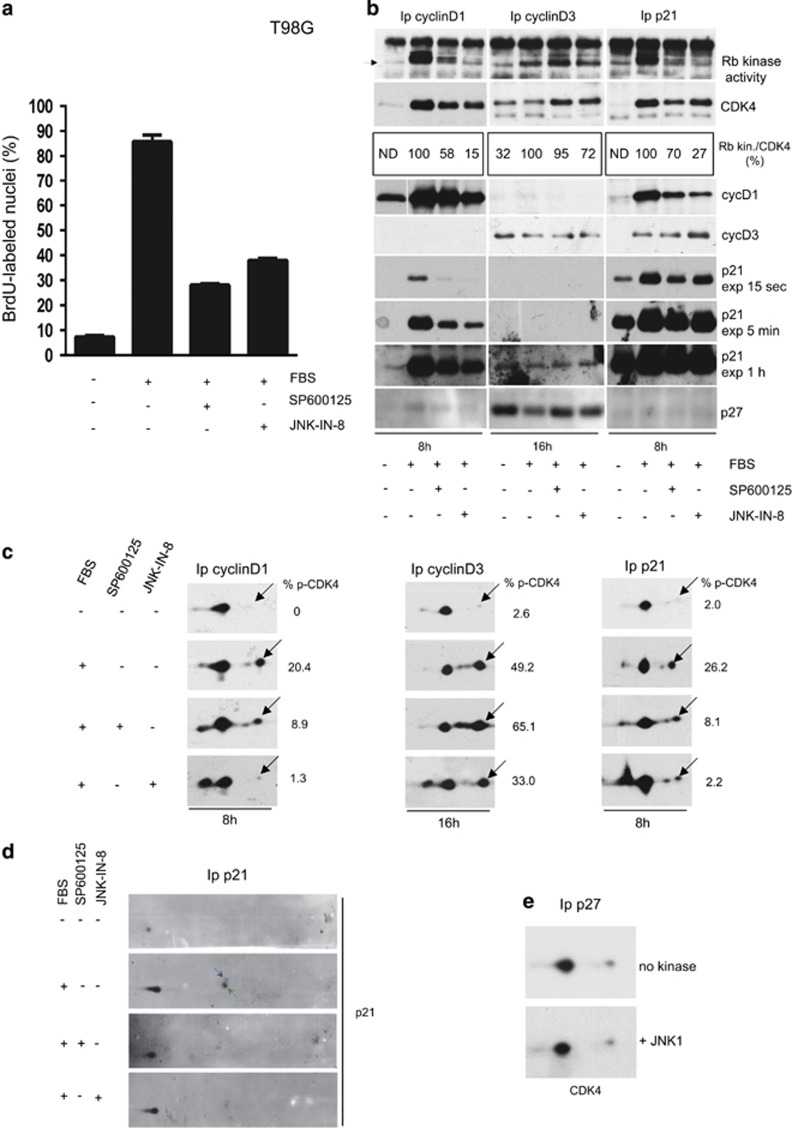
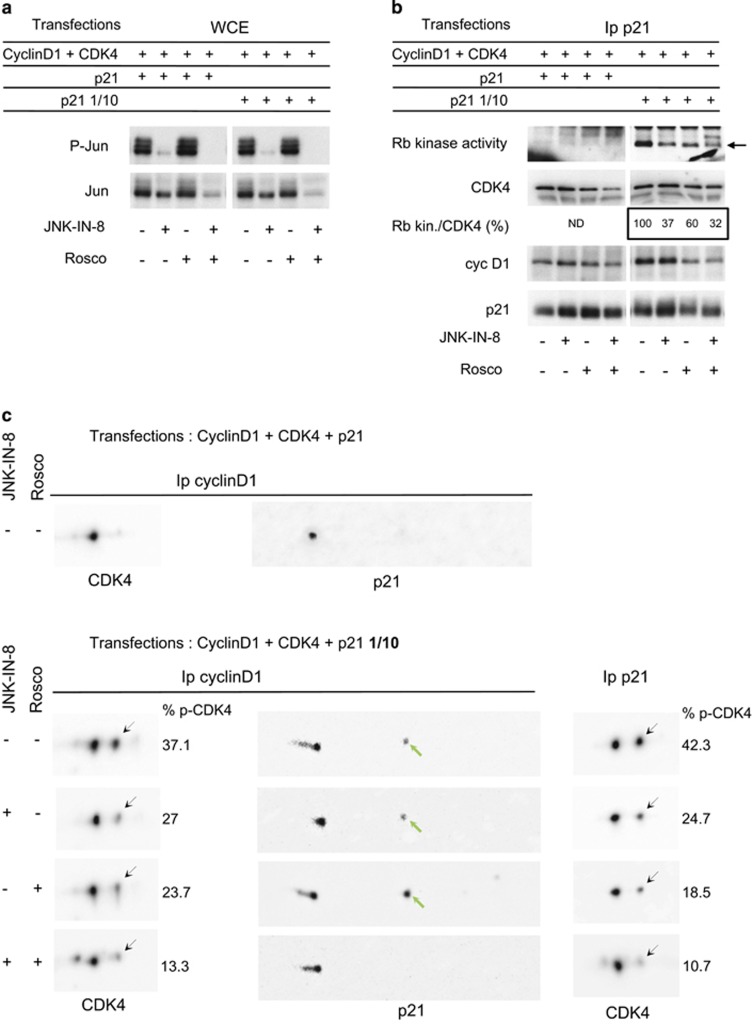
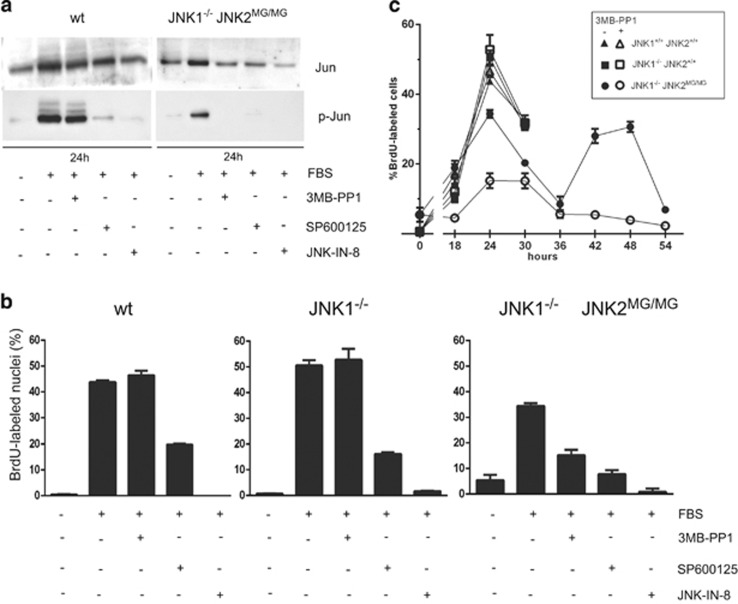
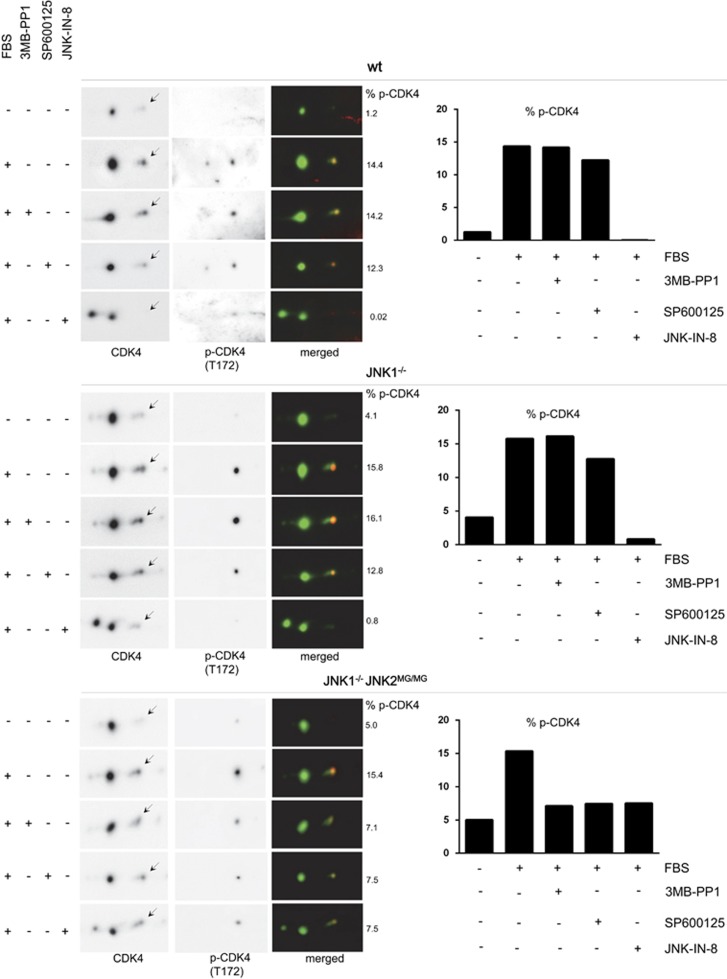
Cyclin D-CDK4/6 are the first cyclin-dependent kinase (CDK) complexes to be activated by mitogenic/oncogenic pathways. They have a central role in the cell multiplication decision and in its deregulation in cancer cells. We identified T172 phosphorylation of CDK4 rather than cyclin D accumulation as the distinctly regulated step determining CDK4 activation. This finding challenges the view that the only identified metazoan CDK-activating kinase, cyclin H-CDK7-Mat1 (CAK), which is constitutively active, is responsible for the activating phosphorylation of all cell cycle CDKs. We previously showed that T172 phosphorylation of CDK4 is conditioned by an adjacent proline (P173), which is not present in CDK6 and CDK1/2. Although CDK7 activity was recently shown to be required for CDK4 activation, we proposed that proline-directed kinases might specifically initiate the activation of CDK4. Here, we report that JNKs, but not ERK1/2 or CAK, can be direct CDK4-activating kinases for cyclin D-CDK4 complexes that are inactivated by p21-mediated stabilization. JNKs and ERK1/2 also phosphorylated p21 at S130 and T57, which might facilitate CDK7-dependent activation of p21-bound CDK4, however, mutation of these sites did not impair the phosphorylation of CDK4 by JNKs. In two selected tumor cells, two different JNK inhibitors inhibited the phosphorylation and activation of cyclin D1-CDK4-p21 but not the activation of cyclin D3-CDK4 that is mainly associated to p27. Specific inhibition by chemical genetics in MEFs confirmed the involvement of JNK2 in cyclin D1-CDK4 activation. Therefore, JNKs could be activating kinases for cyclin D1-CDK4 bound to p21, by independently phosphorylating both CDK4 and p21.
细胞周期蛋白D - CDK4/6是首批通过有丝分裂原/致癌途径被激活的细胞周期蛋白依赖性激酶(CDK)复合物。它们在细胞增殖决策以及癌细胞中该过程的失调中起着核心作用。我们发现CDK4的T172磷酸化而非细胞周期蛋白D的积累是决定CDK4激活的明显受调控步骤。这一发现挑战了这样一种观点,即唯一已确定的后生动物CDK激活激酶,即组成型活性的细胞周期蛋白H - CDK7 - Mat1(CAK),负责所有细胞周期CDK的激活磷酸化。我们之前表明,CDK4的T172磷酸化受相邻脯氨酸(P173)的调节,而CDK6和CDK1/2中不存在该脯氨酸。尽管最近发现CDK7活性是CDK4激活所必需的,但我们提出脯氨酸定向激酶可能特异性地启动CDK4的激活。在此,我们报告JNKs而非ERK1/2或CAK可以是细胞周期蛋白D - CDK4复合物的直接CDK4激活激酶,这些复合物因p21介导的稳定化而失活。JNKs和ERK1/2也在S130和T57位点磷酸化p21,这可能促进CDK7依赖性的与p21结合的CDK4的激活,然而,这些位点的突变并不损害JNKs对CDK4的磷酸化。在两个选定的肿瘤细胞中,两种不同的JNK抑制剂抑制了细胞周期蛋白D1 - CDK4 - p21的磷酸化和激活,但不抑制主要与p27相关的细胞周期蛋白D3 - CDK4的激活。在MEF中通过化学遗传学进行的特异性抑制证实了JNK2参与细胞周期蛋白D1 - CDK4的激活。因此,JNKs可以通过独立地磷酸化CDK4和p21而成为与p21结合的细胞周期蛋白D1 - CDK4的激活激酶。