
克氏原螯虾的眼柄和大脑中合成甲壳类高血糖激素。
Crustacean hyperglycemic hormone is synthesized in the eyestalk and brain of the crayfish Procambarus clarkii.
作者信息
Loredo-Ranjel Rosaura, Fanjul-Moles María Luisa, Escamilla-Chimal Elsa G
机构信息
Laboratorio de Neurofisiología y Ritmos Biológicos, Departamento de Ecología y Recursos Naturales, Facultad de Ciencias, Universidad Nacional Autónoma de México, Mexico City, Mexico.
出版信息
PLoS One. 2017 Apr 3;12(4):e0175046. doi: 10.1371/journal.pone.0175046. eCollection 2017.
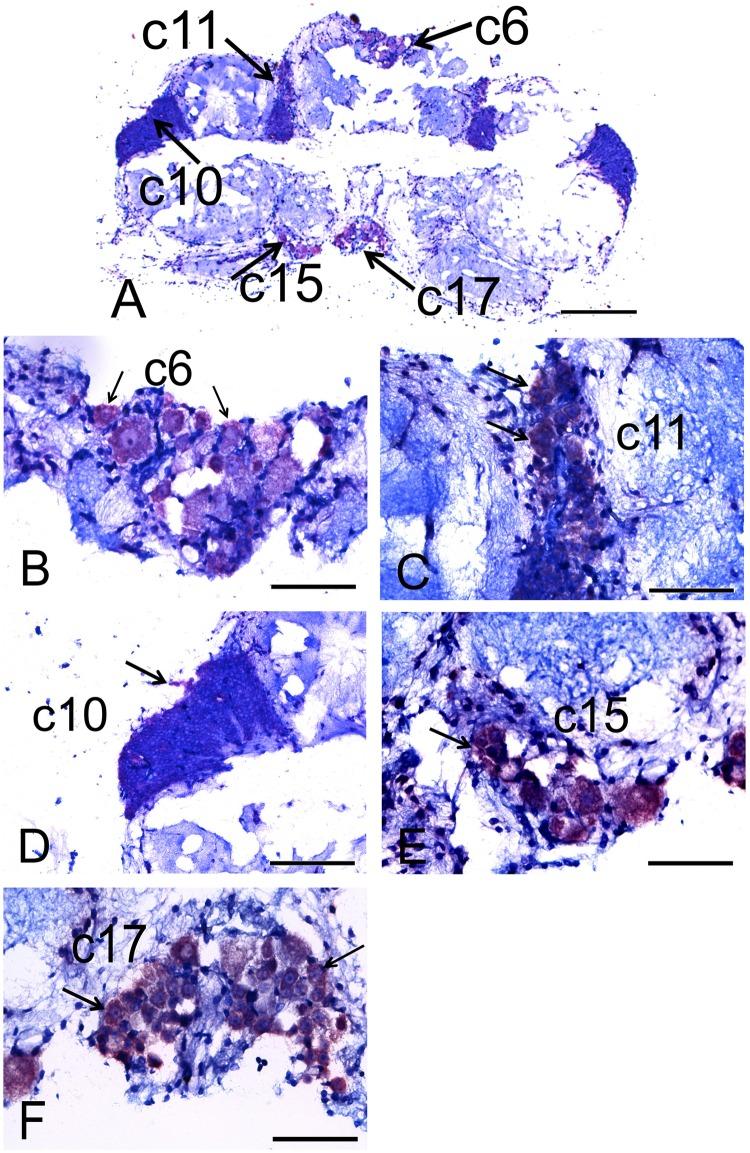
Crustacean hyperglycemic hormone (CHH) is a neuropeptide that is synthesized, stored, and released by brain and eyestalk structures in decapods. CHH participates in the regulation of several mechanisms, including increasing the level of glucose in hemolymph. Although CHH mRNA levels have been quantified and the CHH protein has been localized in various structures of the crayfish P. clarkii, CHH synthesis has only been reported in the X-organ-sinus gland (XO-SG). Therefore, the aim of this study was to use in situ hybridization to determine whether CHH mRNA is located in other structures, including the putative pacemaker, eyestalk and brain, of crayfish P. clarkii at two times of day. CHH mRNA was observed in both the eyestalk and the brain of P. clarkii, indicating that CHH is synthesized in several structures in common with other crustaceans, possibly to provide metabolic support for these regions by increasing glucose levels.
甲壳类高血糖激素(CHH)是一种神经肽,由十足目动物的脑和眼柄结构合成、储存并释放。CHH参与多种生理机制的调节,包括提高血淋巴中的葡萄糖水平。尽管已对克氏原螯虾不同结构中的CHH mRNA水平进行了定量分析,并且CHH蛋白也已定位,但CHH的合成仅在X器官-窦腺(XO-SG)中被报道过。因此,本研究的目的是利用原位杂交技术,确定在一天中的两个时间点,克氏原螯虾的其他结构(包括假定的起搏器、眼柄和脑)中是否存在CHH mRNA。在克氏原螯虾的眼柄和脑中均观察到了CHH mRNA,这表明CHH与其他甲壳类动物一样,在多个结构中合成,可能是通过提高葡萄糖水平为这些区域提供代谢支持。


 Zotero 插件