Qian Yanyan, Xiao Deyong, Guo Xiao, Chen Hongbo, Hao Lili, Ma Xiaojing, Huang Guoying, Ma Duan, Wang Huijun
Key Laboratory of Metabolism and Molecular Medicine, Ministry of Education, Department of Biochemistry and Molecular Biology, Collaborative Innovation Center of Genetics and Development, Institutes of Biomedical Sciences, School of Basic Medical Sciences, Fudan University, Shanghai, 20032, China.
Shanghai Key Lab of Birth Defect, Children's Hospital of Fudan University, Shanghai, 201102, China.
J Transl Med. 2017 Apr 3;15(1):69. doi: 10.1186/s12967-017-1173-0.
Congenital heart disease (CHD) is a common birth defect, and most cases occur sporadically. Mutations in key genes that are responsible for cardiac development could contribute to CHD. To date, the genetic causes of CHD remain largely unknown.
In this study, twenty-nine candidate genes in CHD were sequenced in 106 patients with Tetralogy of Fallot (TOF) using target exome sequencing (TES). The co-immunoprecipitation (CO-IP) and luciferase reporter gene assays were performed in HEK293T cells, and wild-type and mutant mRNA of ZFPM2 were microinjected into zebrafish embryos.
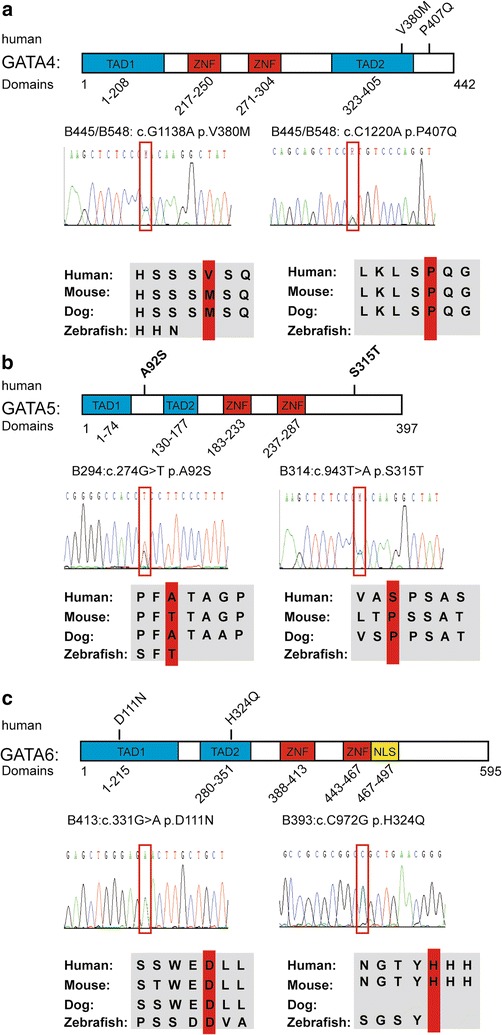
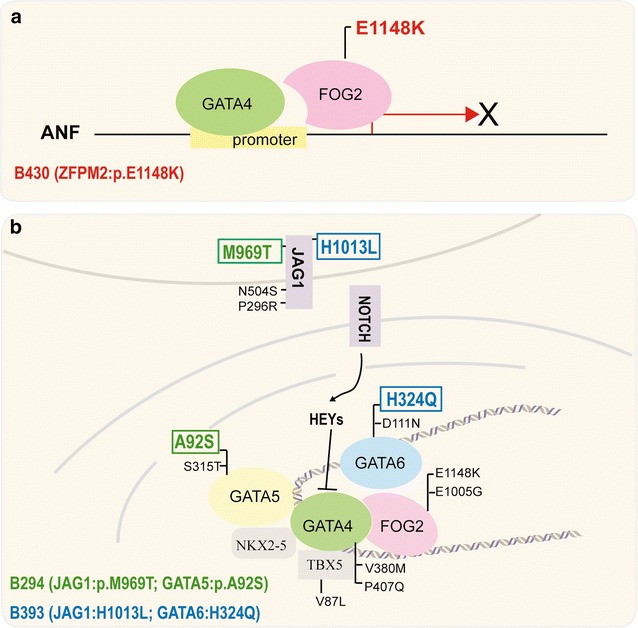
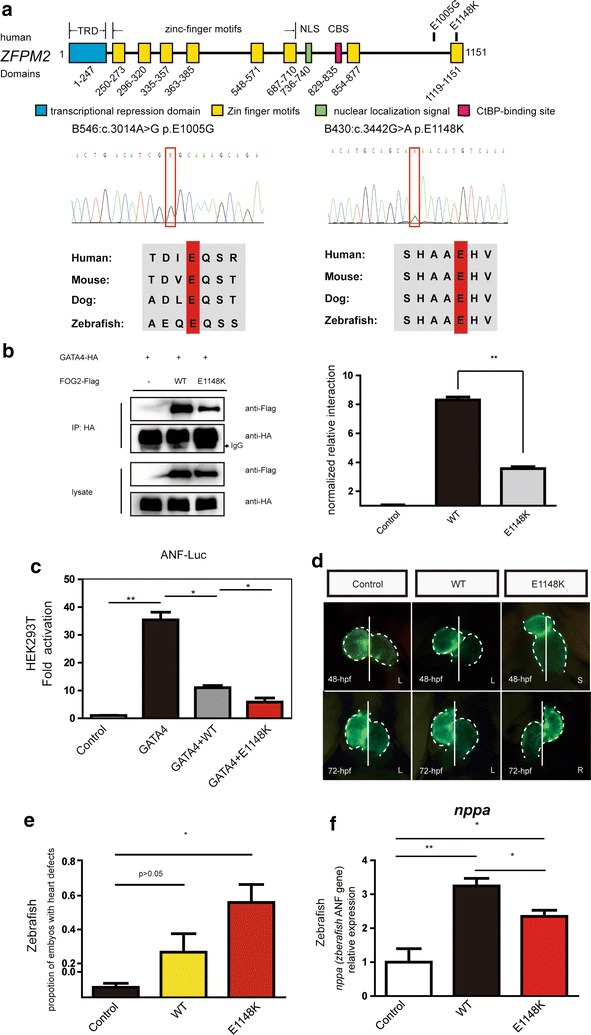
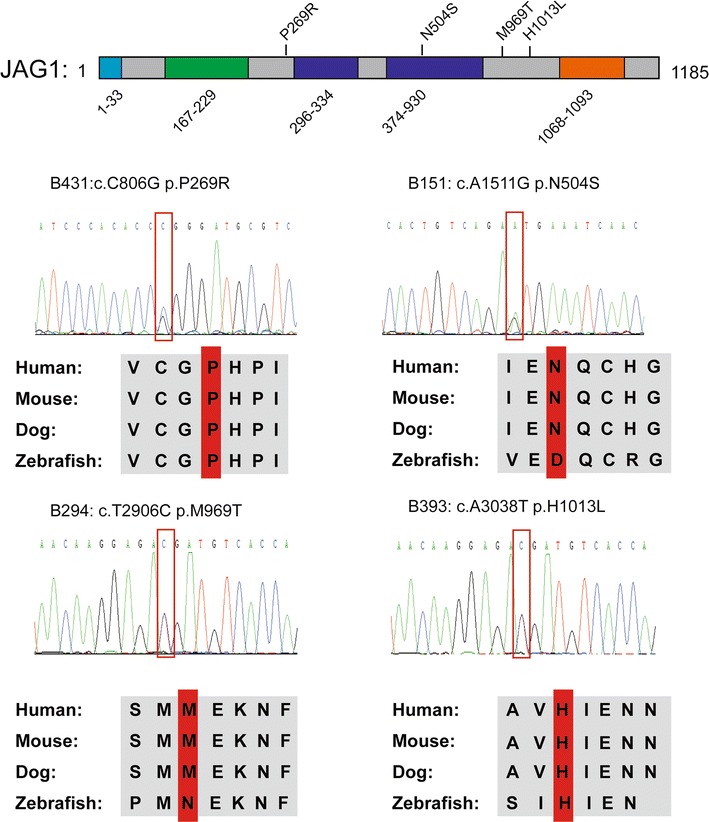
Rare variants in key cardiac transcriptional factors and JAG1 were identified in the patients. Four patients carried multiple gene variants. The novel E1148K variant was located at the eighth Zinc-finger domain of FOG2 protein. The CO-IP assays in the HEK293T cells revealed that the variant significantly damaged the interaction between ZFPM2/FOG2 and GATA4. The luciferase reporter gene assays revealed that the E1148K mutant ZFPM2 protein displayed a significantly greater inhibition of the transcriptional activation of GATA4 than the wild-type protein. The wild-type mRNA and the E1148K mutant mRNA of ZFPM2 were injected into zebrafish embryos. At 48 hpf, in the mutant mRNA injection group, the number of embryos with an abnormal cardiac chamber structure and a loss of left-right asymmetry was increased. By 72 hpf, the defects in the chamber and left-right asymmetry became obvious.
We performed TES in sporadic TOF patients and identified rare variants in candidate genes in CHD. We first validated the E1148 K variant in ZFPM2, which is likely involved in the pathogenesis of CHD via GATA4. Moreover, our results suggest that TES could be a useful tool for discovering sequence variants in CHD patients.
先天性心脏病(CHD)是一种常见的出生缺陷,大多数病例为散发性。负责心脏发育的关键基因发生突变可能导致CHD。迄今为止,CHD的遗传病因在很大程度上仍不清楚。
在本研究中,使用目标外显子组测序(TES)对106例法洛四联症(TOF)患者的29个CHD候选基因进行测序。在HEK293T细胞中进行了免疫共沉淀(CO-IP)和荧光素酶报告基因检测,并将ZFPM2的野生型和突变型mRNA显微注射到斑马鱼胚胎中。
在患者中鉴定出关键心脏转录因子和JAG1中的罕见变异。4例患者携带多个基因变异。新型E1148K变异位于FOG2蛋白的第八个锌指结构域。HEK293T细胞中的CO-IP检测显示,该变异显著破坏了ZFPM2/FOG2与GATA4之间的相互作用。荧光素酶报告基因检测显示,E1148K突变型ZFPM2蛋白对GATA4转录激活的抑制作用明显大于野生型蛋白。将ZFPM2的野生型mRNA和E1148K突变型mRNA注射到斑马鱼胚胎中。在48 hpf时,突变型mRNA注射组中具有异常心腔结构和左右不对称性丧失的胚胎数量增加。到72 hpf时,心腔和左右不对称性的缺陷变得明显。
我们对散发性TOF患者进行了TES,并在CHD候选基因中鉴定出罕见变异。我们首次验证了ZFPM2中的E1148K变异,该变异可能通过GATA4参与CHD的发病机制。此外,我们的结果表明,TES可能是发现CHD患者序列变异的有用工具。