University of Toronto, Department of Medical Biophysics, Toronto, M4N 3M5, Canada.
Sunnybrook Research Institute, Toronto, M4N 3M5, Canada.
Sci Rep. 2017 Apr 4;7:45657. doi: 10.1038/srep45657.
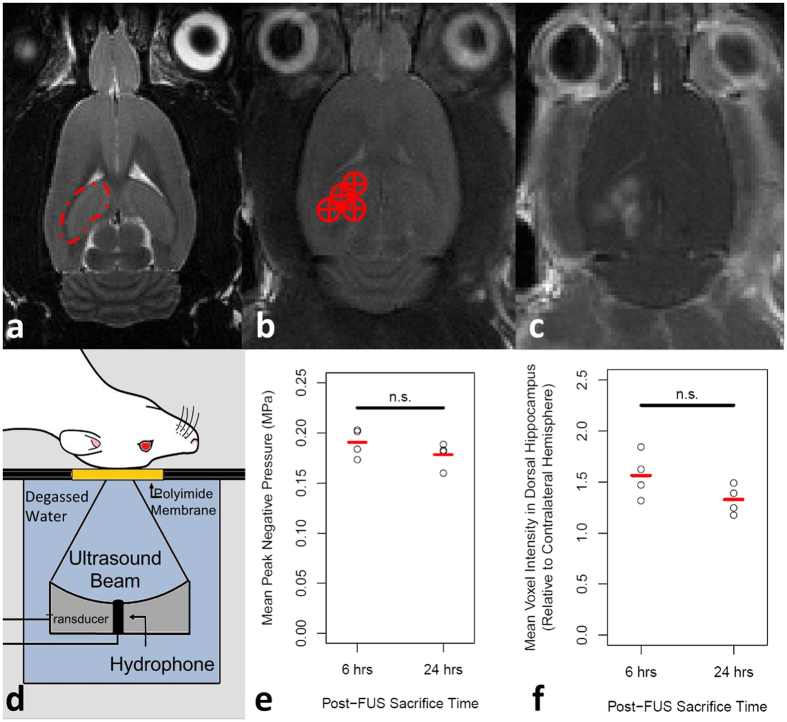
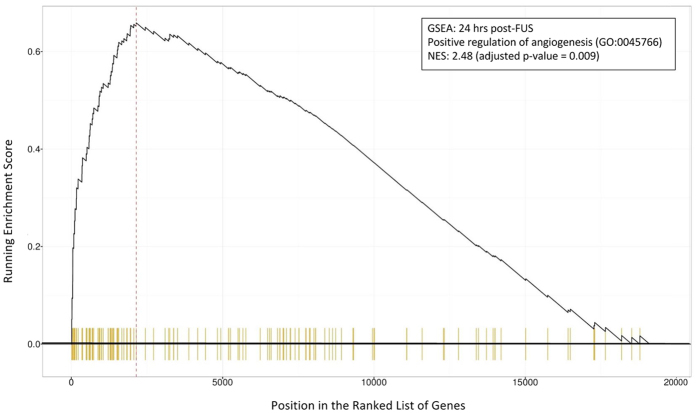
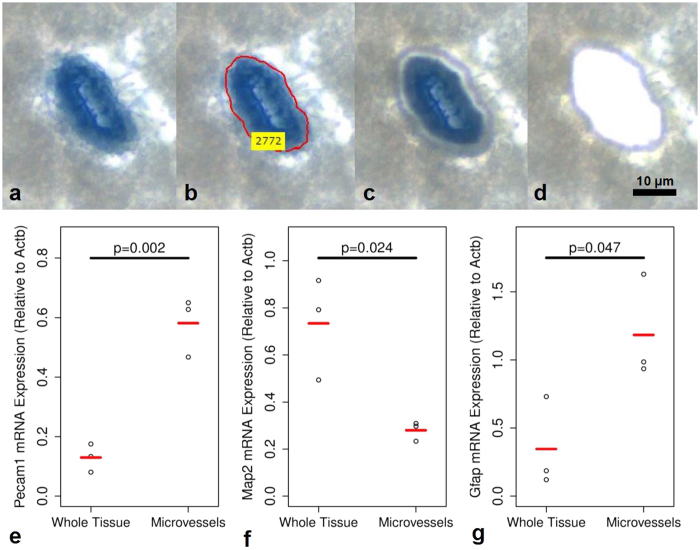
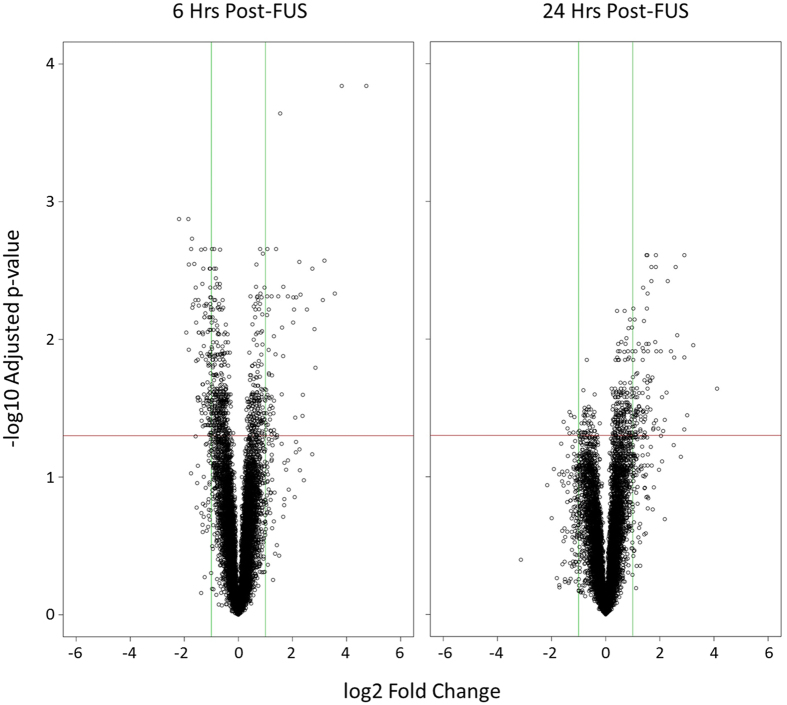
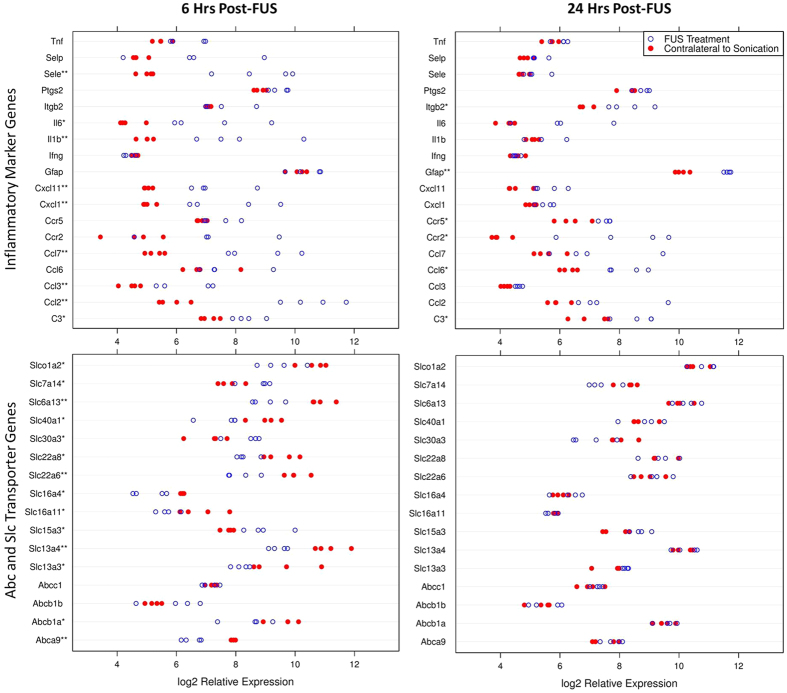
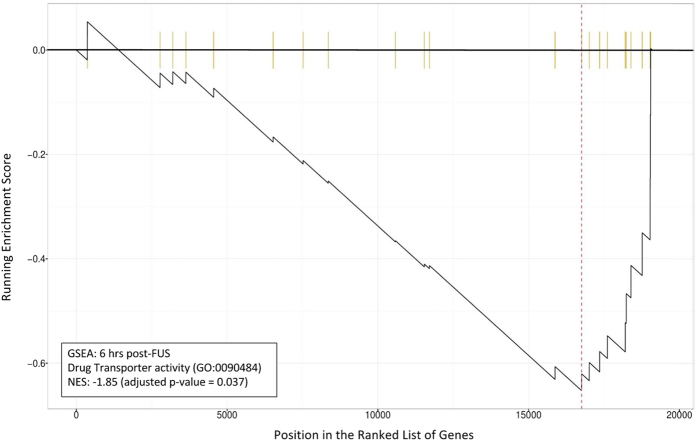
Therapeutic treatment options for central nervous system diseases are greatly limited by the blood-brain barrier (BBB). Focused ultrasound (FUS), in conjunction with circulating microbubbles, can be used to induce a targeted and transient increase in BBB permeability, providing a unique approach for the delivery of drugs from the systemic circulation into the brain. While preclinical research has demonstrated the utility of FUS, there remains a large gap in our knowledge regarding the impact of sonication on BBB gene expression. This work is focused on investigating the transcriptional changes in dorsal hippocampal rat microvessels in the acute stages following sonication. Microarray analysis of microvessels was performed at 6 and 24 hrs post-FUS. Expression changes in individual genes and bioinformatic analysis suggests that FUS may induce a transient inflammatory response in microvessels. Increased transcription of proinflammatory cytokine genes appears to be short-lived, largely returning to baseline by 24 hrs. This observation may help to explain some previously observed bioeffects of FUS and may also be a driving force for the angiogenic processes and reduced drug efflux suggested by this work. While further studies are necessary, these results open up intriguing possibilities for novel FUS applications and suggest possible routes for pharmacologically modifying the technique.
治疗中枢神经系统疾病的治疗选择受到血脑屏障 (BBB) 的极大限制。聚焦超声 (FUS) 与循环微泡结合使用,可以诱导 BBB 通透性的靶向和短暂增加,为从全身循环向大脑输送药物提供了独特的方法。虽然临床前研究已经证明了 FUS 的实用性,但我们对超声对 BBB 基因表达的影响的了解仍然存在很大差距。这项工作专注于研究超声治疗后急性阶段背海马大鼠微血管的转录变化。在 FUS 后 6 和 24 小时对微血管进行微阵列分析。个别基因的表达变化和生物信息学分析表明,FUS 可能会在微血管中引起短暂的炎症反应。促炎细胞因子基因的转录似乎是短暂的,到 24 小时基本恢复到基线。这一观察结果可能有助于解释一些以前观察到的 FUS 生物效应,也可能是这项工作所表明的血管生成过程和药物外排减少的驱动力。虽然还需要进一步的研究,但这些结果为新型 FUS 应用开辟了有趣的可能性,并为药理修饰该技术提供了可能的途径。