Luthra Priya, Aguirre Sebastian, Yen Benjamin C, Pietzsch Colette A, Sanchez-Aparicio Maria T, Tigabu Bersabeh, Morlock Lorraine K, García-Sastre Adolfo, Leung Daisy W, Williams Noelle S, Fernandez-Sesma Ana, Bukreyev Alexander, Basler Christopher F
Center for Microbial Pathogenesis, Institute for Biomedical Sciences, Georgia State University, Atlanta, Georgia, USA.
Department of Microbiology, Icahn School of Medicine at Mount Sinai, New York, New York, USA.
mBio. 2017 Apr 4;8(2):e00368-17. doi: 10.1128/mBio.00368-17.
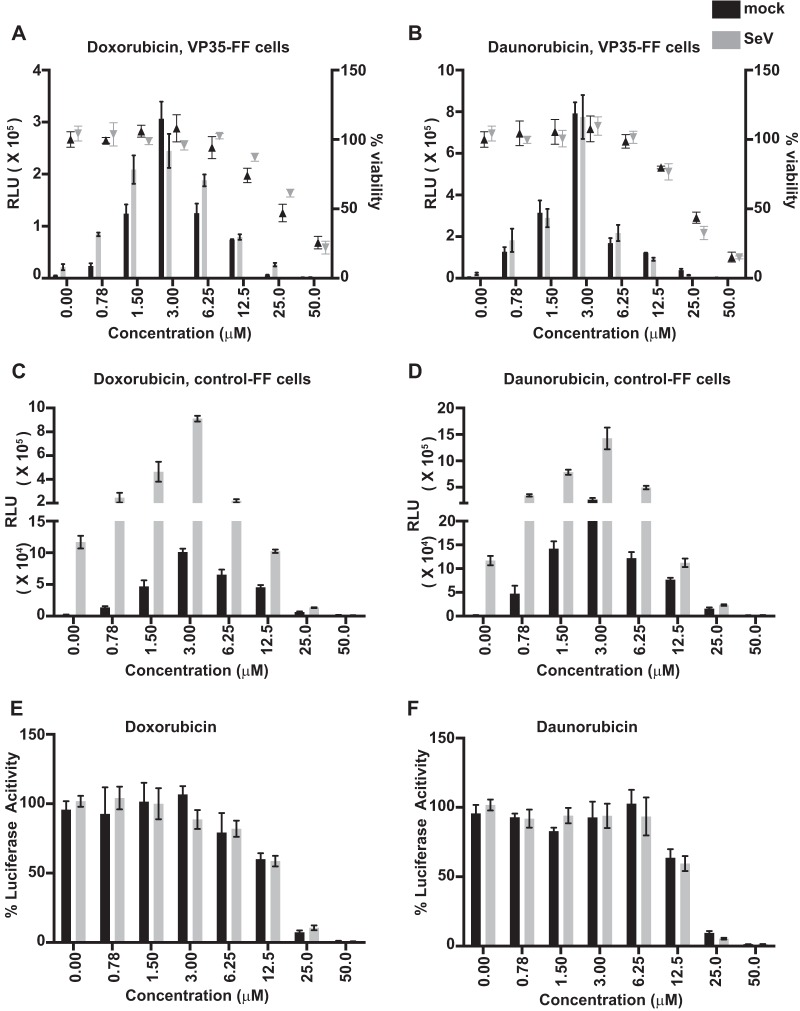
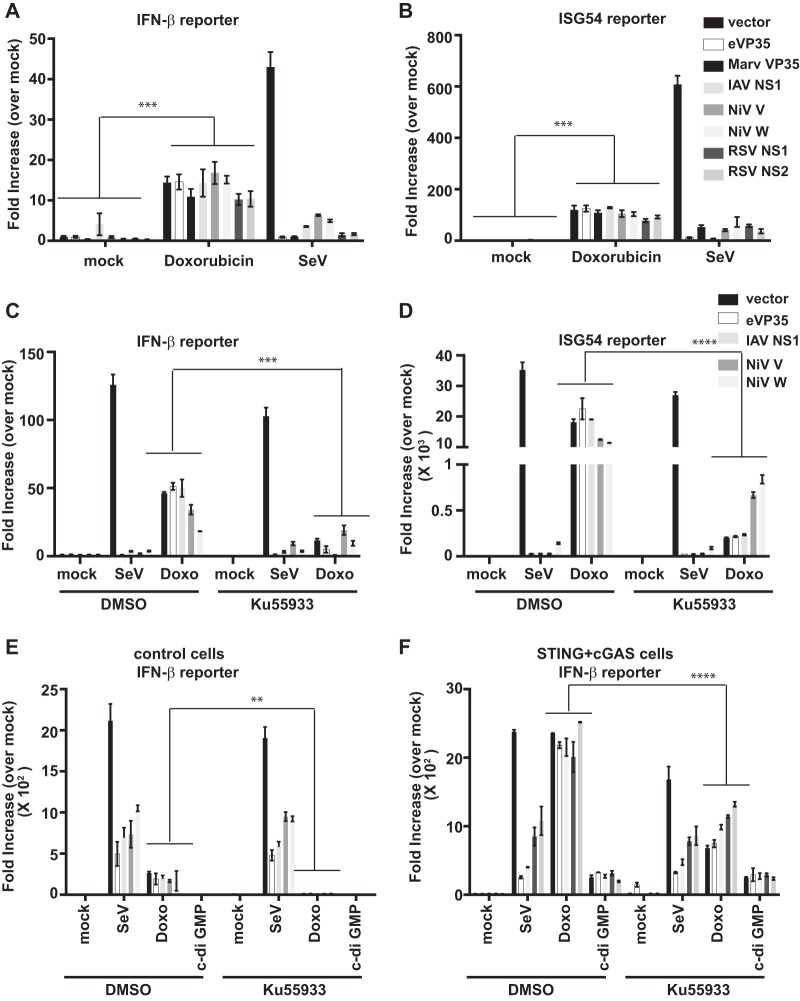
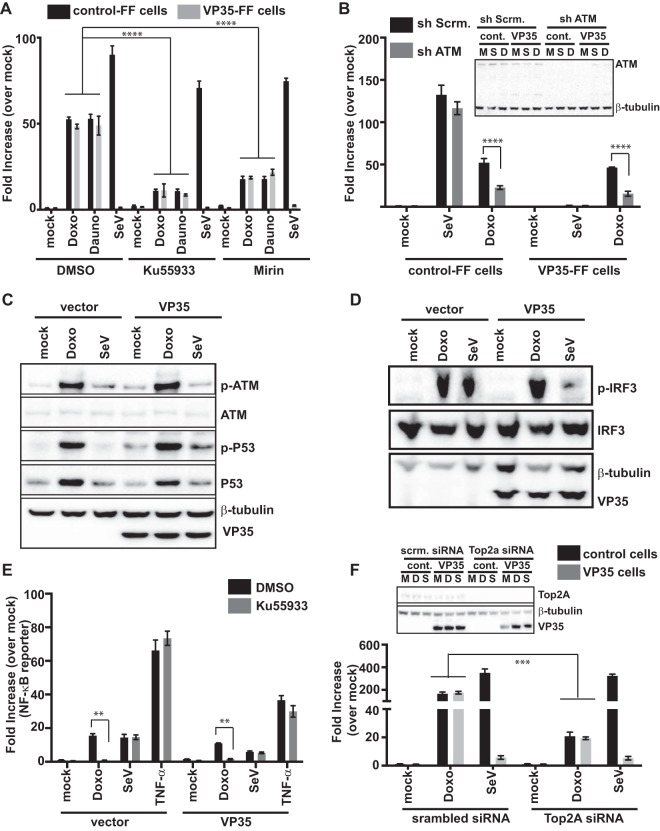
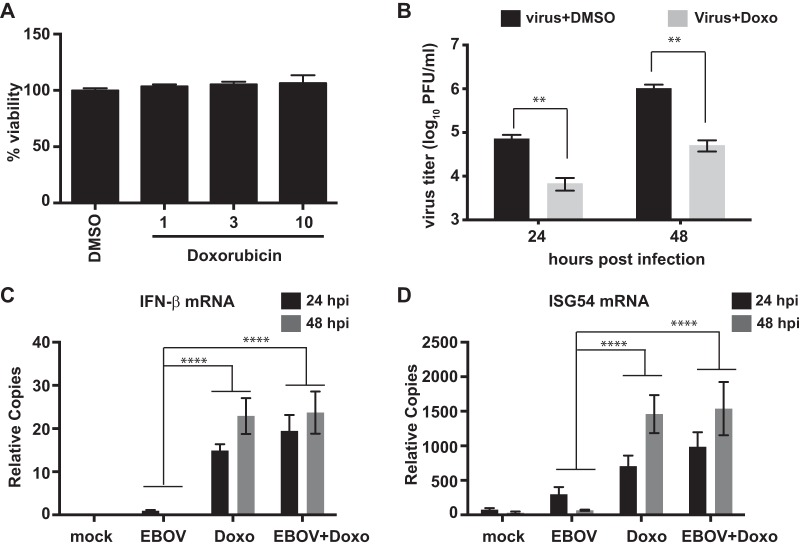
Ebola virus (EBOV) protein VP35 inhibits production of interferon alpha/beta (IFN) by blocking RIG-I-like receptor signaling pathways, thereby promoting virus replication and pathogenesis. A high-throughput screening assay, developed to identify compounds that either inhibit or bypass VP35 IFN-antagonist function, identified five DNA intercalators as reproducible hits from a library of bioactive compounds. Four, including doxorubicin and daunorubicin, are anthracycline antibiotics that inhibit topoisomerase II and are used clinically as chemotherapeutic drugs. These compounds were demonstrated to induce IFN responses in an ATM kinase-dependent manner and to also trigger the DNA-sensing cGAS-STING pathway of IFN induction. These compounds also suppress EBOV replication and induce IFN in the presence of IFN-antagonist proteins from multiple negative-sense RNA viruses. These findings provide new insights into signaling pathways activated by important chemotherapy drugs and identify a novel therapeutic approach for IFN induction that may be exploited to inhibit RNA virus replication. Ebola virus and other emerging RNA viruses are significant but unpredictable public health threats. Therapeutic approaches with broad-spectrum activity could provide an attractive response to such infections. We describe a novel assay that can identify small molecules that overcome Ebola virus-encoded innate immune evasion mechanisms. This assay identified as hits cancer chemotherapeutic drugs, including doxorubicin. Follow-up studies provide new insight into how doxorubicin induces interferon (IFN) responses, revealing activation of both the DNA damage response kinase ATM and the DNA sensor cGAS and its partner signaling protein STING. The studies further demonstrate that the ATM and cGAS-STING pathways of IFN induction are a point of vulnerability not only for Ebola virus but for other RNA viruses as well, because viral innate immune antagonists consistently fail to block these signals. These studies thereby define a novel avenue for therapeutic intervention against emerging RNA viruses.
埃博拉病毒(EBOV)蛋白VP35通过阻断视黄酸诱导基因I样受体信号通路来抑制α/β干扰素(IFN)的产生,从而促进病毒复制和发病机制。为了鉴定抑制或绕过VP35干扰素拮抗功能的化合物而开发的一种高通量筛选试验,从生物活性化合物库中鉴定出五种DNA嵌入剂作为可重复的命中物。其中四种,包括阿霉素和柔红霉素,是抑制拓扑异构酶II的蒽环类抗生素,临床上用作化疗药物。这些化合物被证明以一种依赖ATM激酶的方式诱导IFN反应,并且还触发IFN诱导的DNA传感cGAS-STING途径。这些化合物还抑制埃博拉病毒复制,并在存在来自多种负链RNA病毒的干扰素拮抗蛋白的情况下诱导IFN。这些发现为重要化疗药物激活的信号通路提供了新的见解,并确定了一种新的IFN诱导治疗方法,可用于抑制RNA病毒复制。埃博拉病毒和其他新出现的RNA病毒是重大但不可预测的公共卫生威胁。具有广谱活性的治疗方法可能为这类感染提供有吸引力的应对措施。我们描述了一种新的试验,该试验可以鉴定克服埃博拉病毒编码的先天免疫逃避机制的小分子。该试验鉴定出癌症化疗药物,包括阿霉素,作为命中物。后续研究为阿霉素如何诱导干扰素(IFN)反应提供了新的见解,揭示了DNA损伤反应激酶ATM以及DNA传感器cGAS及其伴侣信号蛋白STING的激活。这些研究进一步证明,IFN诱导的ATM和cGAS-STING途径不仅是埃博拉病毒的一个脆弱点,也是其他RNA病毒的脆弱点,因为病毒先天免疫拮抗剂始终无法阻断这些信号。因此,这些研究确定了一种针对新出现的RNA病毒的治疗干预新途径。