Liu Yongchen, Wang Zheng, Li Maolan, Ye Yuanyuan, Xu Yi, Zhang Yichi, Yuan Ruiyan, Jin Yunpeng, Hao Yajuan, Jiang Lin, Hu Yunping, Chen Shili, Liu Fatao, Zhang Yijian, Wu Wenguang, Liu Yingbin
Department of General Surgery and Laboratory of General Surgery, Xinhua Hospital, Affiliated to Shanghai Jiao Tong University School of Medicine, Shanghai, China.
Institute of Biliary Tract Disease, Shanghai Jiao Tong University School of Medicine, Shanghai, China.
Cancer Sci. 2017 Jun;108(6):1240-1252. doi: 10.1111/cas.13248. Epub 2017 May 22.
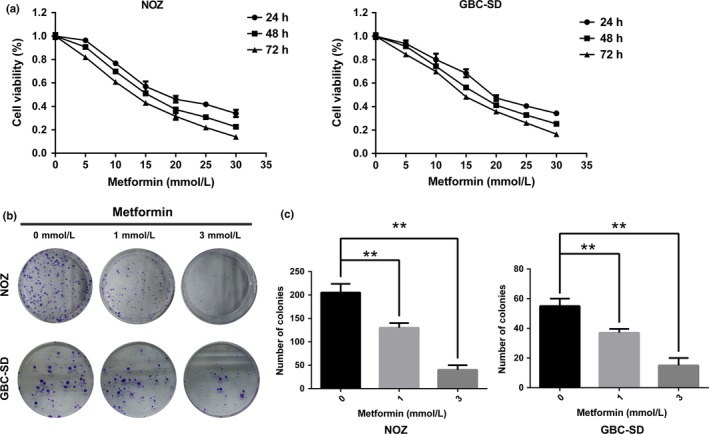
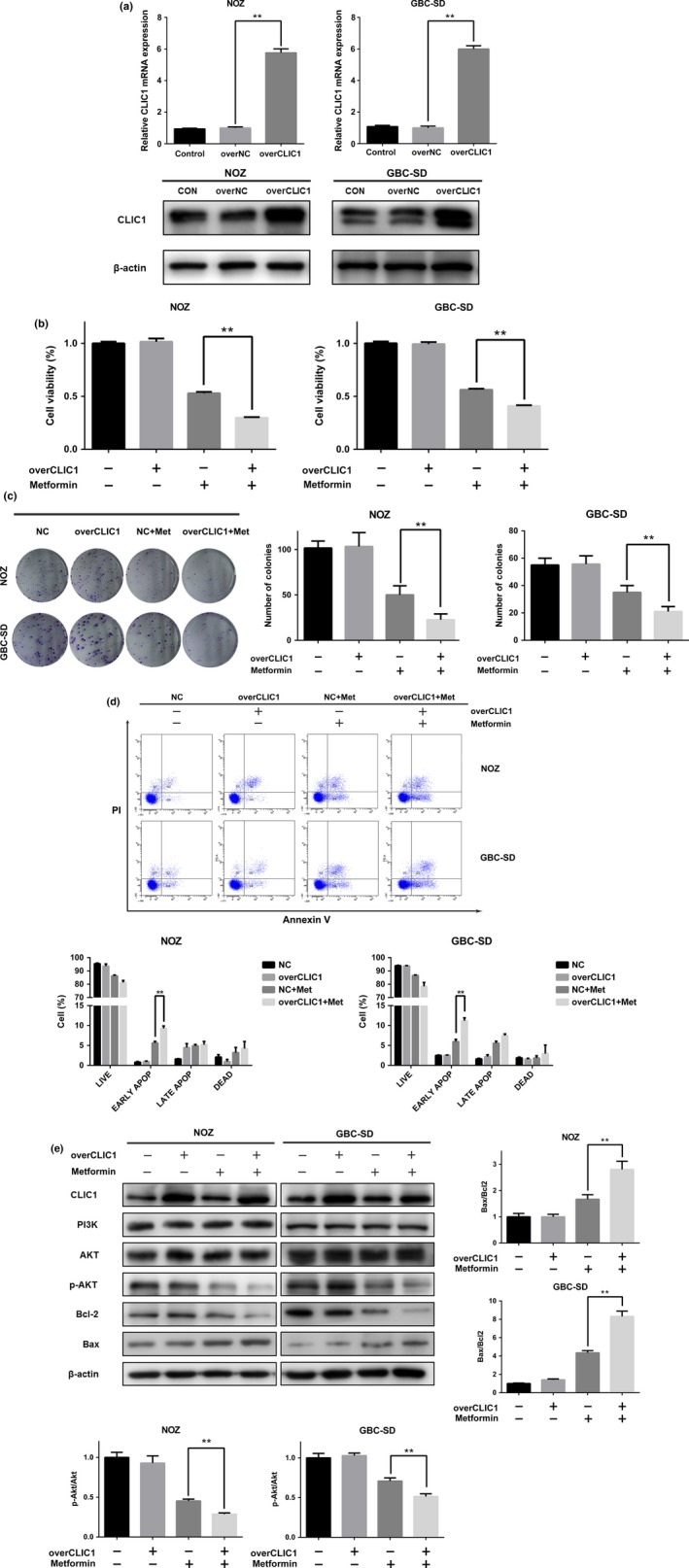
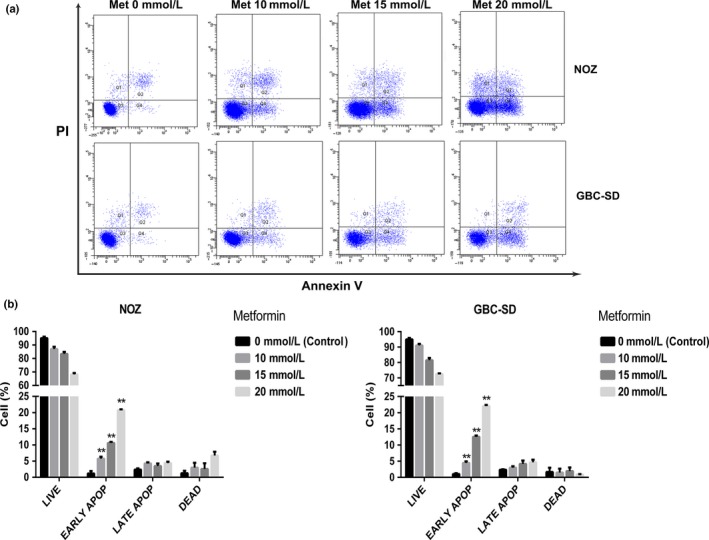
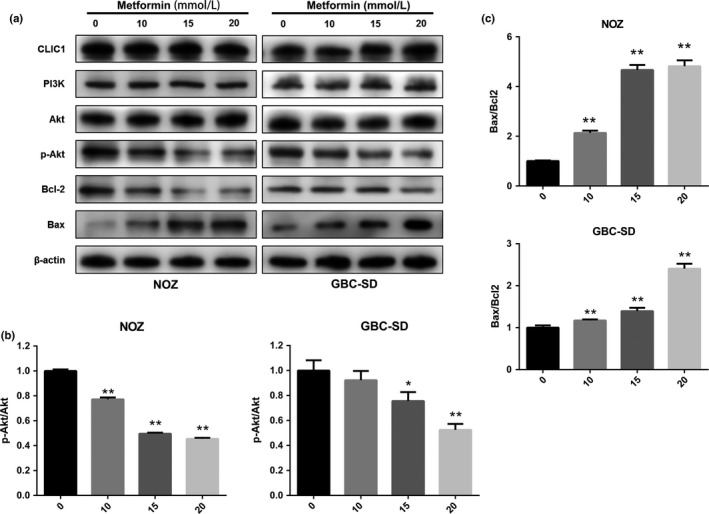
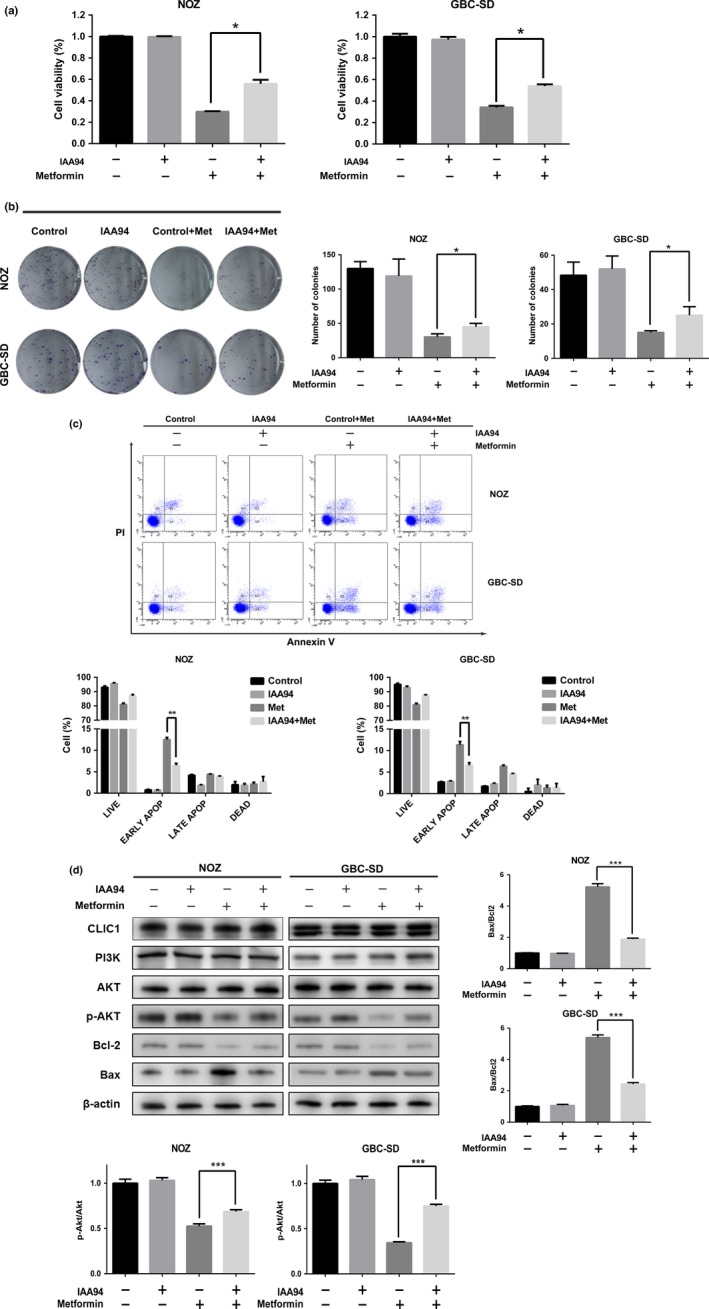
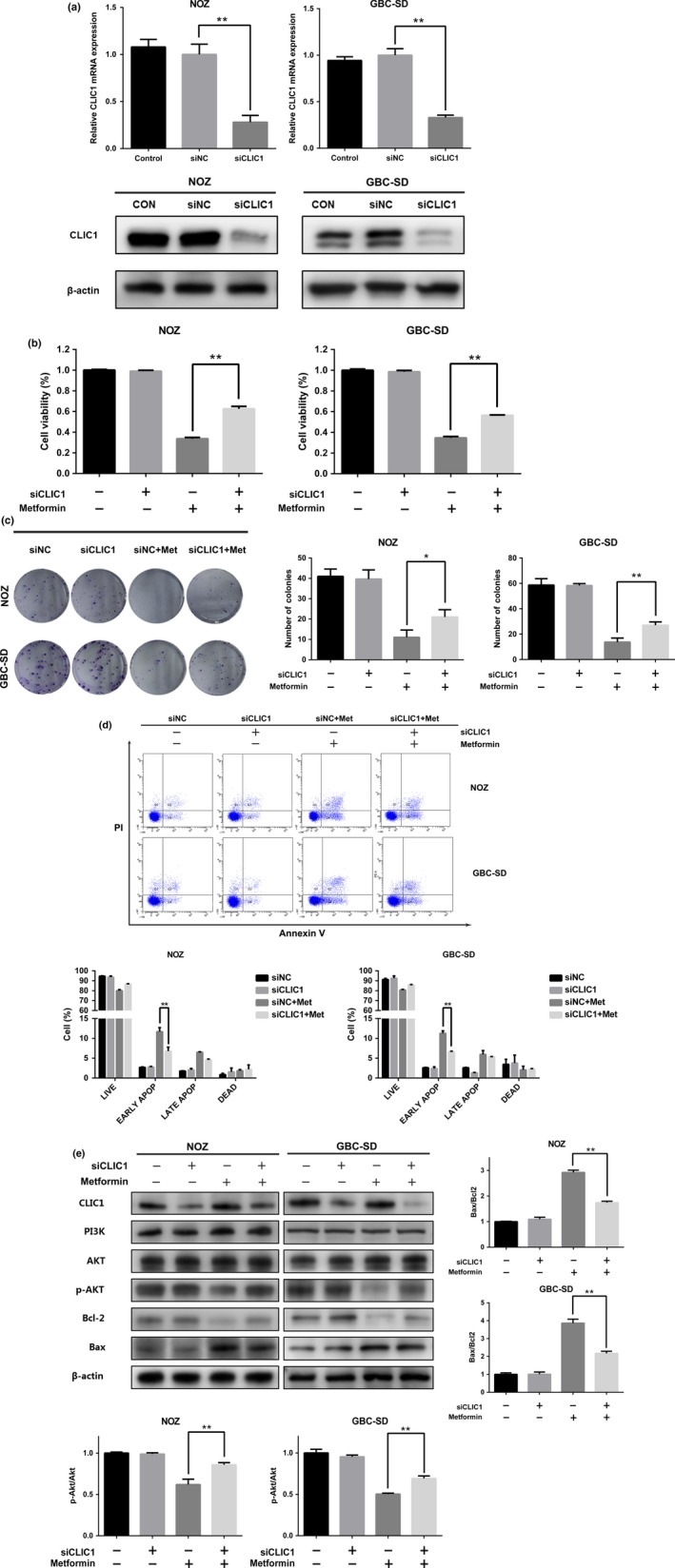
Metformin is the most commonly used drug for type 2 diabetes and has potential benefit in treating and preventing cancer. Previous studies indicated that membrane proteins can affect the antineoplastic effects of metformin and may be crucial in the field of cancer research. However, the antineoplastic effects of metformin and its mechanism in gallbladder cancer (GBC) remain largely unknown. In this study, the effects of metformin on GBC cell proliferation and viability were evaluated using the Cell Counting Kit-8 (CCK-8) assay and an apoptosis assay. Western blotting was performed to investigate related signaling pathways. Of note, inhibition, knockdown and upregulation of the membrane protein Chloride intracellular channel 1 (CLIC1) can affect GBC resistance in the presence of metformin. Our data demonstrated that metformin apparently inhibits the proliferation and viability of GBC cells. Metformin promoted cell apoptosis and increased the number of early apoptotic cells. We found that metformin can exert growth-suppressive effects on these cell lines via inhibition of p-Akt activity and the Bcl-2 family. Notably, either dysfunction or downregulation of CLIC1 can partially decrease the antineoplastic effects of metformin while upregulation of CLIC1 can increase drug sensitivity. Our findings provide experimental evidence for using metformin as an antitumor treatment for gallbladder carcinoma.
二甲双胍是治疗2型糖尿病最常用的药物,在治疗和预防癌症方面具有潜在益处。先前的研究表明,膜蛋白可影响二甲双胍的抗肿瘤作用,在癌症研究领域可能至关重要。然而,二甲双胍在胆囊癌(GBC)中的抗肿瘤作用及其机制仍 largely unknown。在本研究中,使用细胞计数试剂盒-8(CCK-8)检测法和凋亡检测法评估了二甲双胍对GBC细胞增殖和活力的影响。进行蛋白质印迹法以研究相关信号通路。值得注意的是,膜蛋白氯离子细胞内通道1(CLIC1)的抑制、敲低和上调可在存在二甲双胍的情况下影响GBC耐药性。我们的数据表明,二甲双胍明显抑制GBC细胞的增殖和活力。二甲双胍促进细胞凋亡并增加早期凋亡细胞的数量。我们发现,二甲双胍可通过抑制p-Akt活性和Bcl-2家族对这些细胞系发挥生长抑制作用。值得注意的是,CLIC1功能障碍或下调可部分降低二甲双胍的抗肿瘤作用,而CLIC1上调可增加药物敏感性。我们的研究结果为使用二甲双胍作为胆囊癌的抗肿瘤治疗提供了实验证据。