Ren Zhongying, Yu Daoqian, Yang Zhaoen, Li Changfeng, Qanmber Ghulam, Li Yi, Li Jie, Liu Zhao, Lu Lili, Wang Lingling, Zhang Hua, Chen Quanjia, Li Fuguang, Yang Zuoren
Xinjiang Research Base, State Key Laboratory of Cotton Biology, Xinjiang Agriculture UniversityUrumqi, China; Institute of Cotton Research, Chinese Academy of Agricultural SciencesAnyang, China.
Institute of Cotton Research, Chinese Academy of Agricultural SciencesAnyang, China; Cotton Research Institute, Anhui Academy of Agricultural SciencesHefei, China.
Front Plant Sci. 2017 Mar 22;8:384. doi: 10.3389/fpls.2017.00384. eCollection 2017.
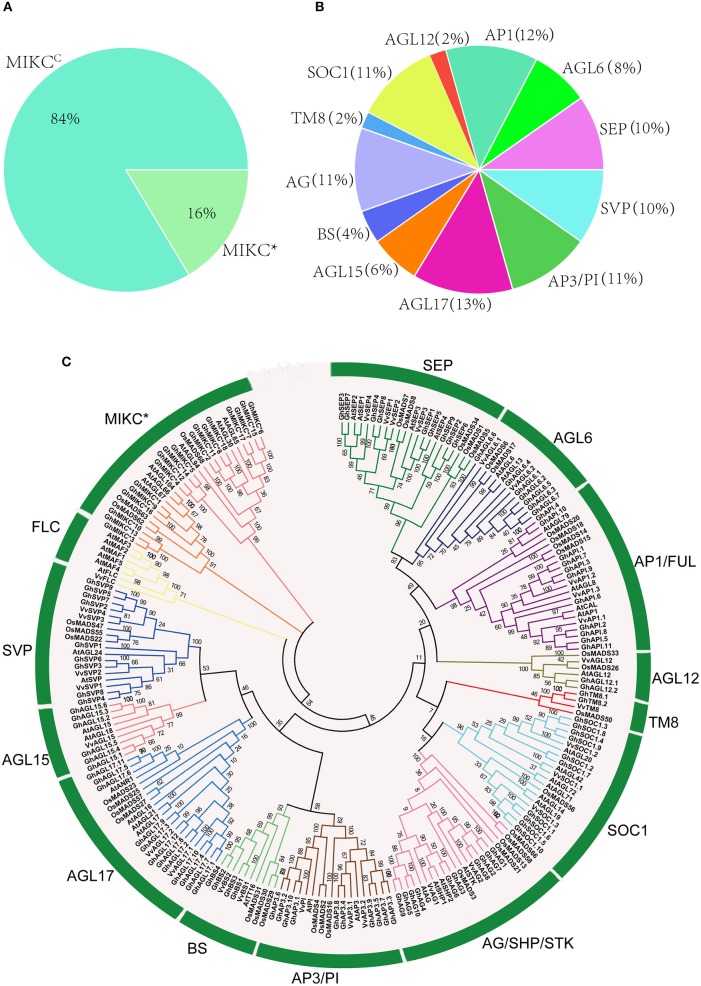
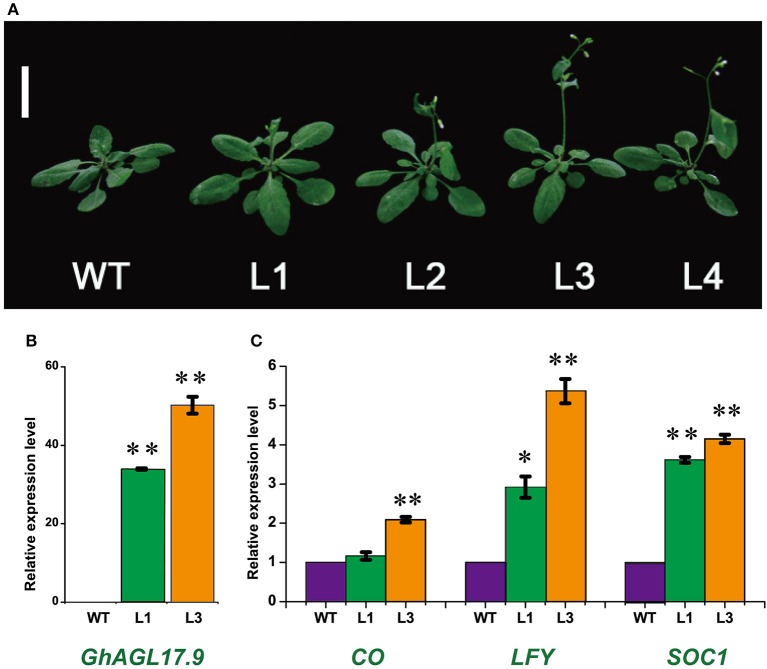
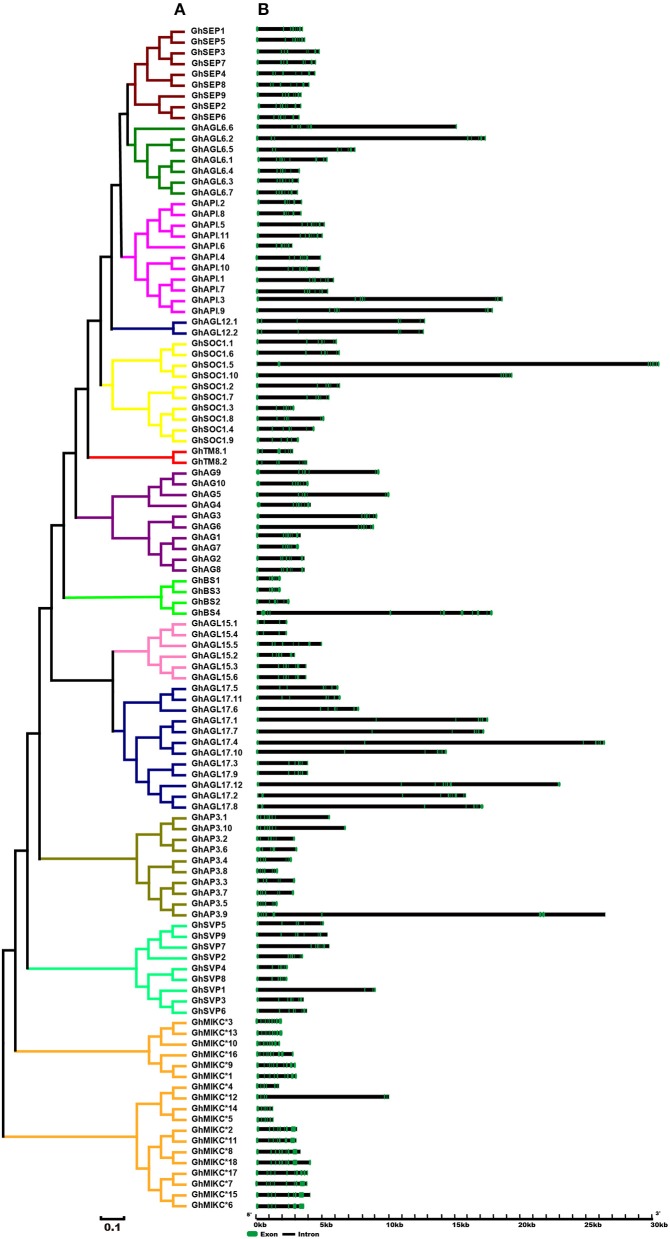
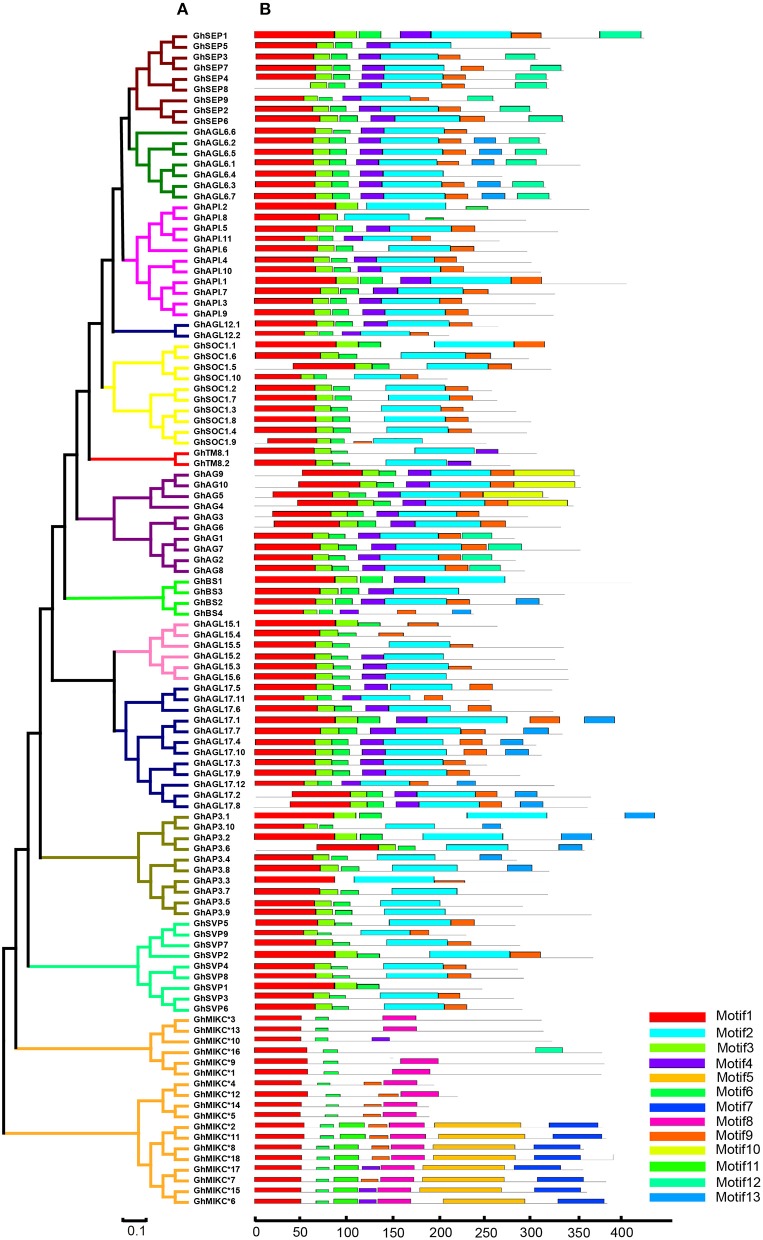
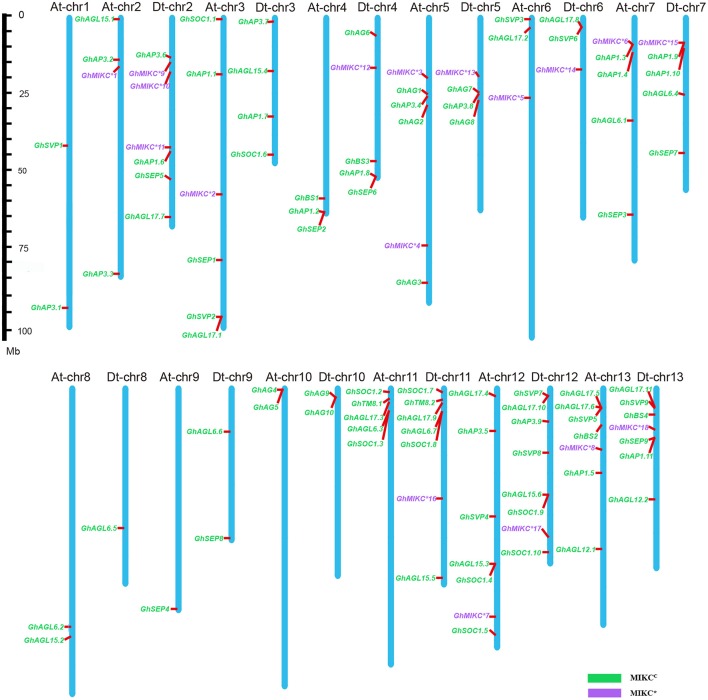
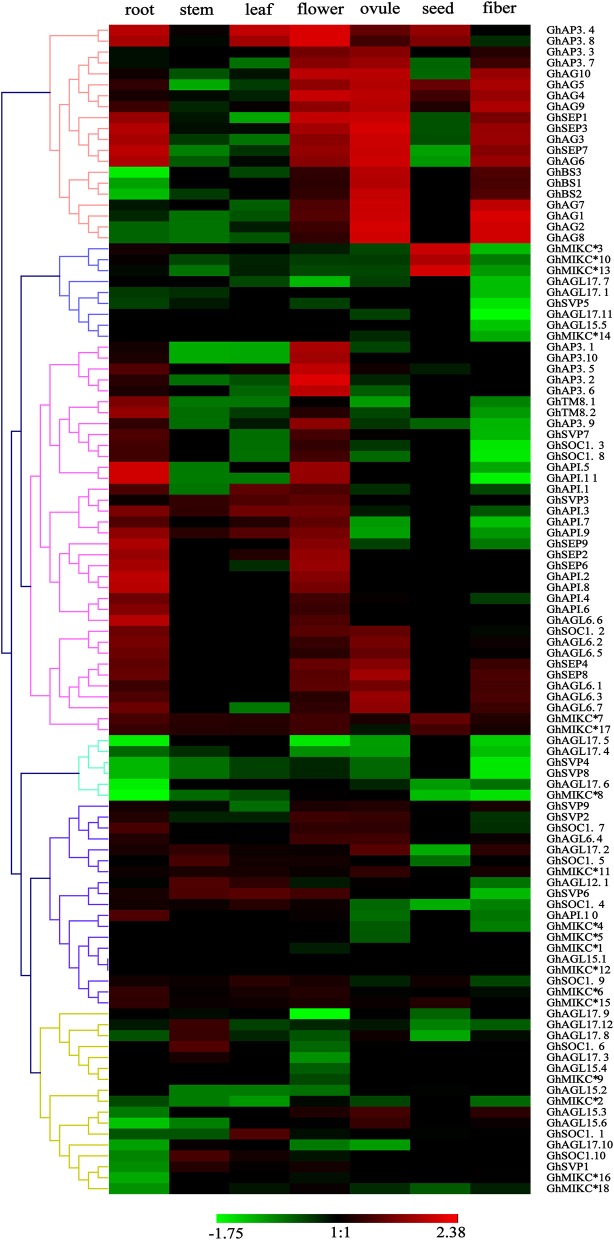
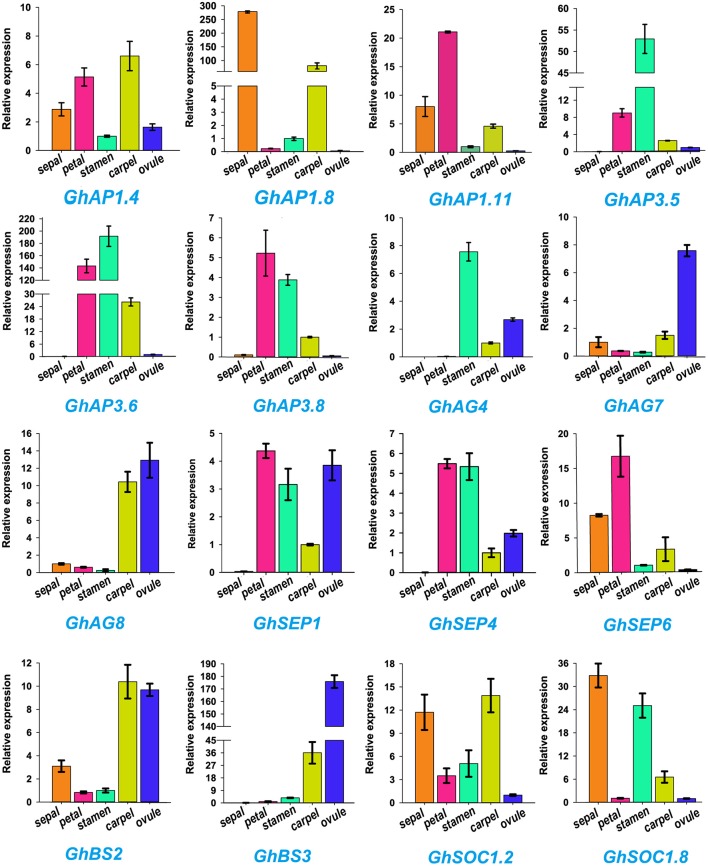
Cotton is one of the major world oil crops. Cottonseed oil meets the increasing demand of fried food, ruminant feed, and renewable bio-fuels. MADS intervening keratin-like and C-terminal (MIKC)-type MADS-box genes encode transcription factors that have crucial roles in various plant developmental processes. Nevertheless, this gene family has not been characterized, nor its functions investigated, in cotton. Here, we performed a comprehensive analysis of MIKC-type MADS genes in the tetraploid L., which is the most widely cultivated cotton species. In total, 110 genes were identified and phylogenetically classified into 13 subfamilies. The Flowering locus C () subfamily was absent in the L. genome but is found in Arabidopsis and L. Among the genes, 108 were distributed across the 13 A and 12 of the D genome's chromosomes, while two were located in scaffolds. within subfamilies displayed similar exon/intron characteristics and conserved motif compositions. According to RNA-sequencing, most MIKC genes exhibited high flowering-associated expression profiles. A quantitative real-time PCR analysis revealed that some crucial MIKC genes determined the identities of the five flower organs. Furthermore, the overexpression of in Arabidopsis caused an early flowering phenotype. Meanwhile, the expression levels of the flowering-related genes and were significantly increased in these lines. These results provide useful information for future studies of regulation of cotton flowering.
棉花是世界主要油料作物之一。棉籽油满足了油炸食品、反刍动物饲料和可再生生物燃料日益增长的需求。MADS介入角蛋白样和C末端(MIKC)型MADS盒基因编码转录因子,这些转录因子在各种植物发育过程中发挥着关键作用。然而,该基因家族在棉花中尚未得到表征,其功能也未得到研究。在此,我们对四倍体陆地棉(最广泛种植的棉花品种)中的MIKC型MADS基因进行了全面分析。总共鉴定出110个基因,并在系统发育上分为13个亚家族。开花位点C(FLC)亚家族在陆地棉基因组中不存在,但在拟南芥和海岛棉中存在。在这些基因中,108个分布在13条A染色体和12条D染色体上,而另外两个位于支架上。亚家族内的基因显示出相似的外显子/内含子特征和保守的基序组成。根据RNA测序,大多数MIKC基因表现出与开花相关的高表达谱。定量实时PCR分析表明,一些关键的MIKC基因决定了五个花器官的特征。此外,在拟南芥中过表达该基因导致早花表型。同时,这些株系中开花相关基因FT和SOC1的表达水平显著增加。这些结果为未来棉花开花调控的研究提供了有用信息。