Alaee Mohammad, Khaghani Shahnaz, Behroozfar Kiarash, Hesari Zahra, Ghorbanhosseini Seyedeh Sara, Nourbakhsh Mitra
Department of Biochemistry, School of Medicine, Tehran University of Medical Sciences, Tehran, Iran.
Department of Biochemistry, School of Medicine, Iran University of Medical Sciences, Tehran, Iran.
J Breast Cancer. 2017 Mar;20(1):20-26. doi: 10.4048/jbc.2017.20.1.20. Epub 2017 Mar 24.
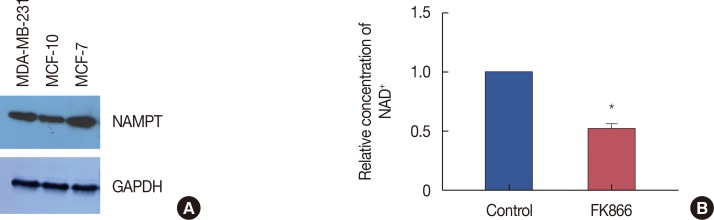
Tumor cells have increased turnover of nicotinamide adenine dinucleotide (NAD), the main coenzyme in processes including adenosine diphosphate-ribosylation, deacetylation, and calcium mobilization. NAD is predominantly synthesized in human cells via the salvage pathway, with the first component being nicotinamide. Nicotinamide phosphoribosyltransferase (NAMPT) is the key enzyme in this pathway, and its chemical inhibition by FK866 has elicited antitumor effects in several preclinical models of solid and hematologic cancers. However, its efficacy in estrogen receptor (ER)-positive and human epidermal growth factor receptor 2-positive breast cancer cells has not been previously investigated. In this study, we aimed to deplete the NAD content of MCF-7 cells, a model cell line for ER-positive breast cancer, by inhibiting NAMPT in order to evaluate downstream effects on p53 and its acetylation, p21 and Bcl-2-associated X protein (BAX) expression, and finally, apoptosis in MCF-7 breast cancer cells.
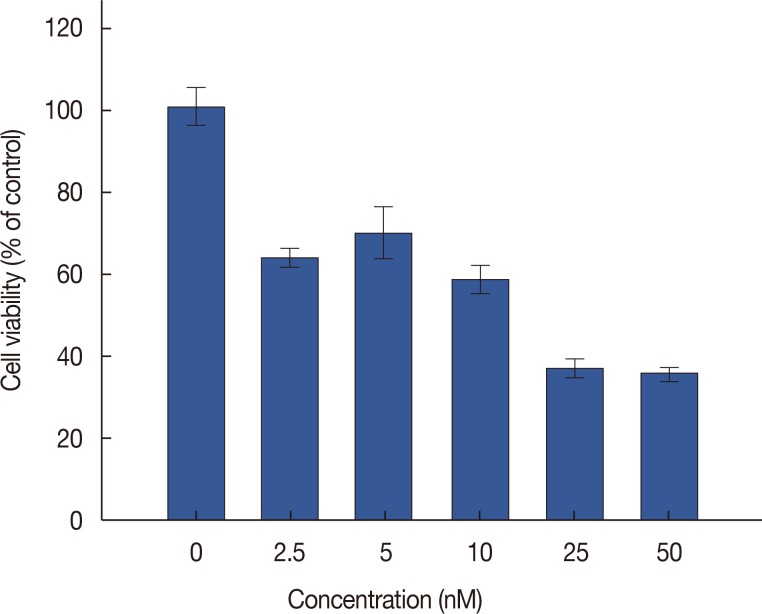
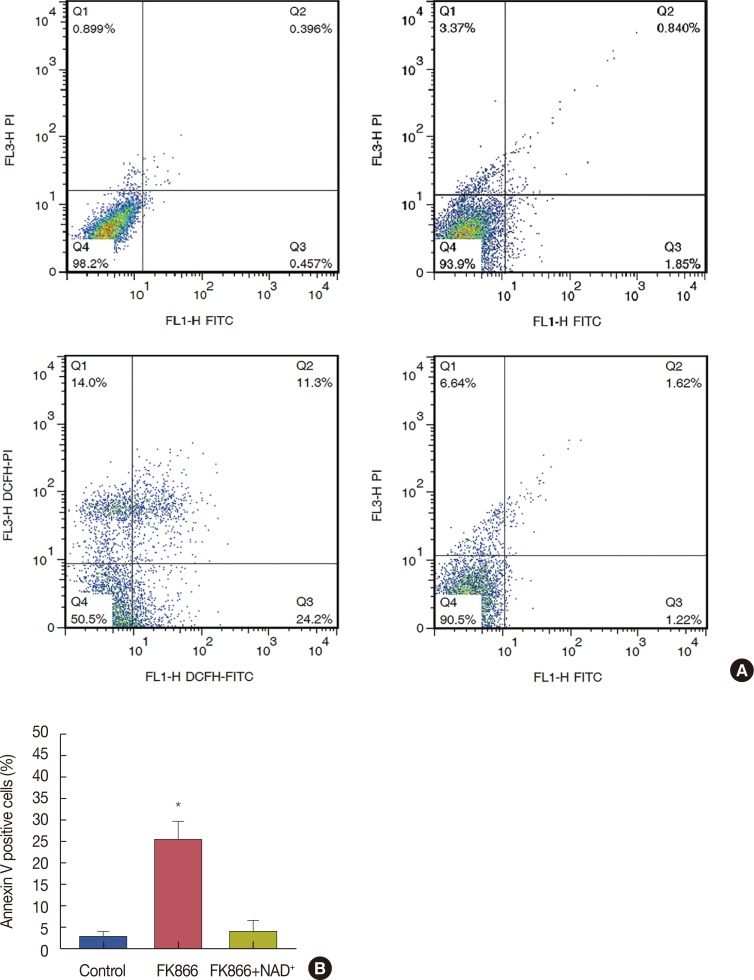
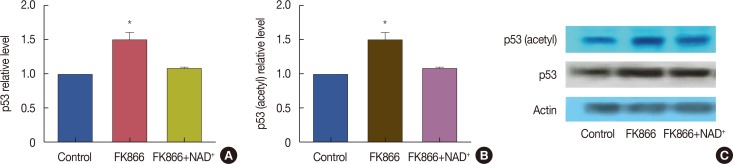
MCF-7 cells were cultured and treated with FK866. NAD levels in cells were determined colorimetrically. Levels of p53 and its acetylated form were determined by Western blotting. Expression of and was determined by real-time polymerase chain reaction. Finally, levels of apoptosis were assessed by flow cytometry using markers for annexin V and propidium iodide.
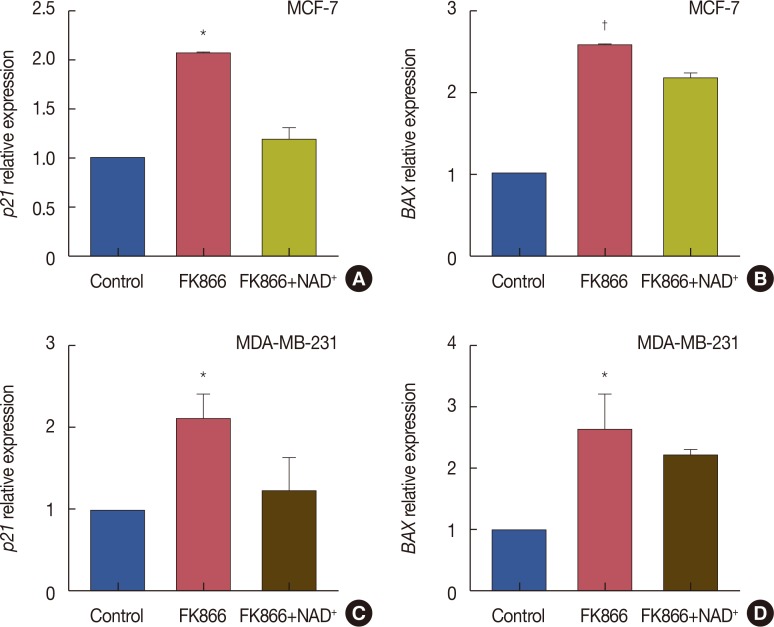
FK866 treatment was able to increase p53 levels and acetylation, upregulate and expression, and induce apoptosis in MCF-7 cells. Addition of exogenous NAD to cells reversed these effects, suggesting that FK866 exerted its effects by depleting NAD levels.
Results showed that FK866 could effectively inhibit NAD biosynthesis and induce programmed cell death in MCF-7 cells, suggesting that NAMPT inhibitors may be useful for the treatment of ER-positive breast cancers.
肿瘤细胞中烟酰胺腺嘌呤二核苷酸(NAD)的周转增加,NAD是包括二磷酸腺苷核糖基化、去乙酰化和钙动员等过程中的主要辅酶。NAD主要通过补救途径在人类细胞中合成,其首个成分是烟酰胺。烟酰胺磷酸核糖基转移酶(NAMPT)是该途径中的关键酶,FK866对其进行化学抑制已在多种实体瘤和血液系统癌症的临床前模型中引发抗肿瘤作用。然而,其在雌激素受体(ER)阳性和人表皮生长因子受体2阳性乳腺癌细胞中的疗效此前尚未得到研究。在本研究中,我们旨在通过抑制NAMPT来消耗ER阳性乳腺癌的模型细胞系MCF-7细胞中的NAD含量,以评估对p53及其乙酰化、p21和Bcl-2相关X蛋白(BAX)表达的下游影响,最终评估MCF-7乳腺癌细胞中的凋亡情况。
培养MCF-7细胞并用FK866处理。采用比色法测定细胞中的NAD水平。通过蛋白质免疫印迹法测定p53及其乙酰化形式的水平。通过实时聚合酶链反应测定p21和BAX的表达。最后,使用膜联蛋白V和碘化丙啶标记物通过流式细胞术评估凋亡水平。
FK866处理能够增加MCF-7细胞中的p53水平及其乙酰化程度,上调p21和BAX的表达,并诱导细胞凋亡。向细胞中添加外源性NAD可逆转这些效应,表明FK866通过消耗NAD水平发挥作用。
结果表明,FK866可有效抑制NAD生物合成并诱导MCF-7细胞发生程序性细胞死亡,提示NAMPT抑制剂可能对ER阳性乳腺癌的治疗有用。