Department of Neurosurgery, The Second Affiliated Hospital, School of Medicine, Zhejiang University, Hangzhou, Zhejiang, China.
Department of Physiology and Pharmacology, Loma Linda University, Loma Linda, CA, United States.
Curr Neuropharmacol. 2018;16(9):1255-1266. doi: 10.2174/1570159X15666170406142631.
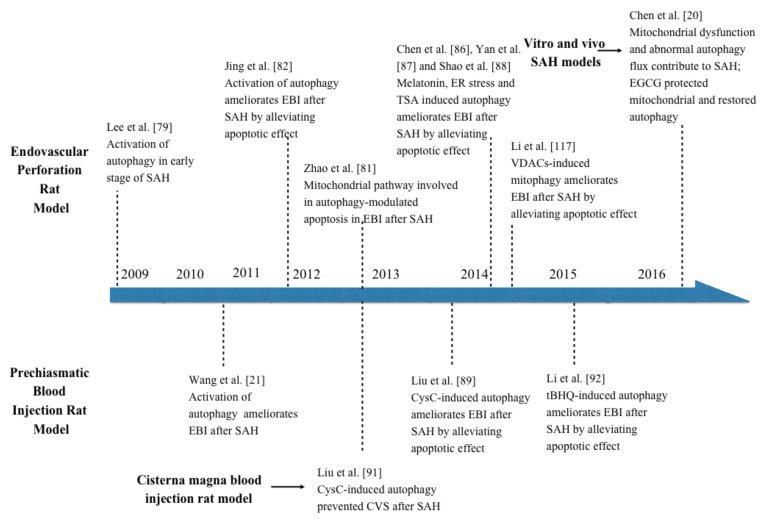
Autophagy is an extensive self-degradation process for the disposition of cytosolic aggregated or misfolded proteins and defective organelles which executes the functions of pro-survival and pro-death to maintain cellular homeostasis. The pathway plays essential roles in several neurological disorders. Subarachnoid Hemorrhage (SAH) is a devastating subtype of hemorrhagic stroke with high risk of neurological deficit and high mortality. Early brain injury (EBI) plays a role in the poor clinical course and outcome after SAH. Recent studies have paid attention on the role of the autophagy pathway in the development of EBI after SAH. We aim to update the multifaceted roles of autophagy pathway in the pathogenesis of SAH, especially in the phase of EBI.
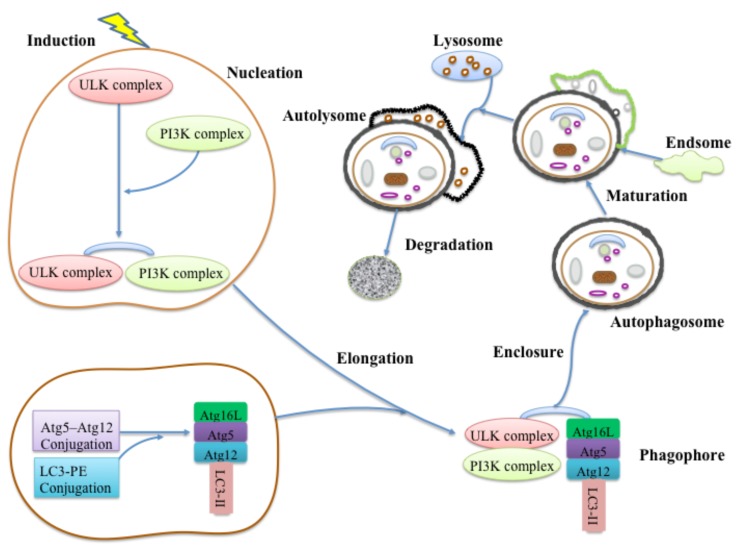
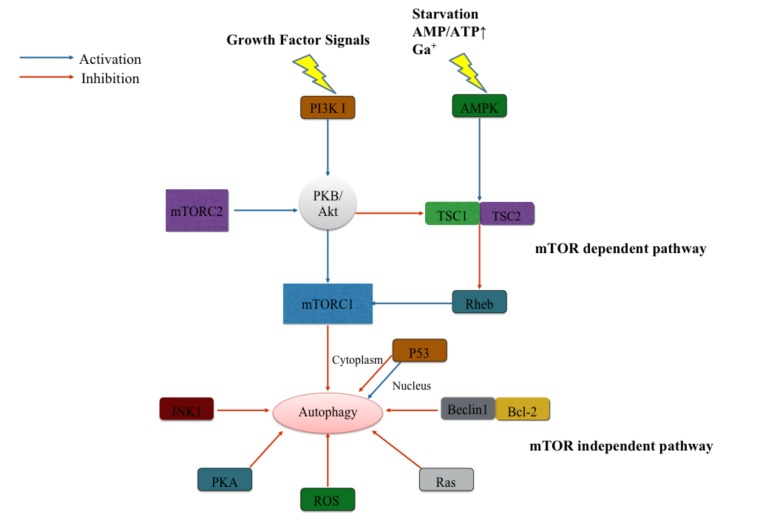
We reviewed early researches related to autophagy and SAH. The following three aspects of contents will be mainly discussed: the process of the autophagy pathway, the role of the autophagy in SAH and the interaction between organelle dysfunction and autophagy pathway after SAH.
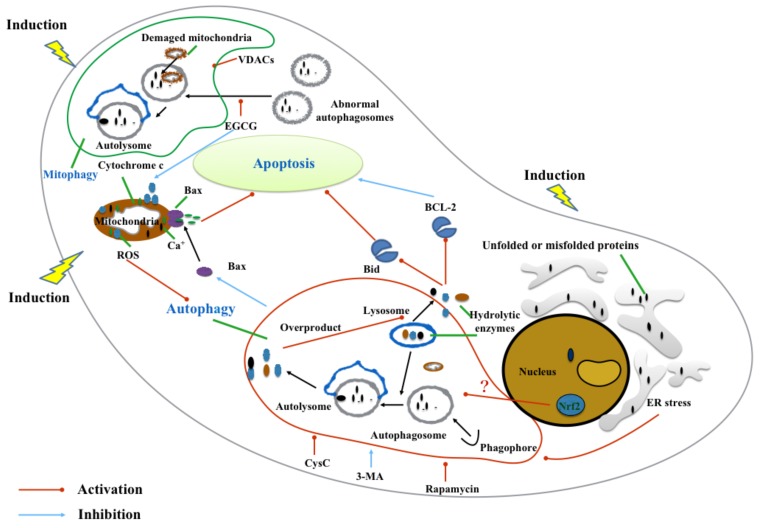
Accumulating evidence shows an increased autophagy reaction in response to early stages of SAH. However, others suggest inadequate or excessive autophagy activation can result in cell injury and death. In addition to autophagy, apoptosis and necrosis can occur in neurons simultaneously after SAH, leading to mixed features of cell death morphologies. And it is also known that there is extensive crosstalk between autophagy and apoptosis pathway. Subcellular organelles of neural cells generally participate in the formation and functional parts of autophagy process.
Autophagy plays an important role in the SAH-induced brain injury. A better understanding of the interrelationship among autophagy, apoptosis, and necrosis might provide us better therapeutic targets for the treatment of SAH.
自噬是一种广泛的自我降解过程,用于处置细胞质中聚集或错误折叠的蛋白质和有缺陷的细胞器,执行生存和死亡功能,以维持细胞内平衡。该途径在几种神经疾病中发挥着重要作用。蛛网膜下腔出血(SAH)是一种具有高神经功能缺损和高死亡率的出血性中风亚型。早期脑损伤(EBI)在 SAH 后的不良临床过程和结果中起作用。最近的研究已经关注自噬途径在 SAH 后 EBI 发展中的作用。我们旨在更新自噬途径在 SAH 发病机制中的多方面作用,特别是在 EBI 阶段。
我们回顾了与自噬和 SAH 相关的早期研究。将主要讨论以下三个方面的内容:自噬途径的过程、自噬在 SAH 中的作用以及 SAH 后细胞器功能障碍与自噬途径之间的相互作用。
越来越多的证据表明,SAH 早期反应增强了自噬反应。然而,其他人认为不足或过度的自噬激活会导致细胞损伤和死亡。除自噬外,SAH 后神经元中同时还会发生凋亡和坏死,导致细胞死亡形态的混合特征。并且还知道自噬和凋亡途径之间存在广泛的串扰。神经细胞的亚细胞细胞器通常参与自噬过程的形成和功能部分。
自噬在 SAH 诱导的脑损伤中起着重要作用。更好地理解自噬、凋亡和坏死之间的相互关系可能为我们提供更好的治疗靶点,以治疗 SAH。