Zhang Jianbo, Zhou Chen, Jiang Huimin, Liang Lin, Shi Wen, Zhang Quansheng, Sun Peiqing, Xiang Rong, Wang Yue, Yang Shuang
Department of Gastrointestinal Surgery, Second Affiliated Hospital of Chongqing Medical University, Chongqing 400010, China.
Department of Medical Genetics, Tianjin Key Laboratory of Tumor Microenvironment and Neurovascular Regulation, Medical College of Nankai University, Tianjin 300071, China.
Cell Death Dis. 2017 Apr 6;8(4):e2732. doi: 10.1038/cddis.2017.154.
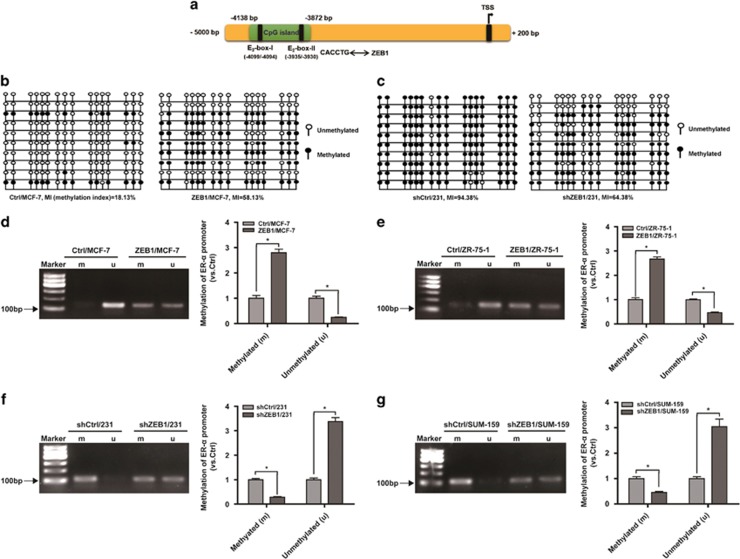
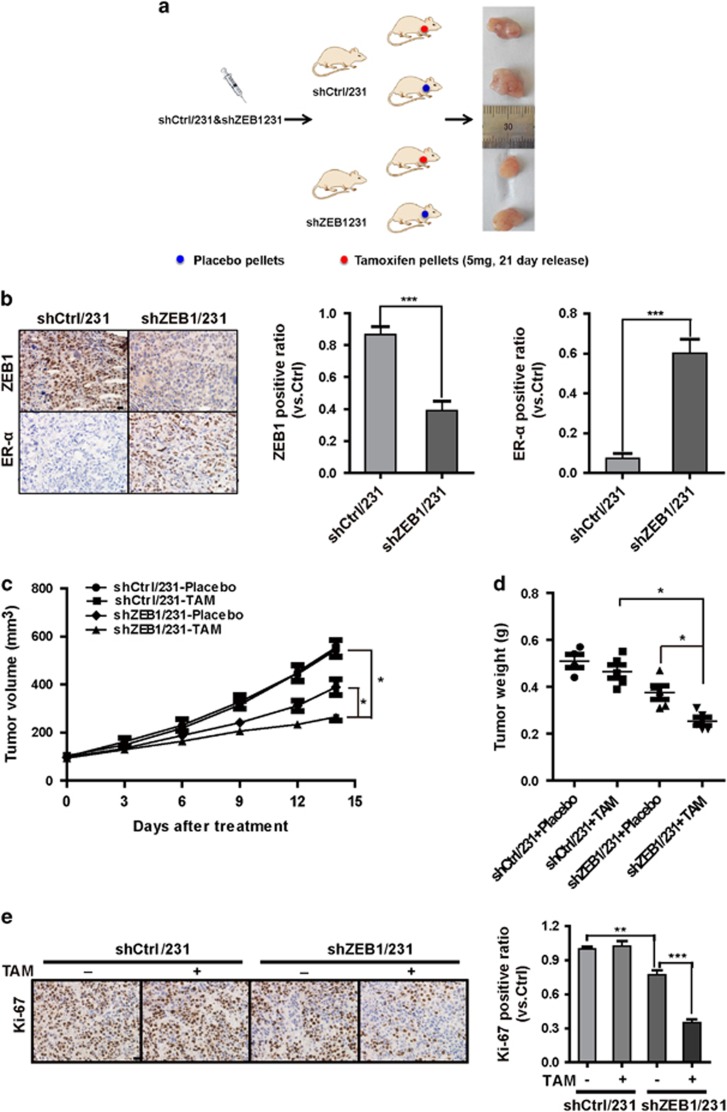
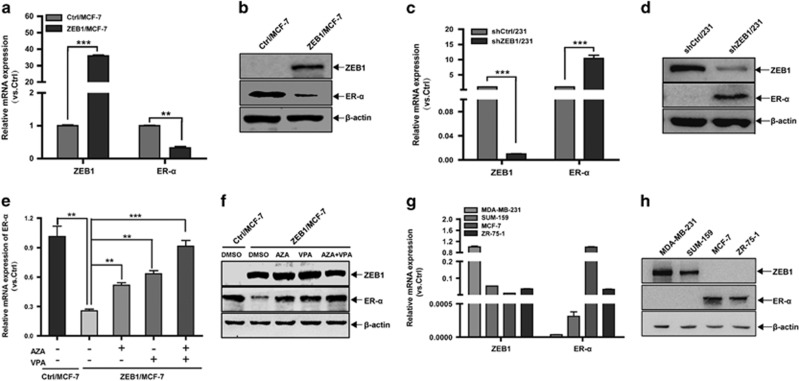
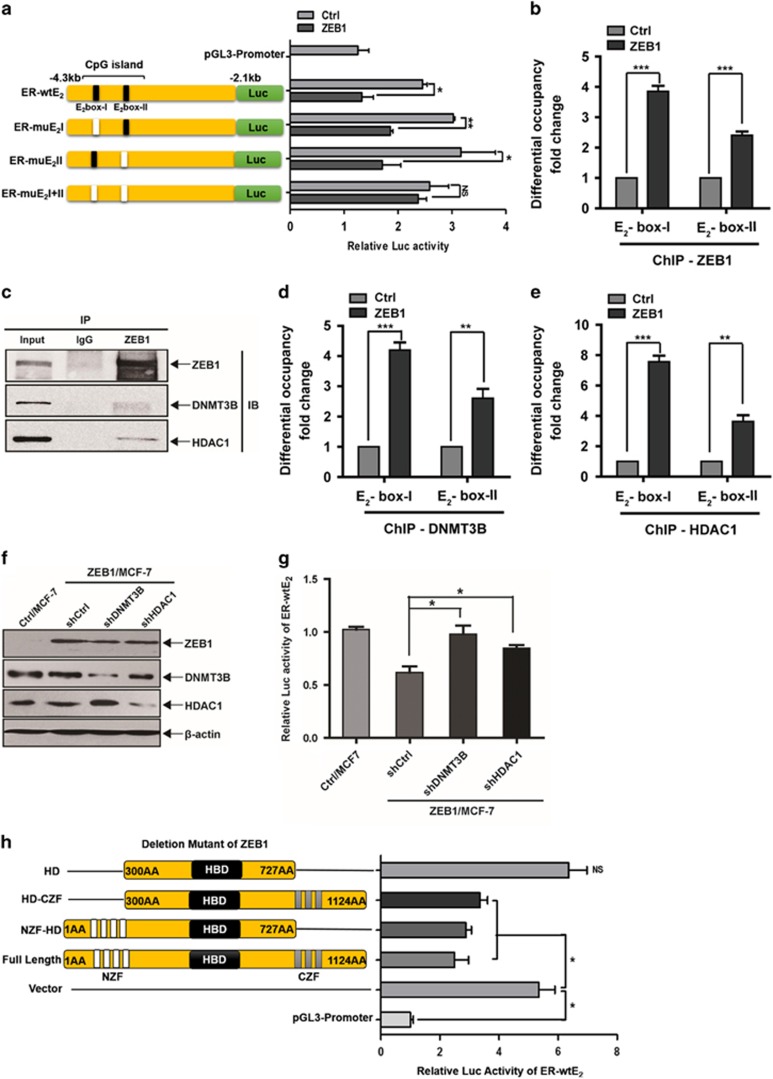
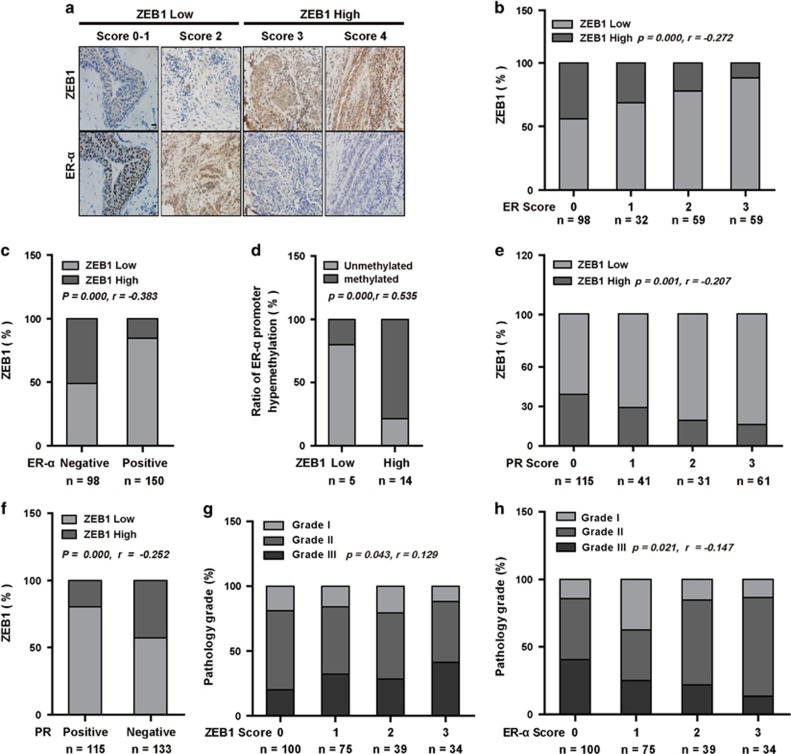
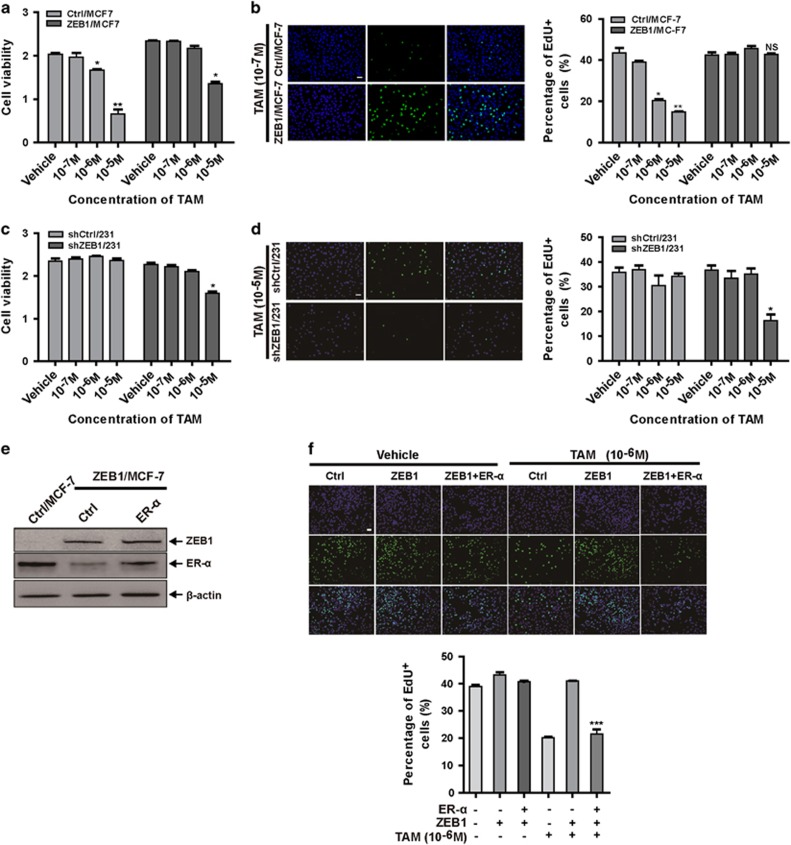
Antiestrogen resistance is a major obstacle to endocrine therapy for breast cancers. Although reduced estrogen receptor-α (ER-α) expression is a known contributing factor to antiestrogen resistance, the mechanisms of ER-α downregulation in antiestrogen resistance are not fully understood. Here, we report that ectopic zinc-finger E-box binding homeobox 1 (ZEB1) is associated with ER-α deficiency in breast cancer cells and thus confers antiestrogen resistance. Mechanistically, ZEB1 represses ER-α transcription by forming a ZEB1/DNA methyltransferase (DNMT)3B/histone deacetylase (HDAC)1 complex on the ER-α promoter, leading to DNA hypermethylation and the silencing of ER-α. Thus, ectopic ZEB1 downregulates ER-α expression and subsequently attenuates cell growth inhibition by antiestrogens, such as tamoxifen and fulvestrant. Notably, the depletion of ZEB1 by RNA interference causes ER-α promoter demethylation, restores ER-α expression, and increases the responsiveness of breast cancer cells to antiestrogen treatment. By studying specimens from a large cohort of subjects with breast cancer, we found a strong inverse correlation between ZEB1 and ER-α protein expression. Moreover, breast tumors that highly express ZEB1 exhibit ER-α promoter hypermethylation. Using a nude mouse xenograft model, we further confirmed that the downregulation of ZEB1 expression restores the responsiveness of breast cancer cells to antiestrogen therapy in vivo. Therefore, our findings suggest that ZEB1 is a crucial determinant of resistance to antiestrogen therapies in breast cancer.
抗雌激素耐药是乳腺癌内分泌治疗的主要障碍。虽然雌激素受体-α(ER-α)表达降低是抗雌激素耐药的一个已知促成因素,但抗雌激素耐药中ER-α下调的机制尚未完全阐明。在此,我们报告异位锌指E盒结合同源框1(ZEB1)与乳腺癌细胞中ER-α缺乏相关,从而赋予抗雌激素耐药性。从机制上讲,ZEB1通过在ER-α启动子上形成ZEB1/DNA甲基转移酶(DNMT)3B/组蛋白去乙酰化酶(HDAC)1复合物来抑制ER-α转录,导致DNA高甲基化和ER-α沉默。因此,异位ZEB1下调ER-α表达,随后减弱抗雌激素(如他莫昔芬和氟维司群)对细胞生长的抑制作用。值得注意的是,RNA干扰使ZEB1缺失导致ER-α启动子去甲基化,恢复ER-α表达,并增加乳腺癌细胞对抗雌激素治疗的反应性。通过研究一大群乳腺癌患者的标本,我们发现ZEB1与ER-α蛋白表达之间存在强烈的负相关。此外,高表达ZEB1的乳腺肿瘤表现出ER-α启动子高甲基化。使用裸鼠异种移植模型,我们进一步证实下调ZEB1表达可在体内恢复乳腺癌细胞对抗雌激素治疗的反应性。因此,我们的研究结果表明ZEB1是乳腺癌抗雌激素治疗耐药的关键决定因素。