Lian Kaili, Ma Chao, Hao Chunyan, Li Yan, Zhang Na, Chen Youhai H, Liu Suxia
Department of Immunology, Shandong University School of Medicine, Ji'nan, P.R. China.
Department of Pathology, Shandong University School of Medicine, Ji'nan, P.R. China.
Oncotarget. 2017 Jul 25;8(30):48889-48904. doi: 10.18632/oncotarget.16522.
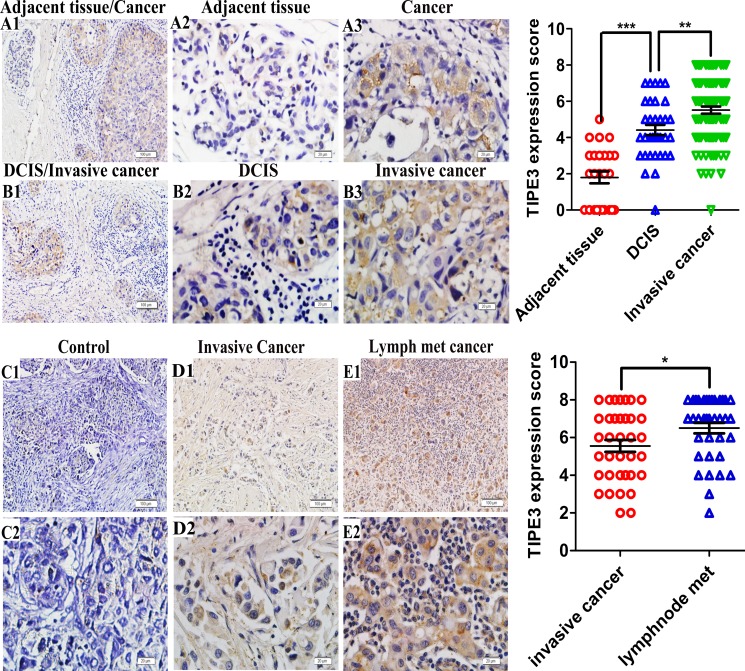
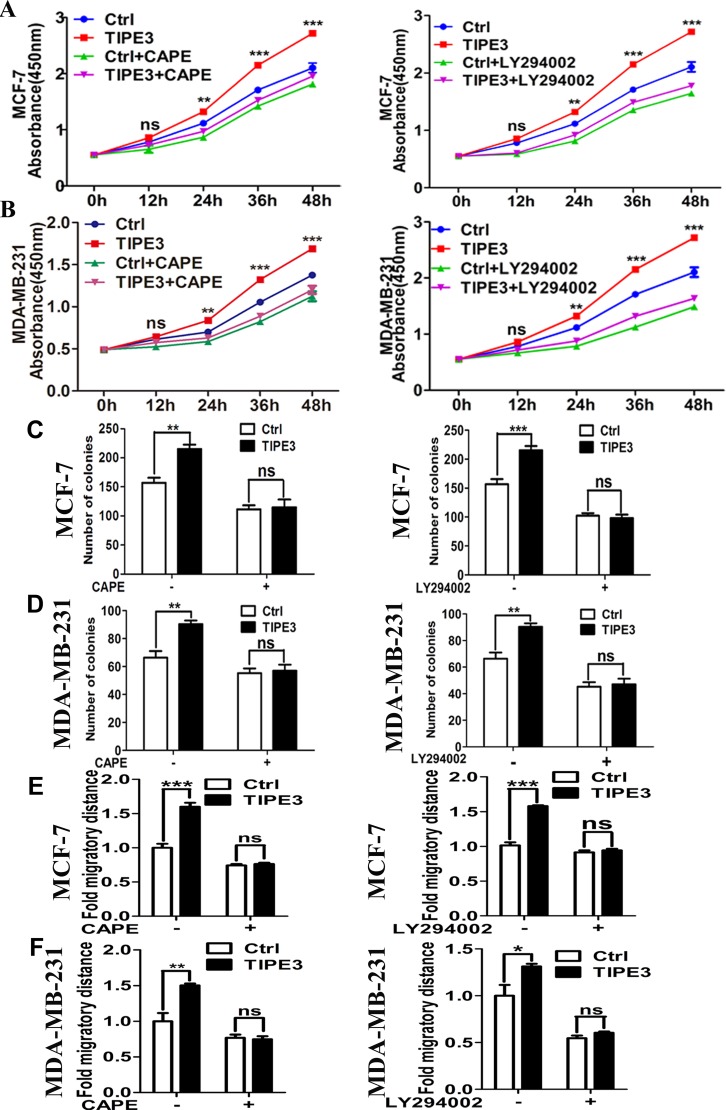
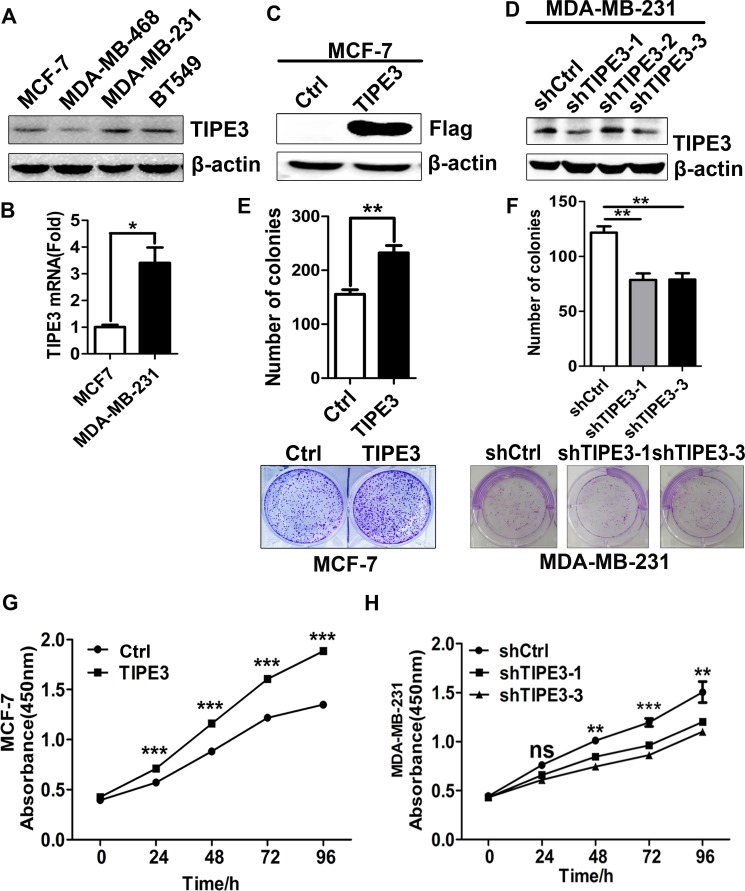
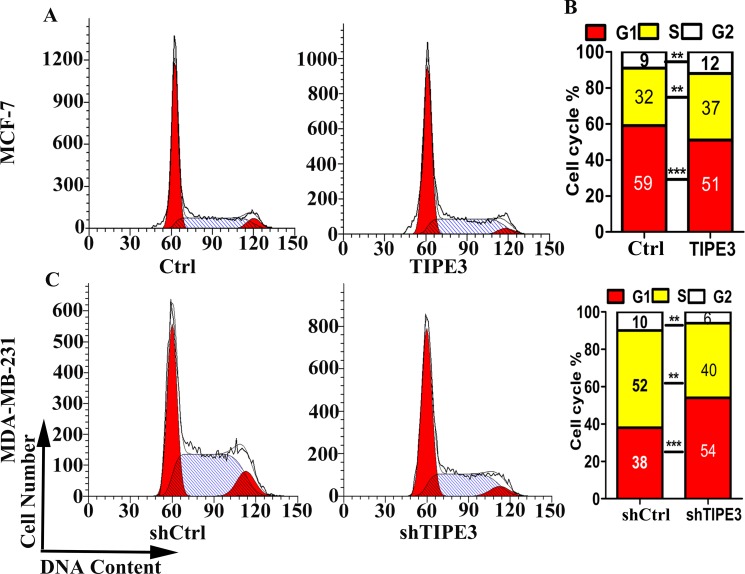
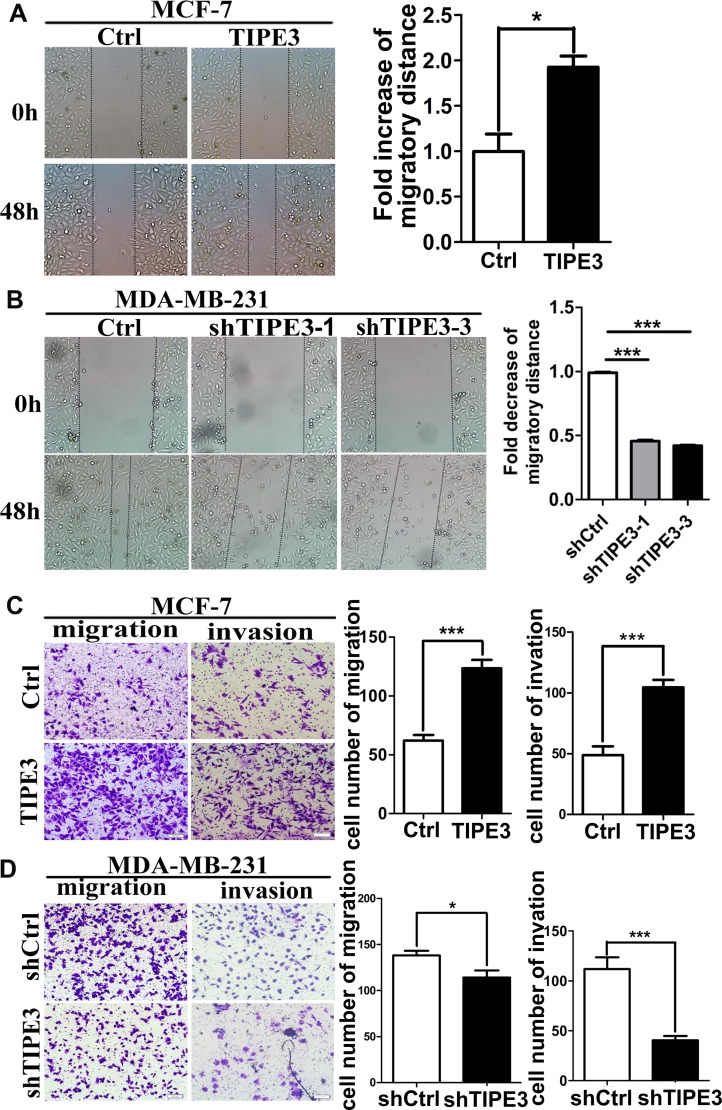
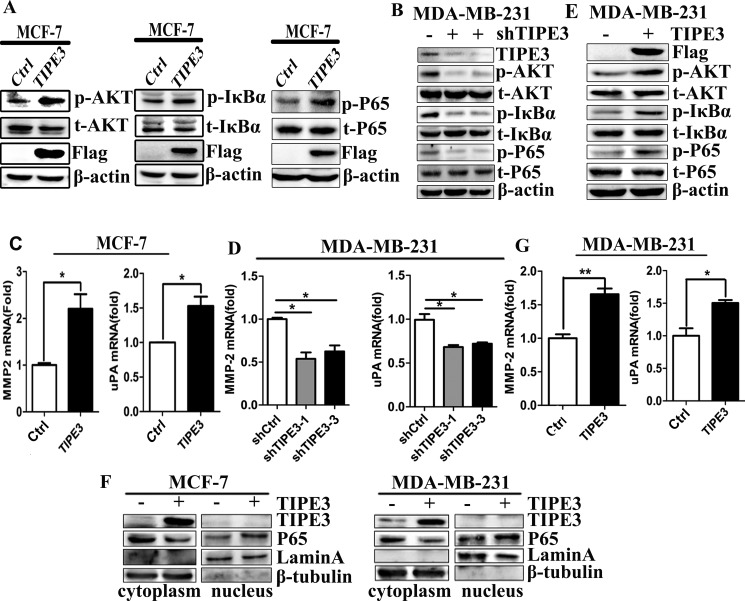
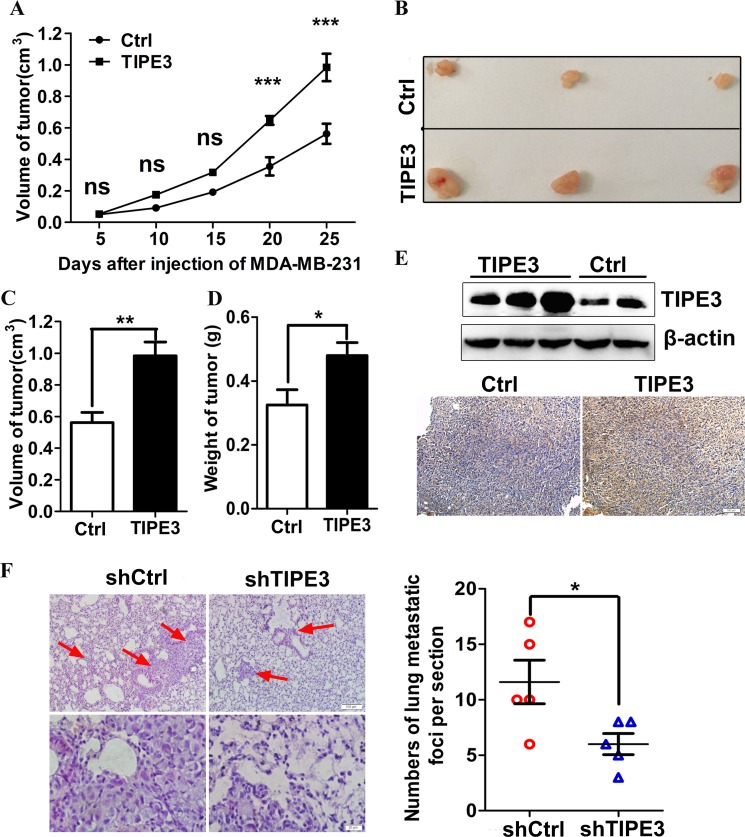
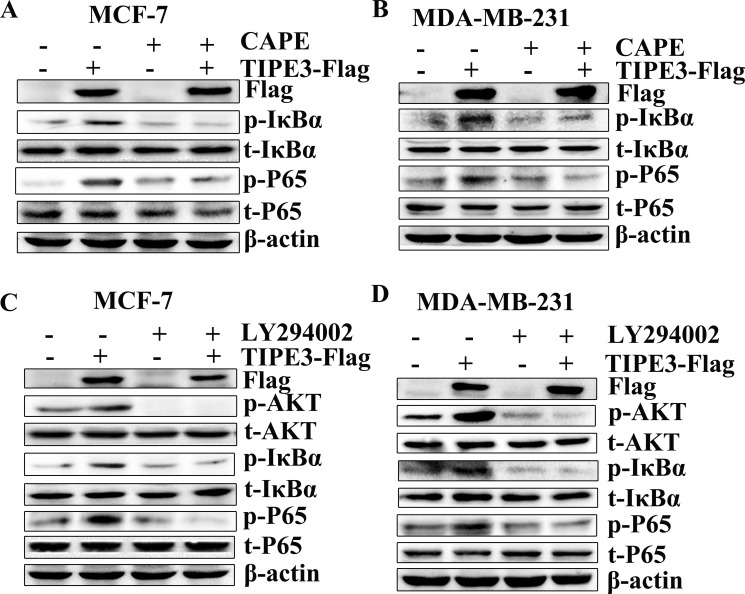
TIPE3 (TNFAIP8L3) is the transfer protein of phosphoinositide second messengers that promote cancer. Its role in breast cancer has not been evaluated. We report here that TIPE3 protein was significantly upregulated in human breast cancer tissues as compared with adjacent non-tumor tissues from the same patients. The level of TIPE3 protein in invasive ductal carcinoma was significant higher than that in ductal carcinoma in situ (DCIS), and the level of TIPE3 in lymphatic metastasized carcinoma was higher than that in invasive ductal carcinoma from the same patients. Additionally, the level of TIPE3 protein was positively correlated with the level of human epidermal growth factor receptor 2 (HER-2), and TIPE3 expression was significantly higher in high-invasive breast cancer cell lines than that in low-invasive cell lines. Importantly, TIPE3 knockdown in breast cancer cells inhibited cell proliferation, migration, and invasion in vitro, whereas TIPE3 overexpression had the opposite effect. In mice, TIPE3 expression significantly promoted the metastasis of breast cancer cells. TIPE3 expression also increased the level of MMP2 and uPA, and the activation of the AKT and NF-κB signaling pathways. These results demonstrate that TIPE3 may promote breast cancer growth and metastasis through AKT and NF-κB, and may serve as a potential biomarker for breast cancer metastasis.
TIPE3(TNFAIP8L3)是一种促进癌症发展的磷酸肌醇第二信使的转运蛋白。其在乳腺癌中的作用尚未得到评估。我们在此报告,与同一患者的相邻非肿瘤组织相比,TIPE3蛋白在人乳腺癌组织中显著上调。浸润性导管癌中TIPE3蛋白水平显著高于原位导管癌(DCIS),且同一患者的淋巴结转移癌中TIPE3水平高于浸润性导管癌。此外,TIPE3蛋白水平与人表皮生长因子受体2(HER-2)水平呈正相关,且TIPE3在高侵袭性乳腺癌细胞系中的表达显著高于低侵袭性细胞系。重要的是,敲低乳腺癌细胞中的TIPE3可在体外抑制细胞增殖、迁移和侵袭,而TIPE3过表达则产生相反的效果。在小鼠中,TIPE3表达显著促进乳腺癌细胞的转移。TIPE3表达还增加了MMP2和uPA的水平,以及AKT和NF-κB信号通路的激活。这些结果表明,TIPE3可能通过AKT和NF-κB促进乳腺癌的生长和转移,并可能作为乳腺癌转移的潜在生物标志物。