Pereira Lucília P, Silva Patrícia, Duarte Marlene, Rodrigues Liliana, Duarte Catarina M M, Albuquerque Cristina, Serra Ana Teresa
iBET, Instituto de Biologia Experimental e Tecnológica, Apartado 12, 2780-901 Oeiras, Portugal.
Instituto de Tecnologia Química e Biológica António Xavier, Universidade Nova de Lisboa (ITQB NOVA), 2780-157 Oeiras, Portugal.
Nutrients. 2017 Apr 10;9(4):368. doi: 10.3390/nu9040368.
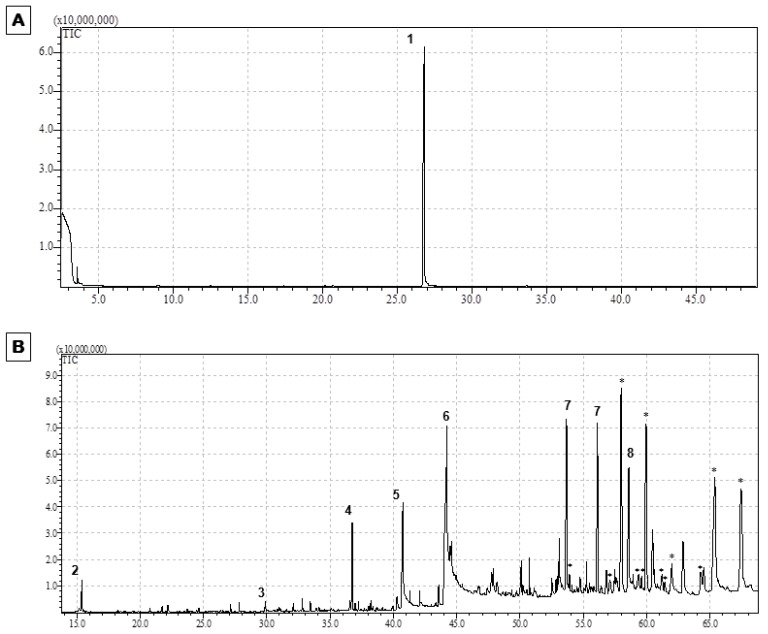
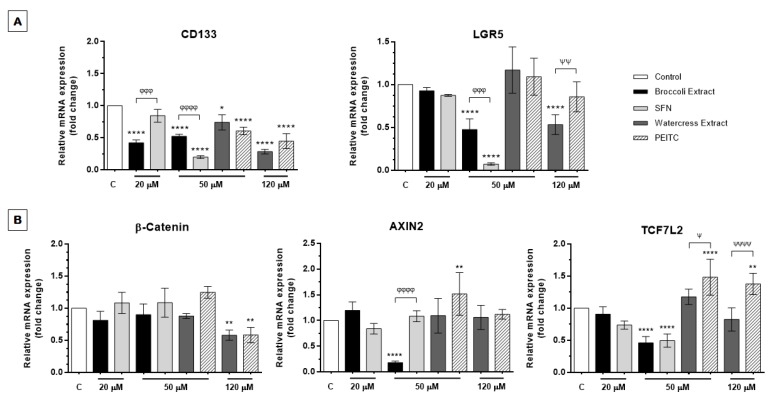
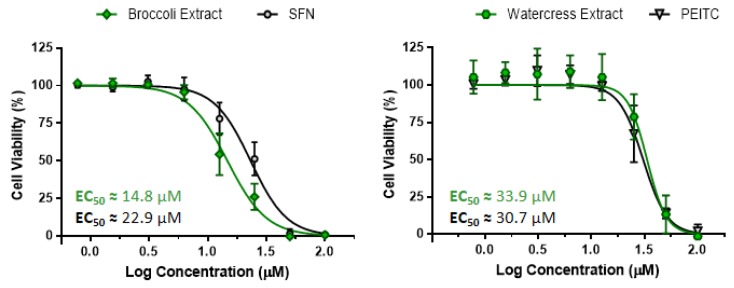
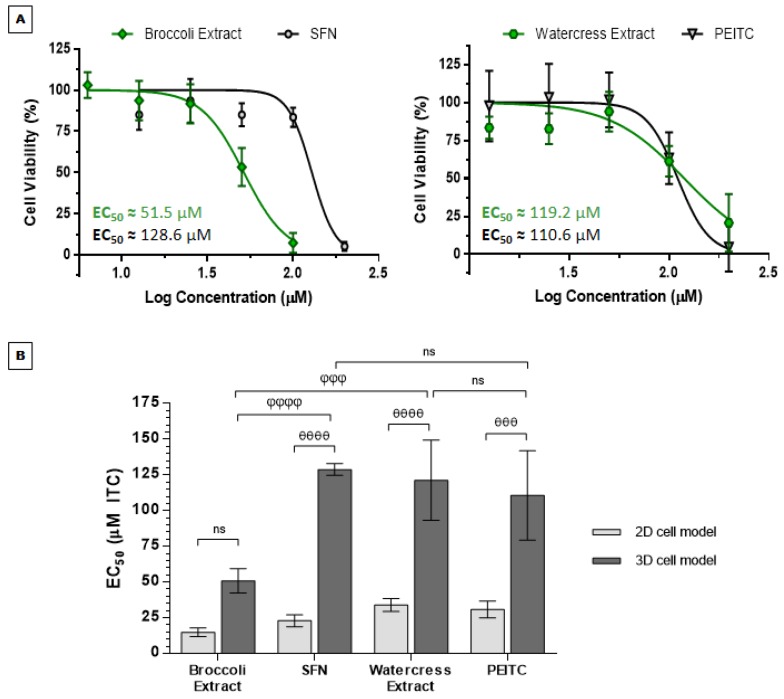
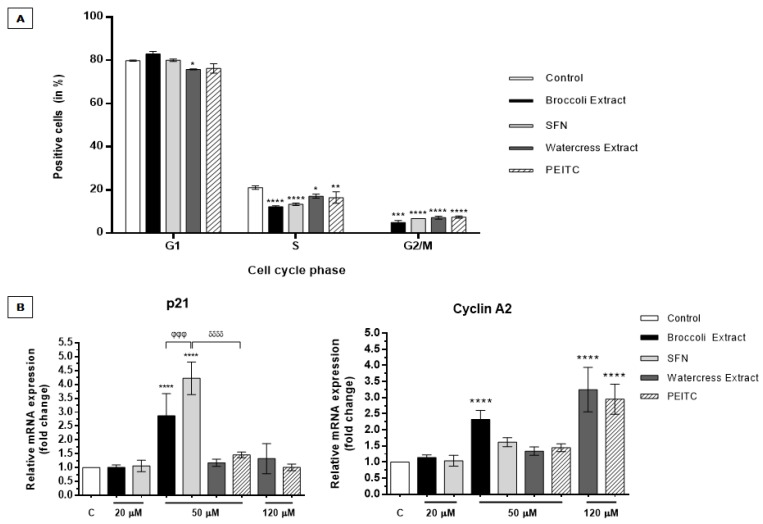
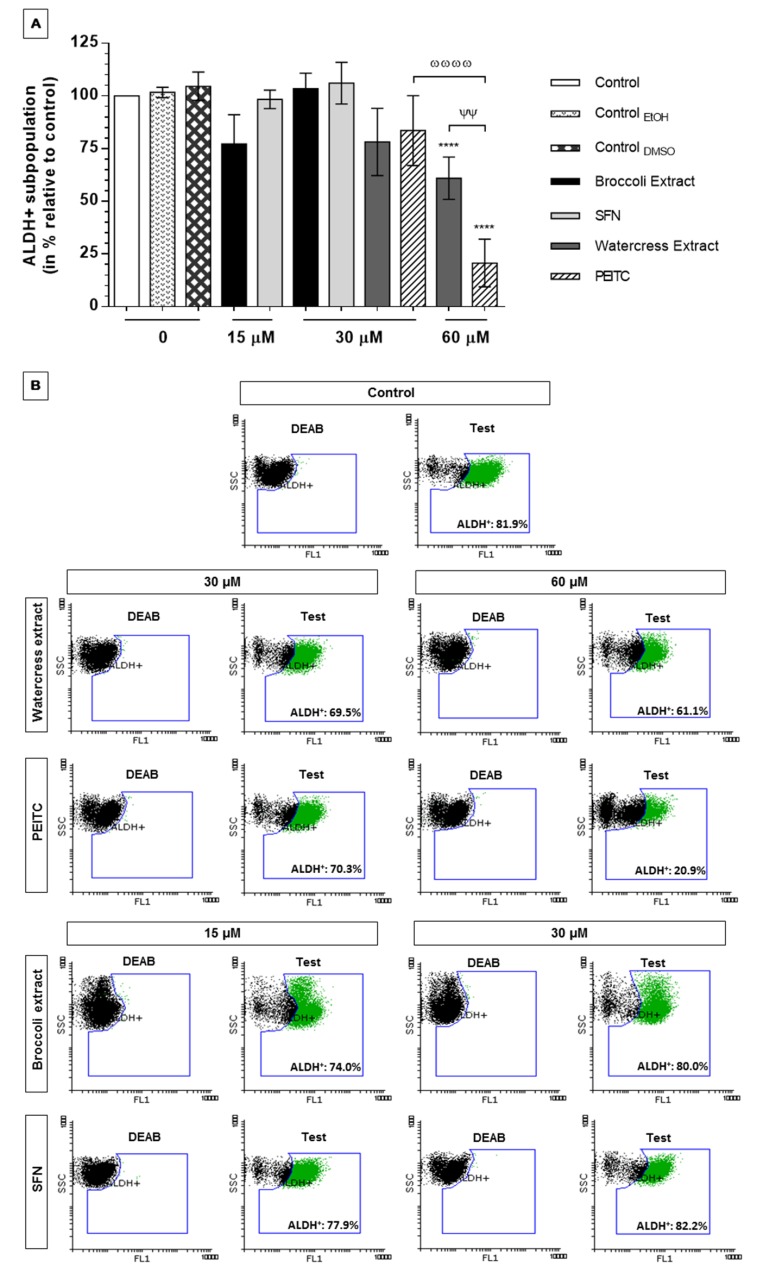
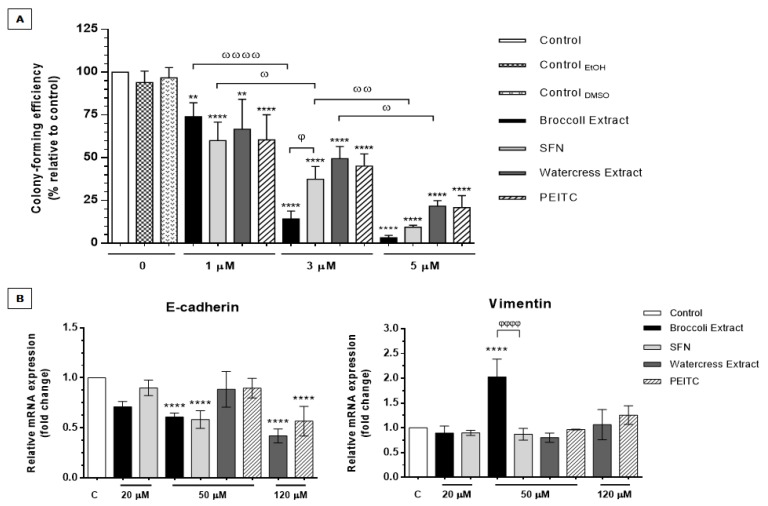
Colorectal cancer (CRC) recurrence is often attributable to circulating tumor cells and/or cancer stem cells (CSCs) that resist to conventional therapies and foster tumor progression. Isothiocyanates (ITCs) derived from vegetables have demonstrated anticancer effects in CRC, however little is known about their effect in CSCs and tumor initiation properties. Here we examined the effect of ITCs-enriched extracts derived from watercress and broccoli in cell proliferation, CSC phenotype and metastasis using a previously developed three-dimensional HT29 cell model with CSC-like traits. Both extracts were phytochemically characterized and their antiproliferative effect in HT29 monolayers was explored. Next, we performed cell proliferation assays and flow cytometry analysis in HT29 spheroids treated with watercress and broccoli extracts and respective main ITCs, phenethyl isothiocyanate (PEITC) and sulforaphane (SFN). Soft agar assays and relative quantitative expression analysis of stemness markers and Wnt/β-catenin signaling players were performed to evaluate the effect of these phytochemicals in stemness and metastasis. Our results showed that both extracts and ITCs exert antiproliferative effects in HT29 spheroids, arresting cell cycle at G₂/M, possibly due to ITC-induced DNA damage. Colony formation and expression of LGR5 and CD133 cancer stemness markers were significantly reduced. Only watercress extract and PEITC decreased ALDH1 activity in a dose-dependent manner, as well as β-catenin expression. Our research provides new insights on CRC therapy using ITC-enriched extracts, specially watercress extract, to target CSCs and circulating tumor cells by impairing cell proliferation, ALDH1-mediated chemo-resistance, anoikis evasion, self-renewal and metastatic potential.
结直肠癌(CRC)复发通常归因于循环肿瘤细胞和/或癌干细胞(CSCs),它们对传统疗法具有抗性并促进肿瘤进展。源自蔬菜的异硫氰酸盐(ITCs)已在结直肠癌中显示出抗癌作用,然而,它们对癌干细胞和肿瘤起始特性的影响知之甚少。在这里,我们使用先前开发的具有CSC样特征的三维HT29细胞模型,研究了西洋菜和西兰花中富含ITCs的提取物对细胞增殖、CSC表型和转移的影响。对两种提取物进行了植物化学表征,并探索了它们在HT29单层细胞中的抗增殖作用。接下来,我们对用西洋菜和西兰花提取物以及各自主要的ITCs(苯乙基异硫氰酸盐(PEITC)和萝卜硫素(SFN))处理的HT29球体进行了细胞增殖测定和流式细胞术分析。进行软琼脂测定以及干性标志物和Wnt/β-连环蛋白信号通路相关分子的相对定量表达分析,以评估这些植物化学物质对干性和转移的影响。我们的结果表明,提取物和ITCs均对HT29球体发挥抗增殖作用,使细胞周期停滞在G₂/M期,这可能是由于ITC诱导的DNA损伤所致。集落形成以及LGR5和CD133癌干细胞标志物的表达均显著降低。只有西洋菜提取物和PEITC以剂量依赖性方式降低了ALDH1活性以及β-连环蛋白的表达。我们的研究为使用富含ITC的提取物(特别是西洋菜提取物)治疗结直肠癌提供了新见解,通过损害细胞增殖、ALDH1介导的化疗抗性、失巢凋亡逃避、自我更新和转移潜能来靶向癌干细胞和循环肿瘤细胞。