Baker Katie, Raemdonck Kristof, Snelgrove Robert J, Belvisi Maria G, Birrell Mark A
Respiratory Pharmacology, Airway Disease Section, National Heart and Lung Institute, Faculty of Medicine, Imperial College London, Exhibition Road, London, SW7 2AZ, UK.
Department of Anatomy, Faculty of Medicine, University of Porto, Alameda Prof. Hernâni Monteiro, 4200-319, Porto, Portugal.
Respir Res. 2017 Apr 11;18(1):55. doi: 10.1186/s12931-017-0541-x.
The incidence of asthma is increasing at an alarming rate. While the current available therapies are effective, there are associated side effects and they fail to adequately control symptoms in all patient subsets. In the search to understand disease pathogenesis and find effective therapies hypotheses are often tested in animal models before progressing into clinical studies. However, current dogma is that animal model data is often not predictive of clinical outcome. One possible reason for this is the end points measured such as antigen-challenge induced late asthmatic response (LAR) is often used in early clinical development, but seldom in animal model systems. As the mouse is typically selected as preferred species for pre-clinical models, we wanted to characterise and probe the validity of a murine model exhibiting an allergen induced LAR.
C57BL/6 mice were sensitised with antigen and subsequently topically challenged with the same antigen. The role of Alum adjuvant, glucocorticoid, long acting muscarinic receptor antagonist (LAMA), TRPA1, CD4 and CD8 T cells, B cells, Mast cells and IgE were determined in the LAR using genetically modified mice and a range of pharmacological tools.
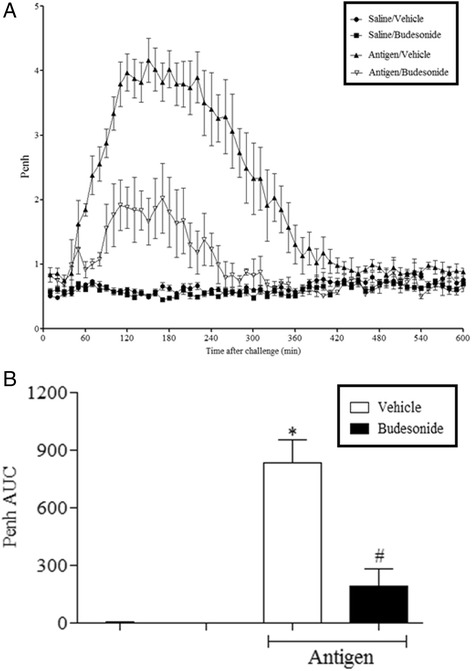
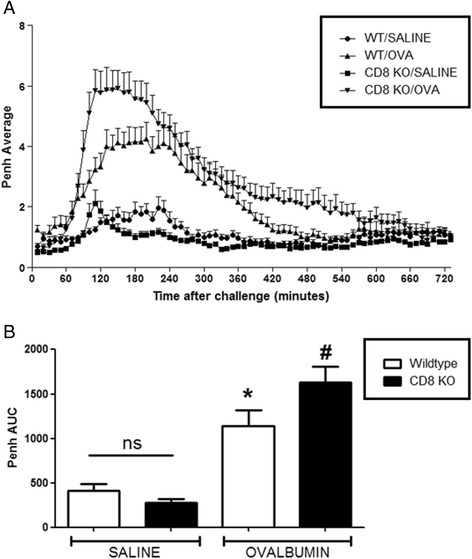
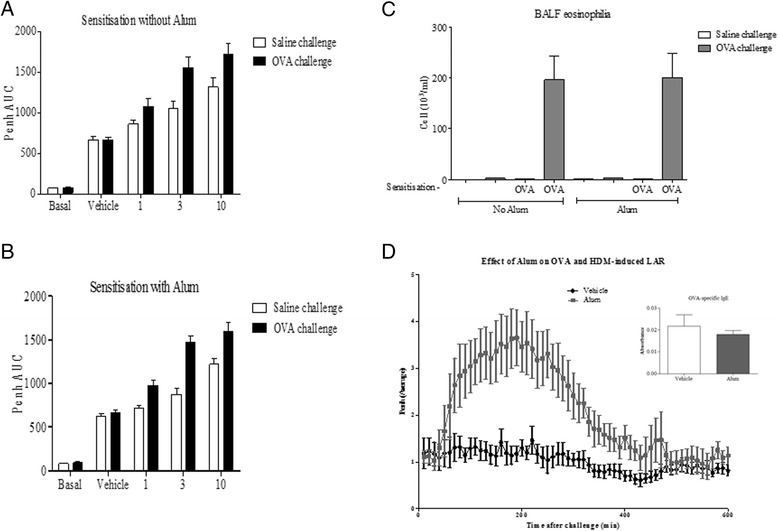
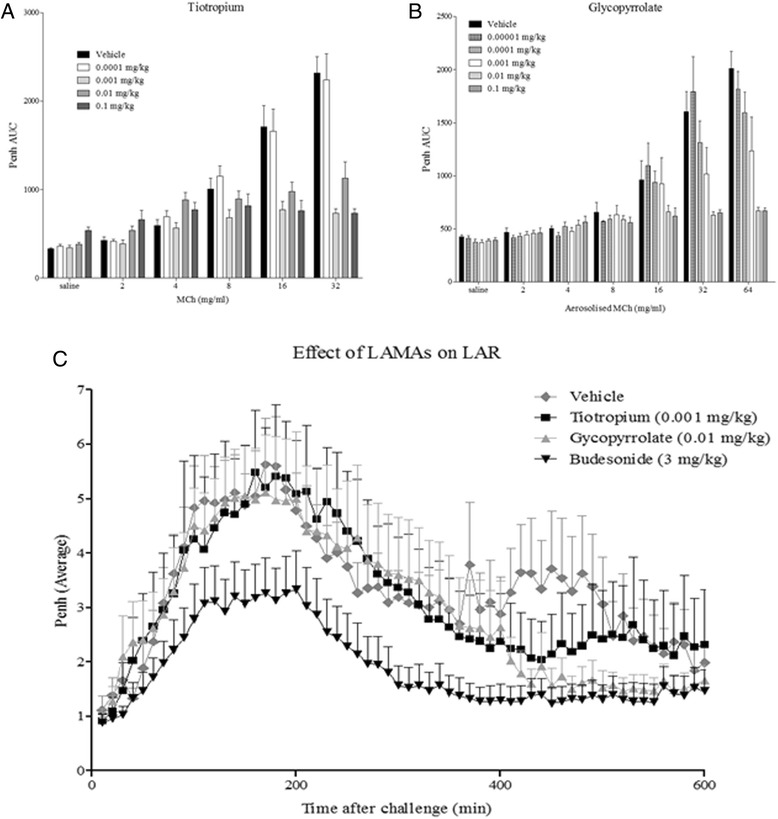
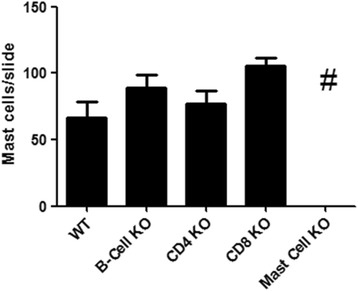
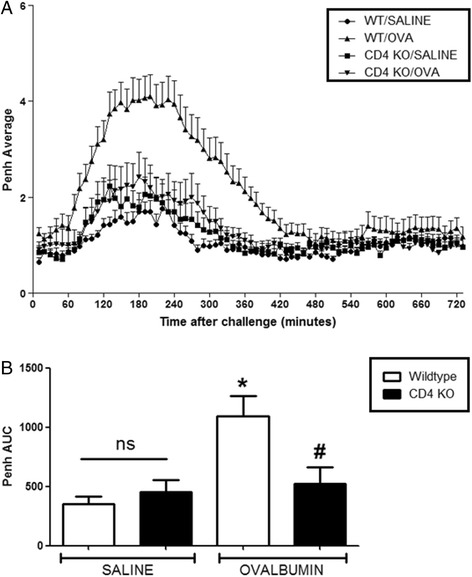
Our data showed that unlike other features of asthma (e.g. cellular inflammation, elevated IgE levels and airway hyper-reactivity (AHR) the LAR required Alumadjuvant. Furthermore, the LAR appeared to be sensitive to glucocorticoid and required CD4 T cells. Unlike in other species studied, the LAR was not sensitive to LAMA treatment nor required the TRPA1 ion channel, suggesting that airway sensory nerves are not involved in the LAR in this species. Furthermore, the data suggested that CD8 T cells and the mast cell-B-cell - IgE axis appear to be protective in this murine model.
Together we can conclude that this model does feature steroid sensitive, CD4 T cell dependent, allergen induced LAR. However, collectively our data questions the validity of using the murine pre-clinical model of LAR in the assessment of future asthma therapies.
哮喘的发病率正以惊人的速度上升。虽然目前可用的治疗方法有效,但存在相关副作用,且无法在所有患者亚组中充分控制症状。在探索疾病发病机制和寻找有效治疗方法的过程中,假设通常在进入临床研究之前先在动物模型中进行测试。然而,目前的共识是动物模型数据往往无法预测临床结果。造成这种情况的一个可能原因是所测量的终点,如抗原激发诱导的迟发性哮喘反应(LAR),在早期临床开发中经常使用,但在动物模型系统中很少使用。由于小鼠通常被选为临床前模型的首选物种,我们希望表征并探究一种表现出变应原诱导LAR的小鼠模型的有效性。
用抗原致敏C57BL/6小鼠,随后用相同抗原进行局部激发。使用基因改造小鼠和一系列药理学工具,确定明矾佐剂、糖皮质激素、长效毒蕈碱受体拮抗剂(LAMA)、TRPA1、CD4和CD8 T细胞、B细胞、肥大细胞和IgE在LAR中的作用。
我们的数据表明,与哮喘的其他特征(如细胞炎症、IgE水平升高和气道高反应性(AHR))不同,LAR需要明矾佐剂。此外,LAR似乎对糖皮质激素敏感且需要CD4 T细胞。与其他研究物种不同,LAR对LAMA治疗不敏感,也不需要TRPA1离子通道,这表明气道感觉神经不参与该物种的LAR。此外,数据表明CD8 T细胞以及肥大细胞 - B细胞 - IgE轴在该小鼠模型中似乎具有保护作用。
我们可以共同得出结论,该模型确实具有类固醇敏感、CD4 T细胞依赖性、变应原诱导的LAR。然而,总体而言,我们的数据对使用LAR的小鼠临床前模型评估未来哮喘治疗方法的有效性提出了质疑。