Ruebhausen Michael R, Mendenhall Shaun D, Neumeister Michael W, Berry Nada N
Institute for Plastic Surgery, Southern Illinois University School of Medicine, Springfield, IL.
Eplasty. 2017 Mar 21;17:e10. eCollection 2017.
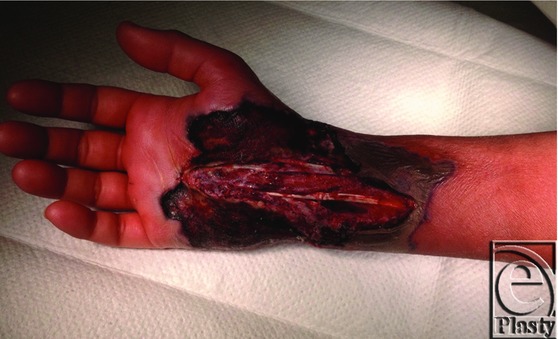
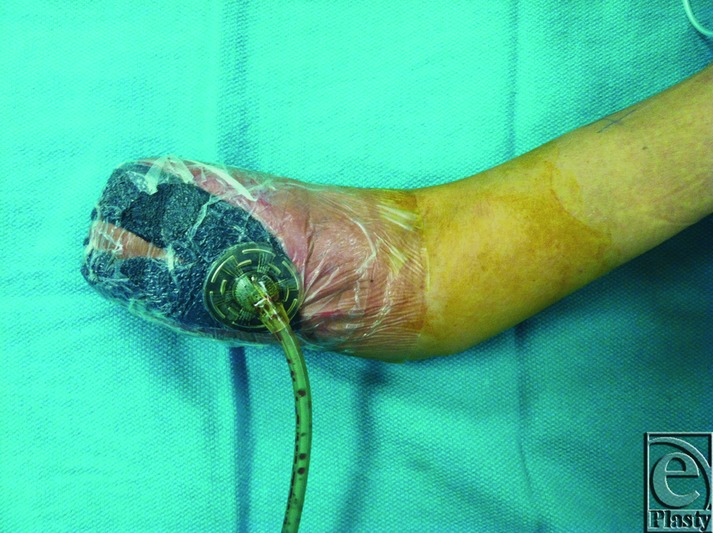
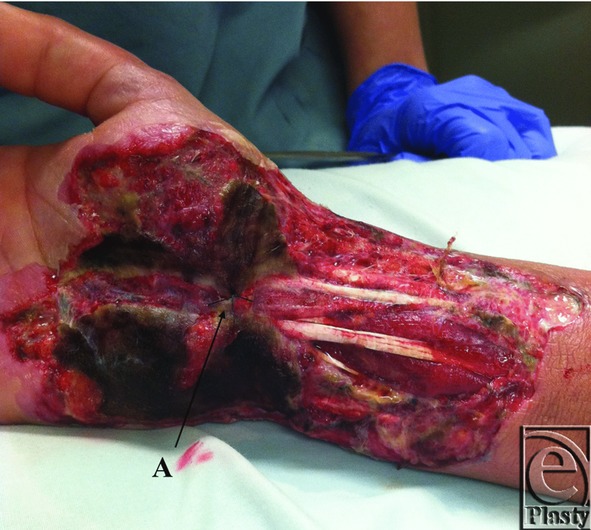
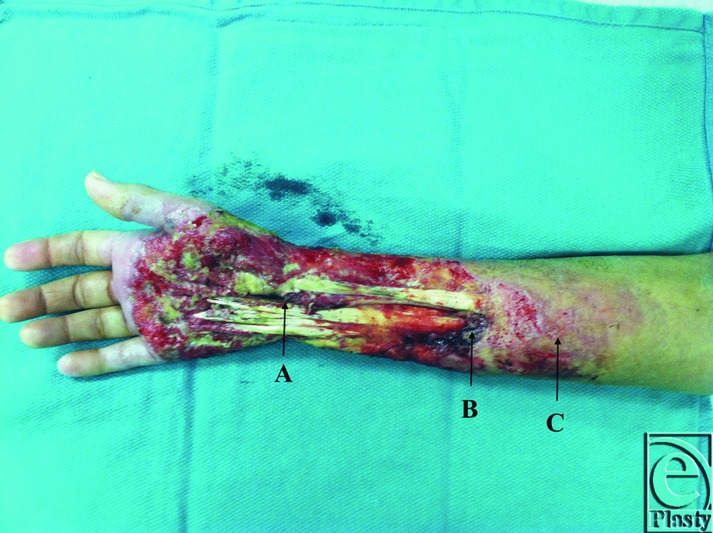
Postsurgical pyoderma gangrenosum is a rare but potentially devastating condition for surgical patients. While pyoderma gangrenosum has 2 subtypes, typical and atypical, each can be further classified by its heralding features. These include ulcerative, pustular, bullous, and vegetative. The presentation can be a result of trauma or, as mentioned before, postsurgical. The plastic and reconstructive surgeon most likely will encounter postsurgical pyoderma gangrenosum in practice, as it has been reported in patient populations frequently seen in plastic surgery clinics. We present a unique case of idiopathic postsurgical pyoderma gangrenosum in a patient who presented after carpal tunnel release, the most common surgery of the hand and wrist performed in the United States annually. This is believed to be the first ever case reported in the literature of pyoderma gangrenosum following carpal tunnel release. The patient's disease course was complicated by surgical debridement prior to diagnosis. Unfortunately, this condition necessitated mid-forearm amputation. The wound eventually healed with primary closure and appropriate medical therapy. Previous experience with this disease, a high index of suspicion, and general education regarding the disease process and its management could potentially have prevented this outcome. We hope to underscore that it is important to consider a patient's entire history and to have a high index of suspicion in unusual postsurgical wounds in order to adequately diagnose, treat, and manage patients who develop postsurgical pyoderma gangrenosum.
术后坏疽性脓皮病对手术患者来说是一种罕见但可能具有毁灭性的病症。坏疽性脓皮病有典型和非典型两种亚型,每种亚型又可根据其先兆特征进一步分类。这些特征包括溃疡性、脓疱性、大疱性和增殖性。其表现可能是由创伤引起的,或者如前所述,是术后出现的。整形外科医生在实际工作中很可能会遇到术后坏疽性脓皮病,因为在整形外科诊所常见的患者群体中已有相关报道。我们报告了一例特发性术后坏疽性脓皮病的独特病例,患者在接受腕管松解术后出现症状,腕管松解术是美国每年手部和腕部最常见的手术。据信这是文献中首次报道的腕管松解术后发生坏疽性脓皮病的病例。患者的病程因诊断前的手术清创而复杂化。不幸的是,这种情况需要进行前臂中段截肢。伤口最终通过一期缝合和适当的药物治疗得以愈合。以往对这种疾病的经验、高度的怀疑指数以及对疾病过程及其管理的全面了解,可能本可避免这种结果。我们希望强调,考虑患者的完整病史并对不寻常的术后伤口保持高度怀疑指数非常重要,以便对发生术后坏疽性脓皮病的患者进行充分的诊断、治疗和管理。