Maret Wolfgang
Division of Diabetes and Nutritional Sciences, Faculty of Life Sciences and Medicine, King's College London, London SE1 9NH, UK.
Prev Nutr Food Sci. 2017 Mar;22(1):1-8. doi: 10.3746/pnf.2017.22.1.1. Epub 2017 Mar 31.
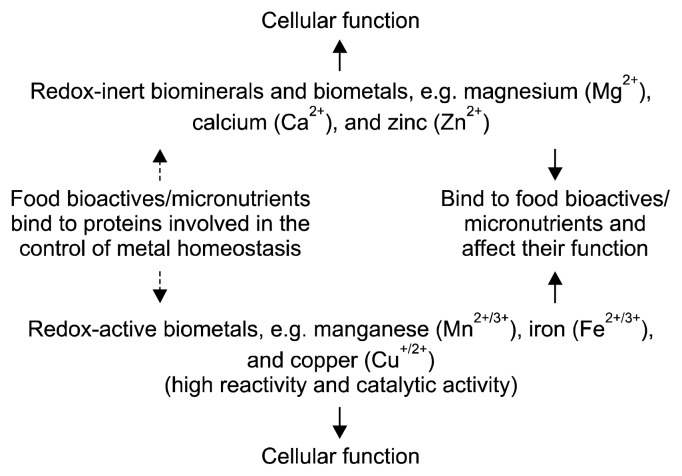
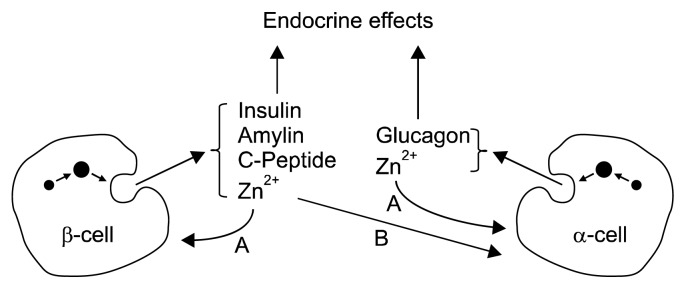
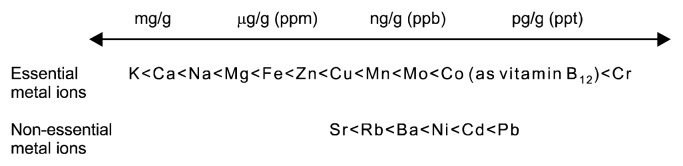
About 20 chemical elements are nutritionally essential for humans with defined molecular functions. Several essential and nonessential biometals are either functional nutrients with antidiabetic actions or can be diabetogenic. A key question remains whether changes in the metabolism of biometals and biominerals are a consequence of diabetes or are involved in its etiology. Exploration of the roles of zinc (Zn) in this regard is most revealing because 80 years of scientific discoveries link zinc and diabetes. In pancreatic β- and α-cells, zinc has specific functions in the biochemistry of insulin and glucagon. When zinc ions are secreted during vesicular exocytosis, they have autocrine, paracrine, and endocrine roles. The membrane protein ZnT8 transports zinc ions into the insulin and glucagon granules. ZnT8 has a risk allele that predisposes the majority of humans to developing diabetes. In target tissues, increased availability of zinc enhances the insulin response by inhibiting protein tyrosine phosphatase 1B, which controls the phosphorylation state of the insulin receptor and hence downstream signalling. Inherited diseases of zinc metabolism, environmental exposures that interfere with the control of cellular zinc homeostasis, and nutritional or conditioned zinc deficiency influence the patho-biochemistry of diabetes. Accepting the view that zinc is one of the many factors in multiple gene-environment interactions that cause the functional demise of β-cells generates an immense potential for treating and perhaps preventing diabetes. Personalized nutrition, bioactive food, and pharmaceuticals targeting the control of cellular zinc in precision medicine are among the possible interventions.
约20种化学元素对人类具有明确的分子功能,是营养必需的。几种必需和非必需的生物金属要么是具有抗糖尿病作用的功能性营养素,要么可能致糖尿病。一个关键问题仍然存在:生物金属和生物矿物质代谢的变化是糖尿病的结果还是参与了其病因。在这方面对锌(Zn)作用的探索最具启发性,因为80年的科学发现将锌与糖尿病联系起来。在胰腺β细胞和α细胞中,锌在胰岛素和胰高血糖素的生物化学过程中具有特定功能。当锌离子在囊泡胞吐过程中分泌时,它们具有自分泌、旁分泌和内分泌作用。膜蛋白ZnT8将锌离子转运到胰岛素和胰高血糖素颗粒中。ZnT8有一个风险等位基因,使大多数人易患糖尿病。在靶组织中,锌的可利用性增加通过抑制蛋白酪氨酸磷酸酶1B增强胰岛素反应,该酶控制胰岛素受体的磷酸化状态以及下游信号传导。锌代谢的遗传性疾病、干扰细胞锌稳态控制的环境暴露以及营养性或条件性锌缺乏都会影响糖尿病的病理生物化学。接受锌是导致β细胞功能衰退的多基因-环境相互作用中众多因素之一的观点,为治疗甚至预防糖尿病带来了巨大潜力。精准医学中针对细胞锌控制的个性化营养、生物活性食品和药物是可能的干预措施。