Zhou Yong, Zhang Wengeng, Tang Fan, Luo Yi, Min Li, Zhang Wenli, Shi Rui, Duan Hong, Tu Chongqi
Department of Orthopedics Precision Medicine Center, West China Hospital, Sichuan University, Chengdu, Sichuan, China.
Medicine (Baltimore). 2017 Apr;96(15):e6578. doi: 10.1097/MD.0000000000006578.
Osteosarcoma is the most common malignant bone tumor in children and adolescents. Pulmonary metastases lead to a significantly increased risk of death. Apatinib, a new potent oral small-molecule tyrosine kinase inhibitor targeting the intracellular domain of vascular endothelial growth factor receptor 2 (VEGFR-2), shows survival benefits in treating advanced or metastatic gastric adenocarcinoma, non-squamous non-small cell lung cancer and metastatic breast cancer. However, its efficacy in metastatic osteosarcoma has not been reported yet.
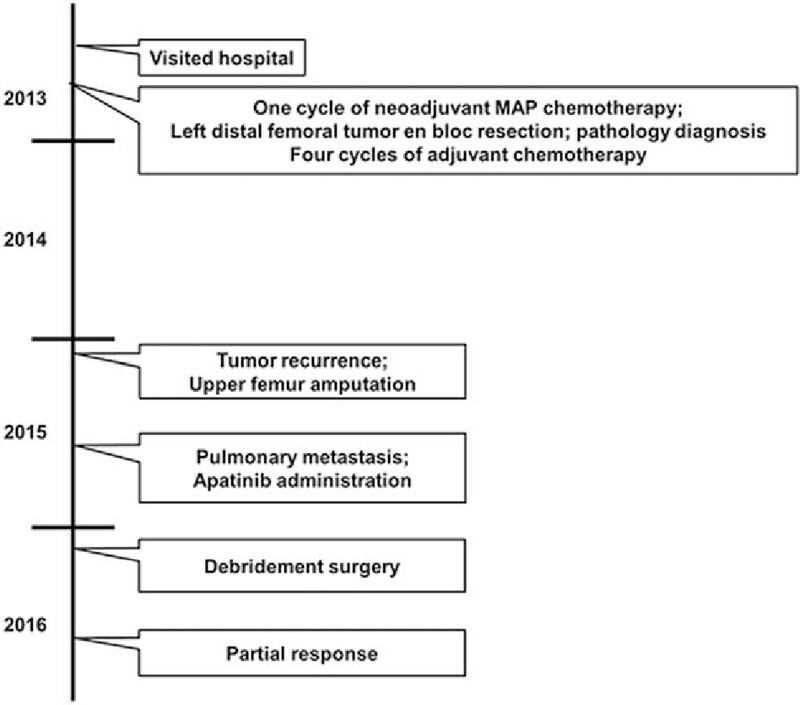
Herein, we presented a 50-year-old man patient who visited hospital due to local bone pain in the left leg.
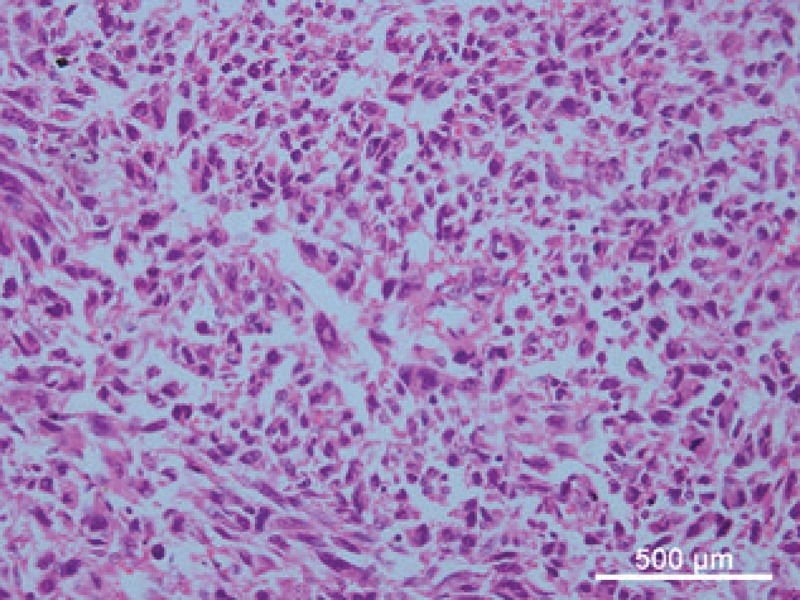
He was initially diagnosed with osteoblastic osteosarcoma.
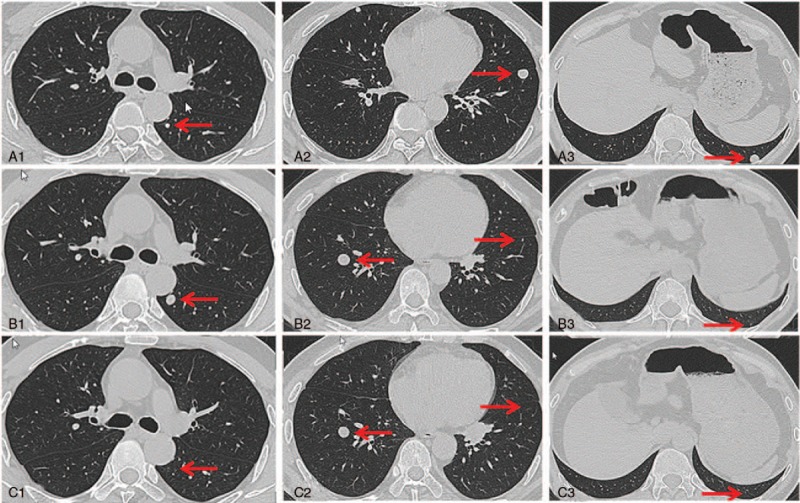
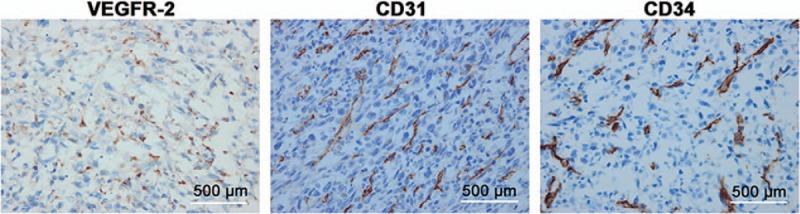
The patient suffered repeated resection surgeries but developed multiple lung metastases. Positive staining for CD31, CD34, and VEGFR-2 were detected in the tumor section. As he refused to receive chemotherapy due to concerns regarding the chemotherapy toxicities and sorafenib due to high cost, apatinib was given at a dose of 500 mg daily.
Eleven months following apatinib administration, the patient achieved a partial response according to the RECIST 1.1 standard. No severe toxicity or drug-related side effect was observed during the treatment.
Therefore, apatinib could be a new option for the treatment of metastatic osteosarcoma. Clinical trials are required to further confirm the efficacy and safety of apatinib in treating pulmonary metastases from osteosarcoma.
骨肉瘤是儿童和青少年中最常见的恶性骨肿瘤。肺转移会导致死亡风险显著增加。阿帕替尼是一种新型强效口服小分子酪氨酸激酶抑制剂,靶向血管内皮生长因子受体2(VEGFR-2)的细胞内结构域,在治疗晚期或转移性胃腺癌、非鳞状非小细胞肺癌和转移性乳腺癌方面显示出生存获益。然而,其在转移性骨肉瘤中的疗效尚未见报道。
在此,我们报告一名50岁男性患者,因左腿局部骨痛前来就诊。
他最初被诊断为成骨性骨肉瘤。
患者接受了多次切除手术,但出现了多处肺转移。在肿瘤切片中检测到CD31、CD34和VEGFR-2呈阳性染色。由于担心化疗毒性且因索拉非尼费用高昂,他拒绝接受化疗,于是给予阿帕替尼,剂量为每日500毫克。
阿帕替尼给药11个月后,根据RECIST 1.1标准,患者获得部分缓解。治疗期间未观察到严重毒性或药物相关副作用。
因此,阿帕替尼可能是治疗转移性骨肉瘤的一种新选择。需要进行临床试验以进一步证实阿帕替尼治疗骨肉瘤肺转移的疗效和安全性。