Dipartimento di Scienze Chimiche e Farmaceutiche, Università di Ferrara, 44121 Ferrara, Italy.
Departamento de Química Farmacéutica y Orgánica, Facultad de Farmacia, Campus de Cartuja s/n, 18071, Granada, Spain.
Sci Rep. 2017 Apr 13;7:46356. doi: 10.1038/srep46356.
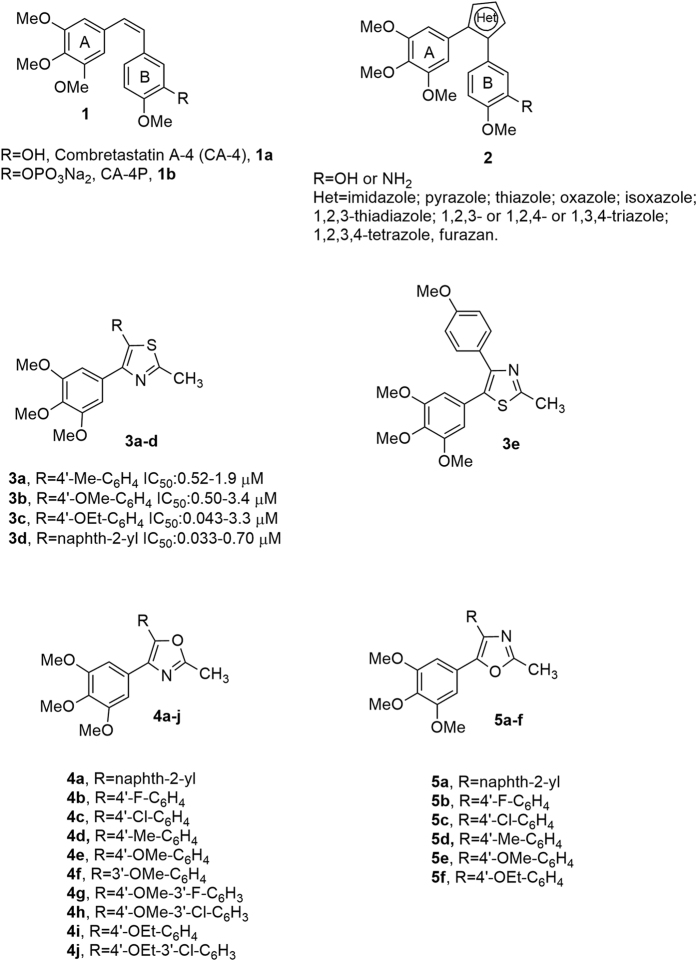
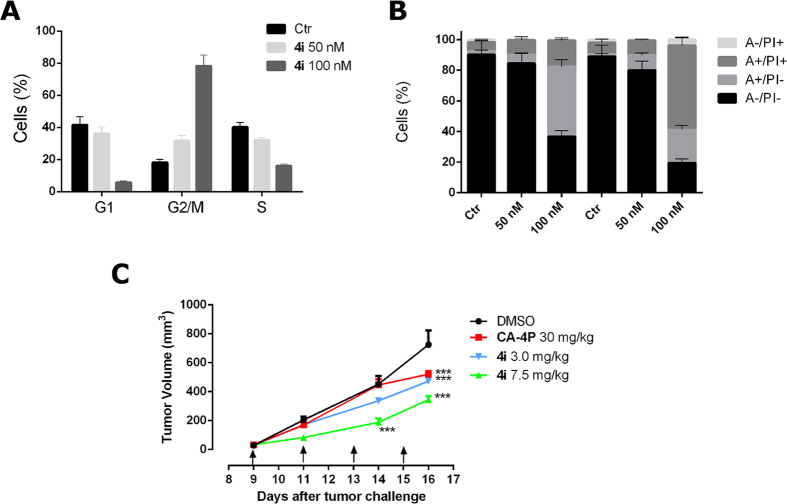
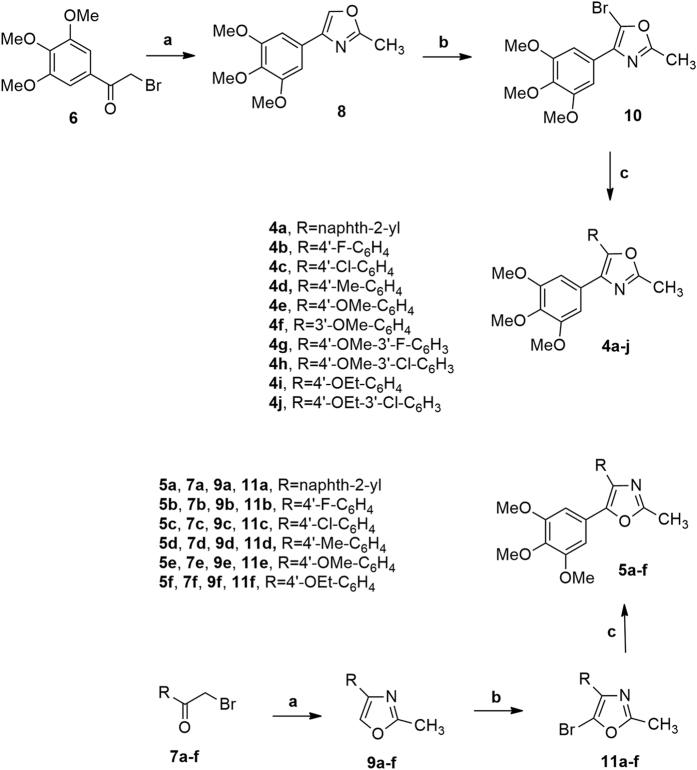
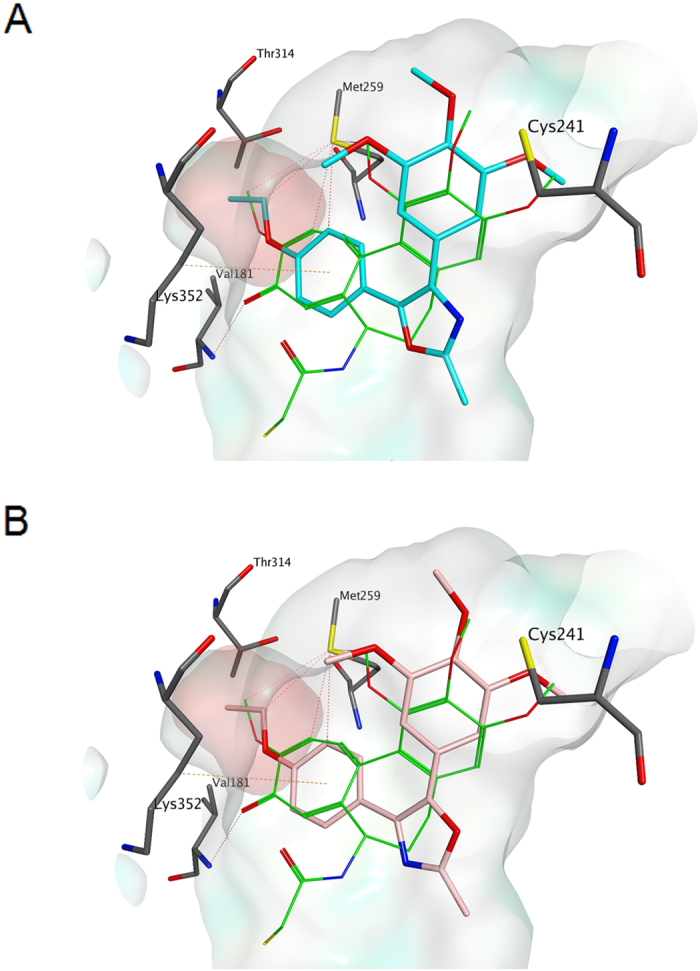
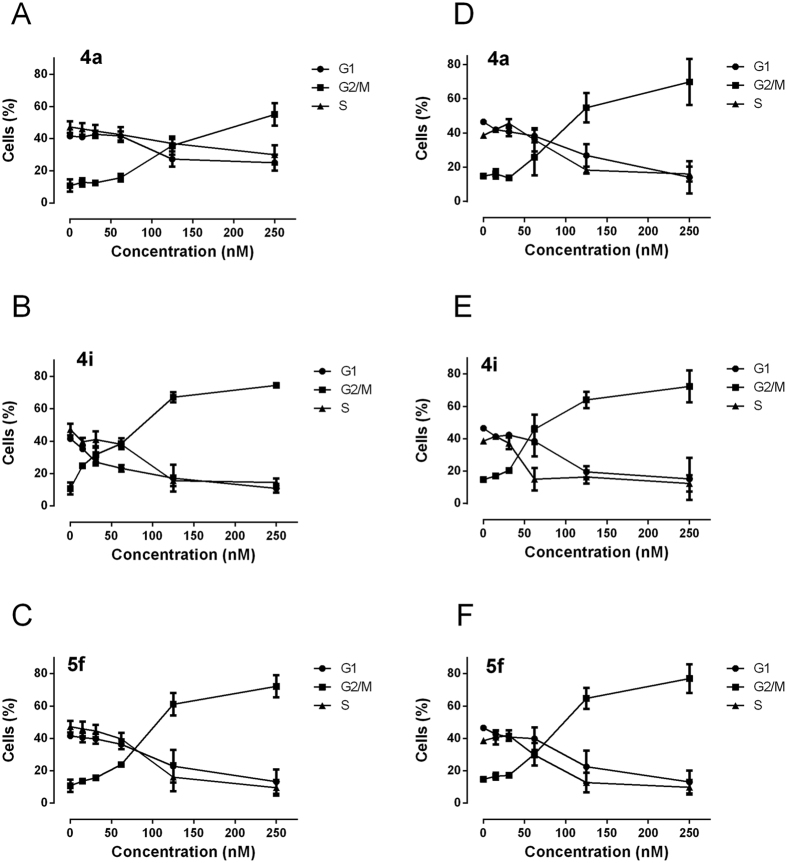
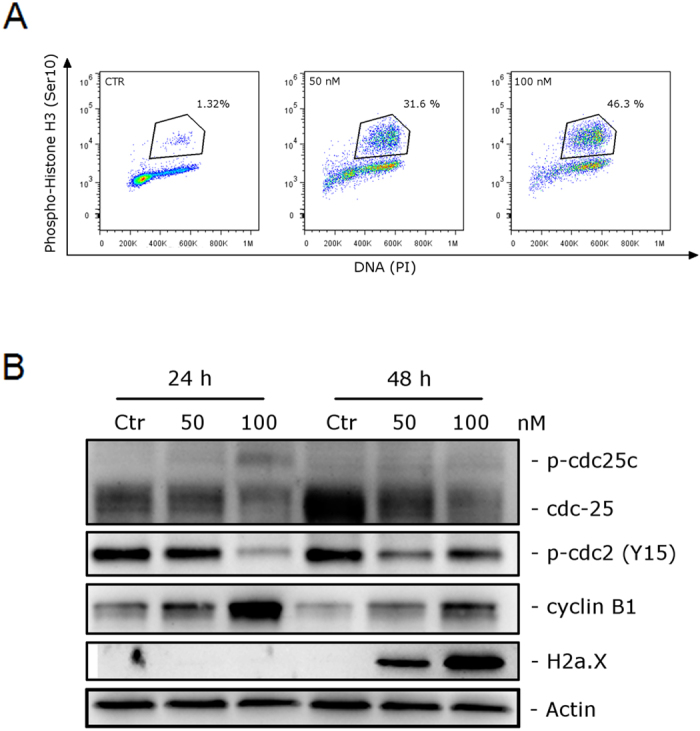
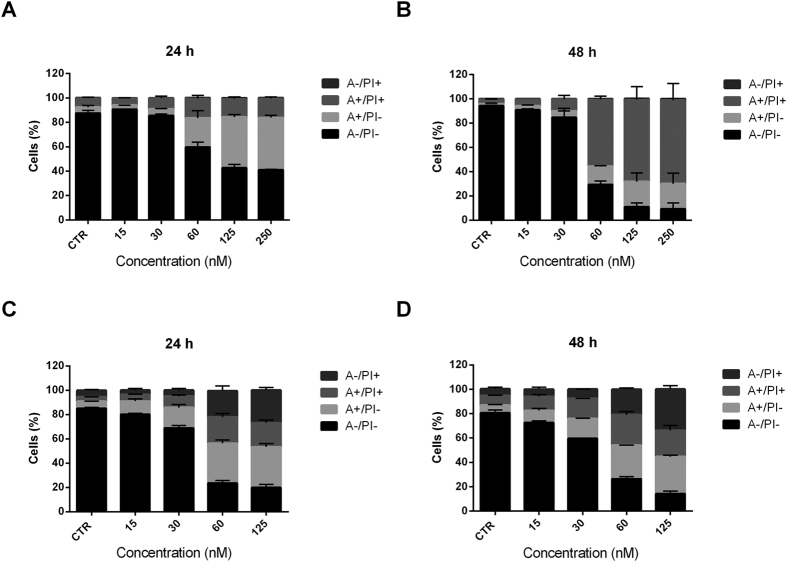
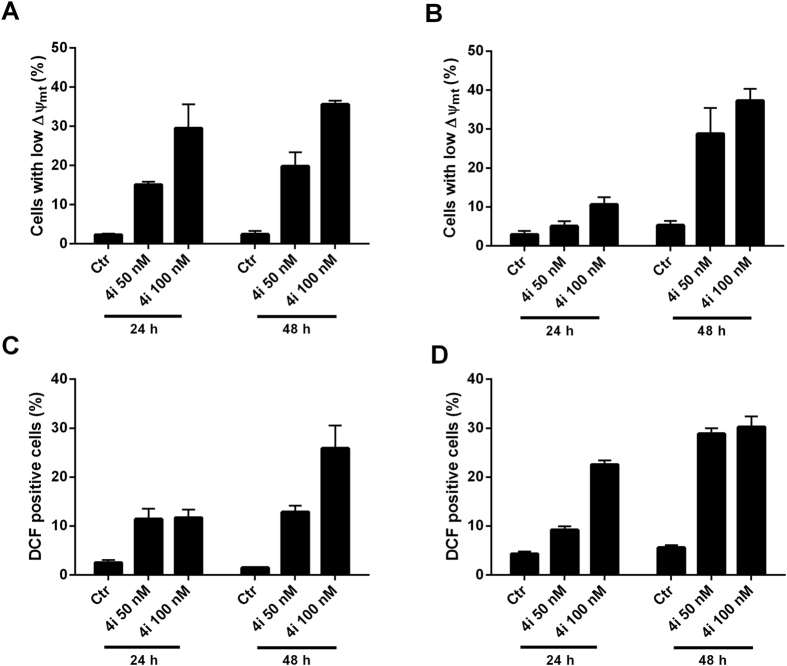
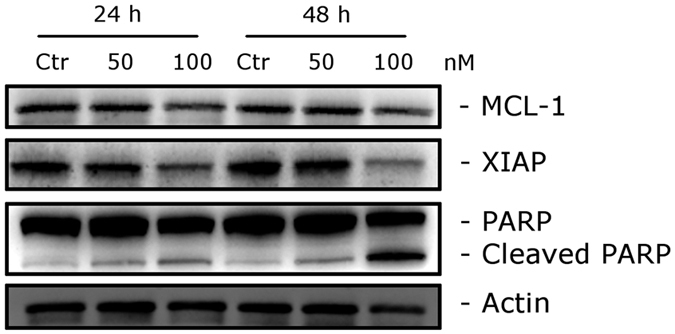
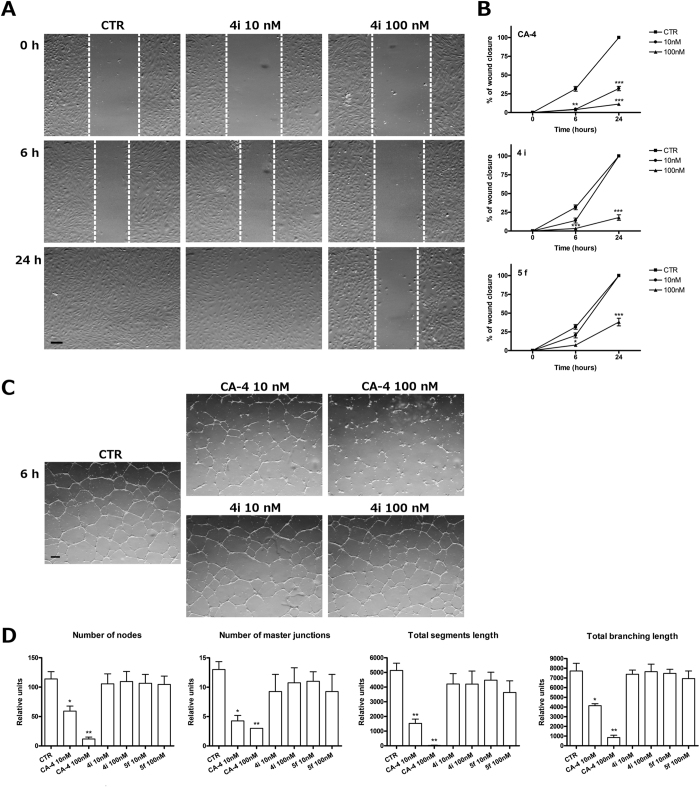
Antimitotic agents that interfere with microtubule formation are one of the major classes of cytotoxic drugs for cancer treatment. Multiple 2-methyl-4-(3',4',5'-trimethoxyphenyl)-5-substituted oxazoles and their related 4-substituted-5-(3',4',5'-trimethoxyphenyl) regioisomeric derivatives designed as cis-constrained combretastatin A-4 (CA-4) analogues were synthesized and evaluated for their antiproliferative activity in vitro against a panel of cancer cell lines and, for selected highly active compounds, interaction with tubulin, cell cycle effects and in vivo potency. Both these series of compounds were characterized by the presence of a common 3',4',5'-trimethoxyphenyl ring at either the C-4 or C-5 position of the 2-methyloxazole ring. Compounds 4g and 4i, bearing a m-fluoro-p-methoxyphenyl or p-ethoxyphenyl moiety at the 5-position of 2-methyloxazole nucleus, respectively, exhibited the greatest antiproliferative activity, with IC values of 0.35-4.6 nM (4g) and 0.5-20.2 nM (4i), which are similar to those obtained with CA-4. These compounds bound to the colchicine site of tubulin and inhibited tubulin polymerization at submicromolar concentrations. Furthermore, 4i strongly induced apoptosis that follows the mitochondrial pathway. In vivo, 4i in a mouse syngeneic model demonstrated high antitumor activity which significantly reduced the tumor mass at doses ten times lower than that required for CA-4P, suggesting that 4i warrants further evaluation as a potential anticancer drug.
抗有丝分裂药物,即干扰微管形成的药物,是癌症治疗中主要的细胞毒性药物之一。我们设计了多个 2-甲基-4-(3',4',5'-三甲氧基苯基)-5-取代恶唑及其相关的 4-取代-5-(3',4',5'-三甲氧基苯基)区域异构体衍生物,作为顺式约束型 combretastatin A-4 (CA-4)类似物,用于体外评估其对一系列癌细胞系的抗增殖活性,并对选定的高活性化合物进行了与微管的相互作用、细胞周期效应和体内效力的研究。这两个系列的化合物的特征均为 2-甲基恶唑环的 C-4 或 C-5 位置上存在一个共同的 3',4',5'-三甲氧基苯基环。化合物 4g 和 4i 分别在 2-甲基恶唑核的 5 位上带有 m-氟-p-甲氧基苯基或 p-乙氧基苯基部分,表现出最强的抗增殖活性,IC 值分别为 0.35-4.6 nM (4g) 和 0.5-20.2 nM (4i),与 CA-4 相似。这些化合物与秋水仙碱结合位点结合,并在亚微摩尔浓度下抑制微管聚合。此外,4i 强烈诱导遵循线粒体途径的细胞凋亡。在体内,4i 在小鼠同源模型中表现出高抗肿瘤活性,其肿瘤质量显著降低,所需剂量比 CA-4P 低十倍,这表明 4i 值得进一步评估作为一种潜在的抗癌药物。