Burke Lora E, Zheng Yaguang, Ma Qianheng, Mancino Juliet, Loar India, Music Edvin, Styn Mindi, Ewing Linda, French Brian, Sieworek Dan, Smailagic Asim, Sereika Susan M
University of Pittsburgh School of Nursing, Pittsburgh, PA, USA.
University of Pittsburgh Graduate School of Public Health, Pittsburgh, PA, USA.
Prev Med Rep. 2017 Mar 31;6:278-285. doi: 10.1016/j.pmedr.2017.03.017. eCollection 2017 Jun.
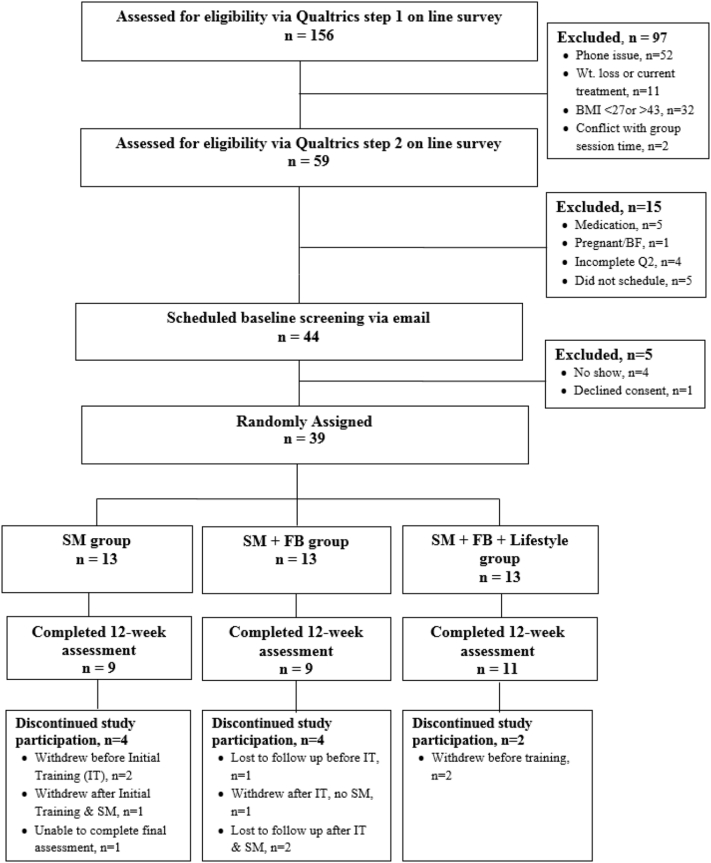
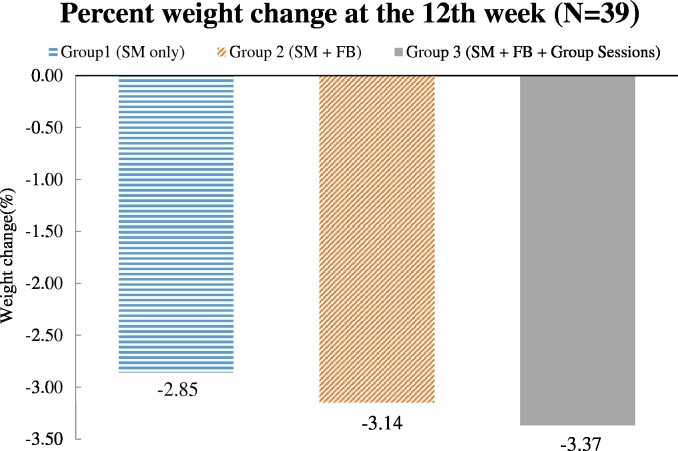
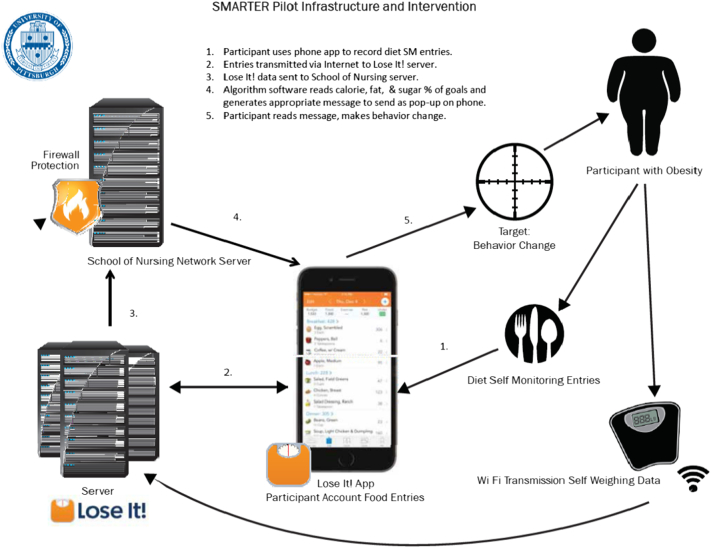
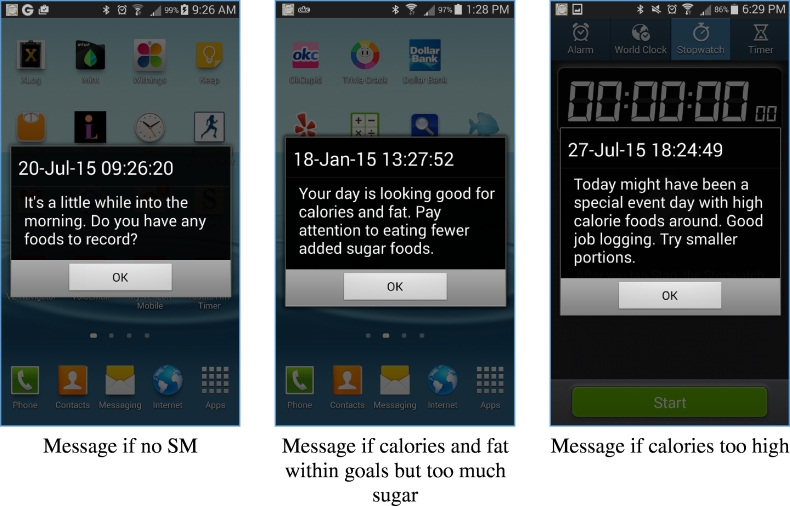
Self-monitoring (SM) of food intake is central to weight loss treatment. Technology makes it possible to reinforce this behavior change strategy by providing real-time feedback (FB) tailored to the diary entry. To test the feasibility of providing 1-4 daily FB messages tailored to dietary recordings via a smartphone, we conducted a 12-week pilot randomized clinical trial in Pittsburgh, PA in US in 2015. We compared 3 groups: SM using the Lose It! smartphone app (Group 1); SM + FB (Group 2); and SM + FB + attending three in-person group sessions (Group 3). The sample (N = 39) was mostly white and female with a mean body mass index of 33.76 kg/m. Adherence to dietary SM was recorded daily, weight was assessed at baseline and 12 weeks. The mean percentage of days adherent to dietary SM was similar among Groups 1, 2, and 3 (p = 0.66) at 53.50% vs. 55.86% vs. 65.33%, respectively. At 12 weeks, all groups had a significant percent weight loss (p < 0.05), with no differences among groups (- 2.85% vs. - 3.14% vs. - 3.37%) (p = 0.95); 26% of the participants lost ≥ 5% of their baseline weight. Mean retention was 74% with no differences among groups (p = 0.37). All groups adhered to SM at levels comparable to or better than other weight loss studies and lost acceptable amounts of weight, with minimal intervention contact over 12 weeks. These preliminary findings suggest this 3-group approach testing SM alone vs. SM with real-time FB messages alone or supplemented with limited in-person group sessions warrants further testing in a larger, more diverse sample and for a longer intervention period.
食物摄入量的自我监测(SM)是体重减轻治疗的核心。技术使得通过提供针对饮食记录量身定制的实时反馈(FB)来强化这种行为改变策略成为可能。为了测试通过智能手机提供针对饮食记录的每日1 - 4条反馈信息的可行性,我们于2015年在美国宾夕法尼亚州匹兹堡进行了一项为期12周的试点随机临床试验。我们比较了3组:使用Lose It!智能手机应用程序进行自我监测(第1组);自我监测 + 反馈(第2组);自我监测 + 反馈 + 参加三次面对面小组会议(第3组)。样本(N = 39)大多为白人女性,平均体重指数为33.76kg/m²。每日记录饮食自我监测的依从性,在基线和12周时评估体重。第1组、第2组和第3组中坚持饮食自我监测的天数平均百分比相似(p = 0.66),分别为53.50%、55.86%和65.33%。在12周时,所有组的体重都有显著下降(p < 0.05),组间无差异(-2.85% vs. -3.14% vs. -3.37%)(p = 0.95);26%的参与者体重减轻了≥其基线体重的5%。平均保留率为74%,组间无差异(p = 0.37)。所有组的自我监测依从性水平与其他减肥研究相当或更好,并且体重减轻量可接受,在12周内干预接触最少。这些初步发现表明,这种三组方法,即单独测试自我监测与单独使用实时反馈信息的自我监测或辅以有限的面对面小组会议,值得在更大、更多样化的样本中进行进一步测试,并进行更长时间的干预期。