Rezapoor Parastoo, Shahriari Mohsen, Sanei Hamid, Moeini Mahin
Department of Adult Health Nursing, School of Nursing and Midwifery, Isfahan University of Medical Sciences, Isfahan, Iran.
Nursing and Midwifery Care Research Center, School of Nursing and Midwifery, Isfahan University of Medical Sciences, Isfahan, Iran.
Int J Community Based Nurs Midwifery. 2017 Apr;5(2):112-122.
Coronary artery diseases and therapies such as coronary angioplasty would lead to changes in the quality of life in patients. The aim of this study was to determine the effects of collaborative care model on the quality of life in patients after coronary angioplasty.
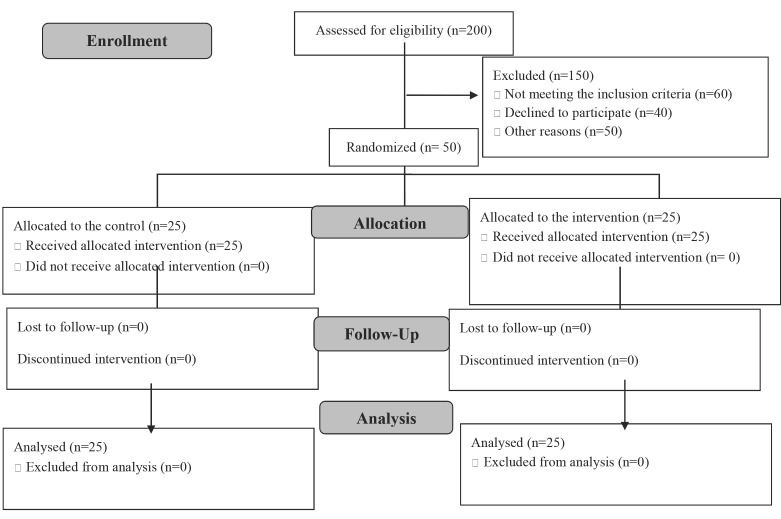
This randomized controlled clinical trial was conducted in Isfahan, Iran during 2015. In this study, 50 samples were selected by simple sampling and randomly allocated into two equal groups of intervention and control. Collaborative care model was performed in the intervention group for 3 months. Data were collected using quality of life (SF-36) questionnaire which includes 36 questions on physical and psychological dimensions and was completed before and one month after the intervention in both groups. Data were analyzed using descriptive and analytical statistics and by independent t- test, paired t test, Chi square and Mann-Whitney tests through SPSS 18.
After the intervention, the mean score of quality of life in the intervention group was significantly higher than the control group (P<0.05). The results of independent t-test showed a significant difference between both groups regarding the mean of changes in the score of quality of life and its dimensions in patients undergoing coronary angioplasty 3 months after the intervention (P<0.001).
Results revealed that patients who had been cared based on collaborative care model had better scores of quality of life in all the physical, mental and social dimensions than the control group. Therefore, using this model for taking care of patients after coronary angioplasty is recommended. IRCT2015120120912N4.
冠状动脉疾病以及诸如冠状动脉血管成形术等治疗方法会导致患者生活质量发生变化。本研究的目的是确定协作护理模式对冠状动脉血管成形术后患者生活质量的影响。
这项随机对照临床试验于2015年在伊朗伊斯法罕进行。在本研究中,通过简单抽样选取50个样本,并随机分为干预组和对照组两组,每组人数相等。干预组采用协作护理模式,为期3个月。使用生活质量(SF - 36)问卷收集数据,该问卷包括36个关于身体和心理维度的问题,两组均在干预前和干预后1个月完成。数据采用描述性和分析性统计方法进行分析,并通过SPSS 18软件进行独立t检验、配对t检验、卡方检验和曼 - 惠特尼检验。
干预后,干预组的生活质量平均得分显著高于对照组(P<0.05)。独立t检验结果显示,干预3个月后,两组在冠状动脉血管成形术患者生活质量得分及其维度变化均值方面存在显著差异(P<0.001)。
结果显示,基于协作护理模式接受护理的患者在所有身体、心理和社会维度的生活质量得分均高于对照组。因此,建议采用该模式护理冠状动脉血管成形术后的患者。IRCT2015120120912N4。