Ocampo Rebollar Ana, Menéndez Balaña Francisco J, Conde Pastor Montserrat
Departamento de Psicología Básica II, Universidad Nacional de Educación a Distancia (UNED), 28040 Madrid, Spain.
Heliyon. 2017 Apr 3;3(4):e00282. doi: 10.1016/j.heliyon.2017.e00282. eCollection 2017 Apr.
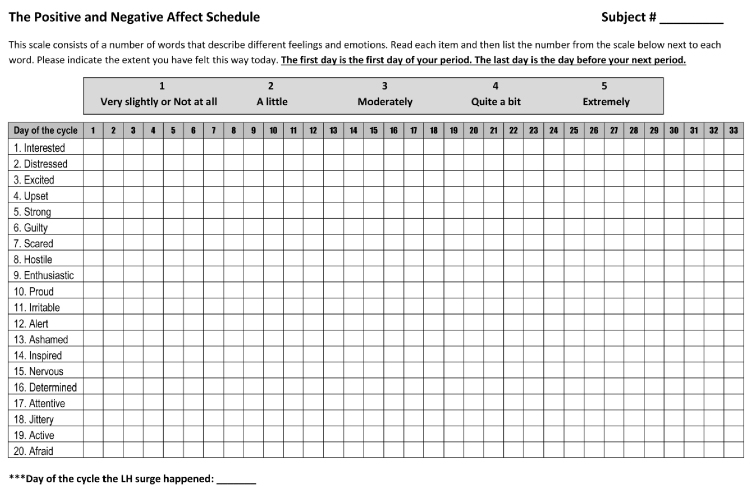
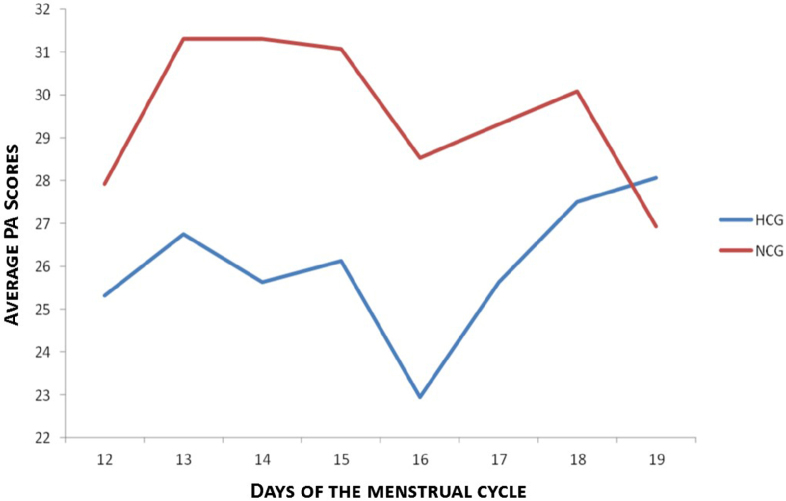
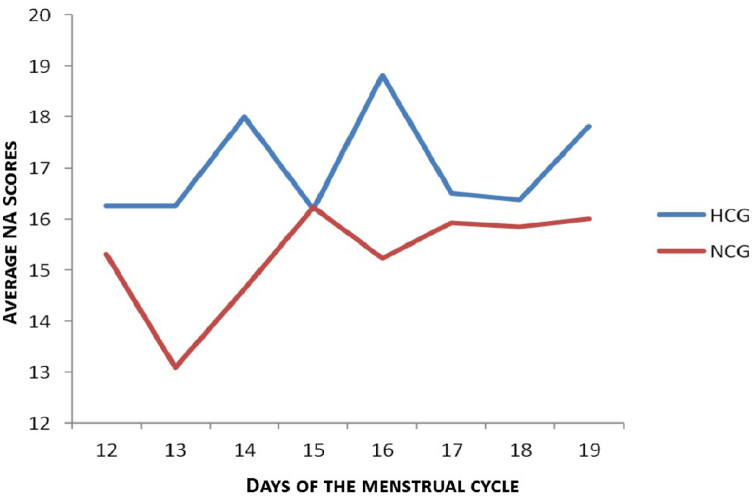
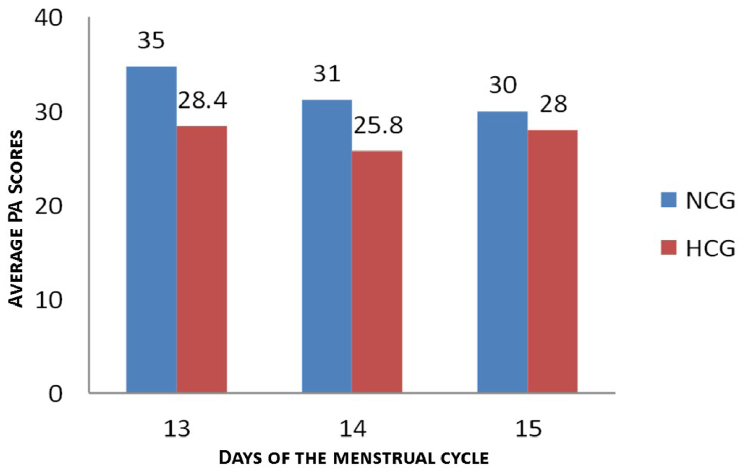
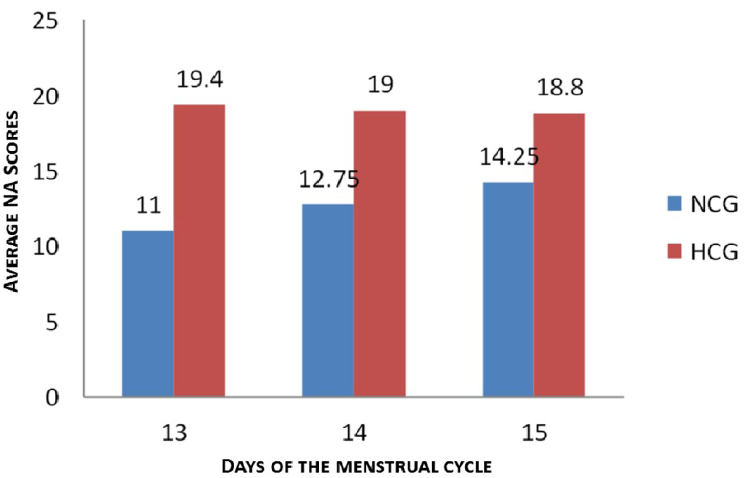
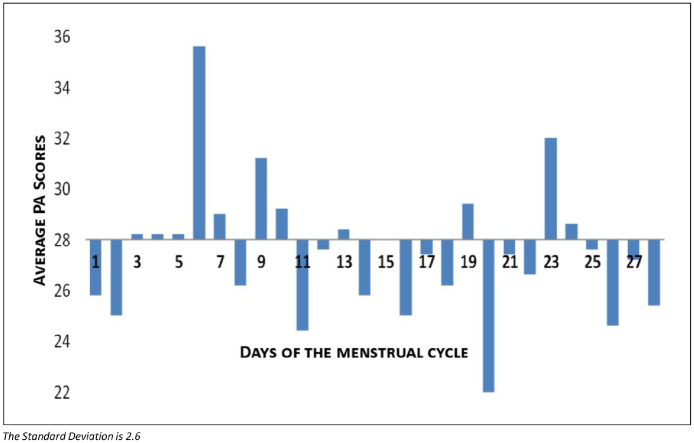
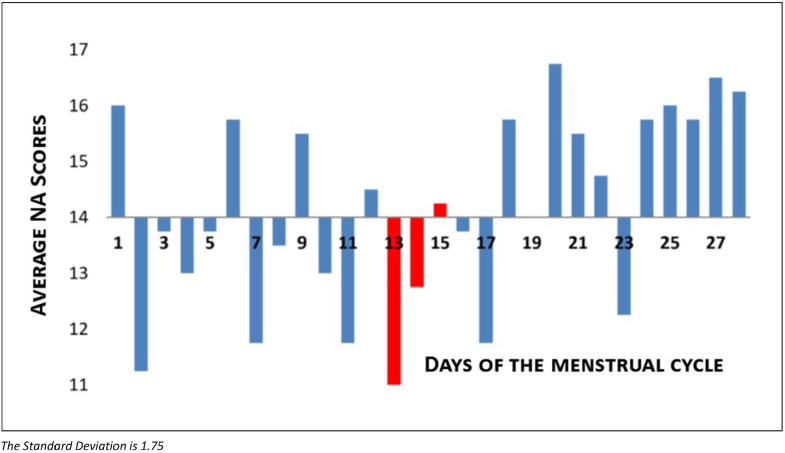
Studies about affect changes during the menstrual cycle and the role of hormones in these changes have yielded contradictory results. Often research has focused on the pre-menstrual phase, with few studies paying specific attention to the affect changes around ovulation. In this research thirty women completed a daily questionnaire measuring the positive and negative affect during their menstrual cycle. These women were divided in two groups: hormonally-contracepting and naturally-cycling. The Positive and Negative Affect Schedule was used to measure the affect. A Digital Ovulation Test was used to determine the day of ovulation in the participants not taking hormonal contraceptives by measuring the Luteinizing Hormone peak. The differences in positive affect (PA) and negative affect (NA) between groups were examined. The results indicate that during the ovulatory phase, PA scores are significantly higher in naturally-cycling women than hormonally-contracepting women.
关于月经周期中的情绪变化以及激素在这些变化中所起作用的研究得出了相互矛盾的结果。研究通常聚焦于经前期,很少有研究特别关注排卵前后的情绪变化。在这项研究中,30名女性在月经周期内每天填写一份问卷,用以测量其积极情绪和消极情绪。这些女性被分为两组:使用激素避孕的女性和自然月经周期的女性。采用正负情绪量表来测量情绪。对于未使用激素避孕的参与者,通过检测促黄体生成素峰值,使用数字排卵测试来确定排卵日。研究了两组之间积极情绪(PA)和消极情绪(NA)的差异。结果表明,在排卵期,自然月经周期的女性的PA得分显著高于使用激素避孕的女性。