Woodward Nicholas C, Levine Morgan C, Haghani Amin, Shirmohammadi Farimah, Saffari Arian, Sioutas Constantinos, Morgan Todd E, Finch Caleb E
Leonard Davis School of Gerontology, University of Southern California, Los Angeles, CA, USA.
Department of Human Genetics, David Geffen School of Medicine, University of California Los Angeles, Los Angeles, CA, USA.
J Neuroinflammation. 2017 Apr 14;14(1):84. doi: 10.1186/s12974-017-0858-x.
Exposure to traffic-related air pollution (TRAP) is associated with accelerated cognitive aging and higher dementia risk in human populations. Rodent brains respond to TRAP with activation of astrocytes and microglia, increased inflammatory cytokines, and neurite atrophy. A role for Toll-like receptor 4 (TLR4) was suggested in mouse TLR4-knockouts, which had attenuated lung macrophage responses to air pollution.
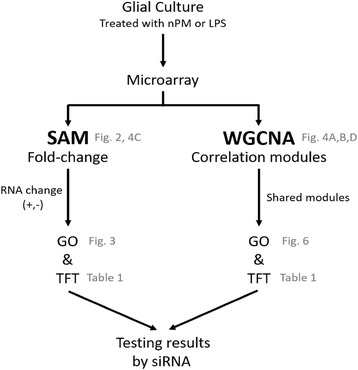
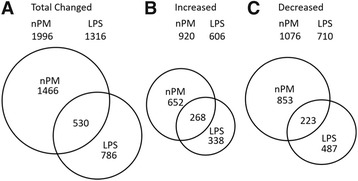
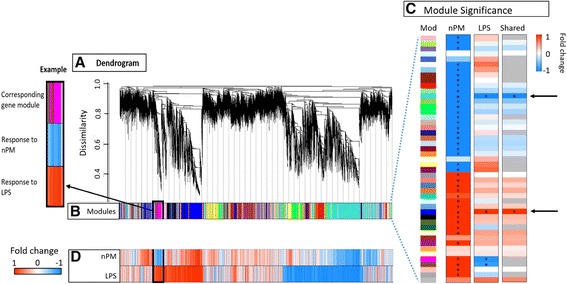
To further analyze these mechanisms, we examined mixed glial cultures (astrocytes and microglia) for RNA responses to nanoscale particulate matter (nPM; diameter <0.2 μm), a well-characterized nanoscale particulate matter subfraction of TRAP collected from a local freeway (Morgan et al. Environ Health Perspect 2011; 119,1003-1009, 2011). The nPM was compared with responses to the endotoxin lipopolysaccharide (LPS), a classic TLR4 ligand, using Affymetrix whole genome microarray in rats. Expression patterns were analyzed by significance analysis of microarrays (SAM) for fold change and by weighted gene co-expression network analysis (WGCNA) to identify modules of shared responses between nPM and LPS. Finally, we examined TLR4 activation in hippocampal tissue from mice chronically exposed to nPM.
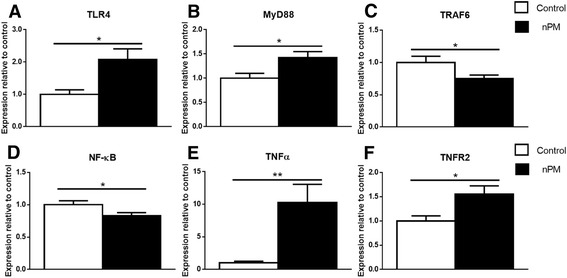
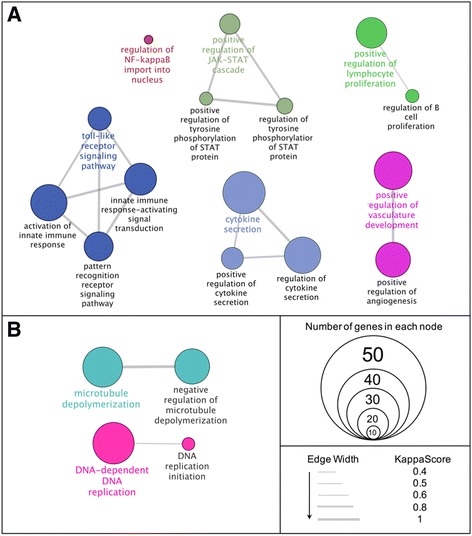
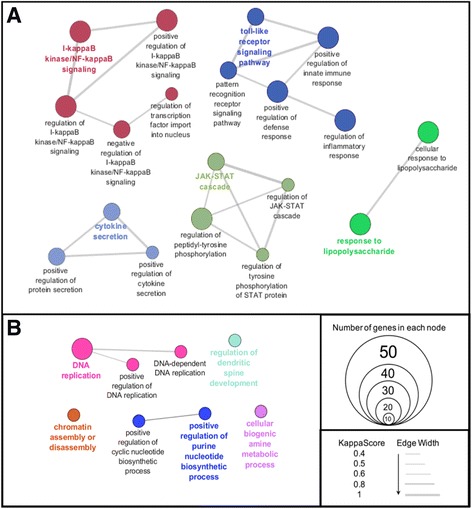
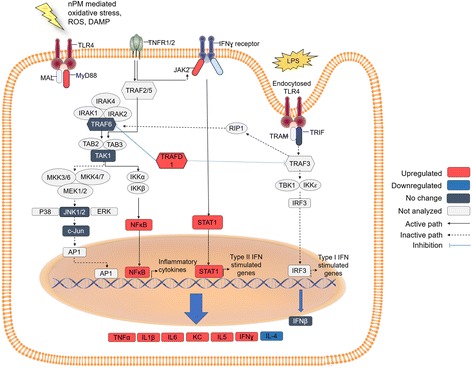
SAM and WGCNA analyses showed strong activation of TLR4 and NF-κB by both nPM and LPS. TLR4 siRNA attenuated TNFα and other inflammatory responses to nPM in vitro, via the MyD88-dependent pathway. In vivo, mice chronically exposed to nPM showed increased TLR4, MyD88, TNFα, and TNFR2 RNA, and decreased NF-κB and TRAF6 RNA TLR4 and NF-κB responses in the hippocampus.
These results show TLR4 activation is integral in brain inflammatory responses to air pollution, and warrant further study of TLR4 in accelerated cognitive aging by air pollution.
暴露于交通相关空气污染(TRAP)与人群认知衰老加速和痴呆风险增加有关。啮齿动物的大脑对TRAP的反应是星形胶质细胞和小胶质细胞激活、炎性细胞因子增加以及神经突萎缩。在小鼠Toll样受体4(TLR4)基因敲除模型中提示了TLR4的作用,该模型中肺巨噬细胞对空气污染的反应减弱。
为进一步分析这些机制,我们检测了混合胶质细胞培养物(星形胶质细胞和小胶质细胞)对纳米级颗粒物(nPM;直径<0.2μm)的RNA反应,nPM是从当地高速公路收集的TRAP中一种特征明确的纳米级颗粒物亚组分(Morgan等人,《环境健康展望》,2011年;119,1003 - 1009,2011)。使用Affymetrix全基因组微阵列在大鼠中将nPM与对内毒素脂多糖(LPS,一种经典的TLR4配体)的反应进行比较。通过微阵列显著性分析(SAM)分析表达模式的倍数变化,并通过加权基因共表达网络分析(WGCNA)来识别nPM和LPS之间共享反应的模块。最后,我们检测了长期暴露于nPM的小鼠海马组织中的TLR4激活情况。
SAM和WGCNA分析显示nPM和LPS均强烈激活TLR4和NF-κB。TLR4小干扰RNA(siRNA)通过MyD88依赖途径在体外减弱了对nPM的TNFα和其他炎性反应。在体内,长期暴露于nPM的小鼠海马中TLR4、MyD88、TNFα和TNFR2的RNA增加,而NF-κB和TRAF6的RNA以及TLR4和NF-κB反应减少。
这些结果表明TLR4激活在大脑对空气污染的炎症反应中不可或缺,并且有必要进一步研究TLR4在空气污染导致的认知衰老加速中的作用。