Richlitzki Antje, Latour Philipp, Schwärzel Martin
Freie Universität Berlin, Biology/Neurobiology, D-14195 Berlin, Germany.
Learn Mem. 2017 Apr 17;24(5):210-215. doi: 10.1101/lm.043646.116. Print 2017 May.
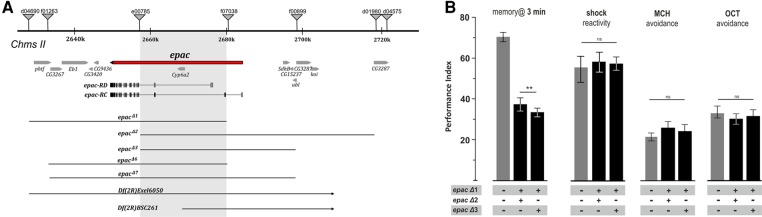
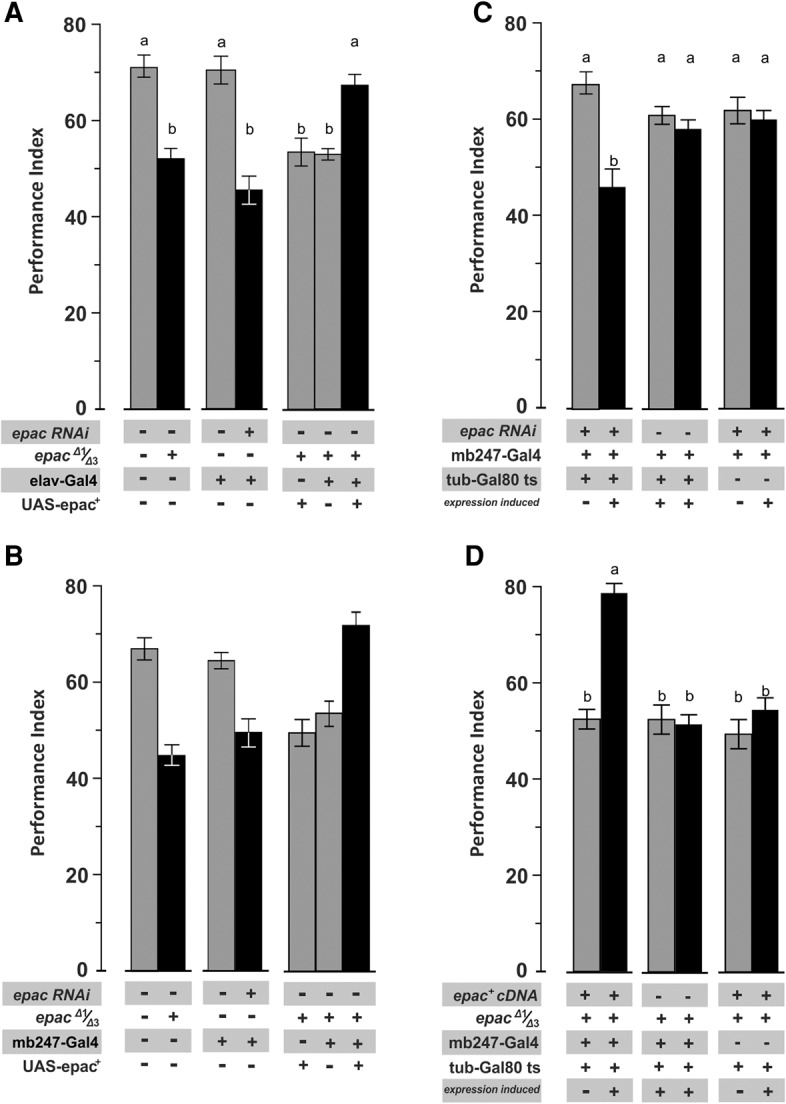
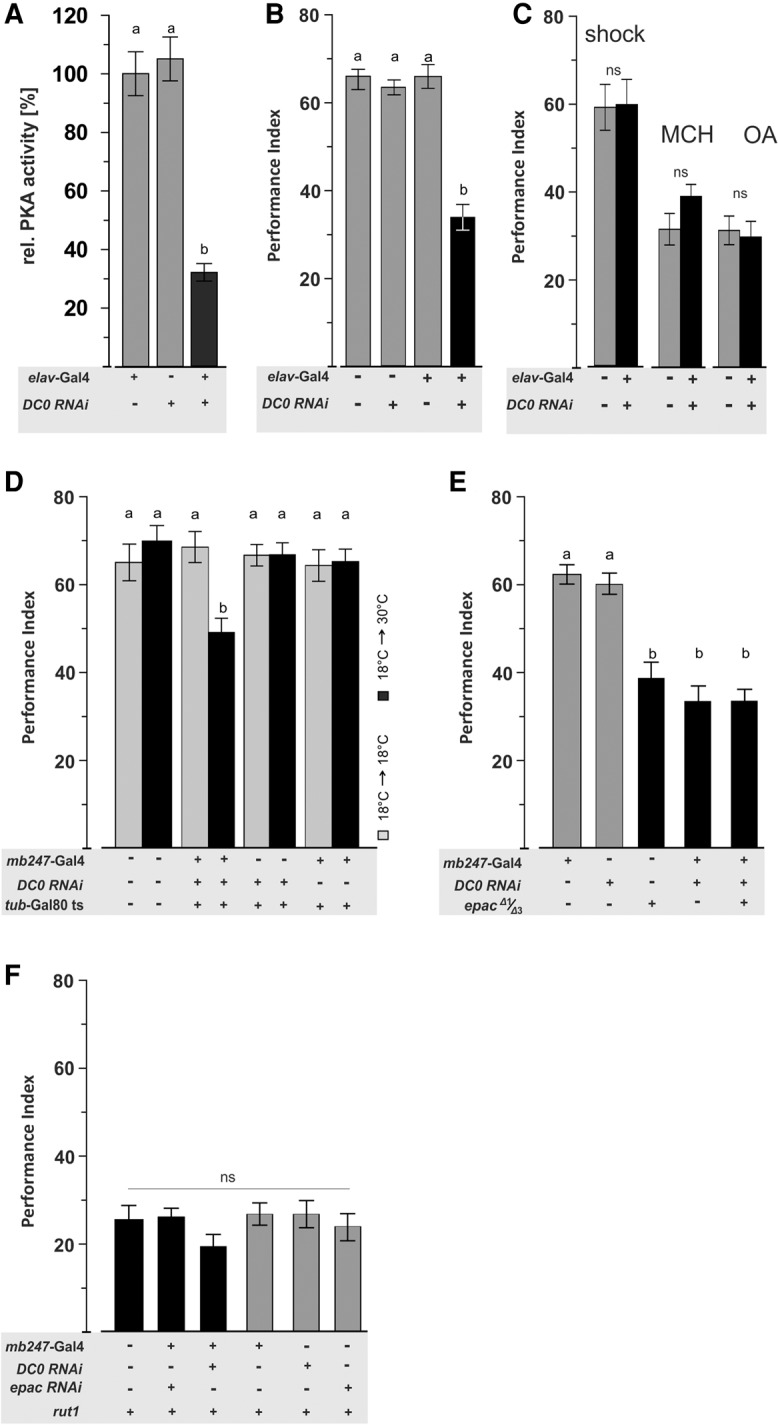
Here, we define a role of the cAMP intermediate EPAC in aversive odor learning by means of null epac mutants. Complementation analysis revealed that EPAC acts downstream from the adenylyl cyclase and in parallel to protein kinase A. By means of targeted knockdown and genetic rescue we identified mushroom body Kenyon cells (KCs) as a necessary and sufficient site of EPAC action. We provide mechanistic insights by analyzing acquisition dynamics and using the "performance increment" as a means to access the trial-based sequential organization of odor learning. Thereby we show that versatile cAMP-dependent mechanisms are engaged within a sequential order that correlate to individual trials of the training session.
在这里,我们通过环磷酸腺苷(cAMP)效应蛋白(EPAC)基因敲除突变体定义了cAMP中间产物EPAC在厌恶气味学习中的作用。互补分析表明,EPAC在腺苷酸环化酶下游起作用,且与蛋白激酶A平行发挥作用。通过靶向敲低和基因拯救,我们确定蕈形体肯扬细胞(KC)是EPAC发挥作用的必要且充分位点。我们通过分析习得动态并使用“性能提升”作为一种手段来探究基于试验的气味学习序列组织,从而提供了机制性见解。由此我们表明,通用的cAMP依赖机制按与训练过程中各个试验相关的顺序参与其中。