Provincial Key Laboratory for Horticultural Crop Genetic Improvement, Institute of Leisure Agriculture, Jiangsu Academy of Agricultural Sciences, Nanjing, Jiangsu, China.
Institute of Botany, Jiangsu Province and Chinese Academy of Sciences, Nanjing, Jiangsu, China.
PLoS One. 2017 Apr 18;12(4):e0176026. doi: 10.1371/journal.pone.0176026. eCollection 2017.
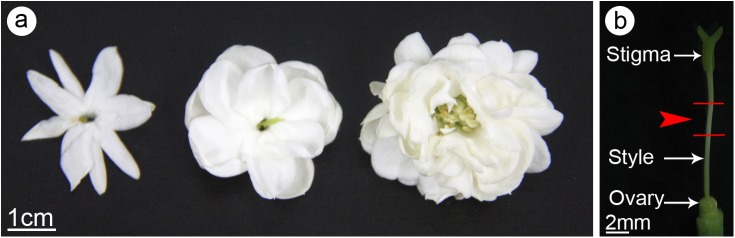
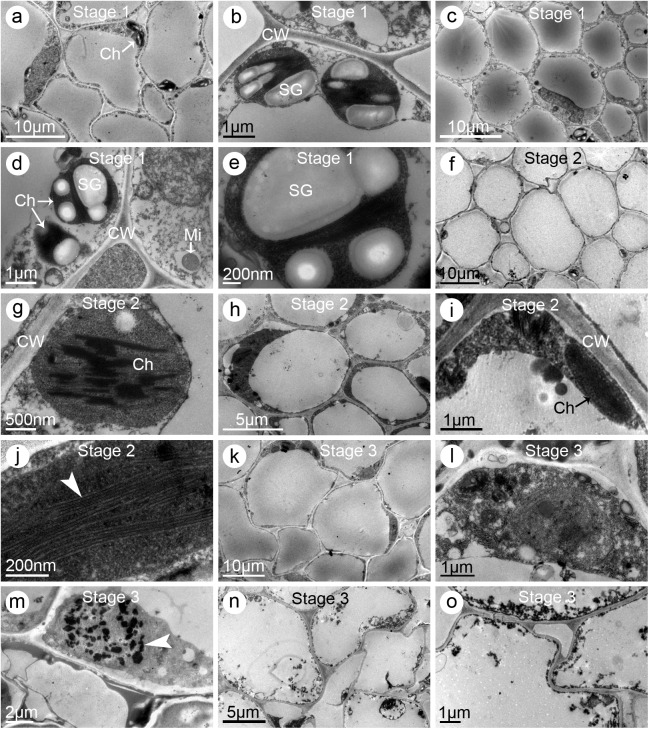
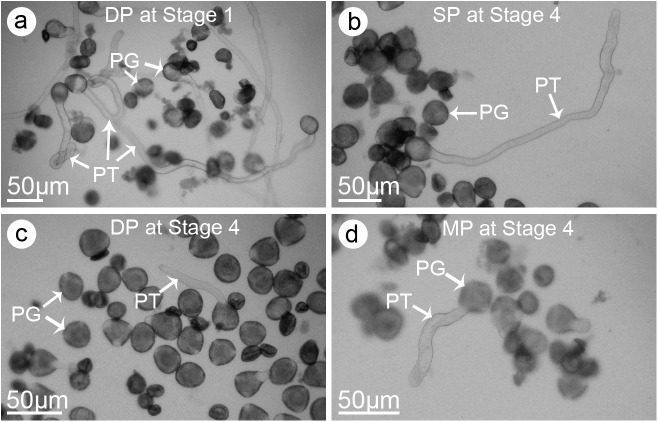
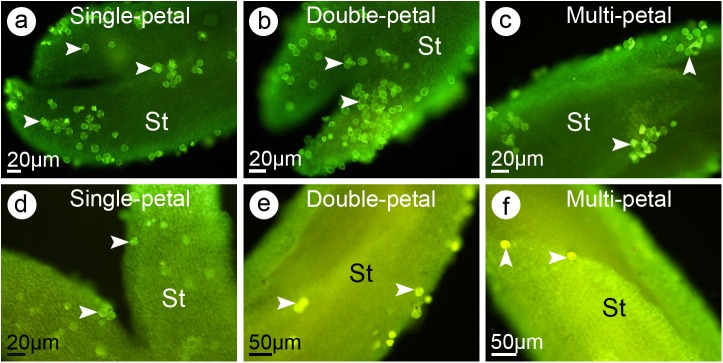
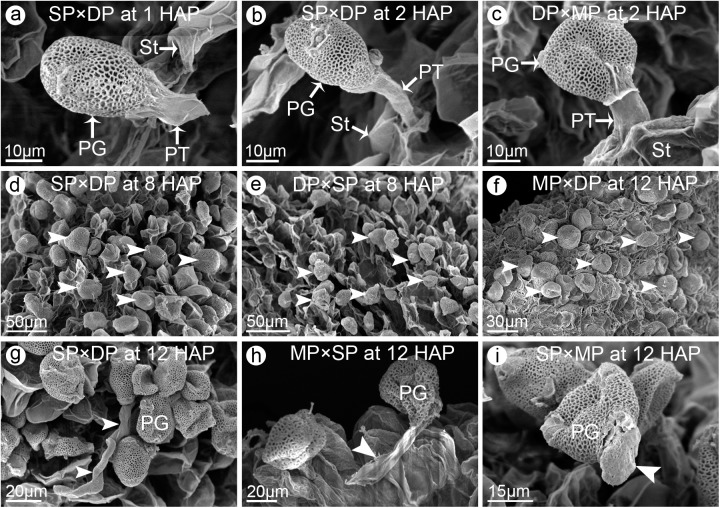
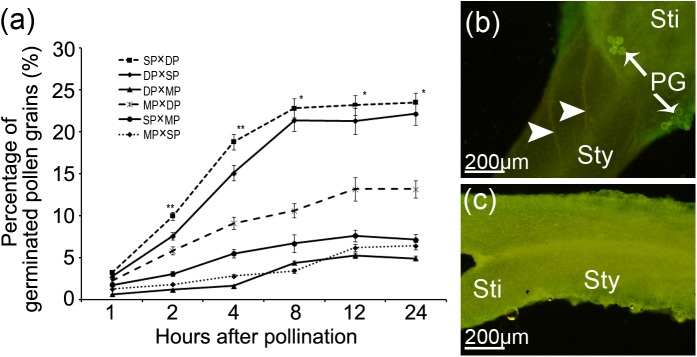
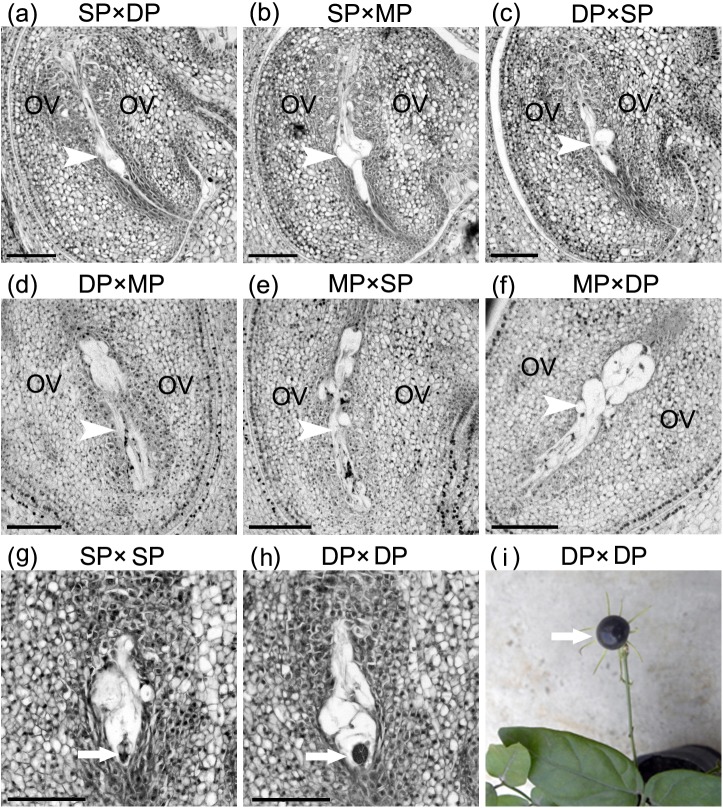
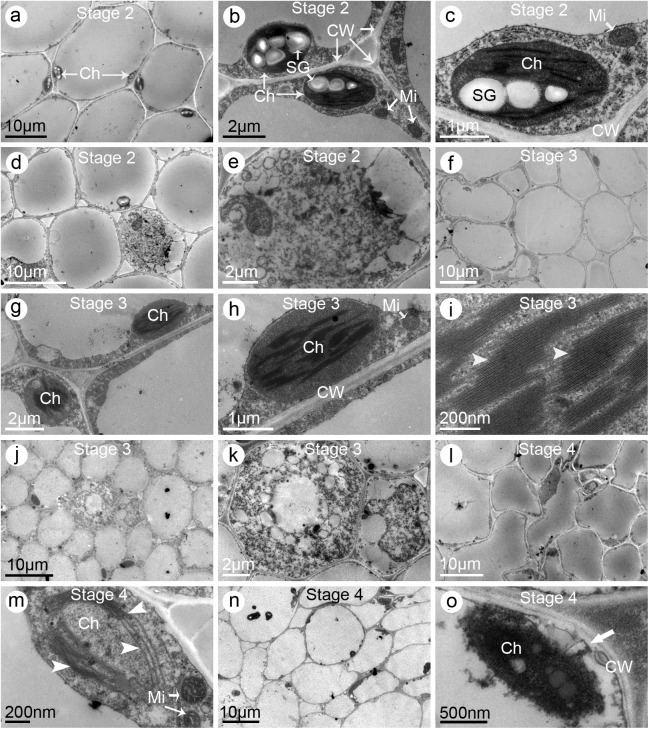
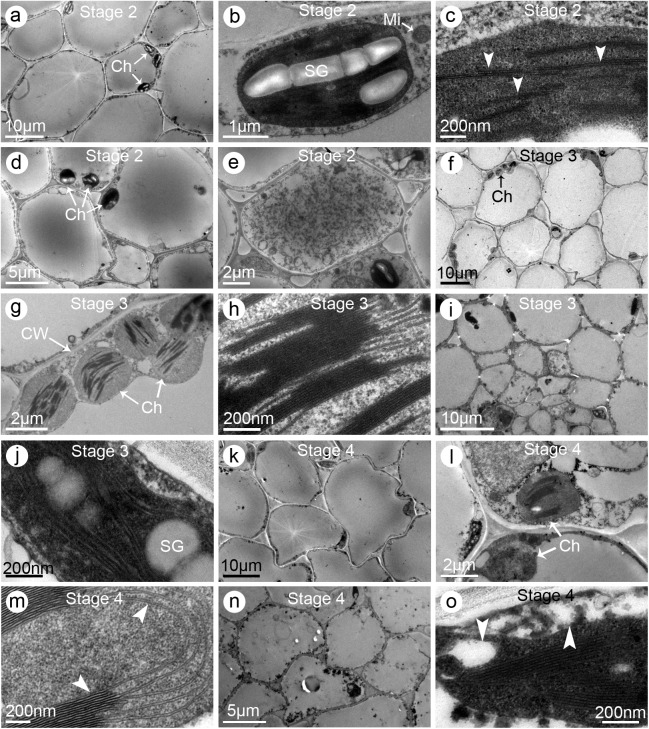
Crosses among single-, double- and multi-petal jasmine cultivars (Jasminum sambac Aiton) are unable to easily generate hybrids. To identify the reproductive barriers restricting hybrid set, dynamic changes in jasmine pollen viability and pistil receptivity were compared at different flowering stages. Pollen-pistil interactions in six reciprocal crosses were also investigated to characterize pollen-stigma compatibility. Additionally, paraffin sections of pollinated embryo sacs were prepared for subsequent analyses of developmental status. Furthermore, pistil cell ultrastructural characteristics were observed to reveal cytological mechanism regulating pistil receptivity and the pollen-pistil interactions. We observed that pollen viability and stigma receptivity varied depending on petal phenotype and flowering stage and were easily lost during flowering. Different reciprocal crosses exhibited varied pollen-stigma compatibilities according to the pollen germination rates. Although some pollen grains germinated normally on maternal stigmas, the pollen tubes were arrested in the pistils and were unable to reach the ovaries. Additionally, the embryo sacs remained unfertilized until degenerating. Therefore, jasmine crosses are affected by pre-fertilization reproductive barriers. Low pollen fertility and poor stigma receptivity are detrimental to pollen germination and pollen-pistil compatibility, indicating they are two factors affecting hybrid set. Ultrastructural observation of the pistil cells revealed that cell death occurred during flowering. Thus, the early and rapid senescence of pistils is likely responsible for the decreased pistil receptivity and inhibited pollen tube growth. These findings may be relevant for future jasmine hybridizations. They provide new insights for the development of methods to overcome reproductive barriers and may also be useful for clarifying the phylogenetic relationships among jasmine cultivars with differing petal phenotypes.
单瓣、重瓣和多瓣素馨(Jasminum sambac Aiton)品种之间的杂交难以产生杂种。为了鉴定限制杂种形成的生殖障碍,比较了不同开花阶段茉莉花粉活力和柱头可授性的动态变化。还研究了六个正反交的花粉-柱头相互作用,以表征花粉-柱头的亲和性。此外,制备授粉胚囊的石蜡切片,以随后分析发育状态。进一步观察柱头细胞的超微结构特征,以揭示调节柱头可授性和花粉-柱头相互作用的细胞学机制。我们观察到,花粉活力和柱头可授性随花瓣表型和开花阶段而变化,并且在开花过程中容易丧失。不同的正反交根据花粉萌发率表现出不同的花粉-柱头亲和性。尽管一些花粉粒在母本柱头上正常萌发,但花粉管在柱头中停滞,无法到达子房。此外,胚囊在退化之前一直未受精。因此,素馨属的杂交受到受精前生殖障碍的影响。花粉活力低和柱头可授性差不利于花粉萌发和花粉-柱头亲和性,表明这两个因素影响杂种的形成。柱头细胞的超微结构观察表明,开花过程中发生了细胞死亡。因此,柱头的早期和快速衰老可能是柱头可授性降低和花粉管生长受阻的原因。这些发现可能与未来的素馨杂交有关。它们为克服生殖障碍的方法的发展提供了新的见解,也有助于阐明具有不同花瓣表型的素馨品种之间的系统发育关系。