Sun Haijian, Zhu Xuexue, Cai Weiwei, Qiu Liying
Department of Basic Medicine, Wuxi School of Medicine, Jiangnan University, Wuxi 214122, China.
Int J Mol Sci. 2017 Apr 17;18(4):844. doi: 10.3390/ijms18040844.
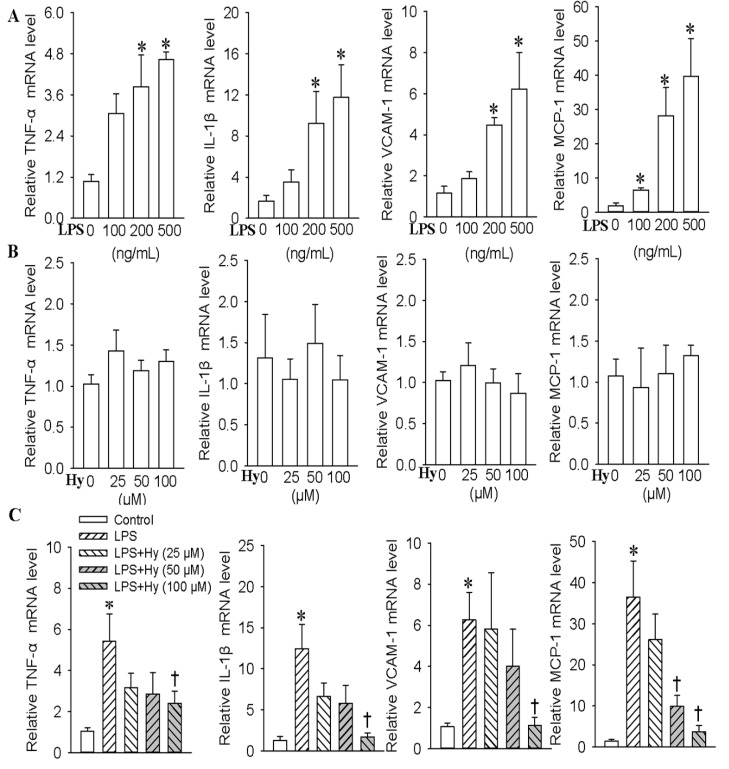
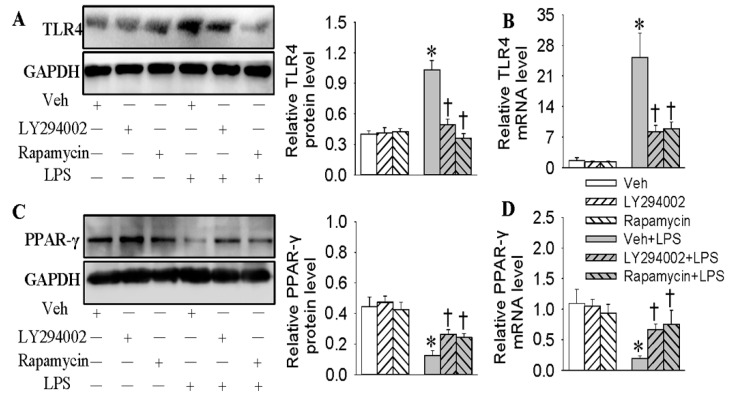
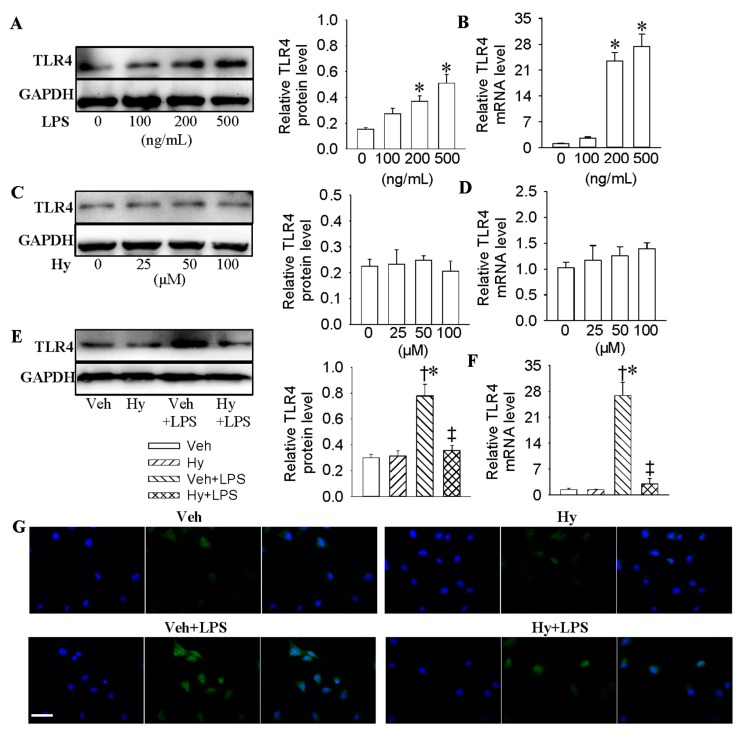
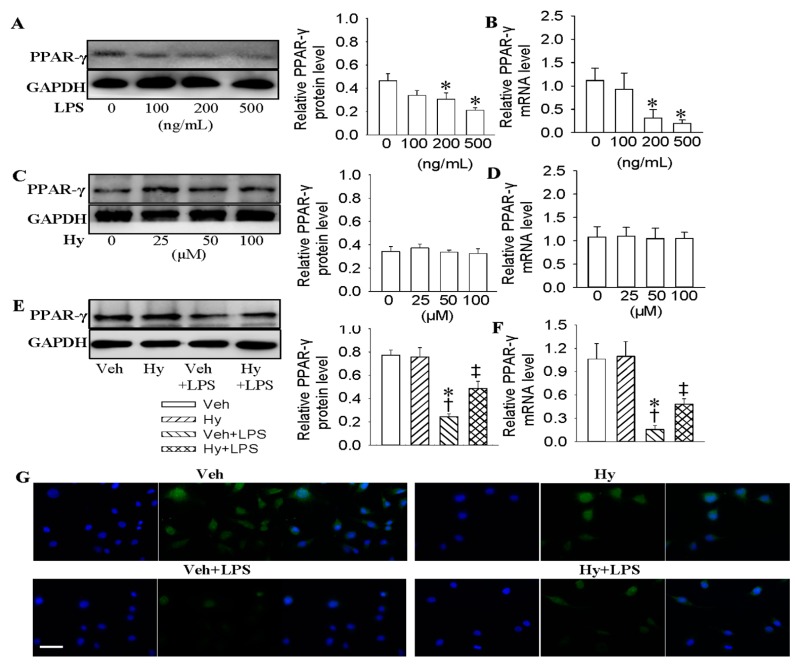
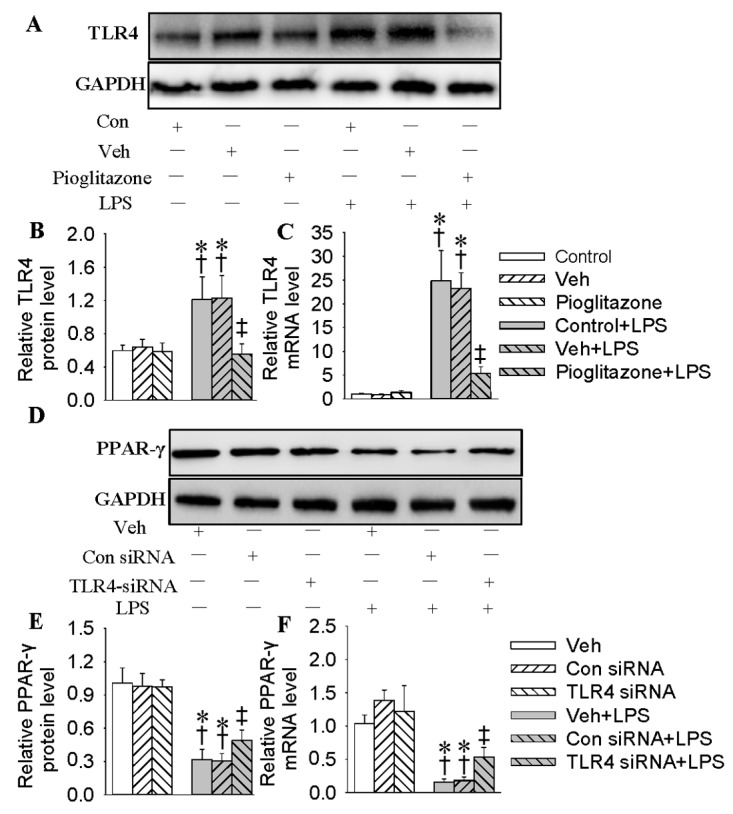
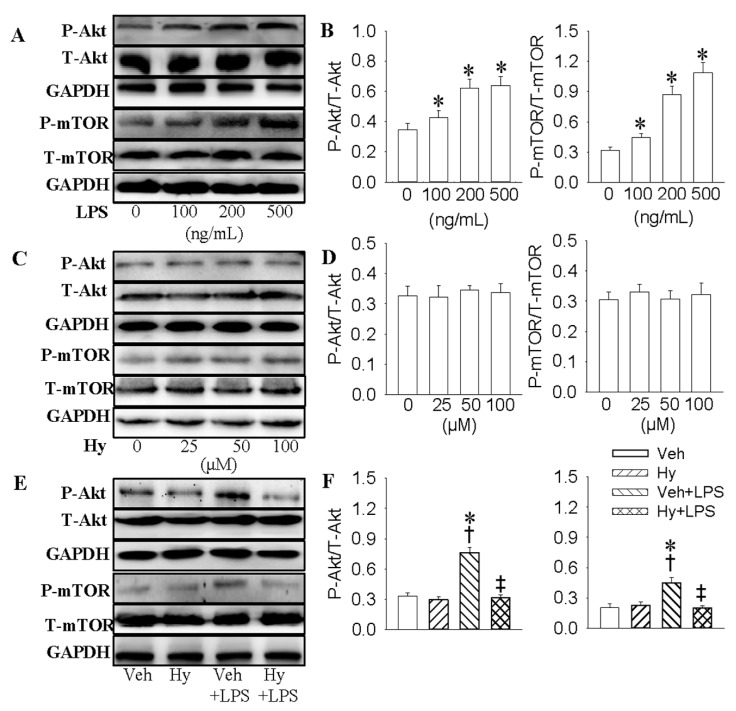
Endothelial lesion response to injurious stimuli is a necessary step for initiating inflammatory cascades in blood vessels. Hypaphorine (Hy) from different marine sources is shown to exhibit anti-inflammatory properties. However, the potential roles and possible molecular mechanisms of Hy in endothelial inflammation have yet to be fully clarified. We showed that Hy significantly inhibited the positive effects of lipopolysaccharide (LPS) on pro-inflammatory cytokines expressions, including tumor necrosis factor-α (TNF-α), interleukin-1β (IL-1β), monocyte chemoattractant protein 1 (MCP-1) and vascular cellular adhesion molecule-1 (VCAM-1), as well as induction of the phosphorylation of Akt and mTOR in HMEC-1 cells. The downregulated peroxisome proliferator-activated receptor γ (PPAR-γ) and upregulated toll-like receptor 4 (TLR4) expressions in LPS-challenged endothelial cells were prevented by Hy. Inhibition of both PI3K and mTOR reversed LPS-stimulated increases in TLR4 expressions and decreases in PPAR-γ levels. Genetic silencing of TLR4 or PPAR-γ agonist pioglitazone obviously abrogated the levels of pro-inflammatory cytokines in LPS-treated HMEC-1 cells. These results suggest that Hy may exert anti-inflammatory actions through the regulation of TLR4 and PPAR-γ dependent on PI3K/Akt/mTOR signal pathways. Hy may be considered as a therapeutic agent that can potentially relieve or ameliorate endothelial inflammation-associated diseases.
内皮细胞对损伤刺激的反应是启动血管炎症级联反应的必要步骤。来自不同海洋来源的hypaphorine(Hy)已显示出具有抗炎特性。然而,Hy在内皮炎症中的潜在作用和可能的分子机制尚未完全阐明。我们发现,Hy显著抑制脂多糖(LPS)对促炎细胞因子表达的积极影响,这些促炎细胞因子包括肿瘤坏死因子-α(TNF-α)、白细胞介素-1β(IL-1β)、单核细胞趋化蛋白1(MCP-1)和血管细胞黏附分子-1(VCAM-1),以及在人微血管内皮细胞-1(HMEC-1)中诱导的Akt和mTOR磷酸化。Hy可防止LPS刺激的内皮细胞中过氧化物酶体增殖物激活受体γ(PPAR-γ)表达下调和Toll样受体4(TLR4)表达上调。抑制磷脂酰肌醇-3激酶(PI3K)和mTOR可逆转LPS刺激引起的TLR4表达增加和PPAR-γ水平降低。TLR4基因沉默或PPAR-γ激动剂吡格列酮可明显消除LPS处理的HMEC-1细胞中促炎细胞因子的水平。这些结果表明,Hy可能通过依赖PI3K/Akt/mTOR信号通路调节TLR4和PPAR-γ发挥抗炎作用。Hy可被视为一种潜在能够缓解或改善内皮炎症相关疾病的治疗药物。