Santamaria Salvatore, Reglińska-Matveyev Natalia, Gierula Magdalena, Camire Rodney M, Crawley James T B, Lane David A, Ahnström Josefin
From the Centre for Haematology, Faculty of Medicine, Imperial College London, London W12 0NN, United Kingdom.
the Division of Hematology, Department of Pediatrics, Perelman School of Medicine, University of Pennsylvania, Philadelphia, Pennsylvania 19104, and.
J Biol Chem. 2017 Jun 2;292(22):9335-9344. doi: 10.1074/jbc.M116.769570. Epub 2017 Apr 18.
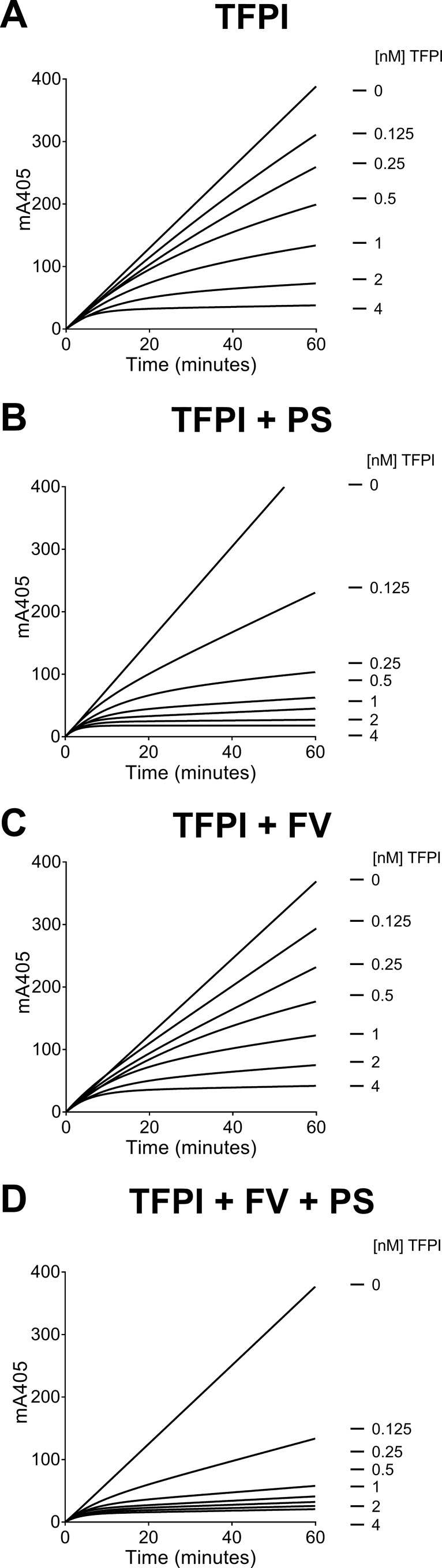
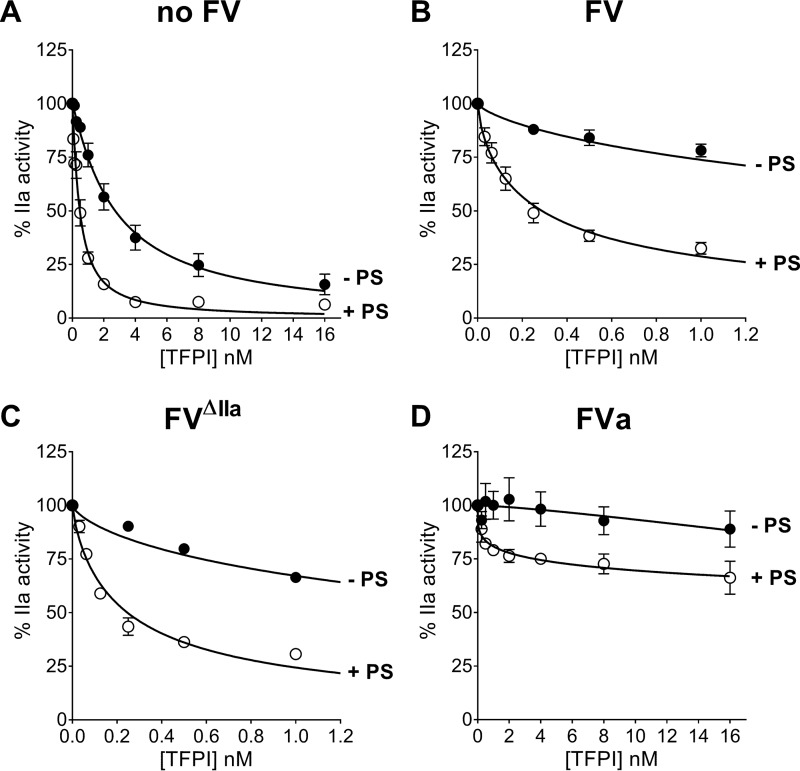
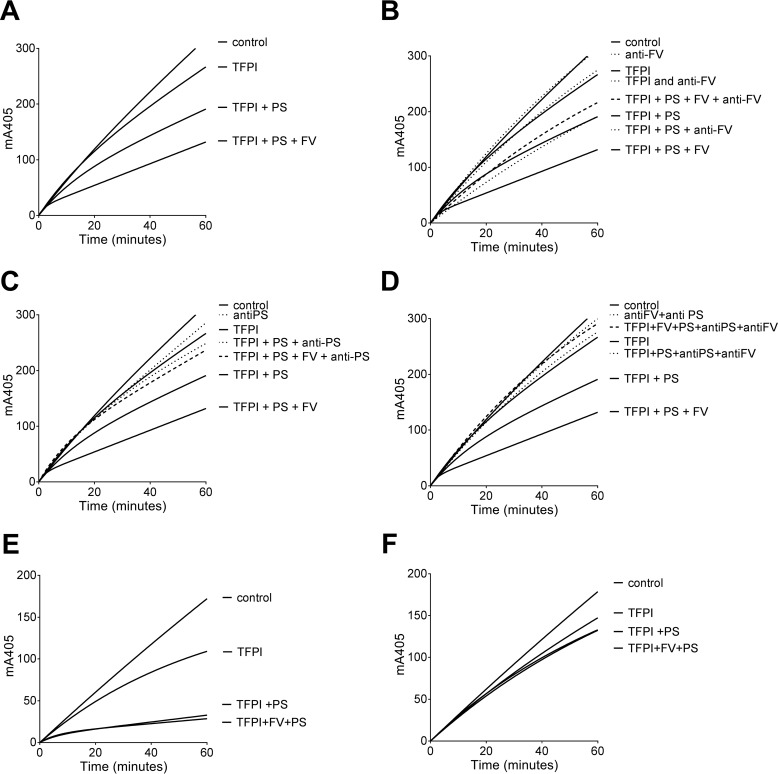
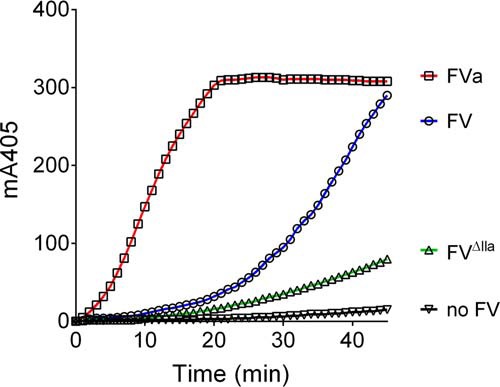
Tissue factor pathway inhibitor (TFPI), the main inhibitor of initiation of coagulation, exerts an important anticoagulant role through the factor Xa (FXa)-dependent inhibition of tissue factor/factor VIIa. Protein S is a TFPI cofactor, enhancing the efficiency of FXa inhibition. TFPI can also inhibit prothrombinase assembly by directly interacting with coagulation factor V (FV), which has been activated by FXa. Because full-length TFPI associates with FV in plasma, we hypothesized that FV may influence TFPI inhibitory function. Using pure component FXa inhibition assays, we found that although FV alone did not influence TFPI-mediated FXa inhibition, it further enhanced TFPI in the presence of protein S, resulting in an ∼8-fold reduction in compared with TFPI alone. A FV variant (R709Q/R1018Q/R1545Q, FV) that cannot be cleaved/activated by thrombin or FXa also enhanced TFPI-mediated inhibition of FXa ∼12-fold in the presence of protein S. In contrast, neither activated FV nor recombinant B-domain-deleted FV could enhance TFPI-mediated inhibition of FXa in the presence of protein S, suggesting a functional contribution of the B domain. Using TFPI and protein S variants, we show further that the enhancement of TFPI-mediated FXa inhibition by protein S and FV depends on a direct protein S/TFPI interaction and that the TFPI C-terminal tail is not essential for this enhancement. In FXa-catalyzed prothrombin activation assays, both FV and FV (but not activated FV) enhanced TFPI function in the presence of protein S. These results demonstrate a new anticoagulant (cofactor) function of FV that targets the early phase of coagulation before prothrombinase assembly.
组织因子途径抑制剂(TFPI)是凝血启动的主要抑制剂,通过依赖于因子Xa(FXa)对组织因子/因子VIIa的抑制发挥重要的抗凝作用。蛋白S是TFPI的辅因子,可提高FXa抑制的效率。TFPI还可通过与已被FXa激活的凝血因子V(FV)直接相互作用来抑制凝血酶原酶组装。由于全长TFPI在血浆中与FV结合,我们推测FV可能影响TFPI的抑制功能。使用纯组分FXa抑制试验,我们发现尽管单独的FV不影响TFPI介导的FXa抑制,但在蛋白S存在的情况下它进一步增强了TFPI,与单独的TFPI相比,导致[具体指标]降低约8倍。一种不能被凝血酶或FXa切割/激活的FV变体(R709Q/R1018Q/R1545Q,FV)在蛋白S存在的情况下也将TFPI介导的FXa抑制增强了约12倍。相反,在蛋白S存在的情况下,活化的FV或重组B结构域缺失的FV均不能增强TFPI介导的FXa抑制,这表明B结构域具有功能作用。使用TFPI和蛋白S变体,我们进一步表明蛋白S和FV对TFPI介导的FXa抑制的增强取决于蛋白S/TFPI的直接相互作用,并且TFPI的C末端尾巴对于这种增强不是必需的。在FXa催化的凝血酶原激活试验中,FV和FV(但不是活化的FV)在蛋白S存在的情况下均增强了TFPI功能。这些结果证明了FV的一种新的抗凝(辅因子)功能,其靶向凝血酶原酶组装之前的凝血早期阶段。