Fallon Jonathan K, Vandeveer Amanda J, Schlom Jeffrey, Greiner John W
Laboratory of Tumor Immunology and Biology, Center for Cancer Research, National Cancer Institute, Bethesda, MD, USA.
Oncotarget. 2017 Mar 28;8(13):20558-20571. doi: 10.18632/oncotarget.16137.
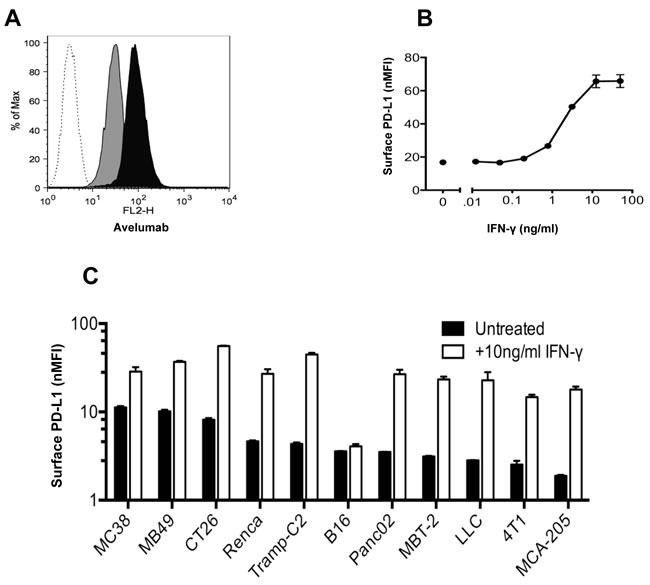
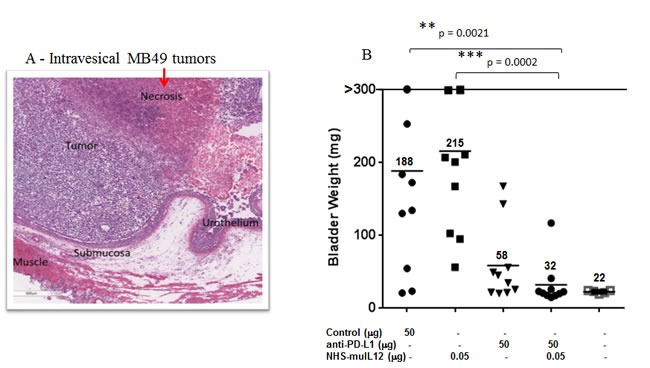
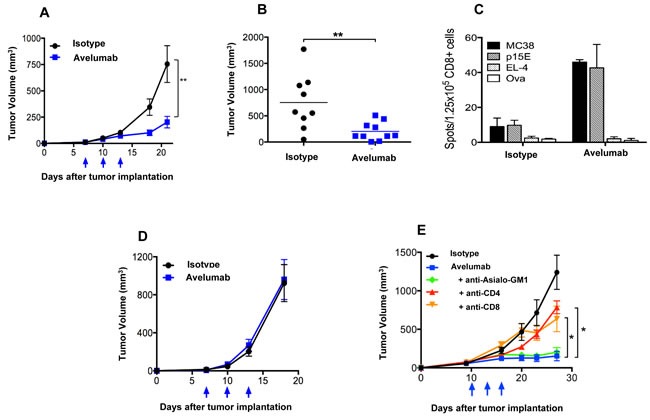
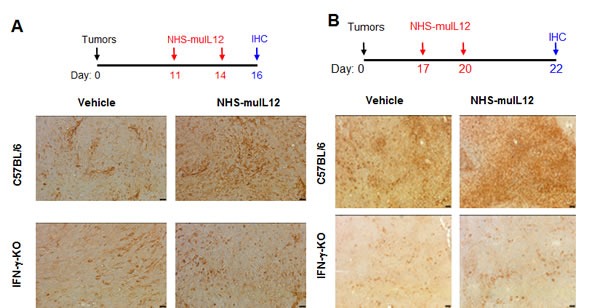
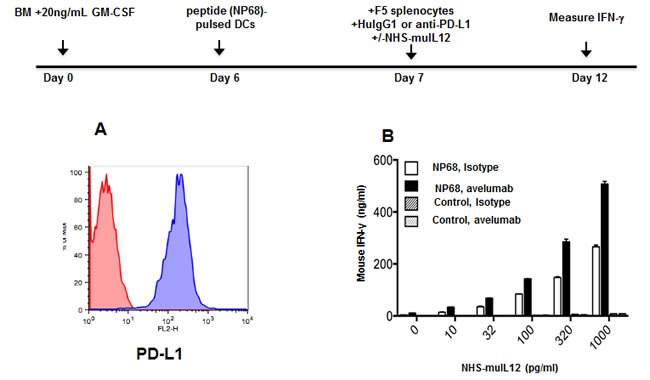
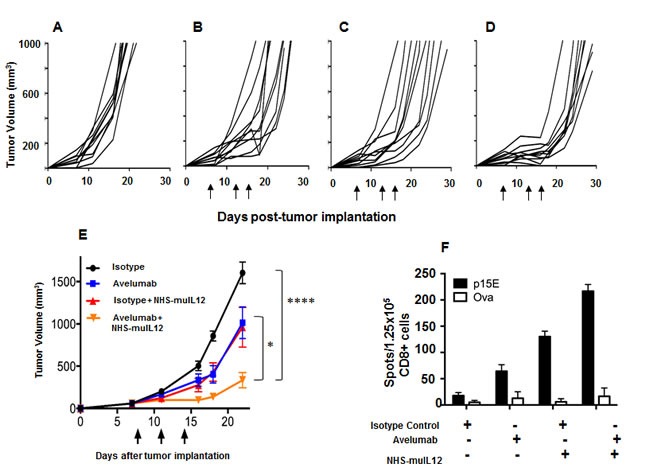
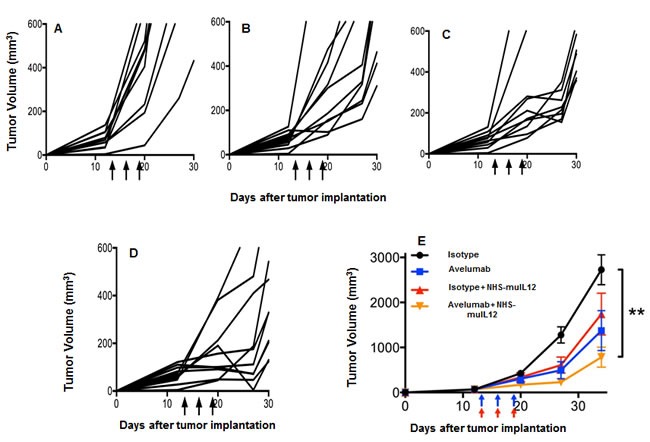
The combined therapeutic potential of an immunocytokine designed to deliver IL-12 to the necrotic regions of solid tumors with an anti-PD-L1 antibody that disrupts the immunosuppressive PD-1/PD-L1 axis yielded a combinatorial benefit in multiple murine tumor models. The murine version of the immunocytokine, NHS-muIL12, consists of an antibody (NHS76) recognizing DNA/DNA-histone complexes, fused with two molecules of murine IL-12 (NHS-muIL12). By its recognition of exposed DNA, NHS-muIL12 targets IL-12 to the necrotic portions of tumors; it has a longer plasma half-life and better antitumor efficacy against murine tumors than recombinant murine IL-12. It is shown here that NHS-muIL12, in an IFN-γâdependent mechanism, upregulates mPD-L1 expression on mouse tumors, which could be construed as an immunosuppressive action. Yet concurrent therapy with NHS-muIL12 and an anti-PD-L1 antibody resulted in additive/synergistic antitumor effects in PD-L1âexpressing subcutaneously transplanted tumors (MC38, MB49) and in an intravesical bladder tumor model (MB49). Antitumor efficacy correlated with (a) with a higher frequency of tumor antigen-specific splenic CD8+ T cells and (b) enhanced T cell activation over a wide range of NHS-muIL12 concentrations. These findings suggest that combining NHS-muIL12 and an anti-PD-L1 antibody enhances T cell activation and T cell effector functions within the tumor microenvironment, significantly improving overall tumor regression. These results should provide the rationale to examine the combination of these agents in clinical studies.
一种免疫细胞因子旨在将白细胞介素-12(IL-12)递送至实体瘤坏死区域,同时联合一种抗程序性死亡配体-1(PD-L1)抗体破坏免疫抑制性程序性死亡蛋白-1(PD-1)/PD-L1轴,二者联合疗法在多种小鼠肿瘤模型中产生了协同效益。免疫细胞因子的小鼠版本NHS-μIL12由一种识别DNA/DNA-组蛋白复合物的抗体(NHS76)与两分子小鼠IL-12融合而成(NHS-μIL12)。通过识别暴露的DNA,NHS-μIL12将IL-12靶向肿瘤坏死部分;与重组小鼠IL-12相比,它具有更长的血浆半衰期和更好的抗小鼠肿瘤疗效。研究表明,NHS-μIL12通过干扰素-γ依赖机制上调小鼠肿瘤上的mPD-L1表达,这可被视为一种免疫抑制作用。然而,NHS-μIL12与抗PD-L1抗体联合治疗在表达PD-L1的皮下移植肿瘤(MC38、MB49)和膀胱内肿瘤模型(MB49)中产生了相加/协同的抗肿瘤作用。抗肿瘤疗效与(a)肿瘤抗原特异性脾CD8+T细胞频率较高以及(b)在广泛的NHS-μIL12浓度范围内增强的T细胞活化相关。这些发现表明,联合使用NHS-μIL12和抗PD-L1抗体可增强肿瘤微环境中的T细胞活化和T细胞效应功能,显著改善整体肿瘤消退。这些结果应为在临床研究中检验这些药物的联合使用提供理论依据。