• 文献检索
  • 文档翻译
  • 深度研究
  • 学术资讯
  • Suppr Zotero 插件Zotero 插件
  • 邀请有礼
  • 套餐&价格
  • 历史记录
应用&插件
Suppr Zotero 插件Zotero 插件浏览器插件Mac 客户端Windows 客户端微信小程序
定价
高级版会员购买积分包购买API积分包
服务
文献检索文档翻译深度研究API 文档MCP 服务
关于我们
关于 Suppr公司介绍联系我们用户协议隐私条款
关注我们

Suppr 超能文献

核心技术专利:CN118964589B侵权必究
粤ICP备2023148730 号-1Suppr @ 2026

文献检索

告别复杂PubMed语法,用中文像聊天一样搜索,搜遍4000万医学文献。AI智能推荐,让科研检索更轻松。

立即免费搜索

文件翻译

保留排版,准确专业,支持PDF/Word/PPT等文件格式,支持 12+语言互译。

免费翻译文档

深度研究

AI帮你快速写综述,25分钟生成高质量综述,智能提取关键信息,辅助科研写作。

立即免费体验

持续气道正压通气与高流量鼻导管吸氧在婴幼儿支气管炎治疗中的比较

Comparison of CPAP and HFNC in Management of Bronchiolitis in Infants and Young Children.

作者信息

Pedersen Majken Bisgaard, Vahlkvist Signe

机构信息

Pediatric Department, Hospital of South West Jutland, Finsensgade 35, 6700 Esbjerg, Denmark.

出版信息

Children (Basel). 2017 Apr 20;4(4):28. doi: 10.3390/children4040028.

DOI:10.3390/children4040028
PMID:28425965
原文链接:https://pmc.ncbi.nlm.nih.gov/articles/PMC5406687/
Abstract

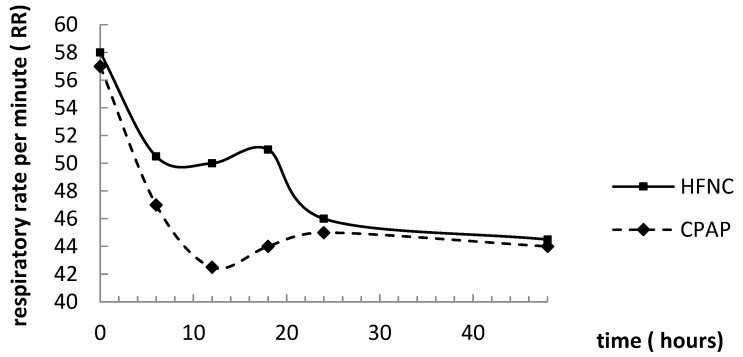
Continuous positive airway pressure (CPAP) has been used in infants with bronchiolitis for decades. Recently, high flow nasal cannula (HFNC) therapy was introduced We conducted a retrospective study of treatment with CPAP vs. HFNC between 2013 and 2015, comparing the development in respiratory rate, fraction of inspired oxygen (FiO2) and heart rate, treatment failure, duration of treatment, and length of hospital stay. A sample size of 49 children were included. Median age was 1.9 months. Median baseline pCO₂ was 7.4 kPa in both groups, respiratory rate per minute was 57 vs. 58 (CPAP vs. HFNC). Respiratory rate decreased faster in the CPAP group ( < 0.05). FiO2 decreased in the CPAP group and increased in the HFNC group during the first 12 h, whereafter it decreased in both groups. ( < 0.01). Heart rate development was similar in both groups. Twelve children (55%) changed systems from HFNC to CPAP due to disease progression. There was no difference in length of treatment, hospital stay, or transmission to intensive care unit between the groups. CPAP was more effective than HFNC in decreasing respiratory rate (RR) and FiO2. No differences were observed in length of treatment or complications. Further studies should be conducted to compare the efficacy of the two treatments of bronchiolitis, preferably through prospective randomized trials.

摘要

持续气道正压通气(CPAP)已在患细支气管炎的婴儿中使用了数十年。最近,高流量鼻导管(HFNC)疗法被引入。我们对2013年至2015年间使用CPAP与HFNC治疗进行了一项回顾性研究,比较呼吸频率、吸入氧分数(FiO2)和心率的变化、治疗失败情况、治疗持续时间和住院时间。纳入了49名儿童样本。中位年龄为1.9个月。两组的中位基线pCO₂均为7.4 kPa,每分钟呼吸频率分别为57次和58次(CPAP组对HFNC组)。CPAP组呼吸频率下降更快(<0.05)。在最初12小时内,CPAP组的FiO2下降,HFNC组的FiO2上升,此后两组均下降(<0.01)。两组的心率变化相似。12名儿童(55%)因病情进展从HFNC转换为CPAP治疗。两组在治疗持续时间、住院时间或转入重症监护病房方面无差异。CPAP在降低呼吸频率(RR)和FiO2方面比HFNC更有效。在治疗持续时间或并发症方面未观察到差异。应进行进一步研究以比较两种细支气管炎治疗方法的疗效,最好通过前瞻性随机试验进行。
https://cdn.ncbi.nlm.nih.gov/pmc/blobs/61d1/5406687/aa71a8c687c8/children-04-00028-g001a.jpg

相似文献

1
Comparison of CPAP and HFNC in Management of Bronchiolitis in Infants and Young Children.持续气道正压通气与高流量鼻导管吸氧在婴幼儿支气管炎治疗中的比较
Children (Basel). 2017 Apr 20;4(4):28. doi: 10.3390/children4040028.
2
High flow nasal cannula and continuous positive airway pressure therapy in treatment of viral bronchiolitis: a randomized clinical trial.高流量鼻导管和持续气道正压通气治疗病毒性细支气管炎的随机临床试验。
Eur J Pediatr. 2020 Mar;179(3):513-518. doi: 10.1007/s00431-019-03533-2. Epub 2019 Dec 11.
3
Safety and effectiveness of bubble continuous positive airway pressure as respiratory support for bronchiolitis in a pediatric ward.气泡持续气道正压通气作为小儿科病房毛细支气管炎呼吸支持的安全性和有效性。
Eur J Pediatr. 2022 Dec;181(12):4039-4047. doi: 10.1007/s00431-022-04616-3. Epub 2022 Sep 21.
4
A comparison between high-flow nasal cannula and noninvasive ventilation in the management of infants and young children with acute bronchiolitis in the PICU.经 PICUs 治疗的婴幼儿毛细支气管炎中高流量鼻导管与无创通气的比较。
Pediatr Pulmonol. 2020 Feb;55(2):455-461. doi: 10.1002/ppul.24553. Epub 2020 Jan 10.
5
High-Flow Nasal Cannula Versus Nasal Prong Bubble Continuous Positive Airway Pressure in Children With Moderate to Severe Acute Bronchiolitis: A Randomized Controlled Trial.高流量鼻导管与鼻塞式持续气道正压通气治疗中重度急性细支气管炎患儿的随机对照研究。
Pediatr Crit Care Med. 2024 Aug 1;25(8):748-757. doi: 10.1097/PCC.0000000000003521. Epub 2024 Apr 19.
6
High flow nasal cannula therapy versus continuous positive airway pressure and nasal positive pressure ventilation in infants with severe bronchiolitis: a randomized controlled trial.高流量鼻导管吸氧与持续气道正压通气和经鼻正压通气治疗婴幼儿重症毛细支气管炎的随机对照研究。
Pan Afr Med J. 2021 Nov 3;40:133. doi: 10.11604/pamj.2021.40.133.30350. eCollection 2021.
7
High flow nasal cannula (HFNC) versus nasal continuous positive airway pressure (nCPAP) for the initial respiratory management of acute viral bronchiolitis in young infants: a multicenter randomized controlled trial (TRAMONTANE study).高流量鼻导管(HFNC)与经鼻持续气道正压通气(nCPAP)治疗婴幼儿急性病毒性毛细支气管炎的初始呼吸管理:一项多中心随机对照试验(TRAMONTANE 研究)。
Intensive Care Med. 2017 Feb;43(2):209-216. doi: 10.1007/s00134-016-4617-8. Epub 2017 Jan 26.
8
High-Flow Nasal Cannula vs. Continuous Positive Airway Pressure Therapy for the Treatment of Children <2 Years With Mild to Moderate Respiratory Failure Due to Pneumonia.高流量鼻导管与持续气道正压通气治疗2岁以下因肺炎导致轻至中度呼吸衰竭儿童的疗效比较
Front Pediatr. 2020 Nov 13;8:590906. doi: 10.3389/fped.2020.590906. eCollection 2020.
9
A review of the use of high-flow nasal cannula oxygen therapy in hospitalised children at a regional hospital in the Cape Town Metro, South Africa.南非开普敦都会区一家地区医院住院儿童中高流量鼻导管氧疗使用情况的回顾。
S Afr Med J. 2019 Mar 29;109(4):272-277. doi: 10.7196/SAMJ.2019.v109i4.13145.
10
First-line treatment using high-flow nasal cannula for children with severe bronchiolitis: Applicability and risk factors for failure.使用高流量鼻导管对重度细支气管炎患儿进行一线治疗:适用性及治疗失败的风险因素
Arch Pediatr. 2018 Apr;25(3):213-218. doi: 10.1016/j.arcped.2018.01.003. Epub 2018 Mar 15.

引用本文的文献

1
Application of the TIDieR checklist to improve the HFNC use in bronchiolitis management.应用TIDieR清单改善毛细支气管炎管理中高流量鼻导管吸氧的使用情况。
Eur J Pediatr. 2024 Dec 17;184(1):87. doi: 10.1007/s00431-024-05880-1.
2
Understanding the use and outcomes of high-flow nasal cannula among infants admitted to Canadian hospitals with bronchiolitis (CanFLO): a protocol for a multicentre, retrospective cohort study.了解加拿大患有毛细支气管炎的住院婴儿中高流量鼻导管的使用情况和结果(CanFLO):一项多中心、回顾性队列研究的方案。
BMJ Open. 2024 Feb 7;14(2):e080197. doi: 10.1136/bmjopen-2023-080197.
3
Bubble Continuous Positive Airway Pressure Oxygen Therapy in Children Under Five Years of Age with Respiratory Distress in Pediatric Intensive Care Unit.

本文引用的文献

1
High flow nasal cannula (HFNC) versus nasal continuous positive airway pressure (nCPAP) for the initial respiratory management of acute viral bronchiolitis in young infants: a multicenter randomized controlled trial (TRAMONTANE study).高流量鼻导管(HFNC)与经鼻持续气道正压通气(nCPAP)治疗婴幼儿急性病毒性毛细支气管炎的初始呼吸管理:一项多中心随机对照试验(TRAMONTANE 研究)。
Intensive Care Med. 2017 Feb;43(2):209-216. doi: 10.1007/s00134-016-4617-8. Epub 2017 Jan 26.
2
Continuous positive airway pressure: Physiology and comparison of devices.持续气道正压通气:生理学及设备比较
Semin Fetal Neonatal Med. 2016 Jun;21(3):204-11. doi: 10.1016/j.siny.2016.02.009. Epub 2016 Mar 3.
3
小儿重症监护病房中五岁以下呼吸窘迫儿童的气泡式持续气道正压给氧治疗
Indian J Crit Care Med. 2023 Nov;27(11):847-854. doi: 10.5005/jp-journals-10071-24563.
4
Clinical review of High Flow Nasal Cannula and Continuous Positive Airway Pressure in pediatric acute respiratory distress.高流量鼻导管与持续气道正压通气在小儿急性呼吸窘迫中的临床综述
Ann Med Surg (Lond). 2022 Jan;73:103180. doi: 10.1016/j.amsu.2021.103180. Epub 2021 Dec 14.
5
High flow nasal cannula therapy versus continuous positive airway pressure and nasal positive pressure ventilation in infants with severe bronchiolitis: a randomized controlled trial.高流量鼻导管吸氧与持续气道正压通气和经鼻正压通气治疗婴幼儿重症毛细支气管炎的随机对照研究。
Pan Afr Med J. 2021 Nov 3;40:133. doi: 10.11604/pamj.2021.40.133.30350. eCollection 2021.
6
Outcomes of High-Flow Nasal Cannula Vs. Nasal Continuous Positive Airway Pressure in Young Children With Respiratory Distress: A Systematic Review and Meta-Analysis.高流量鼻导管与经鼻持续气道正压通气治疗小儿呼吸窘迫的效果:一项系统评价和荟萃分析
Front Pediatr. 2021 Nov 5;9:759297. doi: 10.3389/fped.2021.759297. eCollection 2021.
7
Factors associated with treatment failure of high-flow nasal cannula among children with bronchiolitis: a single-centre retrospective study.毛细支气管炎患儿高流量鼻导管治疗失败的相关因素:一项单中心回顾性研究
Paediatr Child Health. 2020 Aug 2;26(5):e229-e235. doi: 10.1093/pch/pxaa087. eCollection 2021 Aug.
8
High-flow nasal cannula implementation has not reduced intubation rates for bronchiolitis in Canada.在加拿大,实施高流量鼻导管吸氧并未降低小儿细支气管炎的插管率。
Paediatr Child Health. 2020 Apr 15;26(4):e194-e198. doi: 10.1093/pch/pxaa023. eCollection 2021 Jul.
9
Update on the Role of High-Flow Nasal Cannula in Infants with Bronchiolitis.高流量鼻导管在毛细支气管炎婴儿中的作用最新进展
Children (Basel). 2021 Jan 20;8(2):66. doi: 10.3390/children8020066.
10
Pediatric respiratory distress: California out-of-hospital protocols and evidence-based recommendations.小儿呼吸窘迫:加利福尼亚州院外急救方案及循证建议
J Am Coll Emerg Physicians Open. 2020 Jun 8;1(5):955-964. doi: 10.1002/emp2.12103. eCollection 2020 Oct.
Risk Factors for Hospitalization for Respiratory Syncytial Virus Infection: A Population-based Cohort Study of Danish Children.
呼吸道合胞病毒感染住院的危险因素:一项基于人群的丹麦儿童队列研究
Pediatr Infect Dis J. 2016 Jan;35(1):61-5. doi: 10.1097/INF.0000000000000924.
4
Continuous positive airway pressure (CPAP) for acute bronchiolitis in children.持续气道正压通气(CPAP)用于儿童急性细支气管炎
Cochrane Database Syst Rev. 2015 Jan 7;1:CD010473. doi: 10.1002/14651858.CD010473.pub2.
5
The effect of high flow nasal cannula therapy on the work of breathing in infants with bronchiolitis.高流量鼻导管治疗对毛细支气管炎婴儿呼吸功的影响。
Pediatr Pulmonol. 2015 Jul;50(7):713-20. doi: 10.1002/ppul.23060. Epub 2014 May 21.
6
High-flow nasal cannula oxygen therapy for infants with bronchiolitis: pilot study.高流量鼻导管给氧疗法治疗毛细支气管炎婴儿:初步研究。
J Paediatr Child Health. 2014 May;50(5):373-8. doi: 10.1111/jpc.12509. Epub 2014 Feb 25.
7
High-flow nasal cannula therapy for respiratory support in children.高流量鼻导管疗法用于儿童呼吸支持
Cochrane Database Syst Rev. 2014 Mar 7;2014(3):CD009850. doi: 10.1002/14651858.CD009850.pub2.
8
Comparison of a high-flow humidified nasal cannula to nasal continuous positive airway pressure in children with acute bronchiolitis: experience in a pediatric intensive care unit.高流量湿化鼻导管与经鼻持续气道正压通气在小儿急性细支气管炎中的比较:儿科重症监护病房的经验
Eur J Pediatr. 2014 Jul;173(7):953-8. doi: 10.1007/s00431-014-2275-9. Epub 2014 Feb 14.
9
High-flow nasal cannula therapy for infants with bronchiolitis.高流量鼻导管吸氧疗法治疗小儿毛细支气管炎
Cochrane Database Syst Rev. 2014 Jan 20;2014(1):CD009609. doi: 10.1002/14651858.CD009609.pub2.
10
High-flow nasal cannula oxygen for bronchiolitis in a pediatric ward: a pilot study.高流量鼻导管给氧在儿科病房治疗细支气管炎:一项初步研究。
Eur J Pediatr. 2013 Dec;172(12):1649-56. doi: 10.1007/s00431-013-2094-4. Epub 2013 Jul 31.