Liu Qian, Long Zhou, Dong Xingyou, Zhang Teng, Zhao Jiang, Sun Bishao, Zhu Jingzhen, Li Jia, Wang Qingqing, Yang Zhenxing, Hu Xiaoyan, Li Longkun
Department of Urology, Second Affiliated Hospital, Third Military Medical University, Chongqing, China.
Exp Mol Med. 2017 Apr 21;49(4):e319. doi: 10.1038/emm.2017.31.
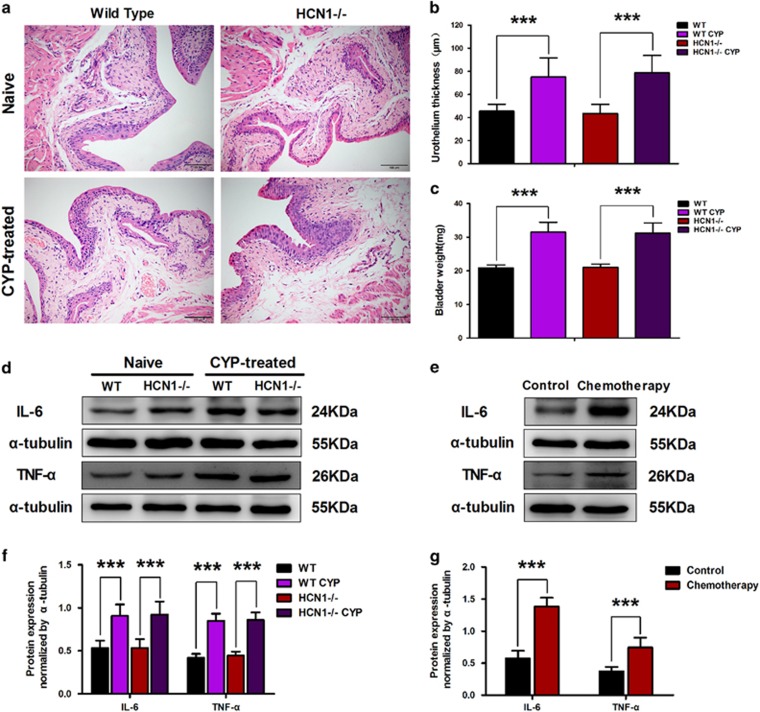
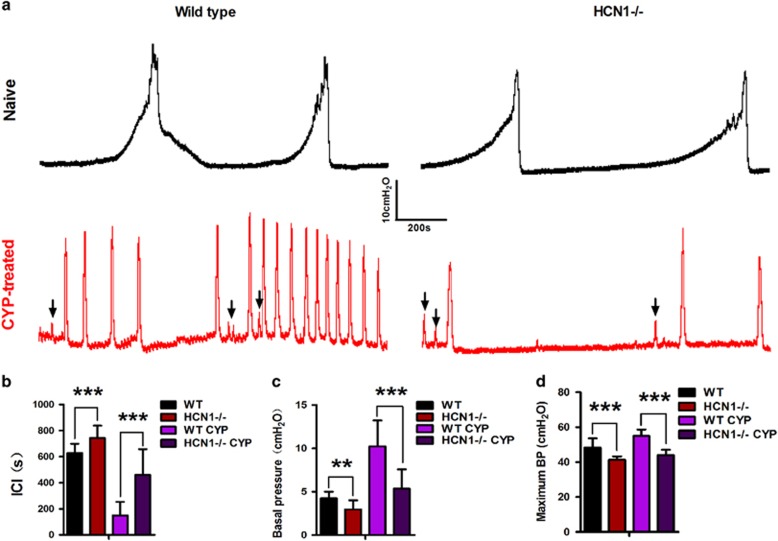
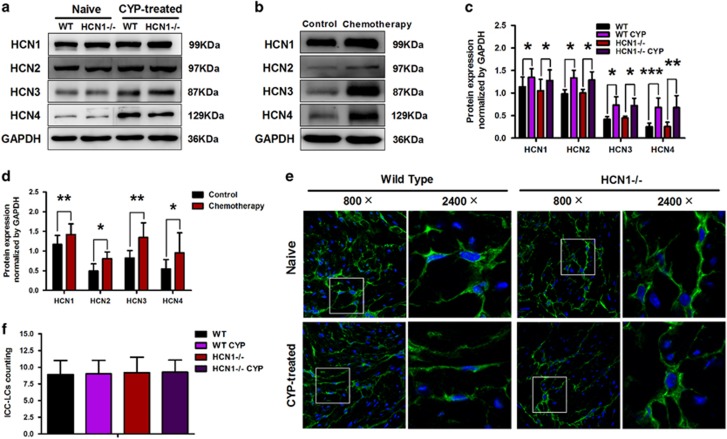
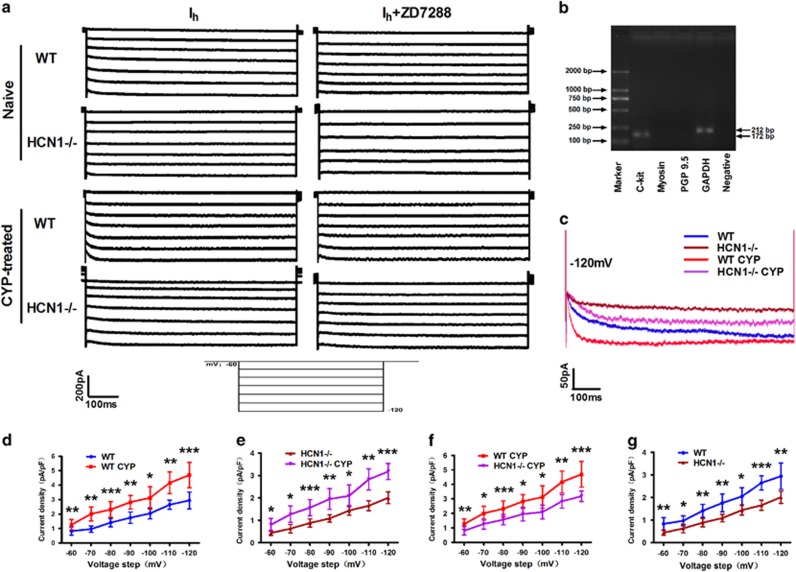
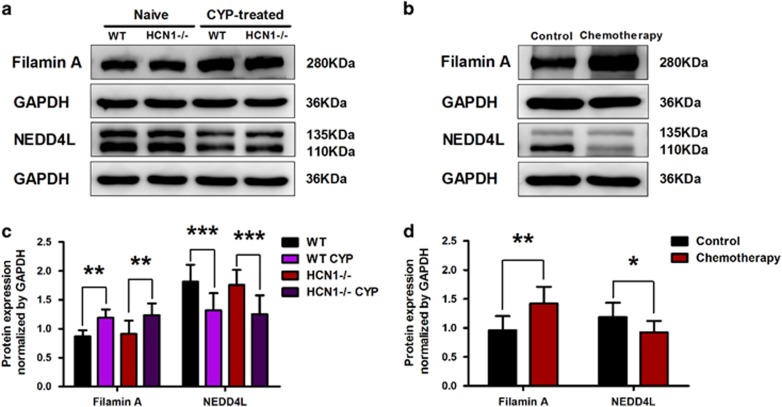
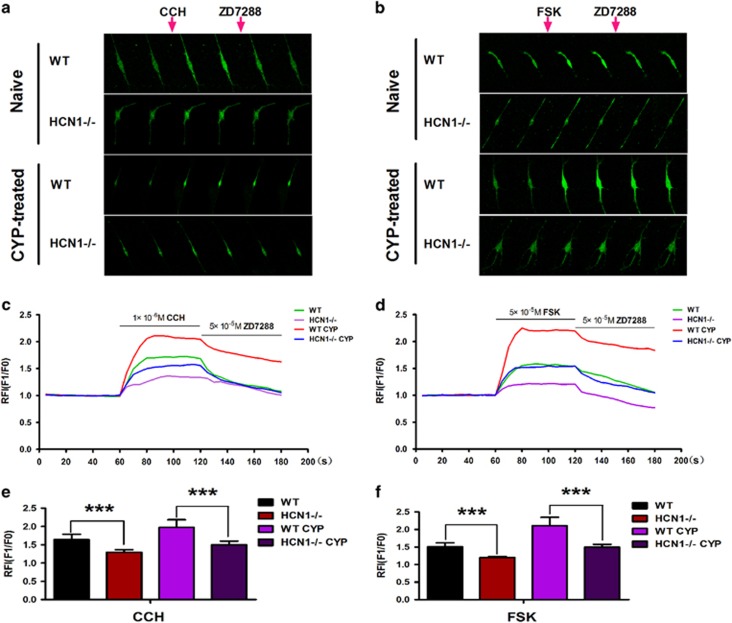
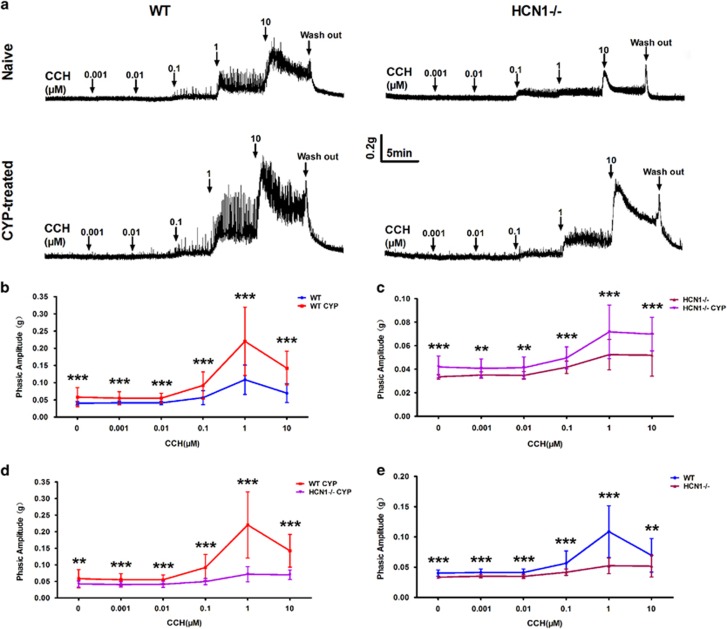
Hyperpolarization-activated cyclic nucleotide-gated (HCN) channels are confirmed to be expressed in bladder interstitial Cajal-like cells (ICC-LCs), but little is known about their possible role in cystitis-associated bladder dysfunction. The present study aimed to determine the functional role of HCN channels in regulating bladder function under inflammatory conditions. Sixty female wild-type C57BL/6J mice and sixty female HCN1-knockout mice were randomly assigned to experimental and control groups, respectively. Cyclophosphamide (CYP)-induced cystitis models were successfully established in these mice. CYP treatment significantly enhanced HCN channel protein expression and I density and significantly altered bladder HCN1 channel regulatory proteins. Carbachol (CCH) and forskolin (FSK) exerted significant effects on bladder ICC-LC [Ca] in CYP-treated wild-type (WT) mice, and HCN1 channel ablation significantly decreased the effects of CCH and FSK on bladder ICC-LC [Ca] in both naive and CYP-treated mice. CYP treatment significantly potentiated the spontaneous contractions and CCH (0.001-10 μM)-induced phasic contractions of detrusor strips, and HCN1 channel deletion significantly abated such effects. Finally, we demonstrated that the development of CYP-induced bladder overactivity was reversed in HCN1-/- mice. Taken together, our results suggest that CYP-induced enhancements of HCN1 channel expression and function in bladder ICC-LCs are essential for cystitis-associated bladder hyperactivity development, indicating that the HCN1 channel may be a novel therapeutic target for managing bladder hyperactivity.
超极化激活的环核苷酸门控(HCN)通道已被证实在膀胱间质 Cajal 样细胞(ICC-LCs)中表达,但关于它们在膀胱炎相关膀胱功能障碍中可能发挥的作用却知之甚少。本研究旨在确定 HCN 通道在炎症条件下调节膀胱功能中的作用。60 只雌性野生型 C57BL/6J 小鼠和 60 只雌性 HCN1 基因敲除小鼠分别被随机分配到实验组和对照组。在这些小鼠中成功建立了环磷酰胺(CYP)诱导的膀胱炎模型。CYP 处理显著增强了 HCN 通道蛋白表达和 I 密度,并显著改变了膀胱 HCN1 通道调节蛋白。在 CYP 处理的野生型(WT)小鼠中,卡巴胆碱(CCH)和福斯高林(FSK)对膀胱 ICC-LC [Ca] 有显著影响,并且 HCN1 通道缺失显著降低了 CCH 和 FSK 对未处理及 CYP 处理小鼠膀胱 ICC-LC [Ca] 的影响。CYP 处理显著增强了逼尿肌条的自发收缩以及 CCH(0.001 - 10 μM)诱导的相性收缩,而 HCN1 通道缺失显著减弱了这些作用。最后,我们证明了 CYP 诱导的膀胱过度活动在 HCN1 - / - 小鼠中得到了逆转。综上所述,我们的结果表明,CYP 诱导的膀胱 ICC-LCs 中 HCN1 通道表达和功能增强对于膀胱炎相关膀胱过度活动的发展至关重要,这表明 HCN1 通道可能是治疗膀胱过度活动的一个新的治疗靶点。