
褪黑素可拮抗白细胞介素-18介导的对神经干细胞增殖和分化的抑制作用。
Melatonin antagonizes interleukin-18-mediated inhibition on neural stem cell proliferation and differentiation.
作者信息
Li Zheng, Li Xingye, Chan Matthew T V, Wu William Ka Kei, Tan DunXian, Shen Jianxiong
机构信息
Department of Orthopaedic Surgery, Peking Union Medical College Hospital, Chinese Academy of Medical Sciences and Peking Union Medical College, Beijing, China.
Department of Anaesthesia and Intensive Care, The Chinese University of Hong Kong, Hong Kong, China.
出版信息
J Cell Mol Med. 2017 Sep;21(9):2163-2171. doi: 10.1111/jcmm.13140. Epub 2017 Apr 21.
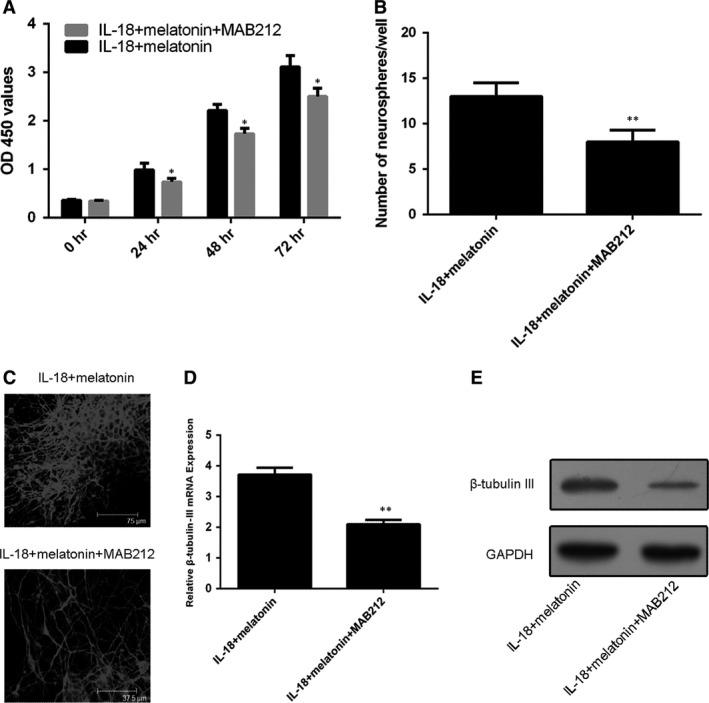
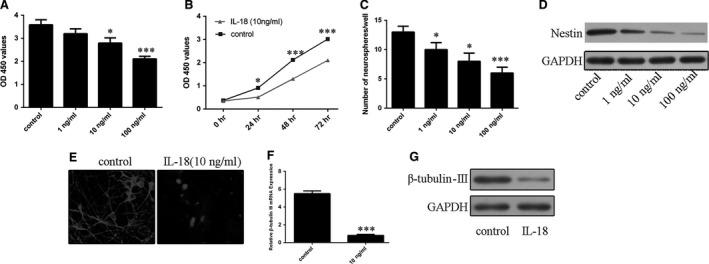
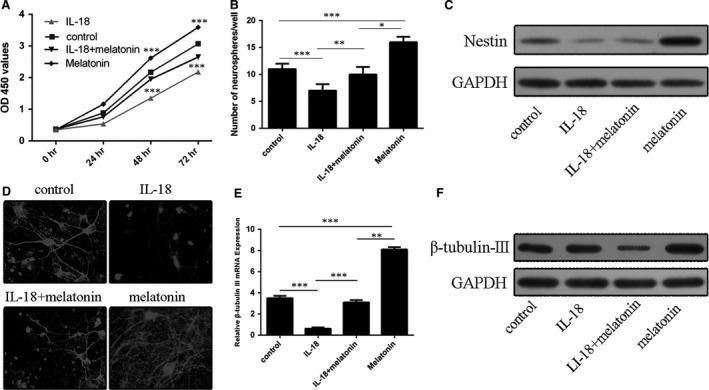
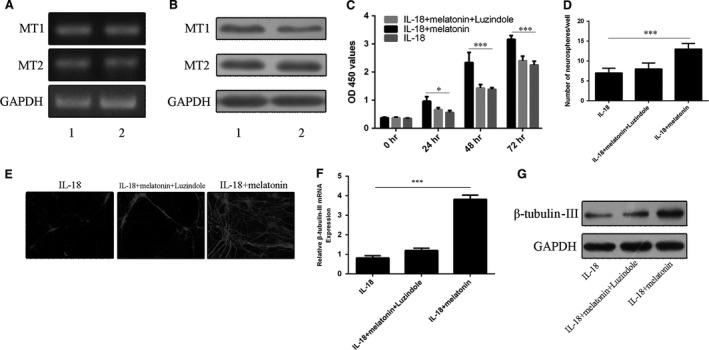
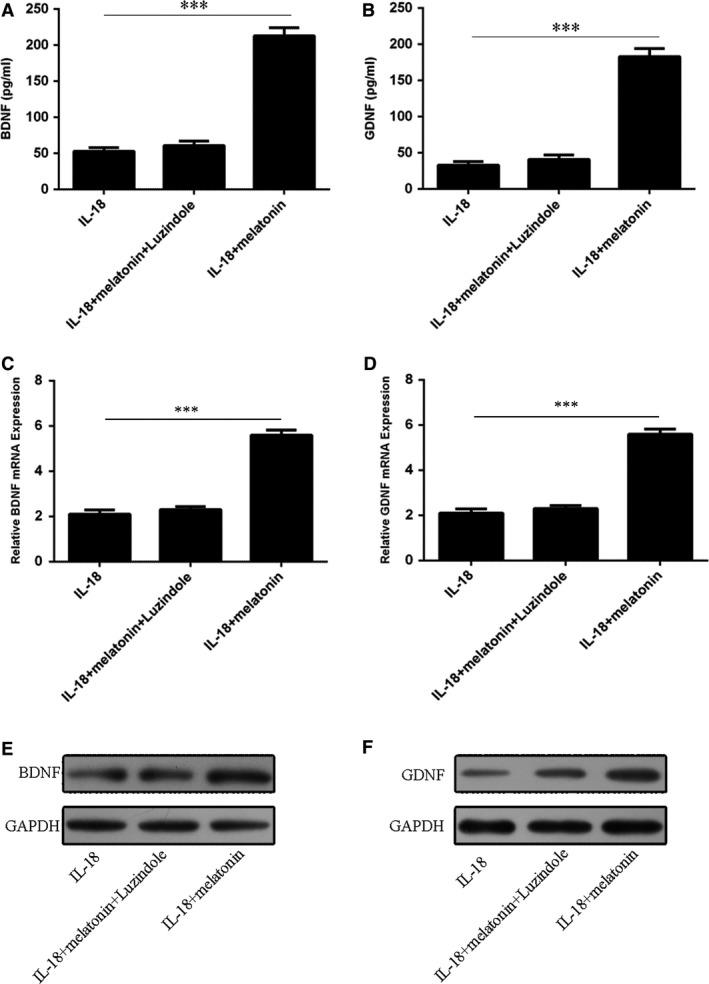
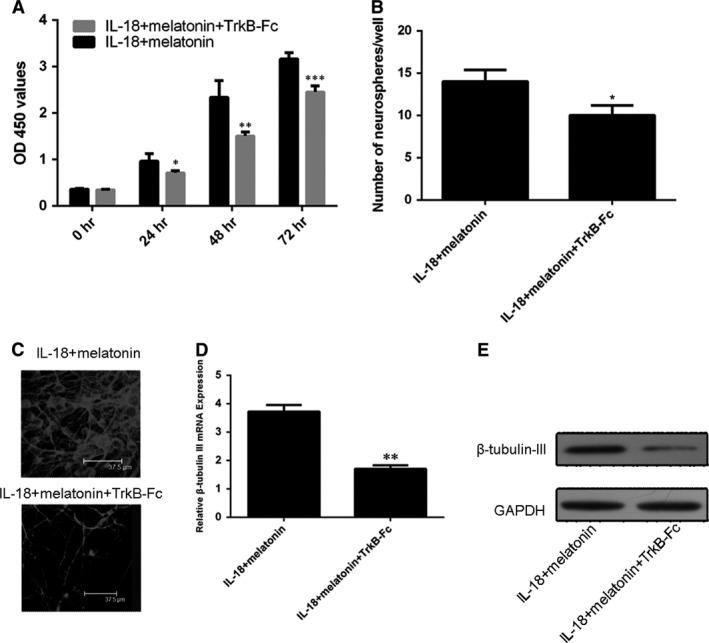
Neural stem cells (NSCs) are self-renewing, pluripotent and undifferentiated cells which have the potential to differentiate into neurons, oligodendrocytes and astrocytes. NSC therapy for tissue regeneration, thus, gains popularity. However, the low survivals rate of the transplanted cell impedes its utilities. In this study, we tested whether melatonin, a potent antioxidant, could promote the NSC proliferation and neuronal differentiation, especially, in the presence of the pro-inflammatory cytokine interleukin-18 (IL-18). Our results showed that melatonin per se indeed exhibited beneficial effects on NSCs and IL-18 inhibited NSC proliferation, neurosphere formation and their differentiation into neurons. All inhibitory effects of IL-18 on NSCs were significantly reduced by melatonin treatment. Moreover, melatonin application increased the production of both brain-derived and glial cell-derived neurotrophic factors (BDNF, GDNF) in IL-18-stimulated NSCs. It was observed that inhibition of BDNF or GDNF hindered the protective effects of melatonin on NSCs. A potentially protective mechanism of melatonin on the inhibition of NSC's differentiation caused IL-18 may attribute to the up-regulation of these two major neurotrophic factors, BNDF and GNDF. The findings indicate that melatonin may play an important role promoting the survival of NSCs in neuroinflammatory diseases.
神经干细胞(NSCs)是具有自我更新能力、多能性且未分化的细胞,有分化为神经元、少突胶质细胞和星形胶质细胞的潜力。因此,NSC疗法在组织再生方面越来越受欢迎。然而,移植细胞的低存活率阻碍了其应用。在本研究中,我们测试了褪黑素这种强效抗氧化剂是否能促进NSC增殖和神经元分化,特别是在促炎细胞因子白细胞介素-18(IL-18)存在的情况下。我们的结果表明,褪黑素本身确实对NSCs有有益作用,而IL-18抑制NSC增殖、神经球形成及其向神经元的分化。褪黑素处理可显著降低IL-18对NSCs的所有抑制作用。此外,在IL-18刺激的NSCs中,应用褪黑素可增加脑源性神经营养因子和胶质细胞源性神经营养因子(BDNF、GDNF)的产生。据观察,抑制BDNF或GDNF会阻碍褪黑素对NSCs的保护作用。褪黑素对IL-18引起的NSC分化抑制的潜在保护机制可能归因于这两种主要神经营养因子BDNF和GNDF的上调。这些发现表明,褪黑素可能在促进神经炎症性疾病中NSCs的存活方面发挥重要作用。
 Zotero 插件