Sun Bin, Hu Congli, Yang Zhibin, Zhang Xiaofeng, Zhao Linlin, Xiong Junye, Ma Junyong, Chen Lei, Qian Haihua, Luo Xiangji, Shi Lehua, Li Jun, Cheng Xianshuo, Yin Zhengfeng
Eastern Hepatobiliary Surgery Hospital, Second Military Medical University, Shanghai, China.
Colorectal Cancer Clinical Research Center, Third Affiliated Hospital, Kunming Medical University, Kunming, China.
Oncotarget. 2017 May 16;8(20):32523-32535. doi: 10.18632/oncotarget.15808.
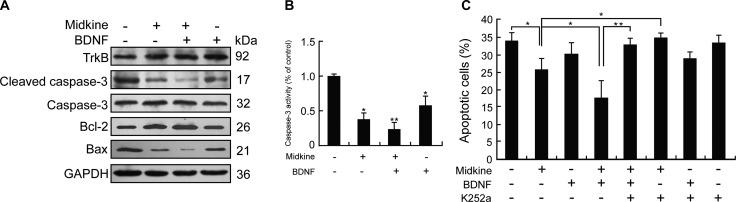
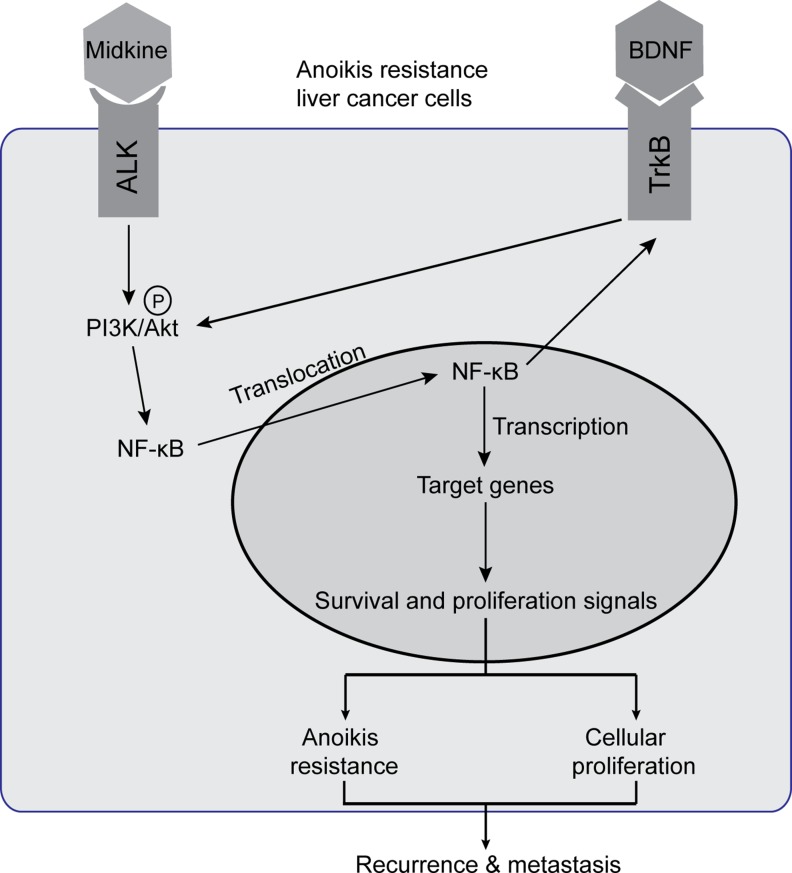
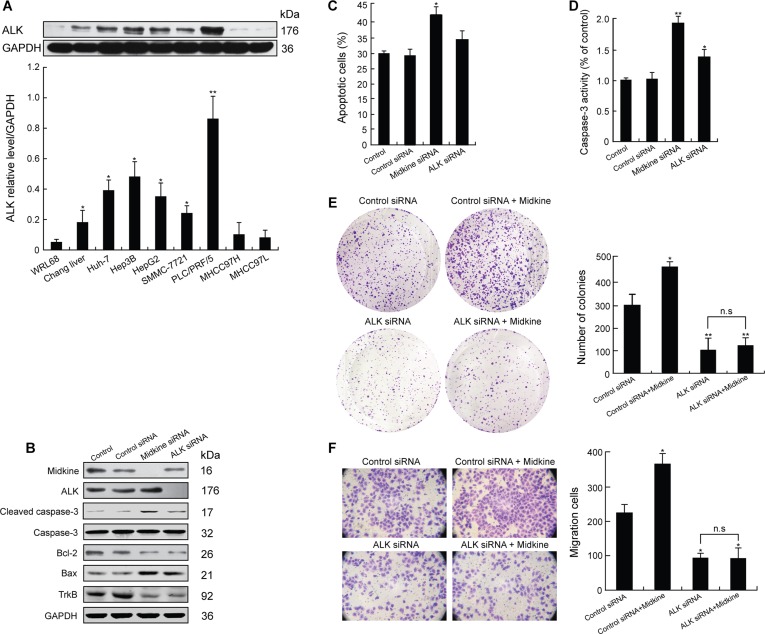
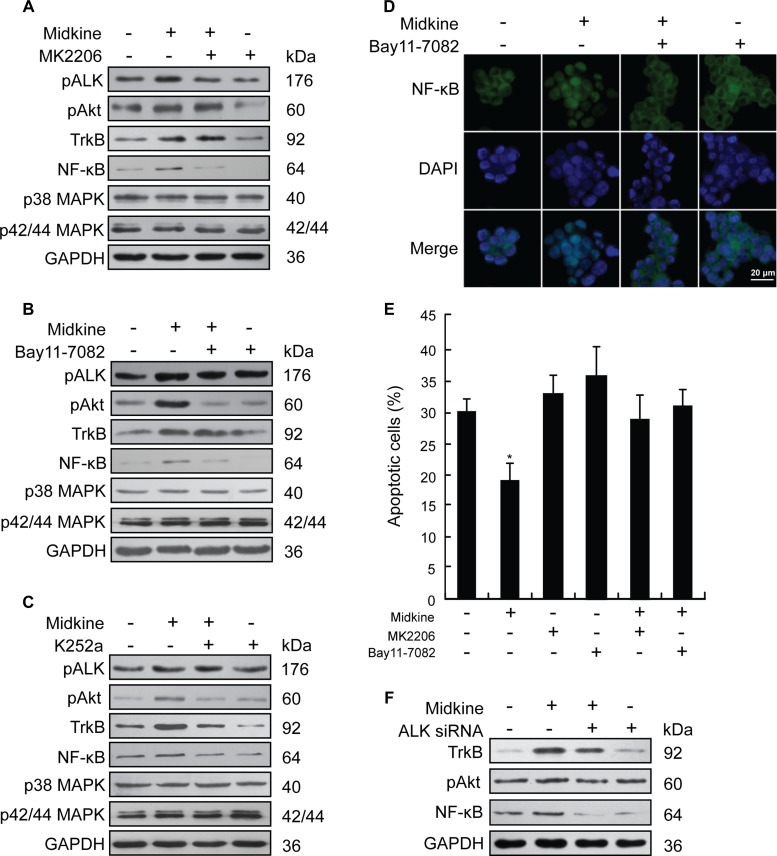
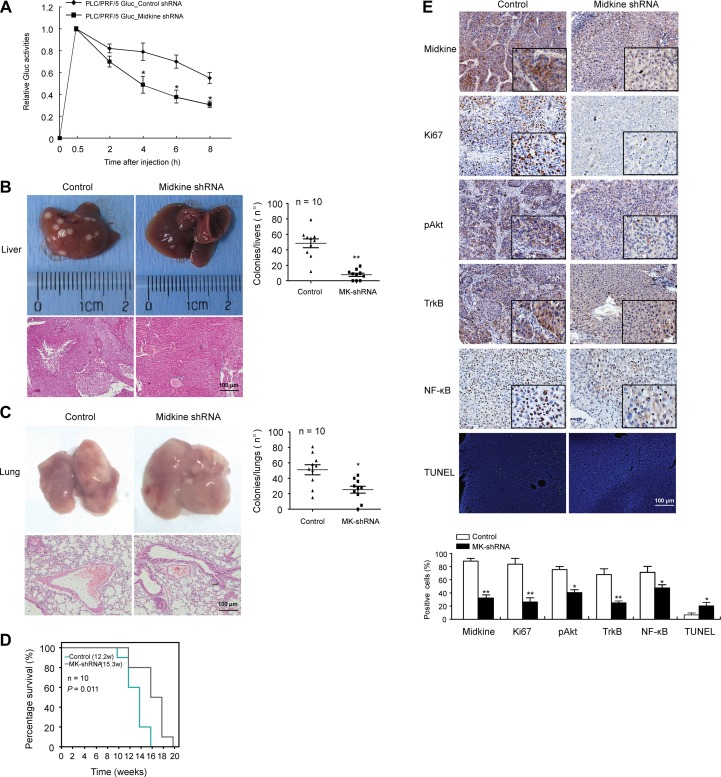
Midkine is overexpressed in hepatocellular carcinoma (HCC) and plays a role in tumor progression, but less is known about its role in resistance of circulating tumor cells (CTCs) to anoikis which leading to recurrence and metastasis. The aim of the present study was to analyze whether midkine was associated with HCC progression with anoikis resistance. We found that cultured HCC cells were more resistant to anoikis, which paralleled midkine expression, and midkine treatment significantly inhibited anoikis in a dose-dependent manner. Furthermore, in in vitro and in vivo assays, knockdown of midkine resulted in significant sensitivity to anoikis, decreased cell survival and significantly decreased tumor occurrence rate. Patients with midkine-elevated HCC had higher CTC counts and less apoptotic CTCs, as well as significantly higher recurrence rate and shorter recurrence-free interval. To understand the molecular mechanism underlying the midkine with HCC progression, we performed in vitro and in vivo studies. We found that midkine plays an important role in enhancement of HCC cell resistance to anoikis, thereby promoting subsequent metastasis. Activation of PI3K/Akt/NF-κB/TrkB signaling by midkine-activated anaplastic lymphomakinase (ALK) is responsible for anoikis resistance.
中期因子在肝细胞癌(HCC)中过表达,并在肿瘤进展中起作用,但关于其在循环肿瘤细胞(CTC)对失巢凋亡的抗性中所起的作用,进而导致复发和转移,我们了解得较少。本研究的目的是分析中期因子是否与具有失巢凋亡抗性的HCC进展相关。我们发现培养的HCC细胞对失巢凋亡更具抗性,这与中期因子的表达平行,并且中期因子处理以剂量依赖的方式显著抑制失巢凋亡。此外,在体外和体内试验中,敲低中期因子导致对失巢凋亡的显著敏感性、细胞存活率降低以及肿瘤发生率显著降低。中期因子升高的HCC患者具有更高的CTC计数和更少的凋亡CTC,以及显著更高的复发率和更短的无复发生存期。为了了解中期因子与HCC进展相关的分子机制,我们进行了体外和体内研究。我们发现中期因子在增强HCC细胞对失巢凋亡的抗性中起重要作用,从而促进随后的转移。中期因子激活的间变性淋巴瘤激酶(ALK)对PI3K/Akt/NF-κB/TrkB信号的激活负责失巢凋亡抗性。