Perrichon Prescilla, Pasparakis Christina, Mager Edward M, Stieglitz John D, Benetti Daniel D, Grosell Martin, Burggren Warren W
University of North Texas, Department of Biological Sciences, Denton, TX 76203, USA
Division of Marine Biology and Ecology, University of Miami, Rosenstiel School of Marine and Atmospheric Science, Miami, FL 33149, USA.
Biol Open. 2017 Jun 15;6(6):800-809. doi: 10.1242/bio.025692.
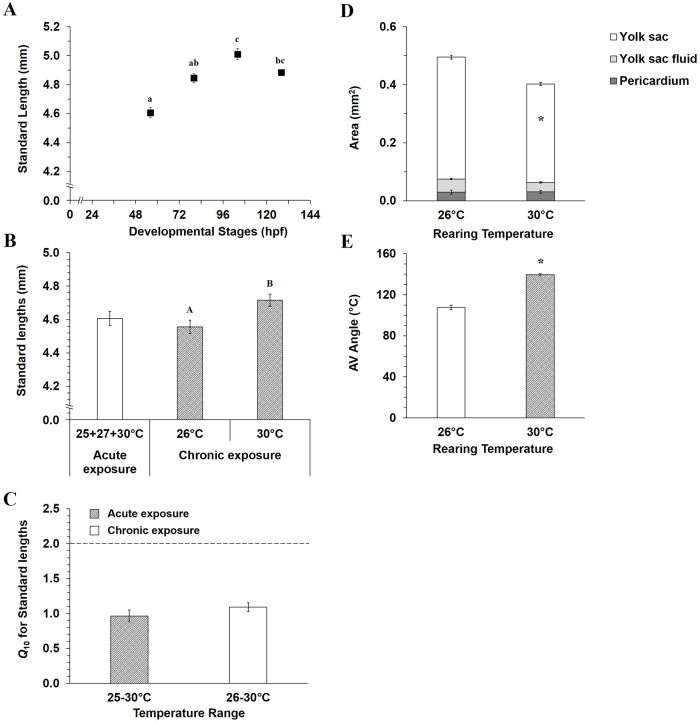
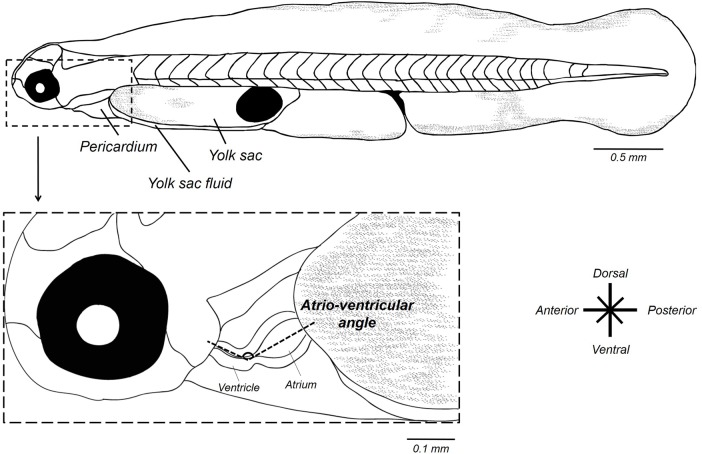
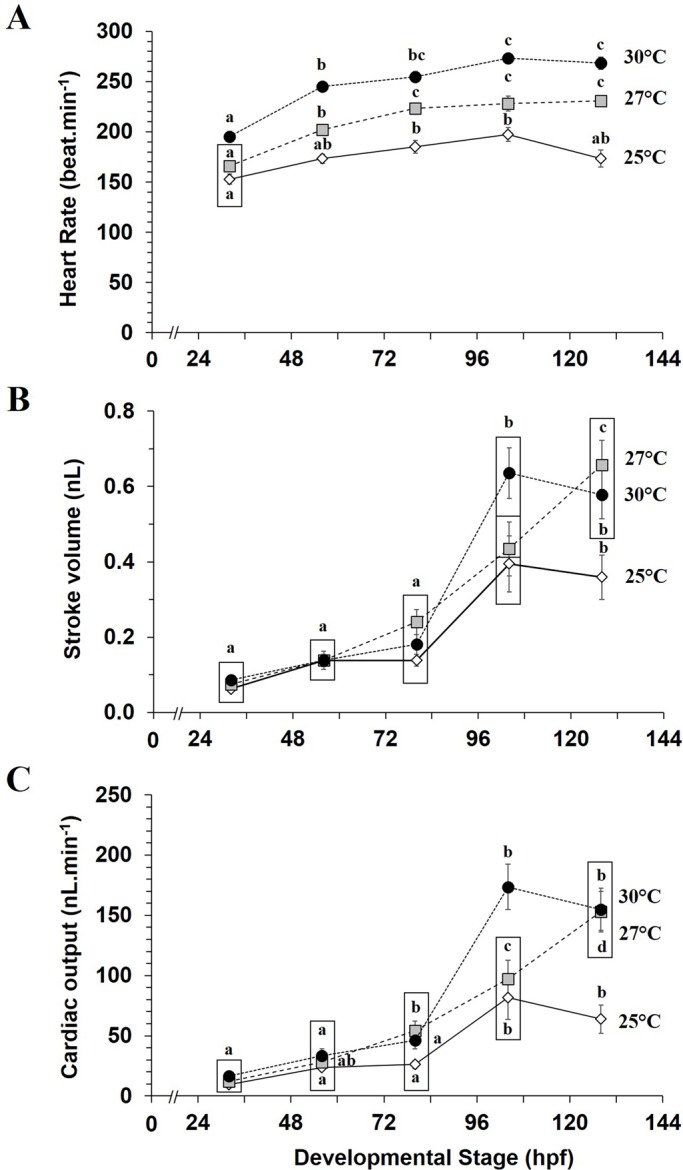
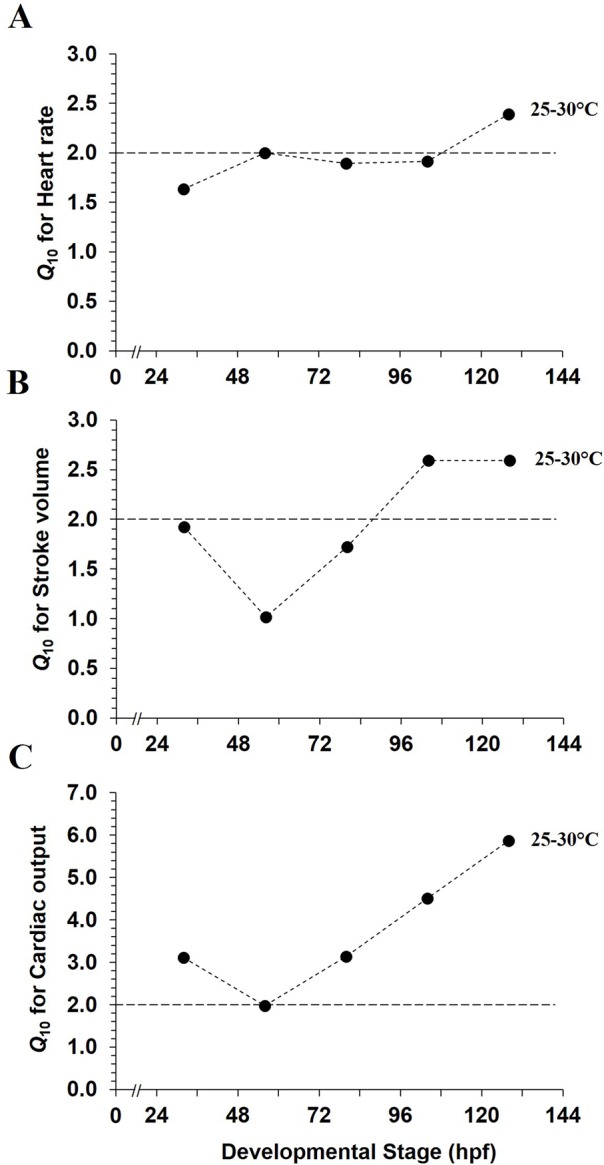
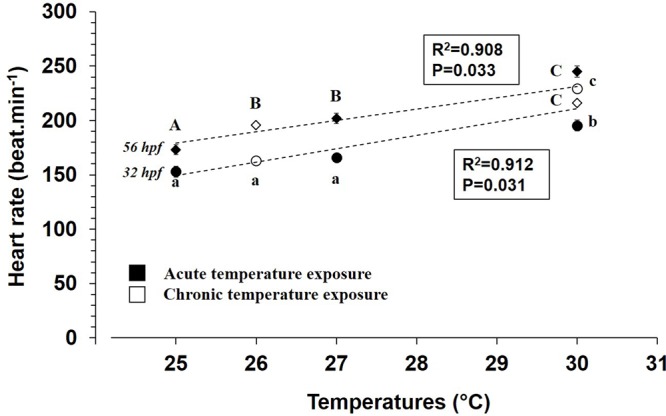
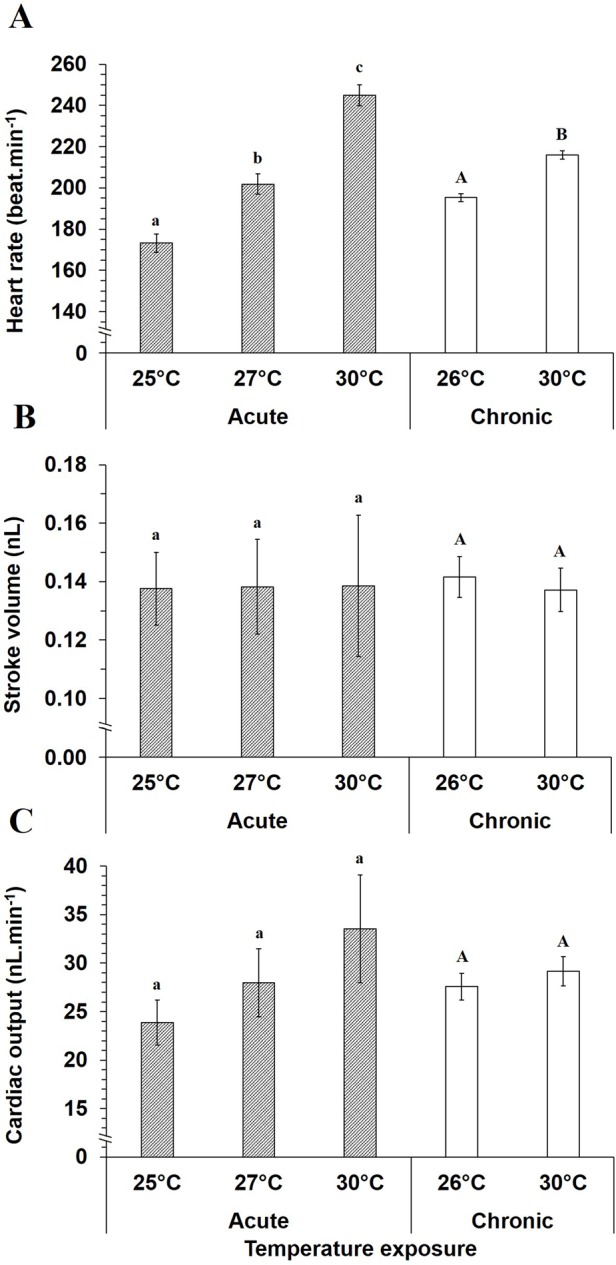
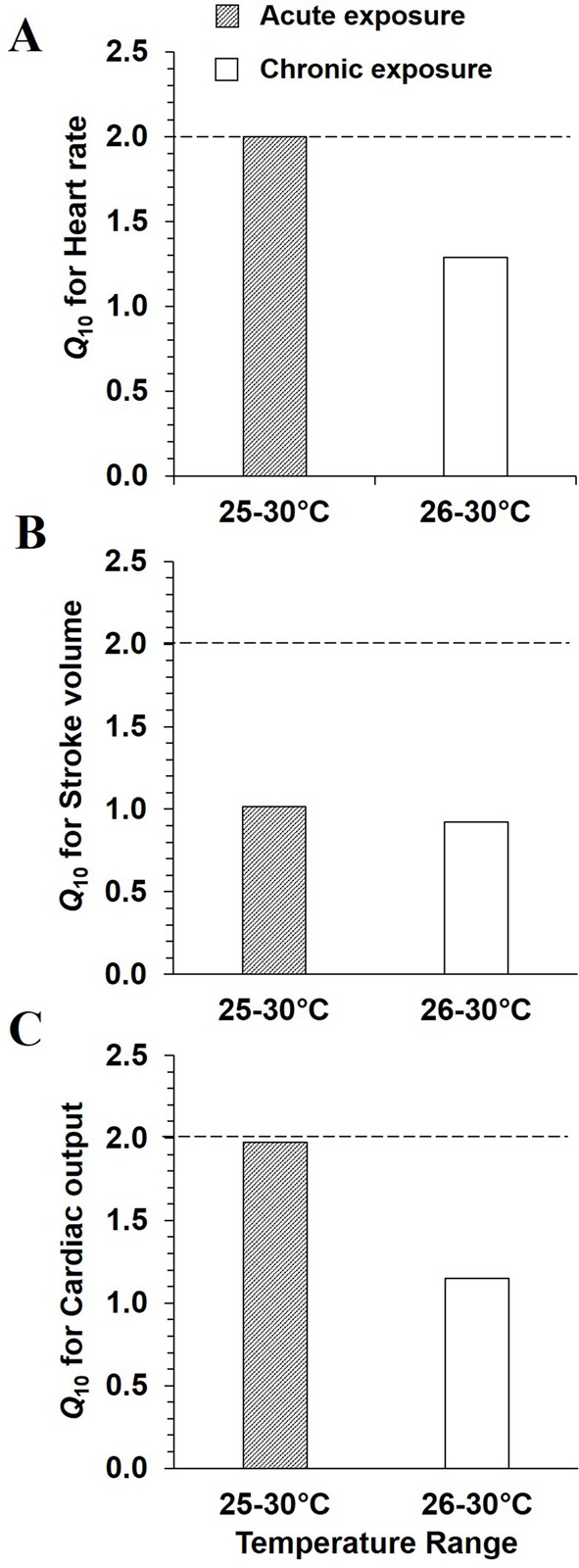
Cardiovascular performance is altered by temperature in larval fishes, but how acute versus chronic temperature exposures independently affect cardiac morphology and physiology in the growing larva is poorly understood. Consequently, we investigated the influence of water temperature on cardiac plasticity in developing mahi-mahi. Morphological (e.g. standard length, heart angle) and physiological cardiac variables (e.g. heart rate , stroke volume, cardiac output) were recorded under two conditions by imaging: (i) under acute temperature exposure where embryos were reared at 25°C up to 128 h post-fertilization (hpf) and then acutely exposed to 25 (rearing temperature), 27 and 30°C; and (ii) at two rearing (chronic) temperatures of 26 and 30°C and performed at 32 and 56 hpf. Chronic elevated temperature improved developmental time in mahi-mahi. Heart rates were 1.2-1.4-fold higher under exposure of elevated acute temperatures across development (≥2.0). for heart rate in acute exposure was 1.8-fold higher compared to chronic exposure at 56 hpf. At same stage, stroke volume was temperature independent (∼1.0). However, larvae displayed higher stroke volume later in stage. Cardiac output in developing mahi-mahi is mainly dictated by chronotropic rather than inotropic modulation, is differentially affected by temperature during development and is not linked to metabolic changes.
幼鱼的心血管性能会受到温度的影响,但急性温度暴露与慢性温度暴露如何独立影响幼鱼生长过程中的心脏形态和生理机能,目前还知之甚少。因此,我们研究了水温对发育中的鲯鳅心脏可塑性的影响。通过成像记录了两种条件下的形态学(如标准长度、心脏角度)和心脏生理变量(如心率、每搏输出量、心输出量):(i)在急性温度暴露条件下,胚胎在25°C下饲养至受精后128小时(hpf),然后急性暴露于25(饲养温度)、27和30°C;(ii)在26和30°C的两个饲养(慢性)温度下,在32和56 hpf时进行。慢性高温改善了鲯鳅的发育时间。在整个发育过程中,急性高温暴露下的心率高出1.2 - 1.4倍(≥2.0)。在56 hpf时,急性暴露下的心率相比慢性暴露高出1.8倍。在同一阶段,每搏输出量与温度无关(约为1.0)。然而,幼鱼在发育后期显示出更高的每搏输出量。发育中的鲯鳅的心输出量主要由变时性而非变力性调节决定,在发育过程中受温度的影响不同,且与代谢变化无关。