Sellmann Cathrin, Degen Christian, Jin Cheng Jun, Nier Anika, Engstler Anna Janina, Hasan Alkhatib Dana, De Bandt Jean-Pascal, Bergheim Ina
Institute of Nutritional Sciences, SD Model Systems of Molecular Nutrition, Friedrich-Schiller University Jena, Jena, Germany.
Department of Nutritional Sciences, Molecular Nutritional Science, University of Vienna, Althanstraße 14 (UZA II), 1090, Vienna, Austria.
Amino Acids. 2017 Jul;49(7):1215-1225. doi: 10.1007/s00726-017-2423-4. Epub 2017 Apr 22.
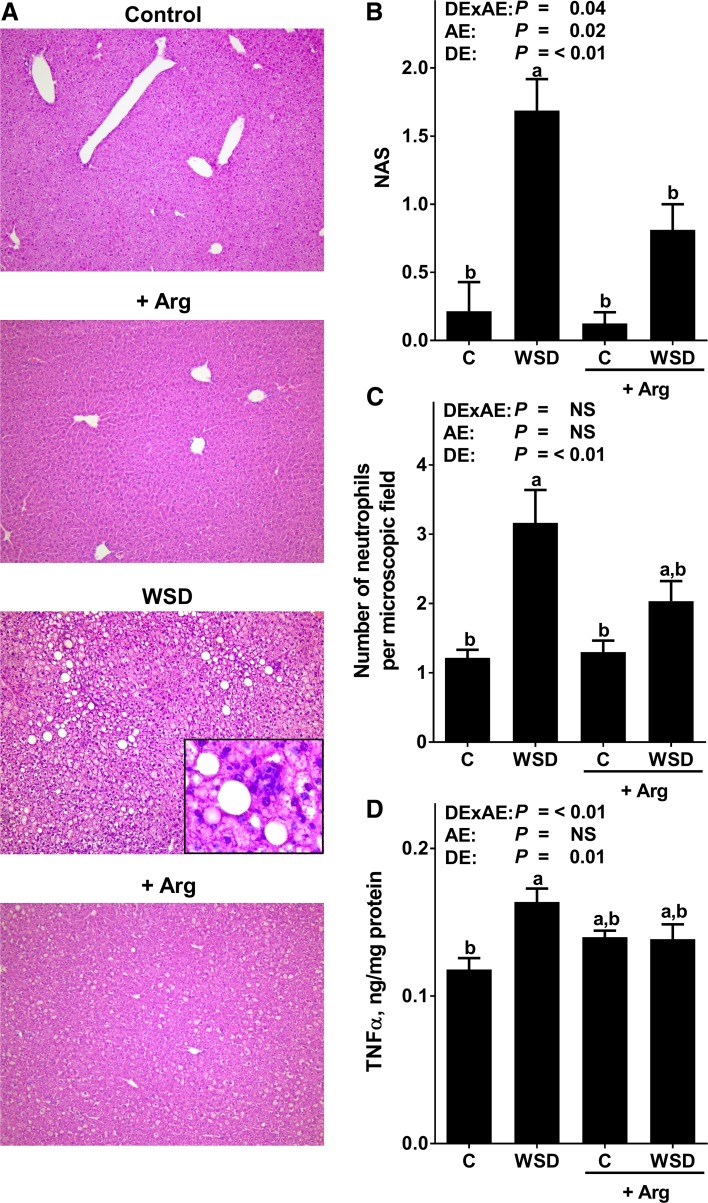
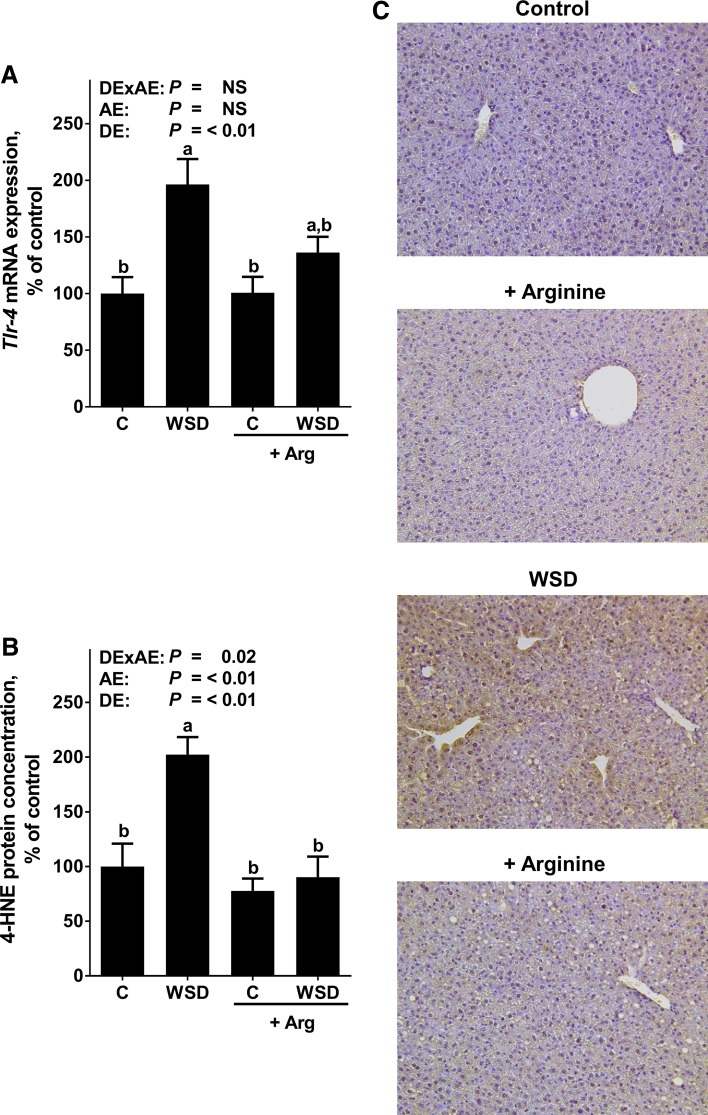
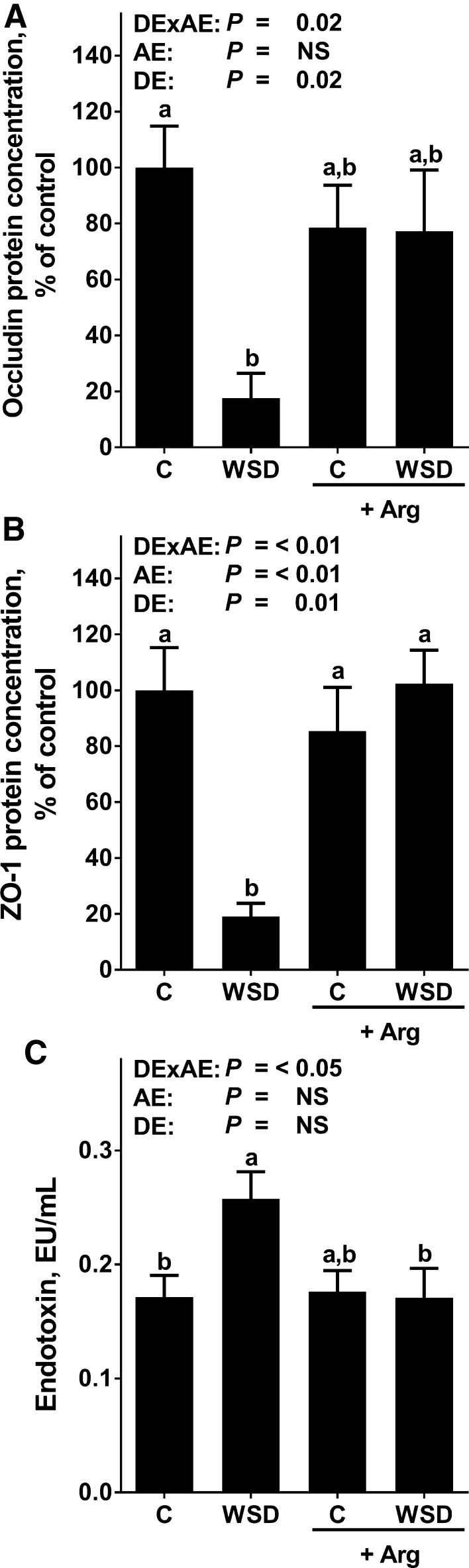
Dietary arginine (Arg) supplementation has been proposed to have positive effects on the development of liver diseases. In the present study, we investigate if an oral Arg supplementation in diet protects mice fed a fructose, fat and cholesterol enriched Western-style diet (WSD) from the development of non-alcoholic steatohepatitis (NASH). Female C57BL/6J mice were fed a liquid control diet or a liquid WSD ± Arg (2.49 g/kg body weight/day) for 6 weeks. Indices of liver injury, glucose metabolism and intestinal permeability were determined. While Arg supplementation had no effects on body weight gain, fasting blood glucose levels were significantly lower in WSD+Arg-fed mice than in C+Arg-fed animals. WSD-fed mice developed liver steatosis accompanied with inflammation, both being significantly attenuated in WSD+Arg-fed mice. These effects of Arg supplementation went along with a protection against WSD-induced decreased tight junction protein levels in the upper parts of the small intestine, increased levels of bacterial endotoxin in portal plasma as well as increased hepatic toll-like receptor-4 mRNA and 4-hydroxynonenal protein adduct levels. In conclusion, Arg supplementation may protect mice from the development of NASH.
膳食补充精氨酸(Arg)已被认为对肝脏疾病的发展具有积极作用。在本研究中,我们调查了在饮食中口服补充精氨酸是否能保护喂食富含果糖、脂肪和胆固醇的西式饮食(WSD)的小鼠免于发展为非酒精性脂肪性肝炎(NASH)。将雌性C57BL/6J小鼠喂食液体对照饮食或液体WSD ± 精氨酸(2.49 g/kg体重/天),持续6周。测定肝脏损伤、葡萄糖代谢和肠道通透性指标。虽然补充精氨酸对体重增加没有影响,但喂食WSD+精氨酸的小鼠空腹血糖水平显著低于喂食C+精氨酸的动物。喂食WSD的小鼠出现肝脏脂肪变性并伴有炎症,而在喂食WSD+精氨酸的小鼠中这两种情况均显著减轻。补充精氨酸的这些作用伴随着对WSD诱导的小肠上部紧密连接蛋白水平降低、门静脉血浆中细菌内毒素水平升高以及肝脏Toll样受体4 mRNA和4-羟基壬烯醛蛋白加合物水平升高的保护作用。总之,补充精氨酸可能保护小鼠免于发展为NASH。