
儿童恶性肿瘤治疗的晚期肾毒性:危险因素、长期结局和监测。
Late renal toxicity of treatment for childhood malignancy: risk factors, long-term outcomes, and surveillance.
机构信息
Department of Paediatric and Adolescent Haematology/Oncology, and Children's Haemopoietic Stem Cell Transplant Unit, Great North Children's Hospital, Newcastle upon Tyne, NE1 4LP, UK.
出版信息
Pediatr Nephrol. 2018 Feb;33(2):215-225. doi: 10.1007/s00467-017-3662-z. Epub 2017 Apr 22.
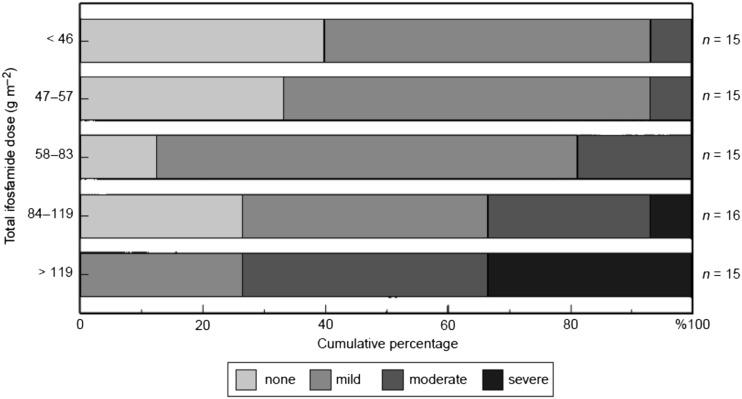
Chronic glomerular and tubular nephrotoxicity is reported in 20-50% and 20-25%, respectively, of children and adolescents treated with ifosfamide and 60-80% and 10-30%, respectively, of those given cisplatin. Up to 20% of children display evidence of chronic glomerular damage after unilateral nephrectomy for a renal tumour. Overall, childhood cancer survivors have a ninefold higher risk of developing renal failure compared with their siblings. Such chronic nephrotoxicity may have multiple causes, including chemotherapy, radiotherapy exposure to kidneys, renal surgery, supportive care drugs and tumour-related factors. These cause a wide range of chronic glomerular and tubular toxicities, often with potentially severe clinical sequelae. Many risk factors for developing nephrotoxicity, mostly patient and treatment related, have been described, but we remain unable to predict all episodes of renal damage. This implies that other factors may be involved, such as genetic polymorphisms influencing drug metabolism. Although our knowledge of the long-term outcomes of chronic nephrotoxicity is increasing, there is still much to learn, including how we can optimally predict or achieve early detection of nephrotoxicity. Greater understanding of the pathogenesis of nephrotoxicity is needed before its occurrence can be prevented.
慢性肾小球和肾小管肾毒性分别在接受异环磷酰胺治疗的儿童和青少年中报告为 20-50%和 20-25%,在接受顺铂治疗的儿童和青少年中报告为 60-80%和 10-30%。高达 20%的儿童在单侧肾肿瘤切除术后显示出慢性肾小球损伤的证据。总体而言,与兄弟姐妹相比,儿童癌症幸存者发生肾衰竭的风险高出九倍。这种慢性肾毒性可能有多种原因,包括化疗、肾脏暴露于放射治疗、肾手术、支持性护理药物和肿瘤相关因素。这些原因导致广泛的慢性肾小球和肾小管毒性,常伴有潜在的严重临床后果。已经描述了许多发生肾毒性的危险因素,大多数与患者和治疗有关,但我们仍然无法预测所有的肾损伤事件。这意味着可能涉及其他因素,例如影响药物代谢的遗传多态性。尽管我们对慢性肾毒性的长期后果的了解正在增加,但仍有许多需要学习,包括如何最佳地预测或早期发现肾毒性。在发生肾毒性之前,需要更好地了解其发病机制。

 Zotero 插件