Boll Erik J, Marti Roger, Hasman Henrik, Overballe-Petersen Søren, Stegger Marc, Ng Kim, Knøchel Susanne, Krogfelt Karen A, Hummerjohann Joerg, Struve Carsten
Department of Microbiology and Infection Control, Statens Serum InstitutCopenhagen, Denmark.
Agroscope, Division of Food Microbial Systems, Microbiological Safety of Foods of Animal Origin GroupBern, Switzerland.
Front Microbiol. 2017 Apr 7;8:579. doi: 10.3389/fmicb.2017.00579. eCollection 2017.
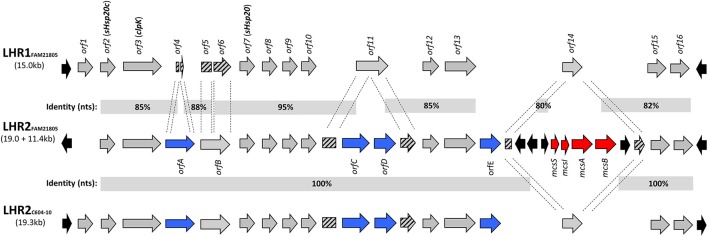
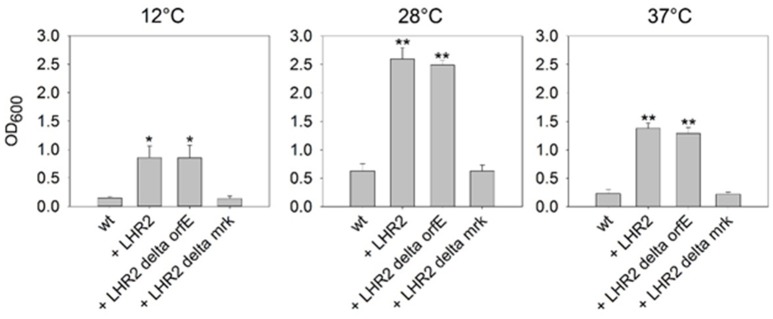
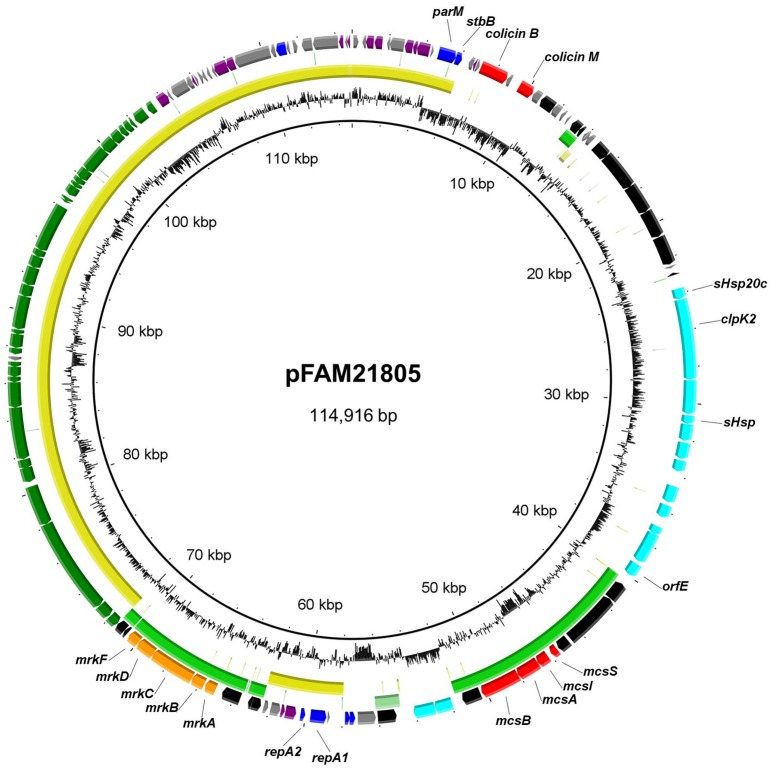
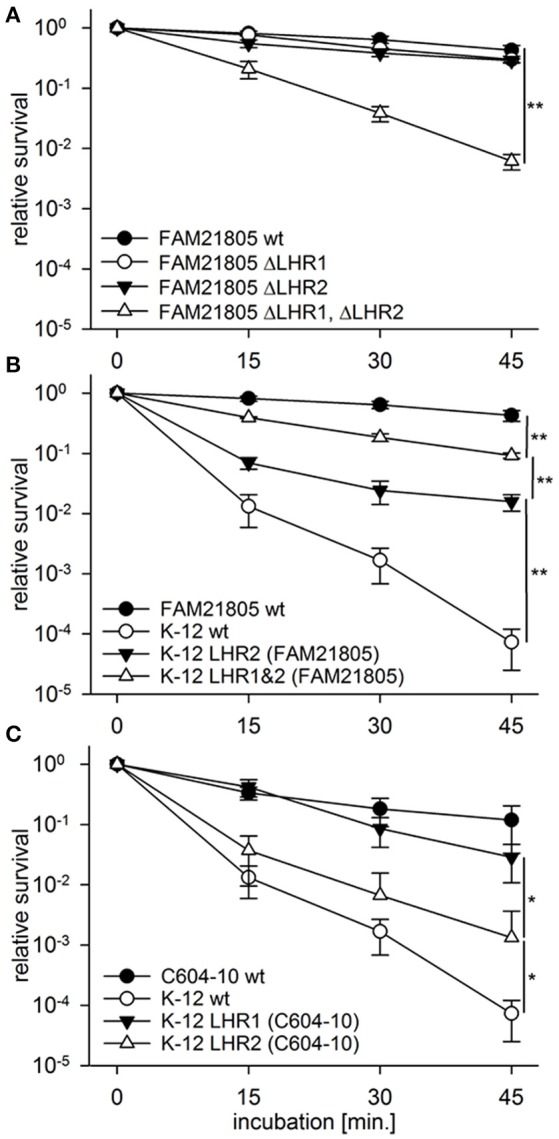
Heat treatment is a widely used process to reduce bacterial loads in the food industry or to decontaminate surfaces, e.g., in hospital settings. However, there are situations where lower temperatures must be employed, for instance in case of food production such as raw milk cheese or for decontamination of medical devices such as thermo-labile flexible endoscopes. A recently identified locus of heat resistance (LHR) has been shown to be present in and confer heat resistance to a variety of , including isolates from food production settings and clinical ESBL-producing isolates. Here, we describe the presence of two distinct LHR variants within a particularly heat resistant raw milk cheese isolate. We demonstrate for the first time in this species the presence of one of these LHRs on a plasmid, designated pFAM21805, also encoding type 3 fimbriae and three bacteriocins and corresponding self-immunity proteins. The plasmid was highly transferable to other strains, including Shiga-toxin-producing strains, and conferred LHR-dependent heat resistance as well as type 3 fimbriae-dependent biofilm formation capabilities. Selection for and acquisition of this "survival" plasmid by pathogenic organisms, e.g., in food production environments, may pose great concern and emphasizes the need to screen for the presence of LHR genes in isolates.
热处理是食品工业中广泛用于降低细菌载量或对表面进行去污的一种工艺,例如在医院环境中。然而,在某些情况下必须采用较低的温度,例如在生产生乳奶酪等食品时,或对诸如热不稳定柔性内窥镜等医疗器械进行去污时。最近发现的一个耐热位点(LHR)已被证明存在于多种细菌中,并赋予它们耐热性,包括来自食品生产环境的分离株和临床产超广谱β-内酰胺酶(ESBL)的分离株。在此,我们描述了一种特别耐热的生乳奶酪分离株中存在两种不同的LHR变体。我们首次在该菌种中证明了其中一种LHR存在于一个名为pFAM21805的质粒上,该质粒还编码3型菌毛以及三种细菌素和相应的自身免疫蛋白。该质粒可高效转移至其他菌株,包括产志贺毒素的菌株,并赋予依赖LHR的耐热性以及依赖3型菌毛的生物膜形成能力。致病性微生物在食品生产环境等中对这种“存活”质粒的选择和获得可能引发极大关注,并强调了对分离株中LHR基因的存在进行筛查的必要性。