Madoux Franck, Dreymuller Daniela, Pettiloud Jean-Phillipe, Santos Radleigh, Becker-Pauly Christoph, Ludwig Andreas, Fields Gregg B, Bannister Thomas, Spicer Timothy P, Cudic Mare, Scampavia Louis D, Minond Dmitriy
Lead Identification Division, Translational Research Institute, The Scripps Research Institute, 130 Scripps Way, Jupiter, FL, 39453, United States.
Institute of Pharmacology and Toxicology, RWTH Aachen University, Wendlingweg 2, 52074, Aachen, Germany.
Sci Rep. 2016 Dec 5;6(1):11. doi: 10.1038/s41598-016-0013-4.
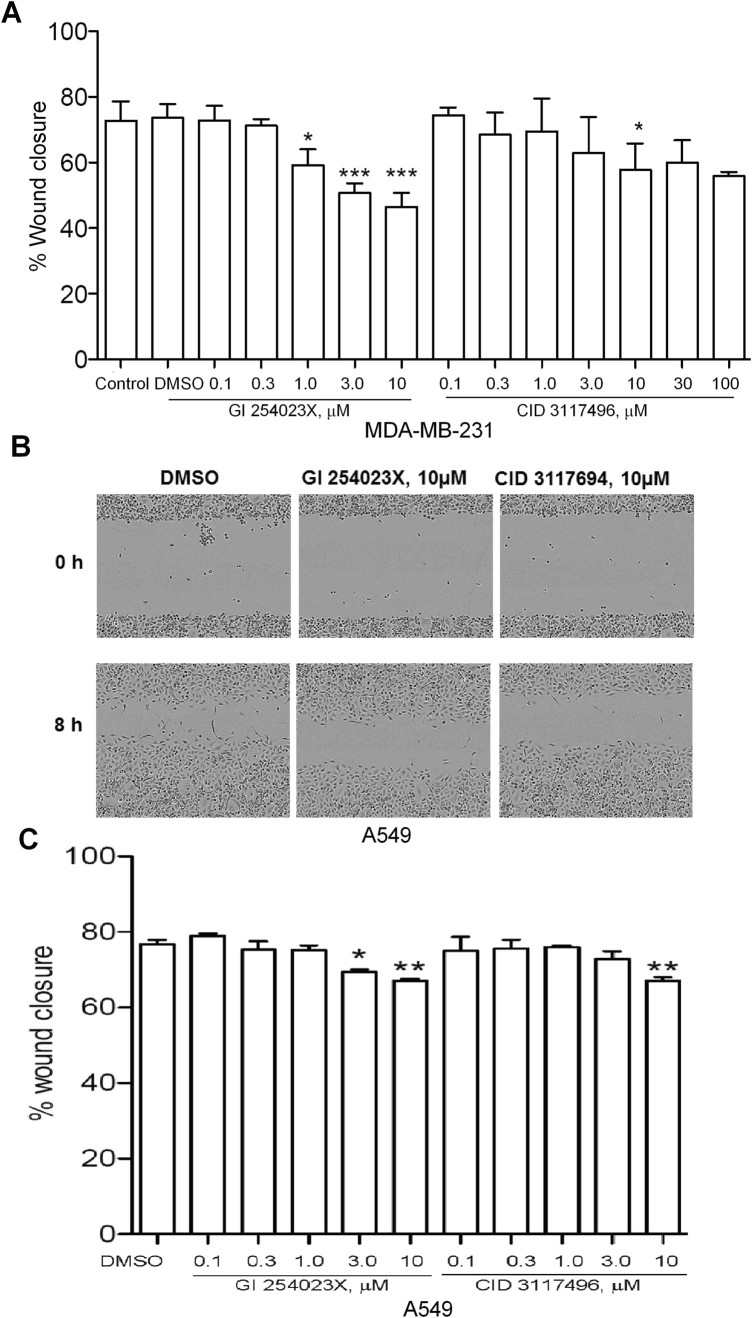
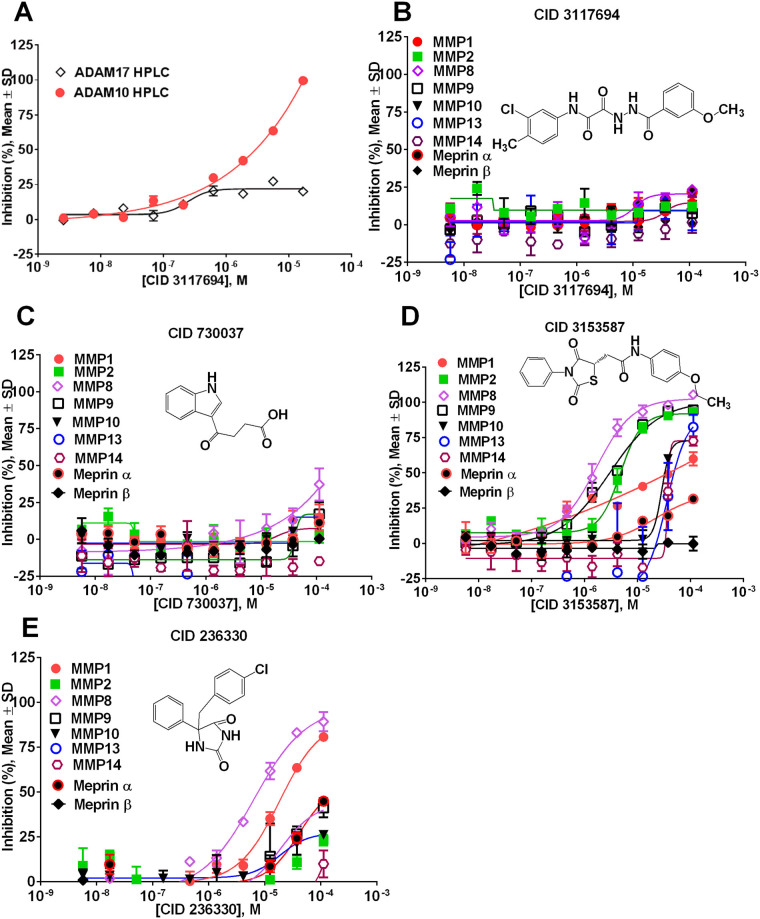
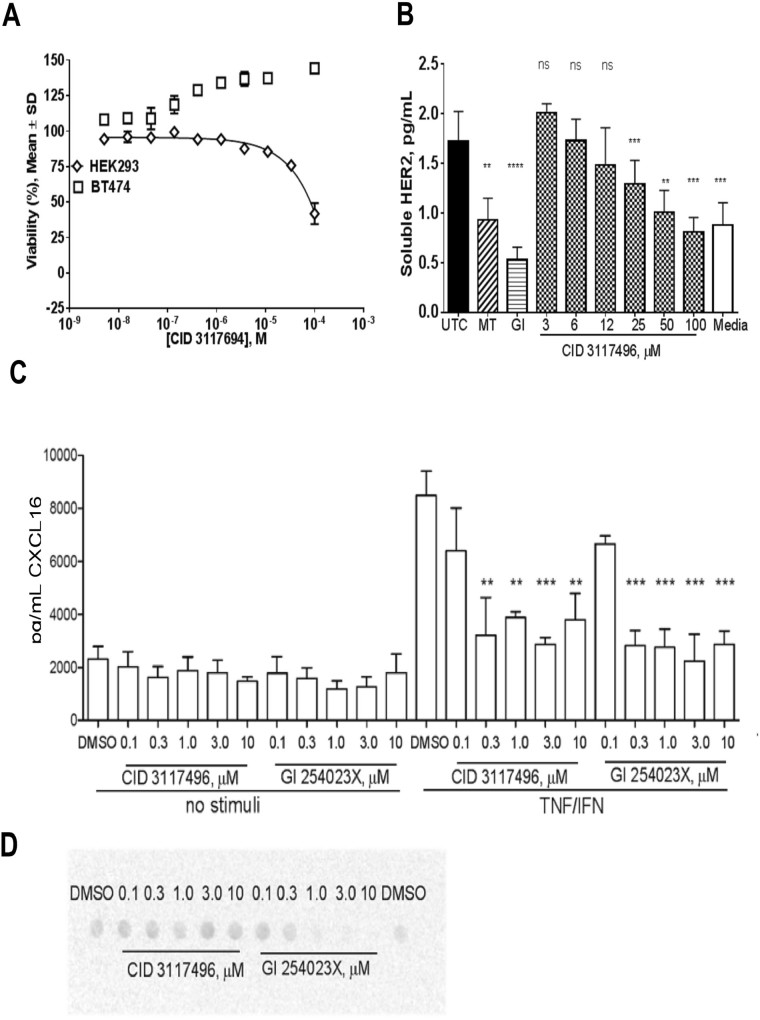
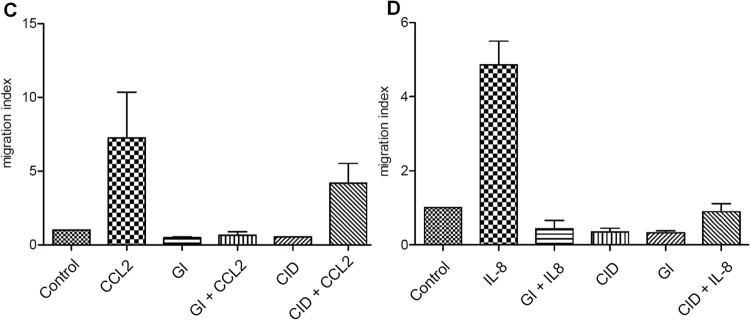
ADAM10 and ADAM17 have been shown to contribute to the acquired drug resistance of HER2-positive breast cancer in response to trastuzumab. The majority of ADAM10 and ADAM17 inhibitor development has been focused on the discovery of compounds that bind the active site zinc, however, in recent years, there has been a shift from active site to secondary substrate binding site (exosite) inhibitor discovery in order to identify non-zinc-binding molecules. In the present work a glycosylated, exosite-binding substrate of ADAM10 and ADAM17 was utilized to screen 370,276 compounds from the MLPCN collection. As a result of this uHTS effort, a selective, time-dependent, non-zinc-binding inhibitor of ADAM10 with K = 883 nM was discovered. This compound exhibited low cell toxicity and was able to selectively inhibit shedding of known ADAM10 substrates in several cell-based models. We hypothesize that differential glycosylation of these cognate substrates is the source of selectivity of our novel inhibitor. The data indicate that this novel inhibitor can be used as an in vitro and, potentially, in vivo, probe of ADAM10 activity. Additionally, results of the present and prior studies strongly suggest that glycosylated substrate are applicable as screening agents for discovery of selective ADAM probes and therapeutics.
已有研究表明,ADAM10和ADAM17与HER2阳性乳腺癌对曲妥珠单抗产生获得性耐药有关。大多数ADAM10和ADAM17抑制剂的研发都集中在发现与活性位点锌结合的化合物上,然而,近年来,为了鉴定非锌结合分子,研发重点已从活性位点抑制剂转向二级底物结合位点(别构位点)抑制剂。在本研究中,利用一种糖基化的、与ADAM10和ADAM17别构位点结合的底物,对MLPCN化合物库中的370276种化合物进行了筛选。通过这种超高通量筛选,发现了一种对ADAM10具有选择性、时间依赖性、非锌结合的抑制剂,其K值为883 nM。该化合物细胞毒性低,能够在多种细胞模型中选择性抑制已知ADAM10底物的脱落。我们推测这些同源底物的差异糖基化是我们新型抑制剂选择性的来源。数据表明,这种新型抑制剂可作为体外,甚至可能在体内,ADAM10活性的探针。此外,本研究及先前研究的结果强烈表明,糖基化底物可作为筛选剂用于发现选择性ADAM探针和治疗药物。