Fu Leilei, Wang Shuya, Wang Xuan, Wang Peiqi, Zheng Yaxin, Yao Dahong, Guo Mingrui, Zhang Lan, Ouyang Liang
State Key Laboratory of Biotherapy and Cancer Center, West China Hospital, Sichuan University, and Collaborative Innovation Center of Biotherapy, Chengdu, 610041, China.
Northwestern University, Feinberg School of Medicine, 303 East Chicago Avenue, Chicago, Illinois, 60611, USA.
Sci Rep. 2016 Dec 5;6(1):3. doi: 10.1038/s41598-016-0007-2.
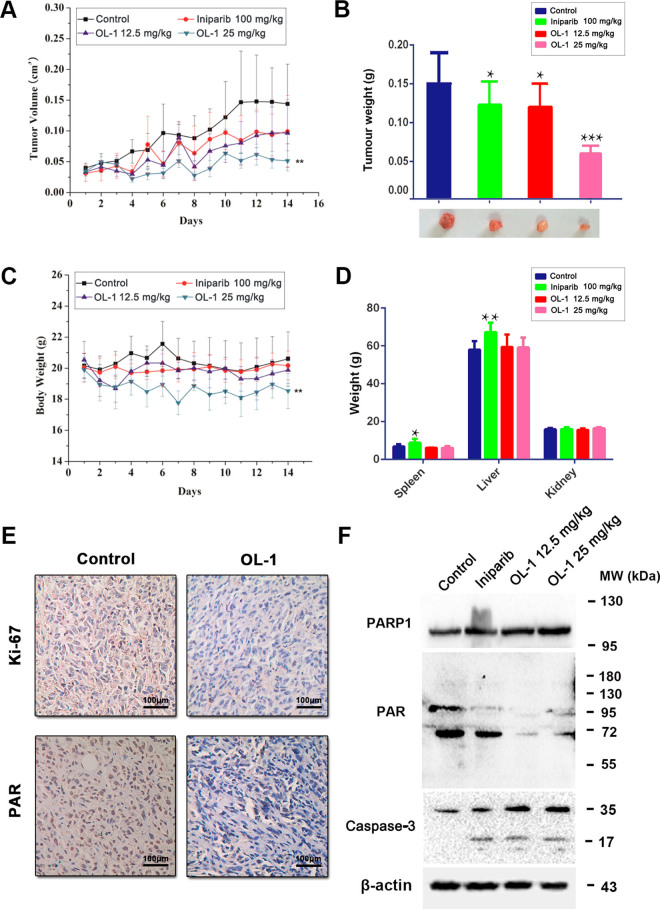
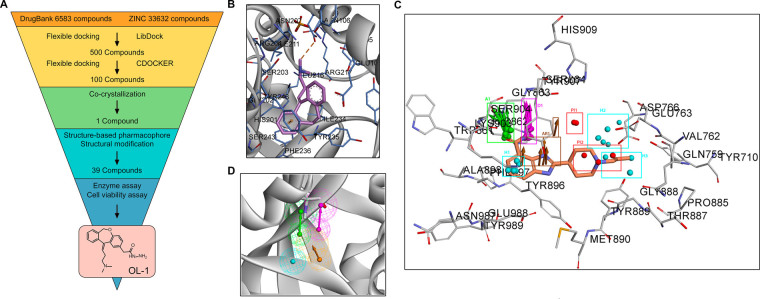
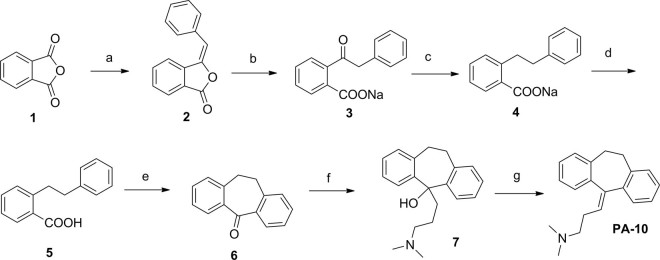
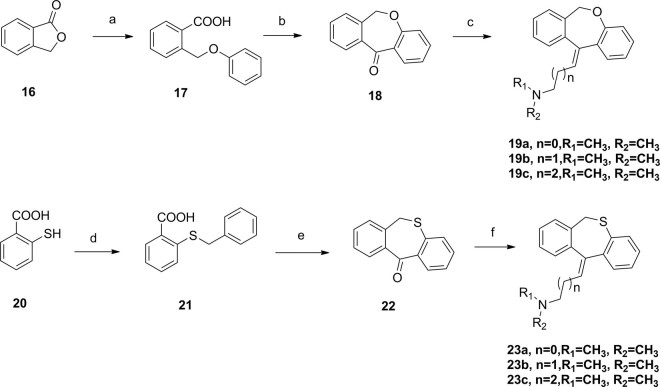
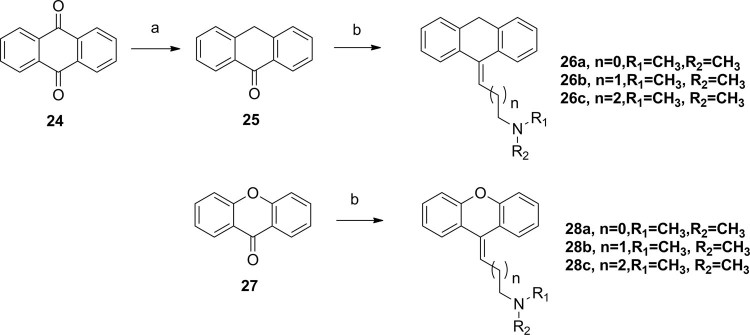
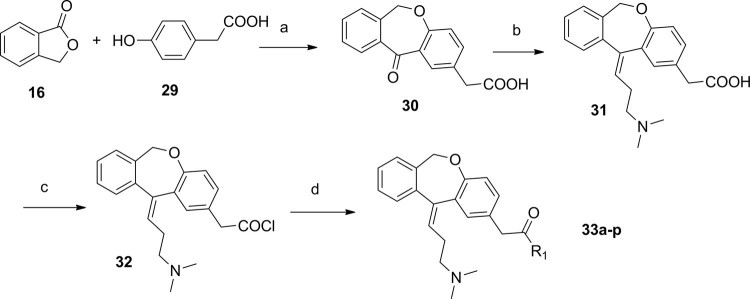
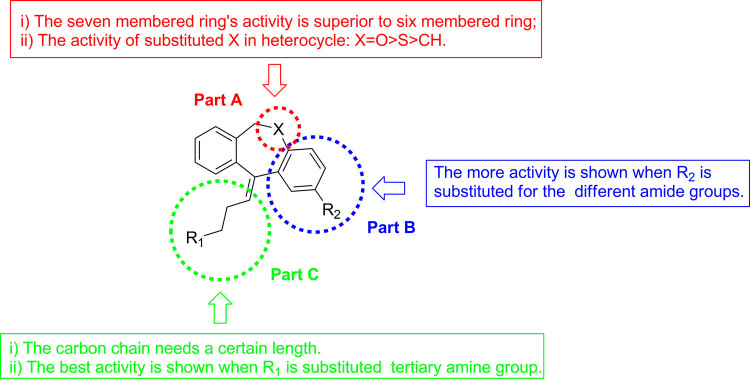
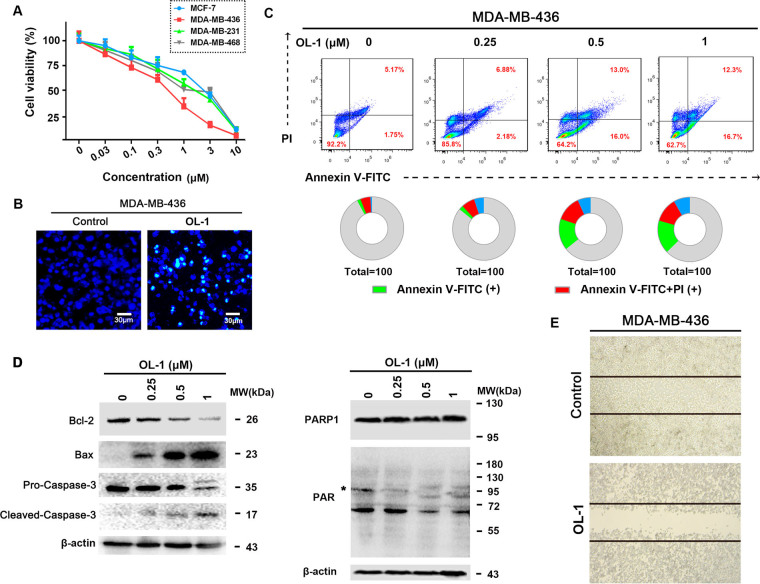
Poly (ADP-ribose) polymerase-1 (PARP1) is a highly conserved enzyme focused on the self-repair of cellular DNA damage. Until now, numbers of PARP inhibitors have been reported and used for breast cancer therapy in recent years, especially in TNBC. However, developing a new type PARP inhibitor with distinctive skeleton is alternatively promising strategy for TNBC therapy. In this study, based on co-crystallization studies and pharmacophore-docking-based virtual screening, we discovered a series of dihydrodibenzo[b,e]-oxepin compounds as PARP1 inhibitors. Lead optimization result in the identification of compound OL-1 (2-(11-(3-(dimethylamino)propylidene)-6,11- dihydrodibenzo[b,e]oxepin )-2-yl)acetohydrazide), which has a novel chemical scaffold and unique binding interaction with PARP1 protein. OL-1 demonstrated excellent potency (inhibiting PARP1 enzyme activity with IC = 0.079 μM), as well as inhibiting PARP-modulated PARylation and cell proliferation in MDA-MB-436 cells (BRAC1 mutation). In addition, OL-1 also inhibited cell migration that closely related to cancer metastasis and displayed remarkable anti-tumor efficacy in MDA-MB-436 xenograft model without apparent toxicities. These findings highlight a new small-molecule PAPR1 inhibitor (OL-1) that has the potential to impact future TNBC therapy.
聚(ADP-核糖)聚合酶-1(PARP1)是一种高度保守的酶,专注于细胞DNA损伤的自我修复。到目前为止,近年来已有许多PARP抑制剂被报道并用于乳腺癌治疗,尤其是在三阴性乳腺癌(TNBC)中。然而,开发一种具有独特骨架的新型PARP抑制剂是TNBC治疗的另一种有前景的策略。在本研究中,基于共结晶研究和基于药效团对接的虚拟筛选,我们发现了一系列二氢二苯并[b,e]氧杂环庚烷化合物作为PARP1抑制剂。先导优化导致化合物OL-1(2-(11-(3-(二甲氨基)亚丙基)-6,11-二氢二苯并[b,e]氧杂环庚烷)-2-基)乙酰肼)的鉴定,其具有新型化学支架并与PARP1蛋白具有独特的结合相互作用。OL-1表现出优异的效力(以IC = 0.079 μM抑制PARP1酶活性),以及抑制MDA-MB-436细胞(BRAC1突变)中PARP调节的PARylation和细胞增殖。此外,OL-1还抑制了与癌症转移密切相关的细胞迁移,并在MDA-MB-436异种移植模型中显示出显著的抗肿瘤功效,且无明显毒性。这些发现突出了一种新型小分子PAPR1抑制剂(OL-1),其有可能影响未来的TNBC治疗。