Saha Piu, Chassaing Benoit, Yeoh Beng San, Viennois Emilie, Xiao Xia, Kennett Mary J, Singh Vishal, Vijay-Kumar Matam
*Department of Nutritional Sciences, The Pennsylvania State University, University Park, Pennsylvania; †Center for Inflammation, Immunity & Infection, Institute for Biomedical Sciences, Georgia State University, Atlanta, Georgia; ‡Departments of Veterinary and Biomedical Sciences, The Pennsylvania State University, University Park, Pennsylvania; and §Department of Medicine, Pennsylvania State University Medical Center, Hershey, Pennsylvania.
Inflamm Bowel Dis. 2017 Jul;23(7):1120-1132. doi: 10.1097/MIB.0000000000001134.
Lipocalin-2 (Lcn2) is a multifunctional innate immune protein that exhibits antimicrobial activity by the sequestration of bacterial siderophores, regulates iron homeostasis, and augments cellular tolerance to oxidative stress. Studies in the murine model of colitis have demonstrated that Lcn2 deficiency exacerbates colitogenesis; however, the therapeutic potential of Lcn2 supplementation has yet to be elucidated. In light of its potential mucoprotective functions, we, herein, investigated whether expression of Lcn2 in the probiotic bacterium can be exploited to alleviate experimental colitis.
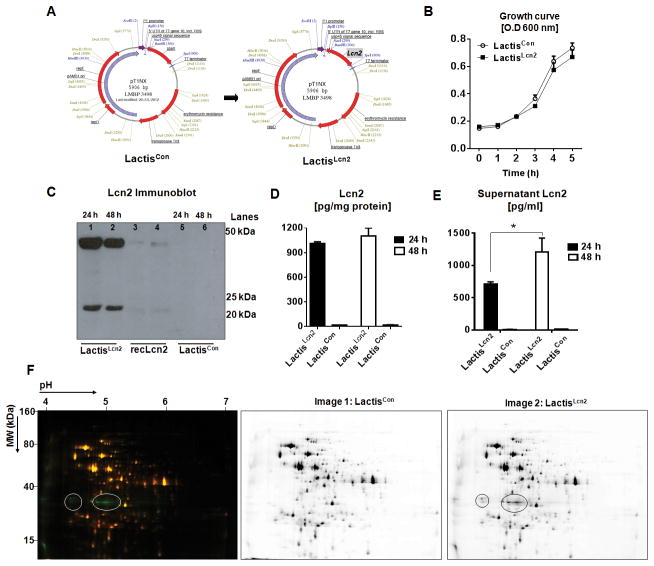
Murine Lcn2 was cloned into the pT1NX plasmid and transformed into Lactococcus lactis to generate L. lactis-expressing Lcn2 (Lactis-Lcn2) or the empty plasmid (Lactis-Con). Lactis-Lcn2 was characterized by immunoblot and enzyme-linked immunosorbent assay and tested for its antimicrobial efficacy on Escherichia coli. The capacity of Lactis-Lcn2 and Lactis-Con to withstand adverse conditions was tested using in vitro viability assays. Dextran sodium sulfate colitis model was used to investigate the colonization ability and therapeutic potential of Lactis-Lcn2 and Lactis-Con.
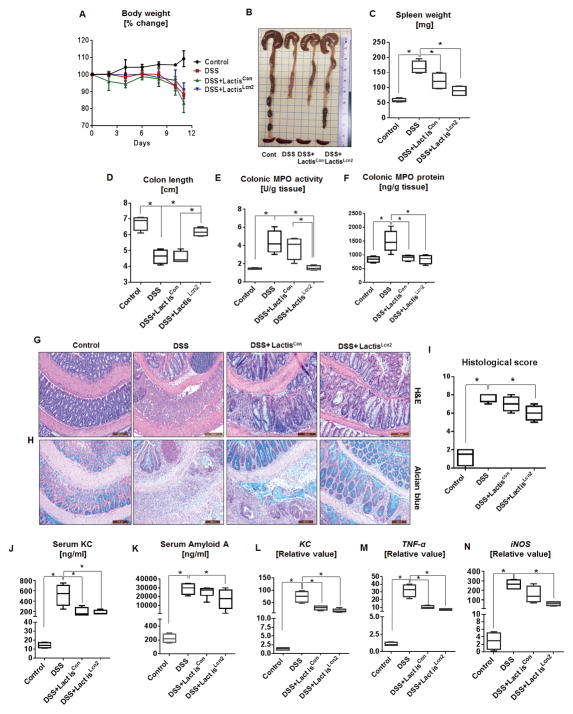
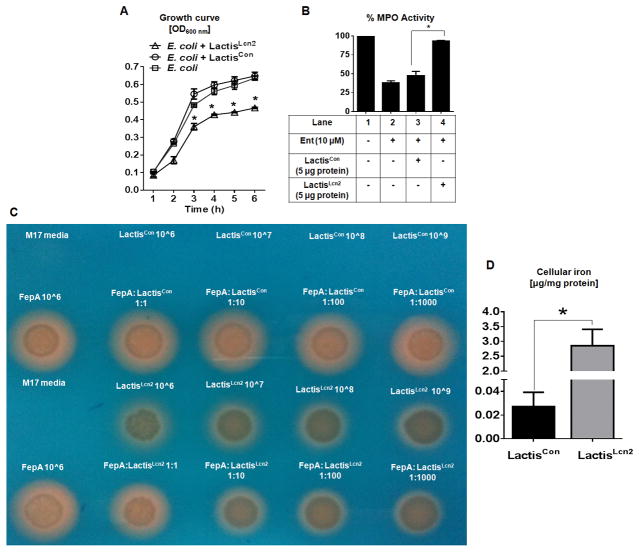
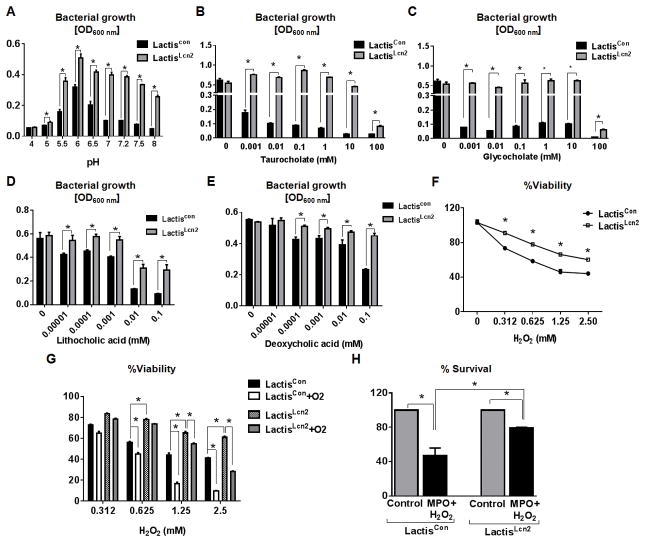
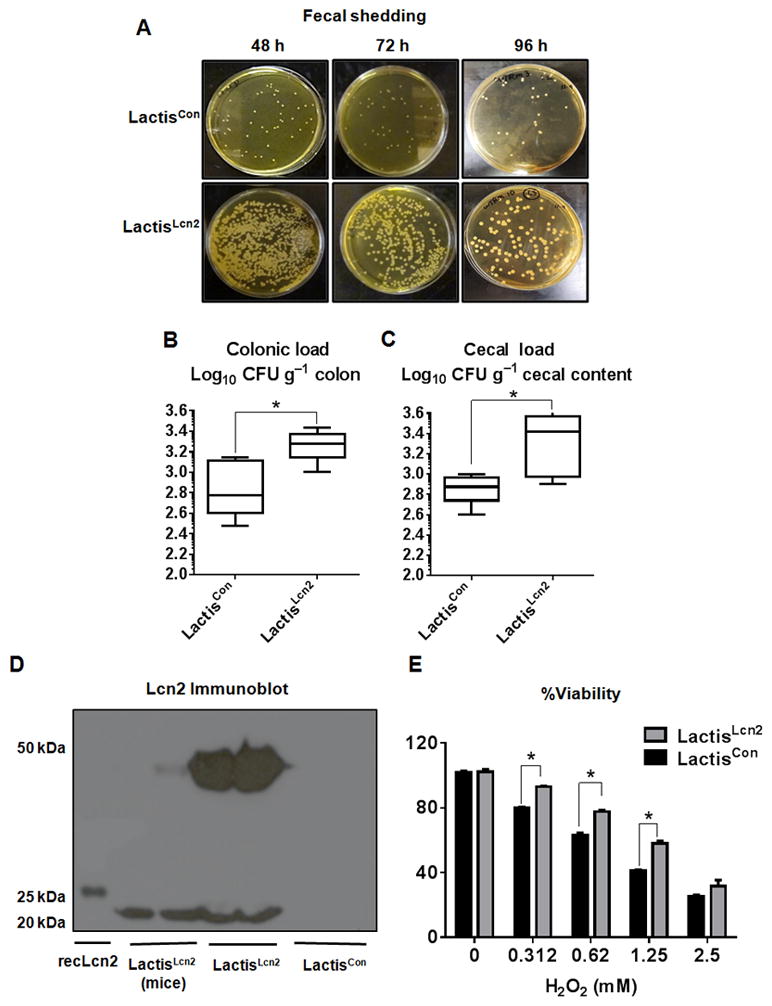
Lcn2 derived from Lactis-Lcn2 inhibited the growth of E. coli and reduced the bioactivity of enterobactin (E. coli-derived siderophore) in vitro. Lactis-Lcn2 displayed enhanced tolerance to adverse pH, high concentration of bile acids, and oxidative stress in vitro and survived better in the inflamed gut than Lactis-Con. Consistent with these features, Lactis-Lcn2 displayed better mucoprotection against intestinal inflammation than Lactis-Con when administered into mice with dextran sulfate sodium-induced acute colitis.
Our findings suggest that Lcn2 expression can be exploited to enhance the survivability of probiotic bacteria during inflammation, which could further improve its efficacy to treat experimental colitis.
脂质运载蛋白2(Lcn2)是一种多功能天然免疫蛋白,通过螯合细菌铁载体发挥抗菌活性,调节铁稳态,并增强细胞对氧化应激的耐受性。在结肠炎小鼠模型中的研究表明,Lcn2缺乏会加剧结肠炎的发生;然而,补充Lcn2的治疗潜力尚未阐明。鉴于其潜在的黏膜保护功能,我们在此研究了益生菌中Lcn2的表达是否可用于缓解实验性结肠炎。
将小鼠Lcn2克隆到pT1NX质粒中,并转化到乳酸乳球菌中,以产生表达Lcn2的乳酸乳球菌(Lactis-Lcn2)或空质粒(Lactis-Con)。通过免疫印迹和酶联免疫吸附测定对Lactis-Lcn2进行表征,并测试其对大肠杆菌的抗菌功效。使用体外活力测定法测试Lactis-Lcn2和Lactis-Con耐受不利条件的能力。采用葡聚糖硫酸钠结肠炎模型研究Lactis-Lcn2和Lactis-Con的定殖能力和治疗潜力。
源自Lactis-Lcn2的Lcn2在体外抑制了大肠杆菌的生长,并降低了肠杆菌素(大肠杆菌衍生的铁载体)的生物活性。Lactis-Lcn2在体外对不利的pH、高浓度胆汁酸和氧化应激表现出增强的耐受性,并且在炎症肠道中的存活能力比Lactis-Con更好。与这些特征一致,当将Lactis-Lcn2施用于葡聚糖硫酸钠诱导的急性结肠炎小鼠时,其对肠道炎症的黏膜保护作用比Lactis-Con更好。
我们的研究结果表明,利用Lcn2表达可提高益生菌在炎症期间的生存能力,这可能进一步提高其治疗实验性结肠炎的疗效。