Orriols Mar, Gomez-Puerto Maria Catalina, Ten Dijke Peter
Department of Molecular Cell Biology and Cancer Genomics Center Netherlands, Leiden University Medical Center, Leiden, The Netherlands.
Cell Mol Life Sci. 2017 Aug;74(16):2979-2995. doi: 10.1007/s00018-017-2510-4. Epub 2017 Apr 26.
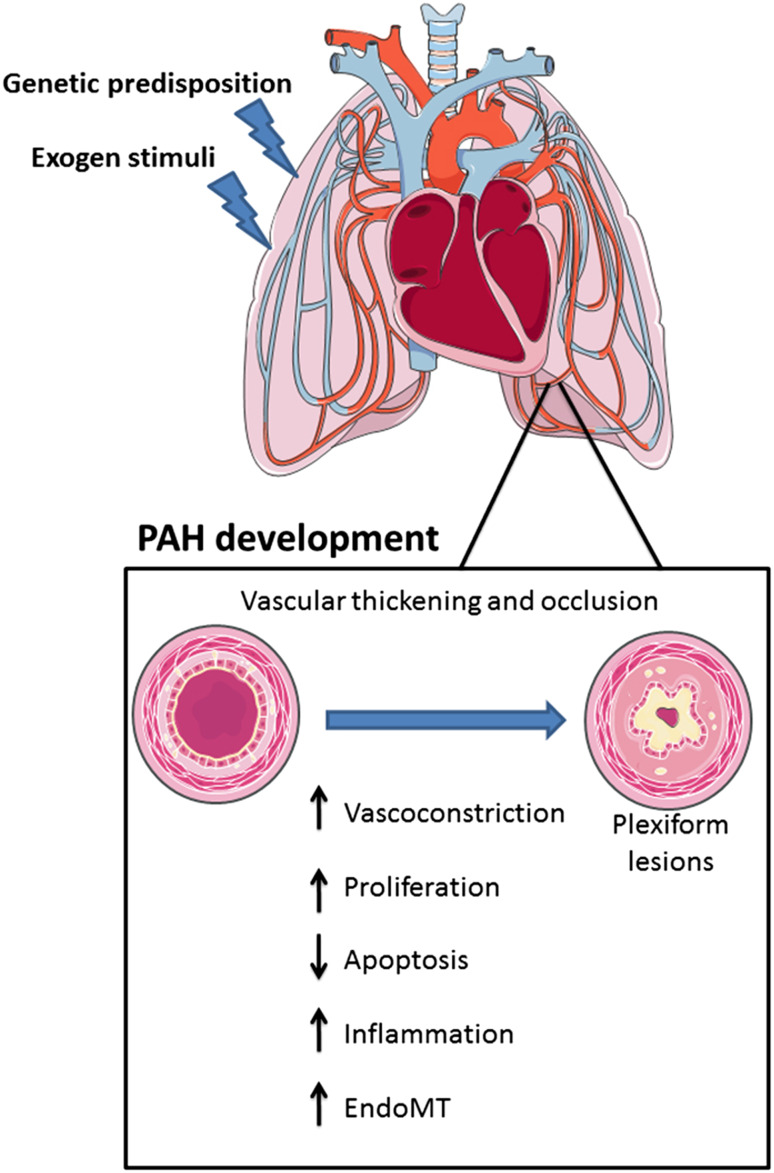
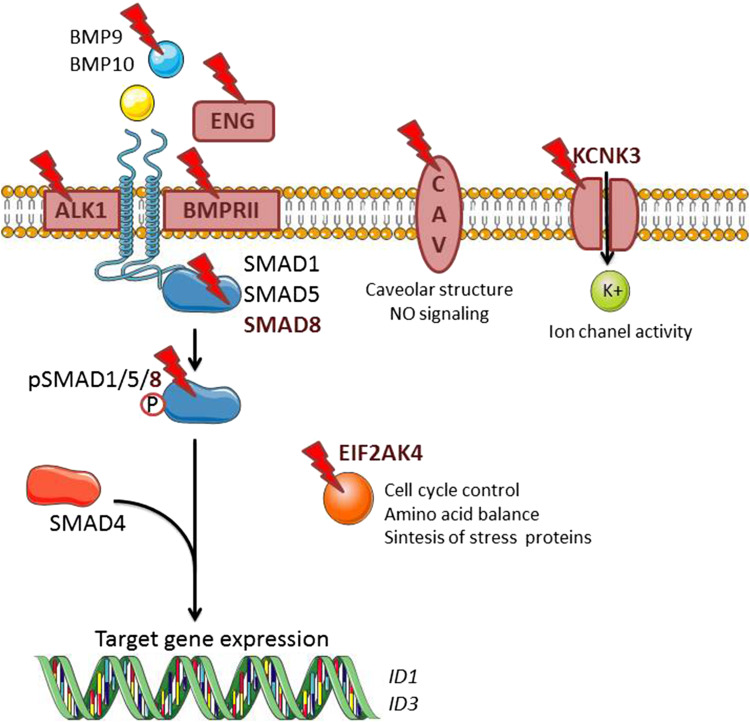
Pulmonary arterial hypertension (PAH) is a chronic disease characterized by a progressive elevation in mean pulmonary arterial pressure. This occurs due to abnormal remodeling of small peripheral lung vasculature resulting in progressive occlusion of the artery lumen that eventually causes right heart failure and death. The most common cause of PAH is inactivating mutations in the gene encoding a bone morphogenetic protein type II receptor (BMPRII). Current therapeutic options for PAH are limited and focused mainly on reversal of pulmonary vasoconstriction and proliferation of vascular cells. Although these treatments can relieve disease symptoms, PAH remains a progressive lethal disease. Emerging data suggest that restoration of BMPRII signaling in PAH is a promising alternative that could prevent and reverse pulmonary vascular remodeling. Here we will focus on recent advances in rescuing BMPRII expression, function or signaling to prevent and reverse pulmonary vascular remodeling in PAH and its feasibility for clinical translation. Furthermore, we summarize the role of described miRNAs that directly target the BMPR2 gene in blood vessels. We discuss the therapeutic potential and the limitations of promising new approaches to restore BMPRII signaling in PAH patients. Different mutations in BMPR2 and environmental/genetic factors make PAH a heterogeneous disease and it is thus likely that the best approach will be patient-tailored therapies.
肺动脉高压(PAH)是一种以平均肺动脉压进行性升高为特征的慢性疾病。这是由于外周小肺血管异常重塑,导致动脉管腔逐渐闭塞,最终引起右心衰竭和死亡。PAH最常见的病因是编码骨形态发生蛋白II型受体(BMPRII)的基因发生失活突变。目前PAH的治疗选择有限,主要集中在逆转肺血管收缩和血管细胞增殖。尽管这些治疗可以缓解疾病症状,但PAH仍然是一种进行性致命疾病。新出现的数据表明,恢复PAH中的BMPRII信号是一种有前景的替代方法,可以预防和逆转肺血管重塑。在这里,我们将重点关注在挽救BMPRII表达、功能或信号以预防和逆转PAH中的肺血管重塑及其临床转化可行性方面的最新进展。此外,我们总结了直接靶向血管中BMPR2基因的所述miRNA的作用。我们讨论了在PAH患者中恢复BMPRII信号的有前景的新方法的治疗潜力和局限性。BMPR2中的不同突变以及环境/遗传因素使PAH成为一种异质性疾病,因此最佳方法可能是针对患者的个性化治疗。